Vegetable · Solanaceae
Bell Pepper
Capsicum annuum
Meet its requirements for full sun, consistent moisture, and warm ground, and Capsicum annuum bears steadily from midsummer until the first frost.
Full sun
Every 3–7 days
59–86°F · 15–30°C
60–90 days
Overview
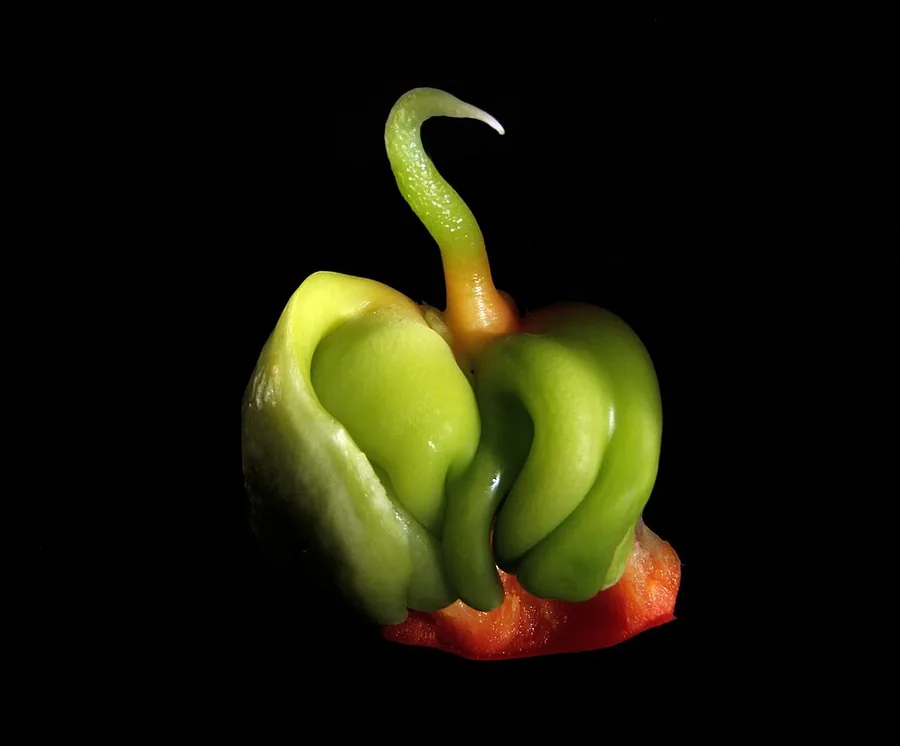
Bell peppers are the sweet, capsaicin-free forms of Capsicum annuum, a nightshade grown for its thick-walled fruit. Color is a function of ripeness rather than separate types, the fruit opening green and developing to red, yellow, or orange as the cultivar dictates. Establishment is unhurried, but a warm site returns weeks of harvest.
These are warm-season plants with no frost tolerance. Cold soil suppresses their growth and high heat triggers flower drop, so the central task is to align transplanting with the dependable warmth of early summer. With that timing met, the crop carries from midsummer to the first frost.
Once rooted, peppers are undemanding. Even soil moisture, full sun, and a pre-plant soil test to guide feeding address most of their requirements. Inconsistent watering is the principal failure mode, because it precipitates blossom-end rot, the disorder that accounts for most disappointment with the crop.
Care
The short version: full sun, warm soil, and even moisture of about 1 to 2 inches of water a week, in rich, well-drained ground with a balanced feed incorporated at planting.
Light
Bell peppers require full sun, meaning at least 6 to 8 hours of direct light daily. Insufficient light yields weak, etiolated plants and poor fruiting, and it reduces the leaf canopy on which the developing fruit depends for its own shade.
Water
Supply steady, even moisture of about 1 to 2 inches (2.5 to 5 cm) a week. Alternating drought and saturation is what induces blossom-end rot, because it disrupts the water-borne movement of calcium into the fruit. A mulch layer conserves that moisture and moderates soil temperature.
Soil
Use rich, well-drained loam amended with ample organic matter. Peppers perform best at a slightly acidic pH of 6.0 to 6.8, so a pre-plant soil test is a worthwhile diagnostic step.
Temperature
The favorable range is 59°F to 86°F (15°C to 30°C). Flowers abscise when daytime heat exceeds the upper bound or nights fall below the lower one, and cold soil arrests growth entirely.
Humidity
Ambient outdoor humidity is adequate, so no target figure applies. The more consequential factor is air movement between plants, which dries the foliage and limits disease pressure.
Feeding
Incorporate a balanced fertilizer such as 10-10-10 at planting, guided by a soil test, then apply a light nitrogen sidedress once the first fruits set. Excess nitrogen promotes vegetative growth at the cost of fruiting.
Pruning
Routine pruning is unnecessary. Pinch the first flowers from small transplants so the plant establishes before fruiting, and stake or cage it so a heavy fruit load does not fracture the branches.
Repotting
Garden peppers are not repotted, though seedlings benefit from a single shift up. Move them from cell trays into 8 to 10 cm pots before planting out, which gives the roots room and prevents circling.
Size & spacing
Mature plants reach 18 to 35 inches (45 to 90 cm) in height and 12 to 24 inches (30 to 60 cm) in spread. Spacing to that width promotes airflow through the planting and rapid drying of the foliage.
When to plant
Bell peppers are governed by temperature and intolerant of frost or cold soil. Sow seed indoors in late winter, transplant a few weeks after the last frost once the soil has warmed, and harvest fruit from midsummer until the first fall frost.
Northern hemisphere
Southern hemisphere
Typical months for a temperate climate: start earlier in warm zones, later where spring frosts linger.
- Sow: 8-10 weeks before the last spring frost
- Plant: 2-3 weeks after the last frost, once soil has warmed to about 18°C (65°F) and nights stay above 13°C (55°F)
- Harvest: Harvest from midsummer until first fall frost; pick green at full size and firm, or leave fruit on the plant to ripen red, yellow, or orange
Hardiness
USDA hardiness zones: 9–11
Temperature: down to -7°C
Troubleshooting
Most pepper disorders register on the fruit, where irregular moisture and excess sun leave physical signs, or on the tender new growth that attracts sap-feeding pests. Early detection keeps a minor issue minor. Identify the sign below, then intervene while the response still matters.
Sunken brown lesion at the blossom end
This is blossom-end rot, a physiological disorder rooted in uneven soil moisture rather than disease. Calcium moves to the fruit dissolved in the water the roots take up, so when moisture swings from dry to saturated the supply to the developing tissue falls short and the blossom end collapses. Hold a consistent supply of about 2.5 to 5 cm a week, mulch to buffer the soil, and strip off any marked fruit so resources flow to sound ones.
Fix:
- Remove affected fruit so the plant redirects energy
- Water deeply and consistently, about 2.5-5 cm per week
- Apply organic mulch to even out soil moisture
Flowers drop without setting fruit
Pepper pollination has a narrow thermal window, so blossoms abort when days exceed 90°F (32°C) or nights fall below 59°F (15°C). The flower simply fails to set and drops at the stem. Maintain even moisture and restrain nitrogen, which otherwise diverts the plant toward foliage, and recognize that fruit set resumes without intervention once temperatures return to the moderate range.
Fix:
- Keep plants evenly watered through hot spells
- Wait for moderate temperatures; fruit set usually resumes on its own
- Reduce supplemental nitrogen
Distorted, tacky young foliage harboring minute insects below
The soft-bodied colonies massed on the shoot tips are aphids, sap feeders that distort tender growth and excrete honeydew, the sugary residue that later supports sooty mold. A forceful jet of water displaces most of the population, and insecticidal soap applied to the leaf undersides finishes the rest where they persist. Lady beetles and lacewings prey on the colony directly, so conserving these natural enemies keeps numbers in check.
Fix:
- Dislodge aphids with a strong spray of water
- Apply insecticidal soap or horticultural oil, covering leaf undersides
- Preserve natural enemies such as lady beetles and lacewings
Bleached, thin-skinned lesions on sun-facing fruit surfaces
This is sunscald, tissue injury that follows when fruit acclimated to shade is abruptly exposed to direct sun after the canopy above it thins through disease or heavy harvest. The lesion forms only on the sun-facing surface, which is the diagnostic clue. The flesh below remains edible once the affected skin is cut away, so management centers on preserving the foliar cover that keeps developing fruit shaded.
Fix:
- Harvest affected fruit promptly; undamaged portions are still edible
- Manage leaf-spotting diseases to preserve foliage cover
Toxicity
The entire bell pepper plant is safe in a household with pets. The sweet cultivars contain little to no capsaicin, and the ASPCA does not list the species among plants toxic to cats or dogs. The fruit is a routine vegetable, and an incidental bite of foliage causes no harm.
Safe for
People · Cats · Dogs · Horses · Rabbits · Livestock · Birds
Cats None
Sweet bell pepper carries no toxic principle for cats. A small taste of fruit is harmless, while a large quantity of foliage may provoke a mild, self-limiting digestive upset of the sort any unfamiliar food can cause.
Dogs None
Dogs face no toxicological risk from bell pepper. Many take readily to a crisp slice of the ripe fruit, and the plant tissue holds no compound of concern.
Horses Safe
The bell pepper plant contains nothing injurious to horses. In practice most decline the pungent foliage on their own, which further limits any exposure.
Rabbits Safe
Sweet pepper is safe forage for rabbits, and a small portion of fruit serves as a sound treat. The seeds and stem offer no nutritional value and are best withheld.
Livestock Safe
Cattle, goats, and sheep incur no harm from this plant, so surplus fruit can be passed along as harmless scrap.
Birds Safe
Pepper poses no hazard to birds, which lack the receptor sensitivity to the heat compounds that affect mammals. Backyard hens readily consume chopped fruit.
People Safe
Sweet bell peppers are a routine culinary vegetable, sound raw or cooked and safe across the household.
No special handling needed. As with other Solanaceae vegetables, the fruit is the part intended for eating; discourage pets from chewing large amounts of foliage or stems.
Varieties
Home gardeners rely on a small set of dependable sweet peppers. The following cultivars are the ones worth knowing.
California Wonder
An open-pollinated heirloom of long standing, bearing thick-walled, blocky four-lobed fruit that matures from green through to red.
King of the North
An open-pollinated selection suited to short-season northern gardens, valued for ripening its fruit to red within a brief window.
Big Bertha
A hybrid bred for size, yielding elongated bell fruit that reaches roughly 18 cm (7 in) in length.
Companions
Bell peppers do well beside herbs and alliums that share their conditions and help shrug off pests, but keep them away from fennel, which holds back almost everything planted near it.
Plant near
basil: Traditional companion listed on extension companion-planting charts; shares growing conditions and may help deter some insect pests.
onions: Listed as a compatible companion for peppers on extension companion-planting charts.
carrots: Listed as a compatible companion for peppers on extension companion-planting charts.
Keep apart
fennel: Extension companion-planting guidance lists fennel as incompatible with most garden vegetables, including peppers, because it inhibits neighboring plants.
How to propagate
At home, bell peppers are raised by a single method: from seed started early indoors, which gives the slow-developing seedlings the time they need before planting out.
SeedEasy
Sow indoors 8-10 weeks before the last spring frost · Germinates in about 7-14 days at 24-29°C (75-85°F); transplant-ready in 8-10 weeks
Peppers are propagated by seed, sown indoors 8 to 10 weeks before the last spring frost. Germination is temperature-dependent and proves slow and erratic in cool media, so bottom heat at 75°F to 85°F (24°C to 29°C) brings emergence within 7 to 14 days. Direct sowing is impractical across most temperate climates because the crop requires that indoor lead time to reach a transplant-ready stage in 8 to 10 weeks.
Myths
Green peppers and red peppers are produced by two separate kinds of plant.
Both are one fruit observed at different maturity stages. A green pepper has merely been harvested early, whereas most cultivars continue ripening to red, and certain ones to yellow or orange according to their genetics. As the fruit colors on the plant its sugar content climbs and the flavor turns noticeably sweeter.