Vegetable · Solanaceae
Ground Cherry
Physalis pruinosa
Let the husks dry, drop, and turn gold, and the ground cherry hands you a sweet harvest all season.
Full sun
Every 3–7 days
59–86°F · 15–30°C
70–90 days
Overview
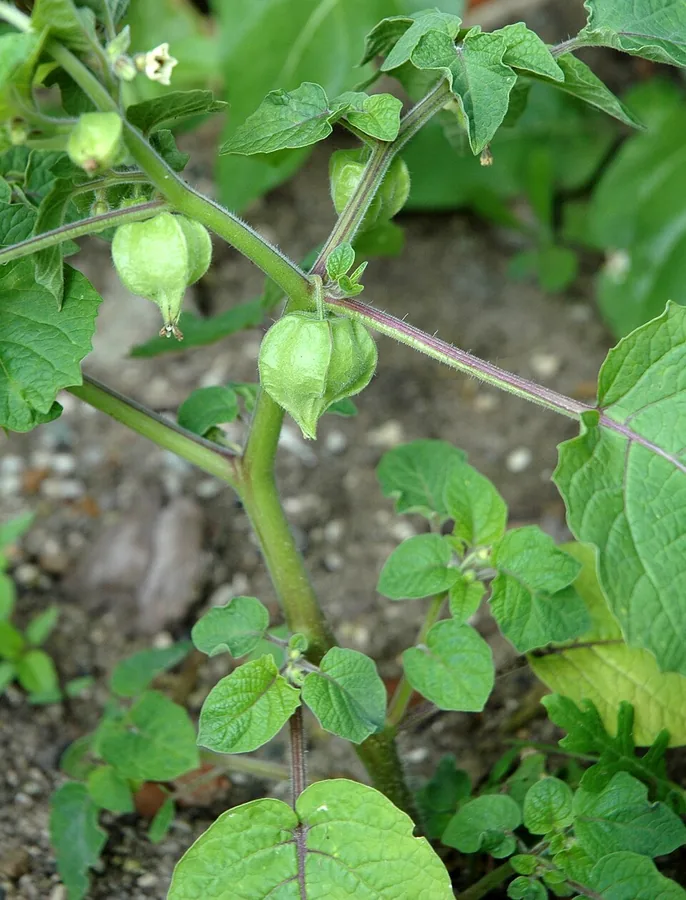
The ground cherry is a low, sprawling nightshade, closely related to the tomato and tomatillo and easy enough to suit a first-time grower. Its defining structure is the inflated calyx that encloses each fruit in a papery husk, much like a small lantern. Growers also list it under the names husk cherry, husk tomato, and strawberry tomato.
Harvest technique is what distinguishes this crop from its relatives. The fruit is not picked from the plant; instead the calyx dries to a thin, papery brown and the ripe golden berry abscises and falls, so the crop is collected off the ground. That ripe berry carries a sweet, faintly tropical flavor placed between tomato and pineapple.
A single caveat accompanies the sweetness. Only the fully ripe golden fruit is edible, because the green unripe fruit, the husk, the leaves, and the stems accumulate solanine and will cause illness if eaten. The crop is grown for that ripe harvest, with every green part treated as inedible.
Care
The short version: full sun with some shade tolerated, even soil moisture at roughly an inch a week, rich and well-drained ground, and enough spacing for the sprawling plants to keep air moving.
Light
Ground cherries fruit most heavily in full sun, with 6 or more hours of direct light a day. They tolerate light partial shade, but yield tracks the light they receive, so more sun means more fruit.
Water
Hold the soil at steady, even moisture, about an inch of water a week, so the fruit fills uniformly. Established plants tolerate some heat and drought, which means overwatering is the greater risk. Water at the base rather than overhead, because leaf wetness is what lets foliar disease establish.
Soil
Grow them in fertile, well-drained loam amended with organic matter. A pH of 6.0 to 6.8, slightly acidic, matches their preference.
Temperature
Their working range is 59°F to 86°F (15°C to 30°C). Warmth drives fruit set, so cool spells early in the season delay production.
Humidity
Ambient outdoor humidity, roughly 40% to 70%, is adequate and needs no management. Airflow is the variable that matters, since crowded, damp foliage is where disease establishes.
Feeding
Feed monthly through the growing season with a balanced, low-nitrogen product or compost. Excess nitrogen drives foliage at the expense of fruit, so restraint pays off.
Pruning
Pruning demand is minimal. Pinch or stake the sprawling stems to keep the fruit off wet soil and open the canopy to air, and cut out any diseased foliage as it appears.
Repotting
Seedlings are started in cells or pots and moved once into the garden. They are not carried on as repotted houseplants, so the transplant into the bed is the sole transfer.
Size & spacing
Plants reach 18 to 35 inches (45 to 90 cm) tall with a comparable spread. Allow each 18 to 24 inches so air circulates and the sprawling stems gain support.
When to plant
Ground cherries require warmth and have no frost tolerance. Sow the seed indoors in early spring, set the plants out a few weeks after the last frost once the soil has warmed, and collect fruit from mid-summer into fall as the husks dry and drop.
Northern hemisphere
Southern hemisphere
Typical months for a temperate climate: start earlier in warm zones, later where spring frosts linger.
- Sow: 6-8 weeks before the last expected spring frost
- Plant: After all danger of frost, about 2-4 weeks after the last frost once soil is warm
- Harvest: Harvest from mid-summer into fall once husks turn dry and papery and the golden ripe fruit drops to the ground
Hardiness
USDA hardiness zones: 3–9
Temperature: down to -40°C
Troubleshooting
Most ground cherry disorders present on the foliage or as thin, unfilled husks. Reading the early symptoms lets you intervene before a minor issue becomes established. Match the signs below, then correct the cause while the response still counts.
Chewed holes and stripped leaves
Heavy defoliation on a solanaceous crop like this usually traces to tomato hornworms, whose size lets them clear a stem in a single night, while hopping flea beetles and Colorado potato beetles perforate the foliage. Because the hornworms and beetles are large enough to see, handpicking removes the feeding load directly, and row cover over young transplants excludes them until the plants outgrow the vulnerable stage. Since these pests overwinter and build up on related nightshades, regular scouting and rotation break the cycle before populations climb.
Fix:
- Handpick hornworms and beetles
- Use row cover on young transplants
- Apply an approved insecticide only if damage is severe
Abundant husks with sparse or unfilled fruit
A plant that grows lush and dark green yet sets little fruit is responding to excess nitrogen, which pushes vegetative growth at the expense of flowering. Early cool weather compounds the problem, since low temperatures and weak early pollination leave the husks flat and unfilled. Withdrawing high-nitrogen feed shifts the plant toward reproduction, and steady moisture plus warmth over time lets fruit set catch up.
Fix:
- Stop high-nitrogen feeding
- Keep moisture even
- Allow plants time and warmth to set fruit
Foliage yellowing with dark lesions or vascular wilt
Concentric target-ringed lesions with progressive lower-leaf yellowing indicate early blight and the foliar diseases common across nightshades, whereas abrupt one-sided wilting points instead to verticillium wilt or tobacco mosaic virus. Removing affected foliage lowers the inoculum, and base watering keeps the leaves dry so spores have no film to germinate in, while any plant that wilts systemically is best pulled. Rotating out of solanaceous beds and spacing for airflow deny the pathogens the host continuity and humidity they need to persist.
Fix:
- Remove affected foliage
- Avoid overhead watering
- Rotate crops and remove infected plants
Lax, spreading growth shedding fruit onto wet soil
This crop carries a naturally low, spreading habit, so the stems lean outward and crowding or wind exaggerates the lodging until the husks rest against wet soil. Staking or caging early holds the canopy up, and a mulch layer underneath intercepts the dropped fruit so it stays clean off the ground. Spacing plants 18 to 24 inches apart supplies the room and light support that limits sprawl from the outset.
Fix:
- Stake or cage plants
- Mulch underneath to keep fallen fruit clean
- Space plants 18-24 inches apart
Toxicity
The ripe fruit is a treat, but the remainder of the plant is not. The unripe green fruit, the husk, the leaves, and the stems all contain a natural compound called solanine that irritates the digestive tract. Eat only the fully ripe golden berries, and keep the green parts away from children, pets, and grazing animals.
Toxic to
Cats · Dogs · Horses · Rabbits · Livestock · Birds
Safe for
People
Cats Caution
In a cat, ingesting the leaves or an unripe husk fruit can trigger drooling, vomiting, and loose stools as the glycoalkaloids irritate the gut. Keep the foliage and green windfall out of reach.
Dogs Caution
A dog that consumes the green parts commonly develops drooling, gastrointestinal upset, and lethargy from the same alkaloids. Clear fallen green fruit from areas a dog browses.
Horses Caution
The solanine concentrated in the leaves and stems can leave a horse inappetent, dull, and unsteady, so exclude grazing animals from the plants.
Rabbits Caution
The foliage and unripe fruit are unsafe browse for rabbits and provoke digestive upset. Withhold all trimmings from the plant.
Livestock Caution
Cattle, goats, and sheep exposed to the alkaloids in the green plant can show digestive disturbance and weakness. Fence them out of any patch.
Birds Caution
Regard the green parts as unsafe for backyard hens and other birds, since the same toxin is present. A bird may take a fully ripe berry without harm.
People Ripe fruit safe
The fully ripe golden berry, husked and dropped from the plant, is sweet and safe to consume. The unripe green fruit, the husk, the leaves, and the stems retain solanine and cause stomach upset, so keep children away from the green plant.
Eat only the fully ripe, golden fruit that has dropped to the ground and shed its papery husk. Do not eat unripe/green fruit, the husk, leaves, or stems, which are toxic and can cause stomach upset or poisoning. Keep windfall green fruit picked up where children or pets browse.
Helpline numbers

United States
ASPCA Animal Poison Control: (888) 426-4435 (fee applies)
Poison Control: (800) 222-1222



Canada
Poison Centres: 1-844-764-7669
Varieties
Only a few ground cherries reach home gardens, and they separate mainly by size and sweetness. These are the ones worth identifying by name.
Aunt Molly's
A Polish heirloom valued for setting sweet golden fruit dependably and for reseeding itself from season to season.
Cossack Pineapple
A selection grown for an intense, nearly pineapple-like sweetness in the ripe berry.
Cape gooseberry (Physalis peruviana)
A taller, upright relative cultivated as an annual whose orange-gold berries run larger than those of the low, sprawling husk cherry.
How to propagate
Ground cherries are straightforward to raise from seed, and once they fruit the crop reseeds the next generation on its own.
SeedEasy
Start indoors 6-8 weeks before the last frost; transplant after frost danger passes · About 2-3 weeks to germinate at 75-85°F and roughly 6-8 weeks to reach transplant size
Ground cherry seed is raised on the same schedule as tomato. Sow about a quarter inch deep in a sterile soilless mix 6 to 8 weeks before your last frost and hold the tray at 75°F to 85°F (24°C to 29°C), the warmth that drives germination in 2 to 3 weeks and carries the seedlings to transplant size over another 6 to 8. Harden the plants to outdoor conditions and set them out once frost has passed. After fruiting, the crop self-sows freely wherever dropped berries rot in place, so seedlings return without further sowing.
Myths
Because the entire plant carries toxins, the berries themselves cannot be safely consumed.
The fully ripe golden fruit is sweet and edible. Solanine-type alkaloids are confined to the unripe green fruit, the husk, the leaves, and the stems, which is why those parts should never be eaten.
The dry outer husk is an edible component of the fruit itself.
The husk functions only as a protective wrapper and is discarded. The ripe berry inside is the edible portion, reached by peeling away the dry, papery shell.