Vegetable · Solanaceae
Tomato
Solanum lycopersicum
Supply full sun, even moisture, and open airflow, and a tomato yields steadily across the season.
Full sun
Every 3–7 days
70–84°F · 21–29°C
50–90 days
Overview
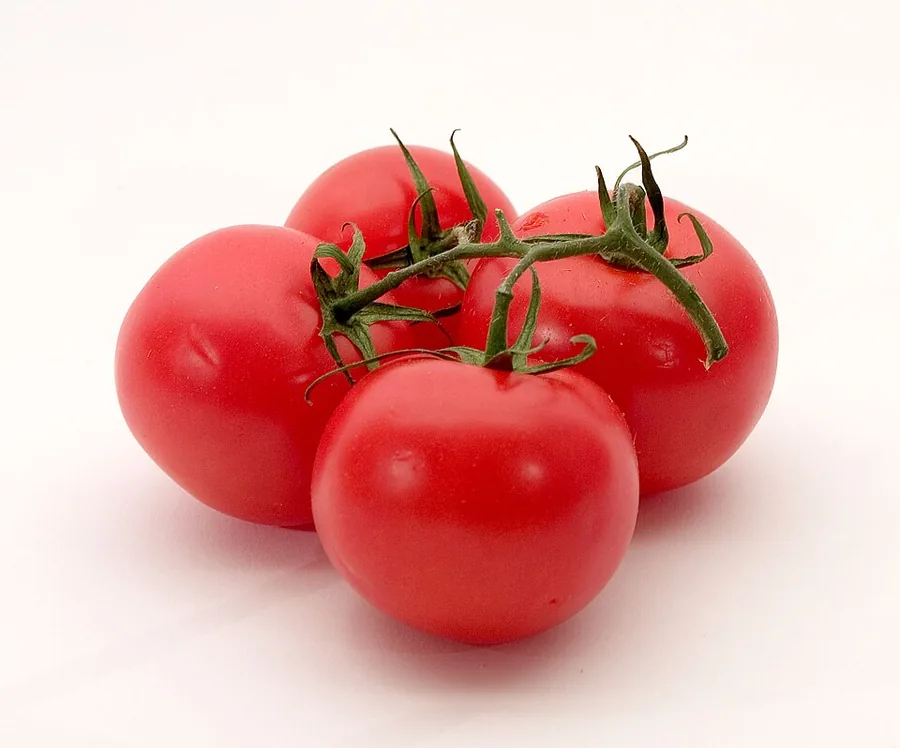
The tomato is a member of the nightshade family, Solanaceae, with origins in the Andes, where it was cultivated long before reaching the wider world. Grown now across most climates as a warm-season annual, it performs as readily in a garden bed as in a container on a sun-exposed balcony.
Cultivars divide along one structural line. Determinate types stop at a fixed height and concentrate ripening into a week or two, while indeterminate types keep extending and setting fruit until frost halts them. Identifying which growth habit you have governs how the plant should be pruned and supported.
A tomato tolerates an inexperienced hand yet responds sharply to good culture. Provide even water, full sun, and space for air to circulate, and the fruit arrives sweet and abundant. Neglect those conditions and the trade is split skins and stripped stems.
Care
The short version: full sun, with light afternoon shade in hot-summer regions. Hold the soil evenly moist at roughly an inch of water weekly, plant into rich, fertile ground, and space each plant for open airflow.
Light
Tomatoes require 8 or more hours of direct sun daily to fuel fruiting. Light afternoon shade is useful where summers turn punishing, but genuine shade produces tall, weak plants and a sharply reduced crop.
Water
Target steady, even moisture rather than alternating soakings and droughts, since that swing is what splits the skins. In practice that means roughly an inch of water a week, increased during heat waves or in containers where the medium dries faster.
Soil
Set plants into rich, free-draining ground worked with generous compost. A slightly acidic pH of 6.0 to 6.8 suits them, and loose, friable soil lets the deep root system extend downward.
Temperature
The plant performs best from 70°F to 84°F (21°C to 29°C). Fruit set stalls once nights stay warm or days run hot, and even a light frost is fatal to the foliage.
Humidity
Ambient outdoor humidity poses no concern, so no target figure applies. Air movement is the variable that counts, because crowded, damp foliage is the entry point for most tomato diseases.
Feeding
Apply a balanced feed at planting, then side-dress again once the first fruit has set. Hold back on the nitrogen, or the plant invests in leaf rather than fruit.
Pruning
Pinch the side shoots on indeterminate vines back to one or two leading stems to channel energy upward. Leave determinate bushes unpruned, since cutting them only sacrifices yield.
Repotting
Pot seedlings on into larger containers before transplanting so the roots never circle and bind. After a plant reaches its final bed or large pot, it remains there for the rest of the season.
Overwintering
Grow the tomato as an annual. It is botanically a tender perennial, but the first frost kills it outright, so the practical approach is to replant each spring.
Size & spacing
Mature height ranges from 2 to 10 feet (60 cm to 3 m) by type. Allow each plant 1.5 to 3 feet (45 to 90 cm) of clearance so air circulates and disease pressure stays low.
When to plant
The tomato is heat-driven and frost-intolerant. Sow seed indoors during late winter, transplant only after the danger of cold has lifted, and gather fruit from midsummer through to the first frost that closes the season.
Northern hemisphere
Southern hemisphere
Typical months for a temperate climate: start earlier in warm zones, later where spring frosts linger.
- Sow: 5–8 weeks before last frost (start seeds indoors before last frost)
- Plant: at last frost to 2 weeks after (after frost, soil ~60°F (16°C))
- Harvest: July–October (midsummer to first frost)January–April (midsummer to first frost)
Hardiness
USDA hardiness zones: 10–11
Temperature: down to -1°C
Troubleshooting
Tomato disorders surface first on the fruit or the lowest leaves, so train your eye on those zones. Catch the early signature and you can intervene before the problem advances. Match your symptom against the entries below, then act while action still pays.
Oily gray-brown lesions preceding rapid plant collapse
Oily gray-brown patches that spread within days signal late blight, the Phytophthora pathogen that drives in cool, wet air and can fell a plant before the week is out. Uproot the entire specimen, seal it in a bag, and send it to the trash. Composting it only overwinters the spores and seeds next season's outbreak.
Fix:
- Pull and bag plants immediately
- Do not compost
- Preventive fungicide on neighbors
Lower leaves yellowing and wilting during a slow decline
When the lowest leaves yellow and the plant slowly wilts, suspect a soilborne fusarium or verticillium wilt. These fungi invade the vascular tissue and block the stem from within, which is why no treatment reverses the infection. Remove the plant and grow next year's crop in a container of clean medium, or rely on varieties bred for resistance.
Fix:
- No cure; remove plant
- Grow in containers with fresh mix
A darkened, sunken lesion at the fruit's base
That leathery brown lesion is blossom end rot, a calcium-distribution disorder rather than a soil shortage. The plant cannot deliver calcium to the developing fruit when its water supply swings between dry and saturated, because the mineral travels with the transpiration stream. Hold a regular irrigation schedule, lay mulch to buffer the root zone, and discard any fruit already showing the lesion.
Fix:
- Maintain even soil moisture
- Mulch root zone
- Remove affected fruit
Concentric brown lesions ringing the lowest leaves
Concentric brown rings rising from the base of the plant point to early blight, an Alternaria fungus that favors warm, humid spells. Because the spores survive in soil and splash upward, the oldest foliage is hit first. Cut away the marked leaves, thin the canopy so air dries the foliage, and irrigate at soil level rather than overhead.
Fix:
- Remove infected lower leaves
- Improve airflow
- Apply fungicide if severe
Dense small gray lesions edged in dark margins
Dense stippling of small gray lesions on the lower canopy is Septoria leaf spot, which flares once wet weather sets in. The fungus rides splashing water from the soil onto the foliage. Strip the affected leaves promptly, mulch the bed to block that splash route, and deliver water to the base of each plant.
Fix:
- Remove infected leaves
- Improve air circulation
- Fungicide if severe
Overnight defoliation with dark frass accumulating beneath
Stripped stems and dark frass beneath them are the work of the tomato hornworm, a caterpillar that can defoliate a branch overnight. Inspect at dusk and remove the large green larvae by hand. Spare any studded with small white cocoons, since braconid wasps have already parasitized that caterpillar and will finish the job.
Fix:
- Hand-pick caterpillars
- Leave any with white wasp cocoons
- Spray Bt if heavy
Blossoms yellowing and abscising without setting fruit
Pollen viability collapses outside a narrow band, so blossoms abort when nights hold above 70°F (21°C) or days reach past 85°F (29°C). The remedy is patience: maintain irrigation and let the heat break. Fruit set resumes on its own once temperatures return to the favorable range.
Fix:
- Keep plants irrigated
- Wait for favorable temperatures
Radial or concentric splitting across the fruit surface
Skins rupture when a dry interval is broken by a heavy drink and the interior expands faster than the skin can stretch to accommodate it. Even irrigation paired with mulch smooths out that moisture swing. If a downpour is forecast, harvest near-ripe fruit ahead of it to spare the skins.
Fix:
- Pick fruit before fully ripe
- Keep watering even
Deformed, deeply scarred tissue at the blossom end
Deep puckering and scarring at the base of the fruit is catfacing, a deformity laid down when cold disrupts flower formation. The damage is only cosmetic, and the fruit stays perfectly edible. Delay setting transplants out until the soil has warmed and the late chill has passed.
Fix:
- No cure for set fruit; remove affected
Yellowing confined to the oldest leaves at the base
A little yellowing confined to the lowest, oldest foliage is usually natural senescence as the plant redirects resources into ripening fruit. Watch the pattern, though. If the yellowing advances upward or the canopy pales overall, apply a balanced fertilizer and scan the leaves for the lesions or wilt that signal disease.
Fix:
- Apply balanced fertilizer if deficient
- Remove diseased tissue
Toxicity
Only the ripe fruit is fit to eat; the remainder of the plant is not. Foliage, stems, and unripe green tomatoes carry solanine, a natural glycoalkaloid that irritates the digestive tract. Keep the green tissue out of reach of pets, livestock, and inquisitive children.
Toxic to
Cats · Dogs · Horses · Rabbits · Livestock · Birds
Safe for
People — the ripe fruit
Cats Moderate
Drooling, digestive upset, and lethargy are the usual response. At higher doses the pupils may dilate and the heart rate can drop.
Dogs Moderate
A dog that chews the foliage or stems tends to drool, lose its appetite, and turn sluggish, with an unsettled gut alongside.
Horses Moderate
Consuming the green tissue can produce digestive upset together with dullness and muscle weakness.
Rabbits Toxic
Solanine in the foliage and stems makes them unsafe. Limit any sharing to small portions of ripe fruit given only on occasion.
Livestock Moderate
In cattle, goats, and sheep the foliar solanine can trigger both gastrointestinal and neurological symptoms.
Birds Caution
Treat the green tissue as off limits and offer only ripe fruit, sparingly. A backyard hen can take a peck of ripe tomato without harm.
People Ripe fruit safe
The ripe fruit is a culinary staple and entirely safe to eat. Keep children clear of the foliage and the green, unripe fruit.
Ripe fruit is non-toxic; keep pets away from leaves, stems, and green fruit
Helpline numbers

United States
ASPCA Animal Poison Control: (888) 426-4435 (fee applies)
Poison Control: (800) 222-1222



Canada
Poison Centres: 1-844-764-7669
Varieties
Tomato cultivars number in the thousands, yet a small set dominates home gardens. These are the ones worth recognizing by name.
Early Girl
A fast indeterminate slicer that delivers ripe fruit in roughly 60 days, well before the rest of the crop.
San Marzano
The benchmark paste cultivar, bearing elongated, low-seed fruit that reduces to a dense, full-bodied sauce.
Roma
A determinate bush type favored for sauce and canning that concentrates its harvest into one short flush.
Celebrity
A reliable hybrid prized for resisting the bulk of diseases that afflict other tomatoes.
Beefsteak types
Large indeterminate slicers carrying the richest flavor, though their heavy fruit is the most prone to cracking.
Cherry types
Compact, sweet fruit borne on long trusses that keep producing through the season, among them Sungold and Sweet 100.
Companions
Tomatoes grow best beside herbs and flowers that pull pests away, and worst beside their nightshade cousins, which trade the same diseases back and forth.
Plant near
Basil: Studies show basil can reduce thrips on tomato and intercropping may promote tomato growth
French marigold: Slows glasshouse whitefly population through airborne limonene when planted early in season
Nasturtium: Non-host plant shown to reduce whitefly numbers on tomato
Keep apart
Corn: The corn earworm and tomato fruitworm are the same insect, so the pest builds up on both crops; both are heavy feeders competing for nutrients
Potato: Same Solanaceae family; shares early and late blight, so avoid planting together or in sequence
Pepper: Solanaceous relative sharing tomato diseases; avoid adjacent planting and rotation
Eggplant: Solanaceous relative sharing soilborne diseases and pests with tomato
Black walnut: Roots release juglone; tomatoes are highly sensitive, causing yellowing, wilting, and death near the dripline
How to propagate
Tomatoes rank among the simplest plants to increase, whether you raise them from purchased seed or take free clones off a plant already in the ground.
SeedEasy
Indoors 5-8 weeks before last frost · Germinates 5-10 days at 75-85°F (24-29°C)
Seed is the standard route for raising tomatoes. Sow indoors 5 to 8 weeks ahead of the last frost and hold the tray warm at 75°F to 85°F (24°C to 29°C), and germination follows in 5 to 10 days. At transplanting, set the seedling deep and bury a length of the stem, because the buried stem produces adventitious roots along its length.
Stem cuttingsEasy
During active growth · Roots in 1-2 weeks in water or moist soil
Tomatoes root from cuttings with remarkable ease. Detach a vigorous sucker from an actively growing plant, place it in water or moist soil, and within a week or two it forms roots and becomes a fresh plant genetically identical to its parent.
Myths
Working calcium or crushed eggshells into the soil resolves blossom end rot.
The disorder lies in how the plant transports calcium, not in the supply sitting in the soil. Eggshells decompose far too slowly to matter, and foliar sprays never reach the fruit where the deficit shows. Even, consistent watering is what actually corrects it.
Adding Epsom salt at the base produces larger plants and heavier yields.
Epsom salt supplies magnesium, which helps only on the rare soil that lacks it. An excess can actually deepen blossom end rot, since the added magnesium competes with the calcium the fruit relies on.
Foliage wetted under direct sun scorches as the droplets focus light.
Droplets evaporate long before any lens effect could occur. Scorched, spotted leaves come from disease, pests, or weather, not from sunlight passing through a bead of water.
Marigolds keep every garden pest away.
The protection is far narrower than the lore suggests. French marigolds do suppress whiteflies and may deter a few thrips, yet they offer no broad pest control, and most companion claims rest on tradition rather than research.
Removing all suckers reliably increases total fruit production.
Pruning indeterminate vines yields larger, earlier fruit but tends to lower the total yield and expose fruit to sunscald. Determinate bush types should keep their suckers entirely.
Applying more nitrogen fertilizer produces a larger tomato yield.
An overdose of nitrogen pushes leafy growth at the expense of fruit and leaves the fruit that does form more prone to cracking. A balanced feed produces a far better crop.
Sources
- ASPCA Animal Poison Control
- University of Minnesota Extension
- University of Maryland Extension
- Clemson Cooperative Extension HGIC
- University of Maryland Extension
- Clemson Cooperative Extension HGIC
- Clemson Cooperative Extension HGIC
- University of Minnesota Extension
- Penn State Extension
- University of Minnesota Extension
- PLoS One (peer-reviewed)
- University of Wisconsin-Madison Extension (Wisconsin Horticulture)
- Penn State Extension
- University of Maryland Extension
- University of Illinois Extension
- Penn State Extension