Vegetable · Solanaceae
Eggplant
Solanum melongena
Supply heat, full sun, and even moisture, and eggplant sets glossy fruit through the season.
Full sun
Every 3–7 days
61–90°F · 16–32°C
65–80 days
Overview
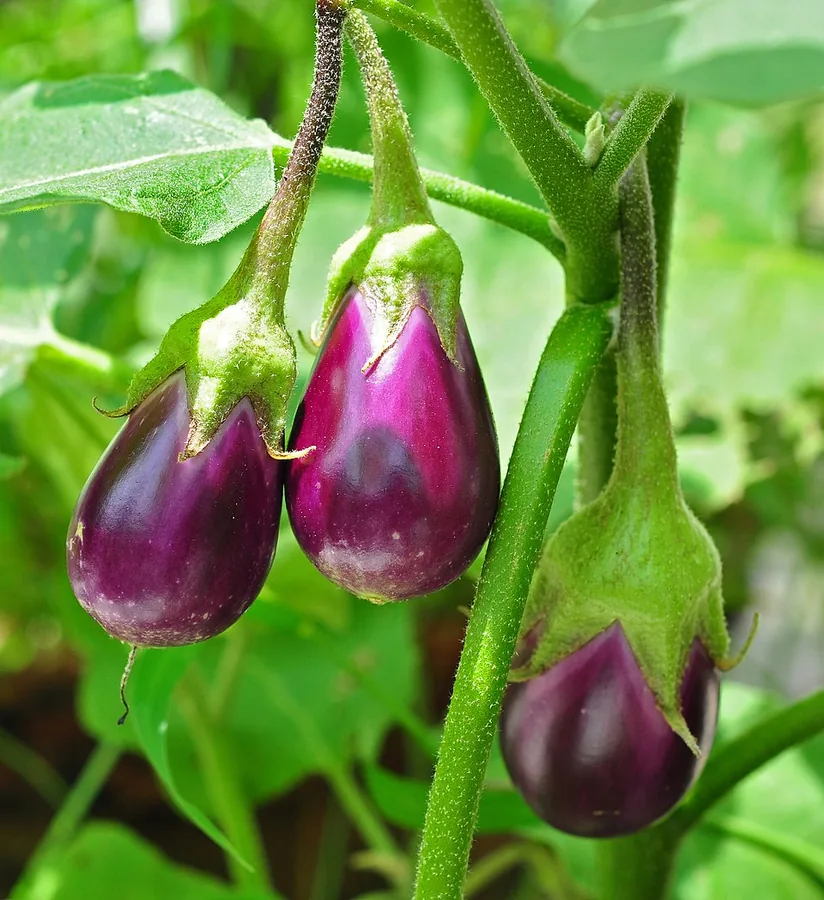
Eggplant is a warm-season nightshade cultivated for its glossy, fleshy fruit. The crop originated in South and East Asia and has been prepared worldwide for centuries, from Italian parmigiana to grilled Japanese nasu. It carries the names aubergine and brinjal, and it belongs to the same genus group as tomatoes, peppers, and potatoes.
Among warm-season vegetables, eggplant carries the longest heat requirement, which is why scheduling matters more than for most crops. The plant needs a long, warm growing window to fruit well, so growers raise it indoors and transplant only once nights stabilize. Sustained warmth keeps it flowering and setting fruit until cold ends the season.
The fruit varies far more than retail selection implies. The range runs from large purple-black ovals to slender Asian forms and white-skinned cultivars. Harvesting early, while the skin is still glossy, captures the fruit before maturity drives flavor toward bitterness.
Care
The short version: full sun and warm soil, with even moisture near an inch of water a week, planted in rich, well drained ground, fed modestly on nitrogen, and harvested while the skin is still glossy.
Light
Eggplant requires full sun, because maximum direct exposure drives the photosynthesis that supports heavy fruiting. It has no meaningful shade tolerance, and plants held in low light grow leggy and set little fruit.
Water
Provide even, consistent moisture, on the order of an inch of water a week, since fluctuating soil moisture stresses the developing fruit. That stress produces bitterness and reduces yield. Watering at the base rather than overhead keeps the foliage dry and limits disease.
Soil
Grow it in fertile, well drained loam amended with organic matter, which supplies nutrients while preventing the waterlogging the roots resist. The crop accepts a broad pH range from 5.5 to 7.5, so most cultivated garden soil is suitable.
Temperature
This is a true warm-season crop, most productive between 61°F and 90°F (16°C to 32°C). Cold sharply checks development, and nights below 50°F (10°C) interfere with pollination and fruit set, causing flowers to abscise.
Humidity
Ambient outdoor humidity is adequate, so no target figure applies. Air movement is the limiting factor, because dense, damp foliage creates the still, humid microclimate fungal pathogens exploit.
Feeding
Side-dress with a nitrogen source such as calcium nitrate three to four weeks after planting, then repeat later in the season. Keep nitrogen moderate, because an excess favors vegetative growth and delays the transition to fruiting.
Pruning
Pruning is generally unnecessary for eggplant. Remove damaged or diseased foliage to reduce inoculum, and stake or cage the taller, heavily fruiting plants so the fruit stays off the soil and away from rot.
Size & spacing
Mature plants reach 2 to 4 feet (60 to 120 cm) in height with a spread of 18 to 30 inches (45 to 75 cm). Spacing to that width promotes the airflow that suppresses disease and keeps the fruit clear of the ground.
When to plant
Eggplant development is governed by heat, and the crop has no cold tolerance. Sow seed indoors about 8 weeks before the last frost, transplant only once nights hold above 50°F (10°C), and expect harvest from midsummer, roughly 65 to 80 days after transplanting.
Northern hemisphere
Southern hemisphere
Typical months for a temperate climate: start earlier in warm zones, later where spring frosts linger.
- Sow: About 8 weeks before the last spring frost
- Plant: After all danger of frost, when nighttime temperatures stay consistently above 50°F (10°C)
- Harvest: Harvest 65 to 80 days after transplanting, when fruit is large, glossy, and uniformly colored
Hardiness
USDA hardiness zones: 4–12
Temperature: down to -34°C
Troubleshooting
Eggplant disorders concentrate on the foliage and the fruit, and the warm, humid conditions that drive its growth also favor its pests and pathogens. Early recognition is what allows intervention before a localized problem becomes systemic. Match the observed symptom below, then act while control is still effective.
Plant wilting and yellowing with brown streaks inside the stem
These are the signs of verticillium wilt, a soilborne fungus that occludes the vascular system and intensifies as fruit load increases water demand. Sectioning a stem near the base reveals the diagnostic brown streaking in the conductive tissue. No cure exists, so removal and destruction of affected plants, without composting, plus multi-year rotation away from tomato, pepper, and potato, is the only durable response.
Fix:
- Remove and destroy severely affected plants
- Do not compost infected material
Tiny round holes peppering young leaves
The pinhole pattern is feeding damage from flea beetles, small dark insects that jump when disturbed and concentrate on tender transplants. Excluding them with floating row covers before colonization, and removing host weeds nearby, breaks the cycle. Because the threat is to young tissue, a vigorous, well-nourished plant generally outgrows the early injury without further loss.
Fix:
- Use floating row covers on young plants
- Apply labeled insecticides if infestations are heavy
- Keep plants vigorous so they outgrow early damage
Flowers forming but dropping before any fruit sets
Eggplant pollination is temperature-sensitive, and blossom drop results from nights below 60°F (16°C), episodes of extreme heat, or excess nitrogen that diverts resources into foliage rather than fruit. The diagnostic cues are temperature extremes around bloom and a lush plant bearing few flowers. Delaying transplant until nights are warm and fertilizing to soil-test rates addresses the underlying causes.
Fix:
- Transplant only after nights stay warm
- Avoid over-fertilizing with nitrogen
Fruit turning bitter on the plate
Bitter fruit develops from uneven soil moisture or from leaving fruit on the plant past maturity. Harvesting while the skin remains glossy, and stabilizing moisture with mulch and regular irrigation, keeps the flavor mild. Once fruit has dulled and become seedy, the bitterness is fixed and cooking does not reverse it.
Fix:
- Maintain even soil moisture
- Harvest fruit while skin is still glossy
Toxicity
The ripe, cooked fruit is edible, but the vegetative parts are not. Leaves, stems, and unripe green tissue accumulate solanine, a glycoalkaloid that irritates the digestive tract and is mildly toxic to cats, dogs, horses, and other animals when foliage is ingested. The green tissue should be kept away from pets and young children.
Toxic to
Cats · Dogs · Horses · Rabbits · Livestock · Birds
Safe for
People
Cats Mild
A cat ingesting leaf or stem tissue may show drooling, vomiting, or loose stools, reflecting the solanine the foliage carries. The concern is the vegetative tissue, not the fruit.
Dogs Mild
Ingestion of green tissue can leave a dog drooling with transient gastrointestinal upset. Most exposures remain mild, though a large quantity warrants veterinary contact.
Horses Mild
Horses grazing the foliage can develop colic-style digestive upset accompanied by lethargy. Excluding them from the plants and any prunings prevents the exposure.
Rabbits Mild
The leaves and stems contain solanine and have no place in a rabbit's diet. A small amount of foliage can produce soft stools and reduced appetite.
Livestock Mild
Cattle, goats, and sheep can suffer digestive disturbance from grazing the green tops, so the rows and clippings should be fenced off.
Birds Mild
Pecking at the leaves or green tissue can disturb a bird's digestion. Backyard hens generally avoid the bitter foliage, but trimmings should not be offered.
People Ripe fruit safe
Ripe, cooked eggplant is a dietary staple and safe to consume. The raw leaves and stems should be avoided, as they hold the same solanine that affects animals.
Keep pets and children from chewing leaves, stems, or green/unripe fruit; the cooked ripe fruit is edible.
Helpline numbers

United States
ASPCA Animal Poison Control: (888) 426-4435 (fee applies)
Poison Control: (800) 222-1222



Canada
Poison Centres: 1-844-764-7669
Varieties
Eggplant cultivars span a wider morphological range than retail produce shows. The following types are the ones worth identifying by name.
Black Beauty / Italian types (e.g., Dusky, Epic)
These represent the classic eggplants, bearing the large, glossy purple-black oval fruit that defines the crop in most people's minds.
Ichiban (Asian type)
An Asian type characterized by long, slender fruit with thin skin and tender flesh that cooks quickly.
Casper
A specialty cultivar distinguished by smooth white skin, a marked departure from the standard purple.
Hansel
A compact cultivar that sets clusters of small, slender fruit, which suits container culture and tight beds.
Companions
Eggplant grows best beside beans and marigolds, and worst beside its nightshade cousins like potatoes, which trade the same pests and diseases back and forth.
Plant near
Beans: Listed as a beneficial companion for eggplant in extension companion-planting guidance
Marigolds: Listed as a beneficial companion; marigolds are associated with pest/nematode suppression
Keep apart
Potatoes: Listed as incompatible with eggplant; both are nightshades sharing pests and diseases
How to propagate
Eggplant is propagated from seed, and successful establishment depends on supplying sufficient warmth and an adequate indoor head start before conditions outdoors allow transplanting.
SeedModerate
Start indoors about 8 weeks before the last frost · 6 to 8 weeks to transplant size indoors
Eggplant is raised from seed sown indoors about 8 weeks before the last frost. Germination depends on warmth, so bottom heat from a mat holding the medium near 75°F to 85°F (24°C to 29°C) gives reliable emergence. The seedlings need 6 to 8 weeks to reach transplant size and should move outdoors only once nighttime temperatures are dependably warm.
Myths
Every part of an eggplant is poisonous, so the fruit is unsafe to eat.
The solanine-type glycoalkaloids concentrate in the leaves, stems, and unripe green tissue, not in the fruit that is cooked. Ripe eggplant is a safe, everyday food, consumed across the world for centuries.