Vegetable · Amaryllidaceae
Leek
Allium ampeloprasum
Plant them deep, feed them hard, and hill the soil up, and a leek hands you a long sweet shank that stands through the cold.
Full sun
Every 3–7 days
120–150 days
USDA 5–10
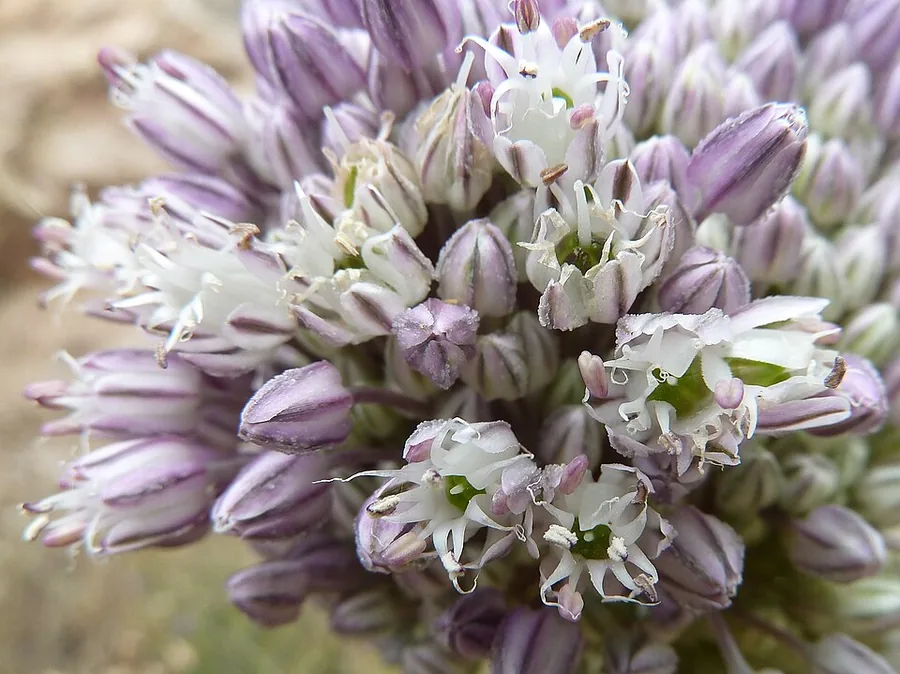
Overview
The leek belongs to the onion family but forms no bulb. The edible portion is the shank, a long cylinder of concentrically wrapped leaf bases that is blanched white by deep planting and by mounding soil against the stem as the plant grows. Its flavor is milder and sweeter than an onion, a quality it retains through cooking.
This is a crop built on a long season. Because leeks require 120 to 150 days to mature, most growers sow indoors in late winter and transplant pencil-thick seedlings around the last frost. The reward is a vegetable that holds in the ground for weeks and, under mulch with a hardy cultivar, right through winter.
Supplied with deep, rich soil, consistent moisture, and ample fertility, a leek grows slowly but builds a strong, heavy shank. Deprive it of space, feeding, or even moisture and the shanks stay thin and fibrous rather than developing into the fat white stems the crop is grown for.
Care
The short version: full sun, deep and fertile soil, and consistent moisture across the whole season. Transplant the seedlings deep, hill soil up the shank to exclude light and blanch it white, and feed on a regular schedule, because leeks are heavy feeders.
Light
Leeks require full sun to build a full-sized shank, and while they tolerate a little afternoon shade, insufficient light yields thin shanks and lax, weak growth. The energy that drives shank thickening comes directly from that light.
Water
Keep the bed evenly moist at all times, because the shallow root system cannot draw on deep reserves, and any full drying leaves the shanks thin and tough. Supply about 1 inch (2.5 cm) of water per week and mulch to buffer the moisture between irrigations.
Soil
Give leeks a deep, loose, fertile loam amended with compost or aged manure, which supplies both the depth the long roots exploit and the fertility this heavy feeder draws down. Hold the pH between 6.0 and 7.0 to keep nutrients available.
Temperature
Leeks tolerate a wide range, from 14°F to 86°F (-10°C to 30°C), and light frost actually improves the shank by sweetening it. Heat is the greater stress, since hot, dry conditions weaken the plants and favor thrips populations.
Humidity
Ambient outdoor humidity is adequate and no target value applies. The variable that matters is airflow, because still, humid air over crowded foliage is precisely the condition under which leek rust establishes.
Feeding
As heavy feeders, leeks draw on soil nitrogen throughout their long season. Side-dress with a nitrogen-rich or balanced fertilizer about once a month from spring through late summer, while the shanks are actively building tissue.
Pruning
Cut the seedling tops back to about 4 to 5 inches (10 to 13 cm) once or twice before transplanting, which shifts growth into a stockier plant. Remove any flower stalk promptly if a plant begins to bolt, since a bolted shank turns woody and inedible.
Repotting
not applicable; grown in open ground (or a deep container) for a single long season and harvested
Size & spacing
Mature plants reach 12 to 35 inches (30 to 90 cm) in height on a narrow footprint of just 4 to 6 inches (10 to 15 cm). Adequate spacing serves two ends: it admits the airflow that suppresses rust and gives each shank room to thicken.
When to plant
Leeks run on a long calendar that rewards an early start. Sow indoors in late winter, transplant the seedlings around the last frost once they reach pencil thickness, then harvest from late summer through fall and, with a hardy cultivar under mulch, deep into winter.
Northern hemisphere
Southern hemisphere
Typical months for a temperate climate: start earlier in warm zones, later where spring frosts linger.
- Sow: 8-12 weeks before the last spring frost
- Plant: around the last frost date, once seedlings are pencil-thick; set them deep in dibble holes or a trench and hill soil up as they grow to blanch the shank
- Harvest: harvest from late summer through fall and, for hardy cultivars under mulch, into winter; flowers only in the second year if overwintered
Hardiness
USDA hardiness zones: 5–10
Temperature: down to -29°C
Troubleshooting
Most leek problems present either on the foliage or as shanks that never thicken. Identifying the cause early usually lets you correct it before harvest. Match the symptom below, then act while intervention still changes the outcome.
First-year flower stalk and a woody shank
A firm, round flower stalk in the first year signals that the plant has bolted, the outcome of vernalization when an extended cold spell convinces a large transplant that a winter has passed and it is time to flower. Drought and transplant stress lower the threshold for this response. The stalk diverts resources from the shank and hardens the tissue, so lift the affected plants at once and use them before the eating quality falls further.
Fix:
- Harvest bolted plants immediately and use them; quality only declines
- Snap out very young stalks and use those plants first
Orange pustules aligned along the leaf veins
Those pustules are leek rust, caused by the fungus Puccinia allii, which sporulates readily under humid conditions and in the still air of a crowded planting. Remove the most heavily infected leaves and widen the spacing, because airflow dries the leaf surface and denies the spores the moisture they need to germinate. Ease off nitrogen as well, since the soft, lush tissue it produces is more easily colonized, and rotate alliums on a 3 to 4 year cycle to break the overwintering pathway.
Fix:
- Remove and destroy heavily infected leaves
- Thin or widen spacing to improve airflow
- Avoid overhead watering late in the day
Silvery stippling and a grayish cast to the foliage
The silvery stippling is feeding damage from onion thrips, which rasp the epidermis and populations of which surge in hot, dry weather. Drought compounds the injury by stressing the plant, so consistent watering and mulch keep the crop resilient while strong jets of water dislodge the insects sheltering in the leaf folds. Where pressure is heavy, insecticidal soap directed into the inner folds reaches the thrips that hide from a spray of water alone.
Fix:
- Knock thrips back with strong jets of water
- Keep plants well watered and mulched
- Use insecticidal soap on the inner leaf folds if pressure is heavy
Shanks failing to thicken beyond pencil width
Pencil-thin shanks point to a shortfall in one of three inputs: adequate spacing, a full season, or sustained fertility. A leek needs the whole 120 to 150 days to build a heavy shank, and as a heavy feeder it draws on the bed the entire time, so thin the stand, clear competing weeds, side-dress with nitrogen, and water deeply and evenly. There is no urgency to lift them, because leeks store well in cool soil and undersized plants continue to add girth as the season lengthens.
Fix:
- Thin to proper spacing and weed thoroughly
- Side-dress with nitrogen and water deeply and evenly
- Leave undersized plants in the ground longer; leeks hold well in cool soil
Toxicity
Leeks are a valued food for people yet genuinely hazardous to animals. Like every allium, they contain organosulfur compounds that oxidize red blood cells and produce hemolytic anemia in pets and livestock, and cooking does nothing to reduce this. Keep growing plants, kitchen trimmings, and compost scraps well clear of cats, dogs, horses, and grazing animals, noting that cats are the most sensitive and that clinical signs may be delayed by several days.
Toxic to
Cats · Dogs · Horses · Rabbits · Livestock · Birds
Safe for
People
Cats Severe
Cats carry the greatest risk of any species here, and even a small nibble can be enough to do harm. The early picture is vomiting, drooling, weakness, and pale gums, progressing to rapid breathing and red or brown urine as the organosulfur compounds oxidize the red blood cells into Heinz-body hemolytic anemia.
Dogs Moderate
A dog that ingests any part of a leek typically presents with vomiting, diarrhea, abdominal pain, and mounting weakness. A larger or repeated dose drives the same hemolytic anemia, evident as pale gums, an elevated heart rate, and dark urine.
Horses Moderate
A horse that grazes a meaningful quantity of leek becomes dull and weak, with pale or yellow-tinged gums and dark urine as the red blood cells are destroyed.
Rabbits Toxic
Leeks and every other allium are unsuitable for rabbits without exception. The same organosulfur compounds oxidize their red blood cells, so exclude all parts from anywhere near the hutch.
Livestock Toxic
Cattle, sheep, and goats are all susceptible, and toxicity can accumulate through repeated grazing of alliums over time. The clinical signs are weakness, pale gums, and dark urine as anemia develops.
Birds Toxic
Birds, including backyard hens, should never receive leek scraps. The toxin damages avian red blood cells by the same oxidative mechanism seen in mammals.
People Safe
Leeks are a culinary staple and entirely safe for people to grow, handle, and eat. The only practical concern is disposal: keep trimmings and compost scraps out of reach of pets.
Safe for people to grow and handle; keep growing plants, kitchen trimmings, and compost scraps out of reach of pets. Onset of anemia signs in pets can be delayed by several days after ingestion.
Helpline numbers

United States
ASPCA Animal Poison Control: (888) 426-4435 (fee applies)

United Kingdom
Animal PoisonLine: 01202 509000 (fee applies)

Australia
Animal Poisons Helpline: 1300 869 738
Varieties
The leeks divide broadly into early cultivars for fall harvest and hardy late cultivars selected to stand through winter. The following are the ones worth knowing by name.
King Richard
An early cultivar with long, slender shanks well suited to a fall harvest, though its winter hardiness ranks among the lowest of the leeks.
American Flag (Broad London)
A classic open-pollinated heirloom valued for thick shanks and the cold tolerance that carries it standing through to spring.
Bandit
A very hardy late cultivar with dark blue-green foliage selected to overwinter in the ground for fresh cold-season harvest.
Lancelot
A uniform, upright mid-season hybrid producing long white shanks that clean up with little effort.
Companions
Leeks pair well with crops that swap pest protection and share their need for rich, moist soil, and badly with the legumes that alliums tend to hold back.
Plant near
carrot: Classic pairing: leeks are reputed to deter carrot rust fly while carrots help deter leek moth, and the crops share bed conditions without competing strongly
celery: Similar needs for rich soil and steady moisture make celery a compatible bed partner that uses the space between slow-growing leeks
Keep apart
beans: Alliums are traditionally reported to inhibit the growth of beans and other legumes when interplanted
peas: Like beans, peas are reported to grow poorly alongside Alliums and should be kept in a separate bed
How to propagate
Leeks are raised solely from seed, and success turns on starting early enough and planting deep enough to blanch a long white shank.
SeedModerate
Sow indoors 8-12 weeks before the last spring frost; transplant outdoors around the last frost date · Germinates in about 1-2 weeks at 18-24°C (65-75°F); reaches transplant size in 8-12 weeks
Leeks are propagated exclusively from seed, and the long establishment period is what dictates an early start. Sow indoors 8 to 12 weeks ahead of the last frost; germination follows in roughly one to two weeks at 65°F to 75°F (18°C to 24°C), after which the slow-growing seedlings work their way toward transplant size. Set pencil-thick seedlings 6 inches (15 cm) deep into dibble holes or a trench, water them in without firming the soil around them, and continue hilling soil up the stem through the season, since it is this exclusion of light that blanches a long, sweet white shank.
Myths
Leeks form a bulb like onions and are ready when the tops fall over.
A leek develops no true bulb at all. The edible white shank is a cylinder of tightly concentric leaf bases, blanched by deep planting and by hilling soil against the stem to exclude light. Gauge harvest by the diameter of the shank, not by any collapse of the tops.
Cooked leeks are safe to share with cats and dogs.
Heat, drying, and grinding to powder leave the organosulfur compounds in an allium fully intact. A cooked leek is exactly as dangerous as a raw one, and in cats the dose required to trigger Heinz-body hemolytic anemia is remarkably small.