Bulb · Amaryllidaceae
Crinum Lily
Crinum × powellii
A large storage bulb and a settled clump are why the crinum lily lifts fragrant pink trumpets each late summer for decades.
Full sun
Every 7–14 days
USDA 6–11
2–5 ft · 0.6–1.5 m
Overview
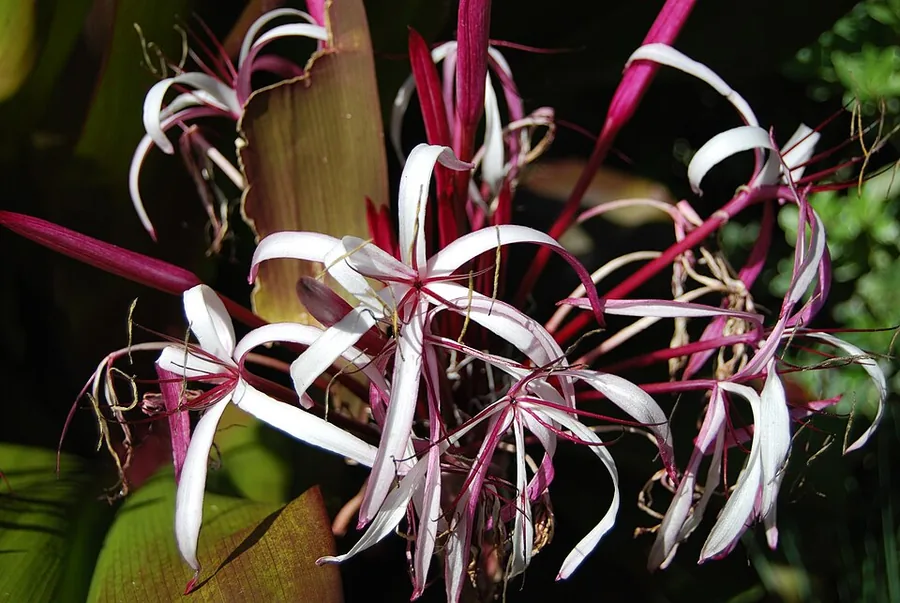
Crinum lily ranks among the most resilient bulbs in cultivation. A member of the Amaryllidaceae, it draws on a massive storage bulb to push out strappy foliage and, later, umbels of fragrant, trumpet-shaped flowers from late summer into early autumn. The reserves packed into that bulb explain its longevity, since old plantings routinely outlast the gardeners who set them and earned it the name cemetery plant.
Its tolerance comes down to that same reserve and a forgiving root system. Once established it withstands heat, drought, and soils from clay to sand, provided the site drains, because the bulb buffers it against short shortfalls of water. It endures a broad thermal range of about 25°F to 100°F (-4°C to 38°C) and persists as a hardy perennial across zones 6 through 11.
The one real limit is root disturbance. Crinum invests years in a single large bulb and an extensive root system, so lifting it interrupts the reserves that drive flowering, which is why an undisturbed plant blooms best. Site it correctly and leave it in place to let those reserves accumulate.
Care
The short version: site it in full sun to partial shade in rich, well-drained soil, hold even moisture during bloom, restrict water in winter to protect the bulb, and then leave it undisturbed for years.
Light
Flowering responds directly to light, so full sun yields the heaviest bloom, while partial sun or light shade is tolerated with some loss of flower count. Where summer radiation is intense, afternoon shade reduces heat stress without much cost to flowering.
Water
Hold the soil moist through bud development and bloom, since water stress at that stage aborts buds, then taper off once the clump is established and its bulb buffers drought. In winter, water sparingly, because cold, saturated soil deprives the bulb of oxygen and invites rot.
Soil
The species prefers moist, rich, fertile loam, yet tolerates clay, sand, or heavy ground wherever drainage is adequate, since the limiting factor is standing water rather than texture. It performs across a wide pH band from 5.5 to 8.0.
Temperature
The storage bulb underpins a wide thermal tolerance, from roughly 25°F to 100°F (-4°C to 38°C). That buffering capacity is what lets the plant persist in place for years across zones 6 through 11.
Humidity
Atmospheric humidity is not a limiting factor, which is why the record sets no target percentage. Air movement matters more, because stagnant, humid air around dense foliage favors the fungal blotch that occasionally develops.
Feeding
A balanced general-purpose fertilizer applied through the spring and summer growing season meets its nutrient demand. Feed seasonally, in step with active growth, and let the bulb allocate the reserves.
Pruning
Remove spent scapes and old or damaged foliage, but allow the leaves to senesce naturally, since they translocate carbohydrates back to the bulb before they die. Stake the tall scapes, which are top-heavy in bloom and prone to toppling in strong wind.
Repotting
Because crinum resents disturbance, leave it undisturbed for many years to let the bulb and roots mature undamaged. Move it only when overcrowding has cut flowering, or when bulbs heave above the soil surface from clump pressure.
Size & spacing
A mature clump reaches 2 to 5 feet (60 to 150 cm) in height and 2 to 4 feet (60 to 120 cm) in spread, so allocate space accordingly. Site it where that eventual mass will not crowd neighbors, since later relocation sets the plant back.
When to plant
Crinum follows a warm-season cycle keyed to soil and air temperature. Plant the bulbs from April through late October, allow the clump to build reserves through spring and summer, and expect anthesis from late summer into early autumn once those reserves peak.
Northern hemisphere
Southern hemisphere
Typical months for a temperate climate: start earlier in warm zones, later where spring frosts linger.
- Plant: April through late October
- Harvest: late summer to early autumn (August to September)
Hardiness
USDA hardiness zones: 6–11
Temperature: down to -23°C
Troubleshooting
Given its vigor, crinum rarely faces serious problems, and most disorders register on the foliage or, in the worst case, the bulb. Reading the early symptoms lets you intervene before a localized issue spreads through the clump. Identify the sign below, then apply the corresponding measure while it still does some good.
Soft basal rot of the bulb with collapse
A soft, foul-smelling base reflects bulb and root rot, driven by waterlogged soil, typically over a wet winter or on poorly drained sites. Necrotic tissue cannot recover, so lift the bulb, excise or discard the rotted portion, and correct the drainage at the root of the problem. Restricting winter irrigation keeps the bulb aerated and prevents recurrence.
Fix:
- Improve drainage and stop overwatering
- Remove the bulb from soggy potting mix when planting potted specimens
- Discard severely rotted bulbs
Stippling and bronzing with fine webbing on leaves
This stippling and bronzing with fine webbing indicates twospotted spider mites, whose populations build fastest under hot, dry conditions on a stressed plant. Dislodge them with a forceful water spray, then apply insecticidal soap or horticultural oil per label. Maintaining adequate moisture through dry spells suppresses the stress and aridity that let mite numbers climb.
Fix:
- Rinse foliage with a strong spray of water to dislodge mites
- Treat with insecticidal soap or horticultural oil per label
- Improve airflow and avoid drought stress
Red to maroon lesions on leaves and scapes
The red to maroon spots and elongated lesions are red blotch, a fungal disease favored by prolonged leaf wetness and still air. Excise and destroy the most affected leaves, switch to base watering to keep foliage dry, and increase spacing to improve airflow. The damage is largely cosmetic, but inoculum carries over, so sanitation limits its spread.
Fix:
- Remove and destroy badly affected leaves
- Avoid overhead watering and improve spacing for airflow
- Apply an appropriate fungicide if severe
Chewing damage and missing tissue on foliage
Ragged, chewed foliage points to eastern lubber grasshoppers and caterpillars, with slugs and snails contributing nocturnal feeding. Handpick the larger insects and deploy molluscicide bait where slugs predominate. Removing garden debris eliminates the moist refugia these pests rely on between feeding bouts.
Fix:
- Handpick grasshoppers, caterpillars, slugs, and snails
- Use slug or snail bait where appropriate
- Remove garden debris that shelters pests
Toxicity
All tissues of the crinum lily are toxic, with the bulb carrying the highest concentration. The active compounds are lycorine and related alkaloids, which provoke salivation, vomiting, and gastrointestinal upset, progressing to tremors at higher doses. Keep the plant, and dug-up bulbs in particular, away from pets, livestock, and children.
Toxic to
Cats · Dogs · Horses · Rabbits · Livestock · Birds · People
Cats Moderate
A cat that bites the foliage or chews a bulb develops hypersalivation, vomiting, and diarrhea, accompanied by abdominal pain. Because the bulb concentrates the most lycorine, an exposed or dug-up bulb poses the greatest risk.
Dogs Moderate
Dogs most often excavate and chew the bulb, which produces salivation, vomiting, and diarrhea. A large ingested dose can advance to tremors, so planted bulbs should stay inaccessible.
Horses Moderate
A horse grazing crinum becomes dull and anorexic, with salivation, loose manure, and abdominal pain. A large dose can induce tremors, which warrants excluding stock from the planting.
Rabbits Toxic
The same alkaloids that affect cats and dogs render crinum unsafe for rabbits, so salivation and gastrointestinal upset follow ingestion. Access to foliage or bulbs should be prevented entirely.
Livestock Toxic
Cattle, goats, and sheep can ingest enough foliar lycorine to cause salivation, scouring, and weakness. Grazing animals should be fenced away from the plants.
Birds Caution
The bulb alkaloids are best regarded as hazardous to birds, so poultry and pet birds should be kept from the leaves and bulbs. Monitor for depression and gastrointestinal upset after any ingestion.
People Caution
No part of crinum is edible, and ingestion produces nausea, salivation, and vomiting, with tremors following a large quantity. The sap can also irritate skin, so wash thoroughly after handling cut stems or bulbs.
Plant sap may irritate skin; wash hands after handling bulbs or cut stems. Keep bulbs out of reach of pets and children.
Helpline numbers

United States
ASPCA Animal Poison Control: (888) 426-4435 (fee applies)
Poison Control: (800) 222-1222



Canada
Poison Centres: 1-844-764-7669
Varieties
Crinum encompasses everything from wetland natives to long-standing garden selections. The following are the names a grower is most likely to encounter.
Crinum × powellii
This hybrid produces umbels of 8 to 10 fragrant, trumpet-shaped pink flowers on scapes of 3 to 5 feet, anthesis running from late summer into early autumn.
Crinum americanum
The native Southern swamp lily is adapted to wet soil and even standing water, bearing white pink-blushed flowers with long purple stamens and favoring acidic substrates.
Milk and Wine Lily
This historic garden crinum takes its name from the bicolored flowers striped in white and deep wine-red.
Ellen Bosanquet
A long-cultivated selection valued for its deep rose-red flowers and pronounced fragrance.
How to propagate
Crinum reproduces vegetatively through offset bulbs, the most reliable method by far, because the plant tolerates little root disturbance and is exceptionally slow from seed.
Offsets & pupsEasy
Spring through fall during active growth · 1 to 2 years to bloom
The standard method is to detach the offset bulblets the parent produces during the spring-to-fall growing period, once their tops reach about 12 inches. Since crinum forms massive, long-lived bulbs intolerant of disturbance, divide only when necessary, and allow each detached bulb the year or two it needs to bloom.
DivisionModerate
Spring through fall · 1 to 2 years to re-establish and bloom
To increase a large established clump, lift it in the growing season and separate the bulbs. Anticipate a season of reduced performance, since crinum resents root disturbance, with a year or two required for the divisions to re-establish and bloom.
SeedDemanding
When fresh seed is available · More than 5 years to reach blooming stage
Seed propagation is slow and demanding, requiring more than 5 years from sowing to the first flowers. Most growers forgo it in favor of offset bulbs, which reach flowering far sooner.
Myths
Crinum lilies cause fatal kidney failure in cats like true lilies do.
Crinum is taxonomically not a true lily. It belongs to the Amaryllidaceae, so its lycorine-type alkaloids produce gastrointestinal upset rather than the acute nephrotoxicity that Lilium and Hemerocallis species cause in cats. The hazard is genuine but gastrointestinal, not the renal crisis of a true lily.
Crinum bulbs need frequent digging, dividing, and repotting to bloom well.
Practice contradicts this. Crinum forms large, long-lived bulbs and responds poorly to root disturbance, often flowering most freely after several undisturbed seasons allow reserves to accumulate. Leaving the clump in place increases flowering rather than reducing it.