Bulb · Amaryllidaceae
Amaryllis
Hippeastrum hybridum
Pot the bulb, supply warmth and water, and a dormant bulb sends up a tall stalk of trumpet flowers within weeks.
Bright indirect
Every 5–10 days
64–75°F · 18–24°C
28–56 days
Overview
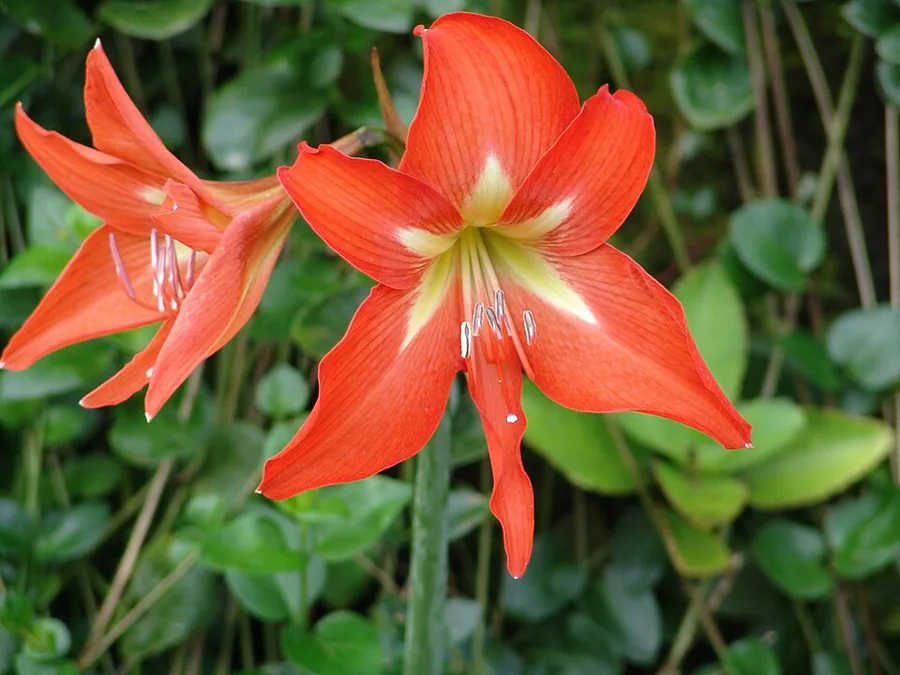
Few bulbs deliver a display on the scale of an amaryllis. A single swollen bulb throws up one thick scape crowned with several oversized trumpet flowers, frequently in deep red, clean white, or a pink-and-white combination. The plant sits in the genus Hippeastrum, the tender amaryllis kin grown under glass, and it demands remarkably little to flower.
Gardeners usually treat it as a forced indoor bulb, potting in autumn for color across winter into spring. Seat the bulb so its upper third clears the soil, water it in, hold it warm, and the first flowers unfurl roughly 4 to 8 weeks afterward, holding for three or four weeks. Across the mild winters of zones 7 to 10 it will also carry on outdoors.
Securing a second year of flowers depends entirely on post-bloom handling. Drive the leaves in bright light and feed them so the bulb banks energy, then hold it cool and dark to rest before restarting the cycle. Neglect that step and the next season returns all leaves and no flowers.
Care
The short version: bright light, warm rooms, and a free-draining pot. Seat the bulb with its top third clear of the surface, water once the top 2 inches of soil dry, and feed through active growth so the bulb can refuel for next year's flowers.
Light
Amaryllis demands bright light, best supplied by a sunny window offering several hours of direct sun. It accepts anything from full sun to partial shade, but stint the light and the scapes come up weak and bending. Turn the pot every few days to keep the flower stem rising straight.
Water
Water thoroughly at potting, then hold the mix barely moist until growth accelerates. Apply water once the top 2 inches of soil read dry and allow the pot to drain unimpeded. Lift the rate to once or twice weekly through active growth and flowering, then taper off or stop entirely while the bulb rests.
Soil
Plant into a well-drained potting mix rich in organic matter, on the order of equal parts peat and perlite. It favors a pH of 6.0 to 7.0. Drainage is the decisive factor, because a bulb left standing in saturated soil rots quickly.
Temperature
Hold it in ordinary warm rooms, 64°F to 75°F (18°C to 24°C), through growth and flowering. Cooler air extends the life of the open blooms. The cool, dark interval required for dormancy is a distinct phase rather than its working range.
Humidity
Standard indoor humidity meets its needs, so there is no target to chase. Amaryllis stays indifferent to atmospheric moisture, which is part of what makes it such a manageable winter houseplant.
Feeding
Feed every two weeks while the plant is in active growth with leaves present, and never while the bulb stands bare and dormant. A liquid houseplant fertilizer weighted toward phosphorus, near a 10-20-15 ratio, underwrites flowering, applied at half strength.
Pruning
Pinch each flower as it spends, then take the entire scape down close to the bulb once the final bloom finishes. Leave the foliage in place, since it is what reloads the bulb for the year ahead. Cut the leaves away only once they yellow and die back of their own accord.
Repotting
Because amaryllis flowers best held slightly potbound, repot only every 3 to 4 years. Make the move when roots crowd or circle the pot, the bulb occupies most of the container, or blooms begin to shrink. Reset it with the top third of the bulb above the soil line.
Size & spacing
In flower a potted amaryllis reaches 12 to 35 inches (30 to 90 cm) in height with a spread near 9 to 12 inches (23 to 30 cm). Plant one bulb per pot, in a container scarcely wider than the bulb itself.
When to plant
Amaryllis follows the rhythm of a forced bulb. Pot it in autumn, typically October or November, and it raises its scape for winter and early-spring color. Across zones 7 to 10 it can shift outdoors once the risk of spring frost is gone.
Northern hemisphere
Southern hemisphere
Typical months for a temperate climate: start earlier in warm zones, later where spring frosts linger.
- Sow: Pot bulbs indoors in fall to early winter (often October through November) for winter and early-spring bloom.
- Plant: Move or plant outdoors in spring after all danger of frost has passed (zones 7-10).
- Harvest: Winter to spring; flowers typically develop about 4 to 8 weeks after potting and last roughly 3 to 4 weeks.
Hardiness
USDA hardiness zones: 7–10
Temperature: down to -18°C
Troubleshooting
Trouble with amaryllis tends to declare itself in the scape, the leaves, or the bulb. Read the early signals and the bulb is usually salvageable for another year. Find your symptom below, then intervene before it advances.
Mushy bulb and failing growth
A bulb gone soft with a foul odor has bulb rot, driven by a medium held too wet, which is most damaging around a leafless bulb that is taking up almost nothing. Cut off water immediately, let the mix dry, and replant into fresh, free-draining medium with the upper third of the bulb proud of the surface. Pare back any rotted tissue, and discard the bulb outright once decay has reached the basal core.
Fix:
- Stop watering and let the medium dry out
- Repot into fresh, well-drained mix with one-third to one-half of the bulb above the soil line
- Trim away rotted tissue or discard a badly rotted bulb
Healthy foliage yet no bloom
When a bulb pushes leaves but withholds flowers, you are looking at failure to rebloom, and the mechanism is reserves: the bulb either skipped a true rest or never banked enough starch to form a flower bud. Run the leaves hard in bright light and feed after the last bloom so the bulb refills, then deliver about 8 to 12 weeks of cool, dark dormancy before forcing it again. An undersized or young bulb has no fault here; it simply needs another season of leaf to bulk up.
Fix:
- Keep foliage actively growing in bright light and fertilize during the growing season to rebuild the bulb
- Provide a cool (about 50 to 60 degrees F), dark rest period of 8 to 12 weeks
- Resume watering and warmth to force new growth and bloom
Reddish streaking across leaf and stalk
Reddish lesions and streaks marching up the foliage and stalk are the signature of red blotch, the fungal disorder also known as leaf scorch, which travels in on infected bulbs. Cut away and destroy the most damaged leaves, then examine the bulb for the tunneling and soft patches left by bulb mites or narcissus fly larvae. Replant only firm, clean bulbs into fresh medium and discard anything infested or decaying.
Fix:
- Remove and destroy severely affected leaves or bulbs
- Inspect and discard infested or rotting bulbs
- Repot healthy bulbs into fresh, clean potting mix
Stalks stretching and bending toward the glass
A stalk that stretches thin and tips toward the window is showing etiolation, the elongation response of a plant starved of light. Set it in a bright, sunny window and rotate the pot every few days, which evens out the light so the stem builds straight. Heat compounds the fault by driving soft, rapid extension, and a stake will carry the heaviest stems until their tissue firms.
Fix:
- Move the plant to a bright, sunny window
- Rotate the pot regularly so stalks grow upright
- Stake tall flower stalks for support if needed
Toxicity
Treat this as a poisonous plant, with the bulb its most dangerous tissue. Every part contains lycorine and allied alkaloids that irritate the gut when eaten. Keep bulbs and plants beyond the reach of pets, livestock, and children, and wash your hands after handling them.
Toxic to
Cats · Dogs · Horses · Rabbits · Livestock · Birds · People
Cats Mild
A cat that samples a leaf or bulb most often salivates and vomits, then refuses food and grows listless. A heavier dose can add diarrhea, abdominal pain, and tremors.
Dogs Mild
Dogs that unearth and chew the bulb commonly hypersalivate, vomit, and go off their food. Swallowing a larger amount can bring abdominal pain, loose stools, and trembling.
Horses Mild
Those same alkaloids irritate the equine gut, producing depression, diarrhea, drooling, and colic-type discomfort, occasionally with light tremors.
Rabbits Toxic
Lycorine runs through every tissue of this plant, and a body as small as a rabbit's tolerates very little of it. Site the bulb, foliage, and flowers well beyond reach instead of trusting it to leave them alone.
Livestock Toxic
The alkaloids in foliage and bulbs can poison cattle, goats, and sheep, bringing on digestive upset and weakness. Spent bulbs discarded near grazing ground pose a genuine danger.
Birds Toxic
The lycorine that harms mammals is equally hazardous to pet birds, so even a pecked leaf or petal carries real risk. Keep the plant clear of any room where a bird has free flight.
People Caution
No part of this plant is edible, and the bulb above all can trigger vomiting and abdominal pain if ingested. Wash your hands after handling bulbs and store them away from young children.
The bulb is the most poisonous part of the plant; keep bulbs and plants out of reach of pets and children and wash hands after handling.
Helpline numbers

United States
ASPCA Animal Poison Control: (888) 426-4435 (fee applies)
Poison Control: (800) 222-1222



Canada
Poison Centres: 1-844-764-7669
Varieties
Named amaryllis number in the hundreds, yet a handful of cultivars dominate retail shelves season after season. These are the ones worth recognizing.
Red Lion
A widely planted large-flowered selection prized for its uniform, deep red blooms.
Apple Blossom
White petals are washed and veined with a gentle pink.
Minerva
Strong red petals frame a white star that streaks outward from a green-tinged throat.
How to propagate
There are two routes to more amaryllis, a quick one and a patient one: detaching the offsets a bulb produces, or growing fresh plants from seed.
Offsets & pupsEasy
At repotting, typically when the bulb is dormant or being divided every few years. · 1 to 3 years to reach flowering size
Amaryllis multiplies most readily through the small offset bulbs that develop around the base of the mother bulb, separated at repotting every few years. Set each offset into its own container and treat it exactly as you would the parent. Expect to wait, because an offset needs 1 to 3 years to reach blooming size.
SeedDemanding
Sow fresh seed soon after it ripens. · Several years (often 3 to 5) to reach flowering size
Seed propagation is possible when the seed is sown fresh, soon after it ripens, but it is a slow route that demands several years, often 3 to 5, to build a bulb capable of flowering. Because these are hybrids, the offspring will not breed true, so seedlings seldom resemble the parent. The wait makes it impractical for most home growers.
Myths
An amaryllis bulb has to be refrigerated before it will flower.
Hippeastrum carries no cold requirement whatsoever. Supplied with warmth and water, the bulb forces into bloom indoors within about 4 to 6 weeks. What it does need is a cool, dark dormancy to lay down the following year's flowers, a resting stage entirely separate from any chilling.
The leaves should come off as soon as the amaryllis stops flowering.
Foliage is the engine that recharges the bulb, so let it keep working in bright light and continue feeding once the flowers drop. Remove the leaves only after they yellow and collapse of their own accord, as the plant slides into dormancy.