Bulb · Amaryllidaceae
Surprise Lily
Lycoris squamigera
Set the bulb once and let its odd cycle deliver bare pink scapes rising overnight in late summer.
Full sun
Every 7–14 days
USDA 5–9
18–24 in · 46–61 cm
Overview
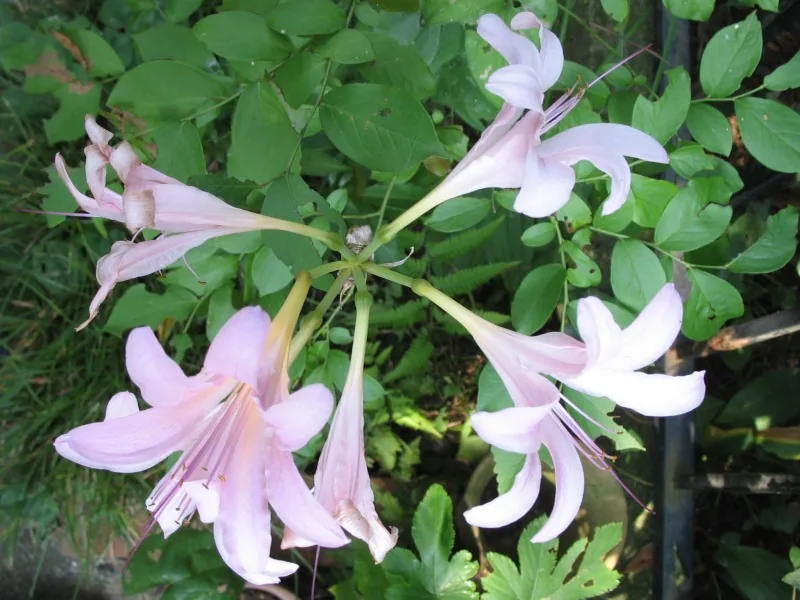
Every common name for this bulb traces to one habit. Strap-shaped leaves emerge in spring, persist for a while like any bulb, then die back completely by early summer. A leafless gap of several weeks follows, after which naked flower scapes push straight from the soil in August and open rose-pink almost overnight. That reappearance explains the labels resurrection lily, magic lily, and naked ladies.
A member of the amaryllis family, it performs as a durable perennial bulb across zones 5 to 9. Once established it withstands summer heat, winter cold to -20°F (-29°C), and most pests and diseases with little intervention. Every tissue is poisonous, the bulb most concentrated, which argues for siting it in beds and borders rather than ground worked by pets or children.
This is a bulb best managed by restraint. Plant at the correct depth in autumn, allow the spring foliage to senesce untouched, and the clumps build reserves and flower for decades. The energy captured by those leaves before dormancy is what funds each year's bloom.
Care
The short version: site it in full sun to part shade in rich, well-drained soil. Supply water through spring leaf growth and again as the scapes emerge, hold it dry through summer dormancy, and divide congested clumps periodically to sustain flowering.
Light
It flowers most reliably in full sun, though partial shade is tolerated. Strong light drives photosynthesis in the spring foliage, and that stored carbohydrate is precisely what powers the late-summer bloom.
Water
Provide steady moisture through spring while the foliage is active, then again as the scapes rise in late summer. After the leaves die back in early summer the bulb enters dormancy, so keep it dry through that rest, matching its natural cycle. Under active growth the effective interval runs about every 7 to 14 days.
Soil
Plant it in organically rich, well-drained soil; loam, silt, or sand all serve provided drainage is free. It is indifferent to pH across the 6.0 to 8.0 range, so soil reaction rarely limits it as long as water moves through freely.
Temperature
Cold hardiness sets this bulb apart. It endures winter lows to -20°F (-29°C) and summer highs to 100°F (38°C), the tolerance that underpins its reliability across zones 5 to 9.
Humidity
Atmospheric humidity is not a limiting factor; ambient outdoor air suffices. Soil drainage governs its health far more than any moisture in the air.
Feeding
Fertilize in spring as the foliage develops, using a balanced bulb fertilizer while the leaves remain green. This is the interval when the bulb accumulates the reserves that will fund flowering months later.
Pruning
Remove spent flower scapes after bloom, but retain the spring foliage until it yellows and collapses of its own accord. Cutting green leaves prematurely interrupts carbohydrate storage and forfeits the following season's flowers.
Repotting
The species resents disturbance and performs best left in place. Lift and divide only every 4 to 5 years, or earlier when crowding depresses flowering.
Size & spacing
Mature plants stand 18 to 24 inches (46 to 61 cm) in both height and spread. Space bulbs 6 to 8 inches apart to accommodate clump expansion over successive years.
When to plant
The plant follows a displaced schedule worth understanding. Bulbs go in during early fall, foliage completes its spring cycle and dies away, and flowering arrives in late summer only after the leaves are entirely gone.
Northern hemisphere
Southern hemisphere
Typical months for a temperate climate: start earlier in warm zones, later where spring frosts linger.
- Plant: Plant bulbs in early fall, 5 to 6 inches deep and 6 to 8 inches apart.
- Harvest: August to September
Hardiness
USDA hardiness zones: 5–9
Temperature: down to -29°C
Troubleshooting
Documented problems are minimal, so most concern reduces to two situations: scapes that fail to appear, and foliage that yellows on schedule. The former warrants correction, the latter is normal for the species. Identify which pattern you see below before intervening.
Vigorous spring foliage without subsequent flower scapes
When foliage is healthy yet scapes never form, the limiting factor is nearly always excessive planting depth or congestion within the clump. Lift a representative clump once the leaves die back to assess depth and spacing, then divide and reset the offsets 5 to 6 inches deep and 6 to 8 inches apart. Recently relocated bulbs may also withhold bloom for a season or two while they re-establish.
Fix:
- Divide and replant offsets at 5 to 6 inches deep and 6 to 8 inches apart
- Allow recently moved bulbs a season or two to settle before expecting bloom
Spring leaves senescing and dying back in early summer
This sequence reflects normal dormancy, not decline. Strap foliage develops in spring, yellows and dies back by early summer, and leafless scapes follow weeks afterward. Allow the declining leaves to wither entirely, since that senescence is the mechanism by which the bulb charges its reserves for the next bloom.
Fix:
- Leave the dying foliage in place until it withers completely so the bulb can store energy
Toxicity
Regard the entire plant as toxic to animals and people. Its leaves, scapes, and above all the bulb concentrate lycorine and related alkaloids, which provoke salivation, vomiting, and diarrhea on ingestion. No portion is edible, so position it beyond the reach of pets and children and wash your hands after handling bulbs.
Toxic to
Cats · Dogs · Horses · Rabbits · Livestock · Birds · People
Cats Toxic
Ingestion of any part causes a cat to hypersalivate and then vomit, frequently with diarrhea and abdominal discomfort. Because the bulb holds the highest lycorine load, an excavated bulb represents the principal hazard.
Dogs Toxic
Dogs that unearth and chew a bulb sustain the most severe exposure. Anticipate drooling, repeated vomiting, loose stools, and lethargy with loss of appetite.
Horses Toxic
The same alkaloids affect horses substantially. A grazing animal that consumes foliage or a bulb may salivate, colic, and scour, so establish plantings well clear of pasture.
Rabbits Toxic
Rabbits should be denied access to the leaves and scapes entirely. Even a minor quantity induces salivation and painful gastrointestinal upset, and the bulb is considerably more toxic.
Livestock Toxic
Cattle, goats, and sheep are all susceptible to the plant's lycorine. Expect salivation, vomiting where the species is capable, and diarrhea, with bulbs exposed by tillage presenting the greatest risk.
Birds Toxic
The whole plant should be considered unsafe for birds. Bulb and foliage carry the identical toxic alkaloids that affect other animals, so pecking at any part poses a genuine hazard.
People Caution
No part is edible, and the bulb is the most toxic portion. Ingestion by a person can produce salivation, vomiting, and diarrhea, so keep the plant well beyond the reach of children.
Store bulbs out of reach of pets and children and wash hands after handling.
Helpline numbers

United States
ASPCA Animal Poison Control: (888) 426-4435 (fee applies)
Poison Control: (800) 222-1222



Canada
Poison Centres: 1-844-764-7669
Varieties
The cultivated form is the true species, and a single floral trait distinguishes it from a red-flowered relative.
Lycoris squamigera (species)
In cultivation this is the straight species, recognizable by rose-pink flowers tinted with lilac borne on leafless scapes in late summer, a contrast to the scarlet blooms of the red spider lily, Lycoris radiata.
How to propagate
Seed is seldom the horticulturist's route here. Because the bulbs offset readily, lifting and dividing a mature clump is both the fastest and the most reliable means of increase.
Offsets & pupsEasy
After foliage dies back in early summer or after flowering in late summer · 1 to 2 years to bloom after transplanting
The bulbs generate daughter bulbs freely, making offset division the standard method of increase; lift a clump and separate the offsets by hand. Carry this out after foliage dies back in early summer or once flowering concludes in late summer, and divide congested clumps every 4 to 5 years. Reset offsets require 1 to 2 years to establish and reach flowering.
DivisionEasy
When bulbs are dormant after foliage dies in early summer · 1 to 2 years to bloom
Excavate and divide crowded clumps while the bulbs are dormant, following foliage dieback in early summer. Replant the offsets 5 to 6 inches deep and expect a year or two of establishment before flowering resumes.
SeedDemanding
Rarely used · Several years
Seed propagation is rarely justified in practice and requires several years to yield a flowering bulb. Division of offset bulbs remains the standard approach and reaches bloom far sooner.
Myths
Surprise lily performs reliably as a forced potted houseplant indoors.
In practice it is a cold-hardy field bulb suited to zones 5 to 9, not a windowsill subject. Its root system extends deep and wide, so container culture seldom succeeds unless the vessel is exceptionally large and deep. Establish it in open ground and let the seasonal cycle govern it.