Vegetable · Amaryllidaceae
Garlic
Allium sativum
Set a clove in fall and hold off until summer, when vernalization turns that single clove into a full head.
Full sun
Every 3–7 days
240–270 days
USDA 3–8
Overview
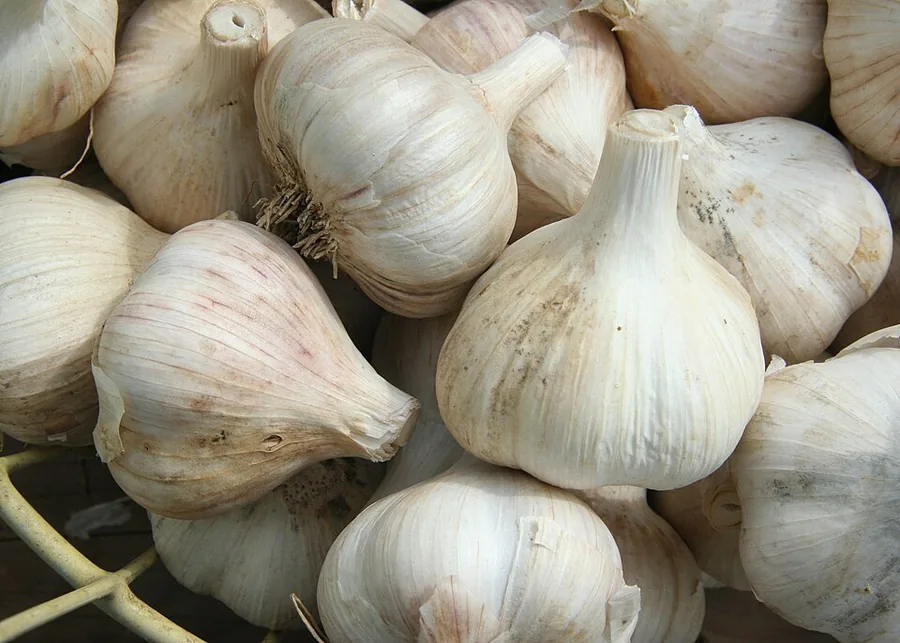
Garlic delivers a high return on modest inputs. A single clove planted in autumn roots through the cold months, produces vegetative leaves in spring, and differentiates into a full head by midsummer, a cycle of roughly eight or nine months. The species sits within the onion family, and that relationship reads across its flat leaf blades and its characteristic pungency in the kitchen.
The crop divides into two horticultural groups with distinct habits. Hardneck cultivars produce a rigid central stalk and a coiling flower stem, the scape, store for a few months, and tolerate hard winters well. Softneck cultivars omit the stalk, carry more cloves per bulb, keep in storage far longer, and lend themselves to braiding, which suits them to milder regions.
Garlic cannot be accelerated, and the reason is physiological. A clove differentiates into a proper head only after sufficient cold exposure, so the seasonal calendar, not the grower's effort, governs the timeline. Once the planting date is correct, the remaining work reduces to mulch, an early nitrogen feed, and patience.
Care
The short version: set the largest cloves into loose, fertile, well-drained soil in full sun in fall, hold the bed evenly moist through spring growth, apply nitrogen early, then withhold water as the bulbs mature so they cure properly for harvest.
Light
Garlic requires full sun, ideally 6 or more hours daily, because the leaf area built under strong light drives the photosynthesis that fills the bulb. It persists in partial sun, but reduced light yields smaller heads and weaker plants.
Water
Hold the soil evenly moist through spring growth, about an inch of water per week, without letting it become waterlogged and starve the roots of oxygen. Then reduce and stop watering in the last 2 weeks before harvest, since drier soil at maturity cures the bulbs and improves their storage life.
Soil
Plant into loose, fertile, well-drained loam amended with organic matter, at a pH of 6.0 and 7.0 where nutrient availability suits the crop. Where the ground is heavy clay, a raised bed improves drainage and keeps the maturing bulbs from rotting in saturated soil.
Temperature
Garlic is hardy across a broad range, roughly 14°F to 86°F (-10°C to 30°C), and it depends on winter cold to trigger the differentiation of a clove into a full head. That requirement for chilling is precisely why the cloves go into the ground in fall.
Humidity
Ambient outdoor humidity is adequate, so there is no target level to manage. Air circulation is the more important variable, because still, damp air around crowded foliage favors rust and other fungal disease.
Feeding
Incorporate compost or a balanced fertilizer at fall planting, then apply a nitrogen side-dressing in early spring as the leaves extend, since that leaf growth fuels bulb formation. Stop feeding once bulbing begins, around scape emergence, to avoid diverting the plant into foliage at the expense of the bulb.
Pruning
Garlic needs almost no pruning. On hardneck types, remove the scapes soon after they emerge and curl, which redirects assimilate from the developing flower stalk into the bulb, and the scapes themselves are edible.
Size & spacing
Plants reach 12 to 24 inches (30 to 60 cm) tall with narrow, upright foliage. Set the cloves 6 to 12 inches (15 to 30 cm) apart so each bulb has room to size up and air moves freely between plants.
When to plant
Garlic is governed by the calendar. Plant the cloves in fall, 4 to 6 weeks before the ground freezes, so roots establish before winter, then let the required cold exposure proceed and lift the bulbs in mid to late summer once the lower foliage has browned.
Northern hemisphere
Southern hemisphere
Typical months for a temperate climate: start earlier in warm zones, later where spring frosts linger.
- Plant: Fall, about 4-6 weeks before the ground freezes (typically late September through November depending on region), so cloves root before winter
- Harvest: Hardneck scapes appear in early summer and are removed; harvest bulbs in mid-to-late summer when the lower one-third to one-half of the leaves have yellowed and browned
Hardiness
USDA hardiness zones: 3–8
Temperature: down to -40°C
Troubleshooting
Garlic problems present either in the visible foliage or in the bulb, which you only assess at harvest. Foliar symptoms caught early often preserve the crop, whereas bulb rots demand prompt removal to protect the surrounding soil. Match the description below, identify the underlying cause, and act before it spreads along the row.
Yellowing shoots with white mycelium and black sclerotia at the base
Yellowing foliage over a bulb base carrying white mycelium and small black sclerotia identifies white rot, a soilborne fungus whose sclerotia persist in the ground for decades and germinate in response to allium root exudates. No in-season control exists for the home garden, so the only sound response is to lift the affected plants with the surrounding soil and discard the material rather than compost it. The differential is fusarium basal rot, which advances more slowly, stains the basal plate pinkish-white, and produces none of the poppy-seed sclerotia that confirm white rot.
Fix:
- Remove and destroy infected plants and surrounding soil; do not compost
- There is no effective in-season chemical rescue for home gardens
Orange rusty bumps on the leaves
Raised orange pustules that shed powdery spores under a fingertip are garlic rust, caused by Puccinia allii and favored by the cool, humid, still air of crowded plantings. Because the fungus degrades photosynthetic leaf area, heavy infection shrinks the final bulb, so strip the worst foliage and widen spacing to let air dry the leaves and slow spore spread. Late-season infection warrants an early harvest, since the bulbs below remain sound and edible.
Fix:
- Remove heavily infected foliage
- Harvest promptly if infection occurs late in the season; bulbs are still edible
Undersized bulbs that fail to differentiate into cloves
A bulb that stays small or fails to separate into cloves generally reflects inadequate vernalization, the cold exposure that triggers clove differentiation, whether from planting too late in fall or from a spring planting that never rooted or chilled enough. Weed competition compounds the deficit, because garlic's sparse upright foliage casts little shade and loses ground to weeds, and a skipped spring nitrogen feed limits the leaf area that fuels bulbing. The undersized bulbs remain fully edible, so use them in the kitchen and plant the largest cloves 4 to 6 weeks before the ground freezes next season.
Fix:
- Use undersized bulbs in the kitchen; they are edible
- Adjust planting date and fertility the following season
Silvery stippling and gray discoloration on foliage in hot, dry spells
Silvery streaking and a gray cast that intensify in hot, dry weather are the feeding scars of onion thrips, which rasp the leaf surface and empty the cells beneath, and whose populations build fastest under those same warm, dry conditions. Confirm by parting the leaf folds to find slender yellow-brown insects or by tapping foliage over white paper. A forceful water spray dislodges most of them, insecticidal soap addresses heavier pressure if it reaches the leaf axils, and consistent irrigation through dry spells checks the population buildup.
Fix:
- Knock populations down with a strong spray of water
- Use insecticidal soap if damage is heavy, ensuring coverage in leaf axils
Toxicity
Garlic is a dietary staple for people yet genuinely hazardous to animals, and the distinction rests on physiology. The organosulfur compounds that produce its flavor cause oxidative damage to the red blood cells of cats, dogs, horses, livestock, rabbits, and birds and can induce hemolytic anemia in every form, raw, cooked, or powdered. Cats are the most sensitive, and garlic is more potent than onion by weight, so exclude all of it from the reach of pets and stock.
Toxic to
Cats · Dogs · Horses · Rabbits · Livestock · Birds
Safe for
People
Cats Severe
Clinical signs in cats include vomiting, diarrhea, drooling, lethargy, weakness, pale gums, an elevated heart rate, a raised respiratory rate, red or brown discolored urine, and collapse as hemolytic anemia develops. Feline red cells are particularly vulnerable to oxidative damage, so even small amounts warrant veterinary attention.
Dogs Moderate
Dogs present with vomiting, diarrhea, abdominal pain, lethargy, weakness, pale gums, elevated heart and respiratory rates, and red or brown urine. Large or repeated doses can progress to severe hemolytic anemia, so treat any significant ingestion as urgent.
Horses Moderate
A horse that ingests a significant quantity may show weakness, lethargy, pale mucous membranes, and discolored urine, all consistent with hemolytic anemia. Exclude garlic and its trimmings from feed and paddock access.
Rabbits Toxic
Garlic has no place in a rabbit's diet. The same organosulfur compounds that damage the red cells of cats and dogs act on a rabbit's blood as well, and no intake is safe, so keep every form of it away from them.
Livestock Toxic
Cattle, sheep, goats, and horses that graze garlic or its trimmings can develop hemolytic anemia, manifesting as weakness, dullness, pale gums, and dark, discolored urine. Fence stock out of the bed and withhold all allium scraps.
Birds Toxic
Garlic is unsafe for birds, including backyard poultry and pet parrots. Even small amounts can break down avian red cells over time, so keep bulbs, cloves, and seasoned scraps out of their reach.
People Safe
Garlic is a culinary staple and safe for people to eat, raw or cooked. The oxidative mechanism that threatens animal red cells does not translate into the same hazard for humans, so use and enjoy it freely.
Store bulbs, peeled cloves, garlic powder, and garlic-seasoned foods where pets cannot reach them; fence or cover garden beds, and never feed pets table scraps containing garlic or onion. Signs of anemia can be delayed several days after ingestion.
Helpline numbers

United States
ASPCA Animal Poison Control: (888) 426-4435 (fee applies)

United Kingdom
Animal PoisonLine: 01202 509000 (fee applies)

Australia
Animal Poisons Helpline: 1300 869 738
Varieties
Hundreds of garlic cultivars exist, but they resolve into a small number of familiar hardneck and softneck types. The selections below are the ones a grower encounters most often.
Music
A hardneck porcelain type bearing 4 to 6 large, easy-to-peel cloves per bulb and notable cold hardiness, which makes it a dependable selection for northern gardens.
German Extra Hardy
A hardneck porcelain type selected for endurance through cold winters together with a strong, full-bodied flavor.
Inchelium Red
A softneck artichoke type of mild flavor and high clove count that performs best in milder climates and braids readily.
Silver Rose
A softneck silverskin type with rose-tinted cloves and exceptional storage life, traditionally chosen for braiding.
Companions
Garlic earns its keep as a neighbor, since its sulfur compounds help drive off aphids and other soft-bodied pests, but it sets back the legumes, so keep it clear of beans and peas.
Plant near
roses: Garlic's sulfur compounds are reported by extension sources to help deter aphids and other soft-bodied pests around roses
brassicas (cabbage family): Interplanted garlic can help repel some cabbage-family insect pests
carrots: Garlic may help deter carrot pests such as rust fly, and the crops do not compete strongly
Keep apart
beans: Alliums are reported to inhibit the growth of beans and other legumes
peas: Alliums are reported to inhibit the growth of peas and other legumes
How to propagate
Garlic propagates vegetatively from its own cloves, which makes it about as straightforward as planting gets, though it returns the crop only on its slow, season-bound schedule.
Bulbs & cormsEasy
Fall, 4-6 weeks before the ground freezes · Roots establish in 4-8 weeks before the ground freezes; bulbs are ready to harvest about 8-9 months after planting
Garlic reproduces vegetatively from cloves rather than seed, so separate a bulb into its cloves immediately before planting and leave the papery wrapper intact on each. Set the largest cloves pointed end up, about 2 inches deep and 4 to 6 inches apart, 4 to 6 weeks before the ground freezes, then mulch once the soil cools so roots establish over the following month or two ahead of winter. The limiting factor is time rather than skill, since the bulbs are not ready to lift until 8 to 9 months later in mid to late summer. The topset bulbils produced on hardneck scapes are also viable planting stock, but they require 2 to 3 seasons to reach full bulb size.
Myths
Garlic serves as a safe botanical control for fleas and ticks on dogs and cats.
This claim is not merely ineffective but genuinely hazardous. Garlic is toxic to cats and dogs in every form, because its thiosulfates cause oxidative damage to red blood cells and can precipitate Heinz-body hemolytic anemia, with cats the most susceptible. No dose is safe or proven to work against parasites, so use a veterinarian-approved product instead.
Culinary garlic from the supermarket is suitable for use as seed stock.
Supermarket garlic is frequently treated with sprout inhibitors, may harbor disease, and is often a cultivar poorly matched to your climate. Plant certified disease-free seed garlic from a reputable supplier to begin with clean, adapted stock.