Vegetable · Apiaceae
Celery
Apium graveolens var. dulce
Cool air, organic-rich ground, and moisture that never lapses are what turn this demanding crop into crisp stalks.
Full sun
Every 2–4 days
55–64°F · 13–18°C
85–120 days
Overview
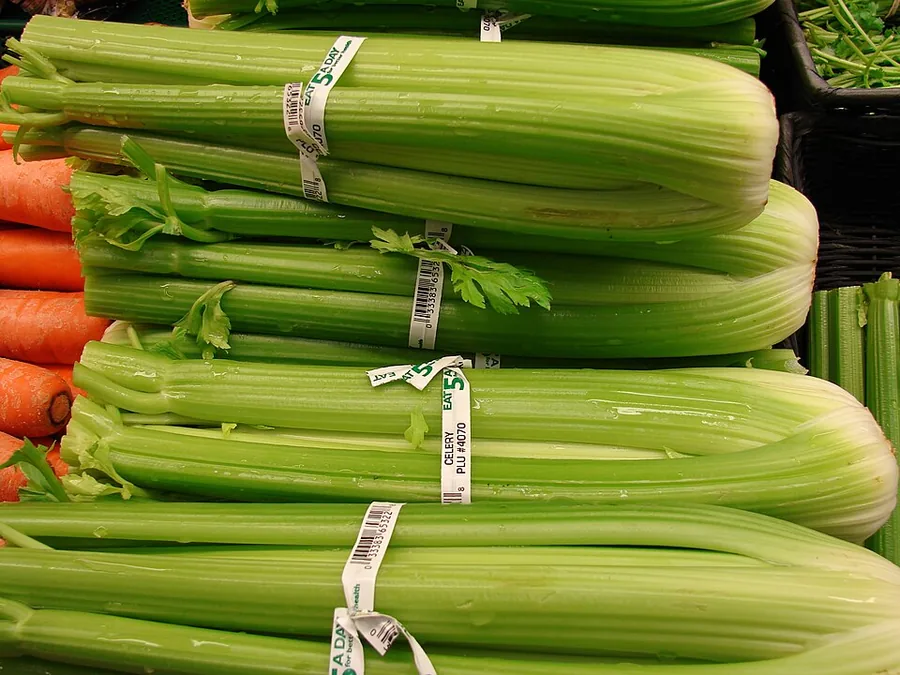
Few vegetables are as unforgiving as celery, and the reasons are physiological rather than mysterious. As a member of the carrot and parsley family, it pairs a shallow root system with a high demand for water, so any check in moisture registers quickly in the plant. Supply cool conditions, ground heavy with organic matter, and uninterrupted moisture, and the stalks finish crisp.
Most of celery's quirks stem from its being a biennial that gardeners harvest as an annual. Expose a young plant to a long cool stretch and it reads that chill as a completed first year, then diverts its energy into a seedstalk rather than edible petioles. That biology is precisely why the timing of transplanting carries so much weight.
None of this puts celery out of reach, but it does make it demanding. Treat it as a slow, water-hungry crop that expects fertile ground and a patient hand, and it returns the favor across a long stretch from late summer into fall.
Care
The short version: full sun with perhaps a little afternoon shade, ground deeply enriched with organic matter, and moisture that never falls short, all held within the cool 55°F to 64°F (13°C to 18°C) band celery prefers.
Light
Full sun produces the strongest growth, though celery tolerates partial shade, and a little afternoon shade is genuinely useful where summers turn warm. Where light is too dim, the stalks come in thin and weak, so reserve an open position for it whenever the garden allows.
Water
No other detail matters more. Because celery is shallow-rooted and thirsty, it draws at least 1 to 2 inches of water each week and demands soil that never dries. Allow even a brief lapse and the stalks respond by turning stringy, pithy, and bitter as the tissue toughens.
Soil
Choose a rich, moisture-retentive loam high in organic matter and dig it deeply, since shallow roots rely on the soil itself to hold water close. A pH between 5.8 and 6.8 is the target, and compost worked in ahead of planting keeps that reserve of moisture and nutrients available through the season.
Temperature
As a cool-weather crop, celery is most content between 55°F and 64°F (13°C to 18°C). Warmth drives bitterness and general stress in the plant, and a prolonged early cold spell can vernalize it, sending it to seed rather than to stalk.
Humidity
Average outdoor humidity poses no problem, so there is no figure to chase. What deserves attention is air movement, because foliage that sits crowded and damp is precisely where fungal leaf blight establishes itself.
Feeding
Celery is a hungry feeder even when set into ground already enriched with organic matter. Apply a balanced, nitrogen-rich fertilizer roughly every two weeks across the growing season, and keep calcium within reach of the roots so the developing hearts do not blacken.
Pruning
Little cutting is called for. Take off diseased or yellowing outer leaves along with any side suckers, but leave the central growing point untouched. For milder flavor, blanch the outer stalks for 2 to 3 weeks before harvest by mounding soil over them or wrapping them, a step self-blanching varieties scarcely require.
Repotting
Celery is shifted a single time, from the seed tray into the garden bed, and then it remains in place. Since it is not usually a container crop, there is no potting on to manage as the season runs.
Size & spacing
Mature plants stand 18 to 35 inches (45 to 90 cm) tall over a relatively narrow base. Space them 12 to 18 inches (30 to 45 cm) apart, tight enough that neighbors help blanch one another yet loose enough to let air pass between them.
When to plant
This is a cool-season crop that takes a long while to mature. Begin the seed indoors during late winter, hold the transplants back until the hardest chill has passed so vernalization does not trigger bolting, and harvest from late summer into fall ahead of any hard freeze.
Northern hemisphere
Southern hemisphere
Typical months for a temperate climate: start earlier in warm zones, later where spring frosts linger.
- Sow: 10 to 12 weeks before the last spring frost
- Plant: From about 2 weeks before to around the last spring frost, once soil has warmed and night temperatures stay above 50°F (10°C)
- Harvest: Late summer into fall; harvest stalks before a hard freeze
Hardiness
USDA hardiness zones: 3–10
Temperature: down to -40°C
Troubleshooting
The stalks are where celery announces its troubles, and water or temperature lies behind nearly every one. Read the early symptoms correctly and you can usually correct course before the plant is lost. Find the description that matches what you see, then respond promptly.
A tall seed stalk rises and the plant turns bitter
What you are seeing is bolting, brought on when young plants endure a long cool spell that vernalizes this biennial and pushes it into flowering a season early. Once the seedstalk elongates the plant ceases forming usable stalks, so harvest whatever remains tender before it toughens and remove the bolted plant. Prevention rests on timing: harden off transplants and set them out only once the risk of sustained chill has truly passed.
Fix:
- Harvest usable stalks promptly before they toughen
- Remove bolted plants
Dead, blackened tissue at the very core of the plant
The cause here is blackheart, a localized calcium shortage in the fast-growing inner stalks rather than any pathogen you could spray away. Uneven watering and heat trigger it, because under those conditions the plant cannot translocate calcium to the heart quickly enough to keep pace with growth. Hold the soil at steady moisture, side-dress with calcium, then harvest the sound outer stalks and discard the rotted hearts.
Fix:
- Keep soil evenly and consistently moist
- Side-dress or foliar-feed with calcium
- Harvest unaffected outer stalks; discard rotted hearts
Spots that spread into browning blight over the leaves
This points to fungal leaf blight, which gains a foothold where foliage stays wet and the soil drains poorly. The small spots enlarge and coalesce across leaves and petioles, advancing fastest in humid, saturated conditions. Strip away the affected foliage, open the planting for stronger air circulation, and keep overhead water off the leaves.
Fix:
- Remove affected foliage
- Improve air circulation and avoid overhead wetting of leaves
Cracked stalks that string out or run hollow inside
Stringy, pithy stalks point most often to irregular watering, as celery reacts badly to any swing between wet and dry. A boron deficiency, or leaving plants in the ground well past maturity, can produce the same fibrous result. Bring moisture back to an even level, maintain fertile soil, and cut the crop on schedule rather than letting stalks coarsen in place.
Fix:
- Restore and maintain consistent soil moisture
- Harvest at proper maturity rather than letting plants stand
Toxicity
Both as food and as a garden plant near pets and children, celery is safe. The single caution falls on whoever tends it: the leafy tops contain a natural compound, furanocoumarin, that can redden sensitive skin after handling in strong sunlight. A quick rinse of the hands resolves the matter.
Safe for
People · Cats · Dogs · Horses · Rabbits · Livestock · Birds
Cats None
Both safe to be near and safe to nibble. Should a cat gorge on any plant it may suffer a brief upset stomach, but the celery itself does no harm.
Dogs None
A favorite crunchy treat that causes no harm. A few dogs pass a little more urine afterward, and a large serving can loosen the stomach, yet neither warrants concern.
Horses Safe
Horses take the stalks and leaves without difficulty. Cut the pieces to a manageable size so an eager feeder does not choke.
Rabbits Safe
In moderation, rabbits relish celery and its leafy tops. Chop the stalks finely so the long fibrous strings cannot catch.
Livestock Safe
Goats, sheep, and cattle may graze on celery and its trimmings without any ill effect.
Birds Safe
Chickens and other birds readily peck at chopped stalks and leaves, which make a welcome bit of greenery for them.
People Safe
As a kitchen staple eaten raw or cooked, celery carries nothing to avoid at the table. The catch lies in handling: the foliage and sap hold furanocoumarins that can leave sensitive skin red and itchy after you work with the tops in bright sun, so rinse your hands once finished.
Like other Apiaceae (parsnip, celeriac), celery foliage and sap contain furanocoumarins (psoralens) that can cause mild phytophotodermatitis in sensitive people who handle the tops in bright sunlight; this reaction is milder than with parsnip. Wash skin after handling the foliage and avoid prolonged sun exposure on contacted skin.
Varieties
A short list of celery types reaches home gardens, and what chiefly separates them is the amount of blanching each requires. These three are worth knowing.
Tall Utah (Utah 52-70 / Pascal type)
The standard dark-green pascal type, carrying tall, crisp, compact stalks; this is the classic celery extension offices most often point home gardeners toward.
Golden Self-Blanching
A compact, early variety that pales its own stalks to a soft yellow, which lets you forgo the trenching and wrapping other types require.
Tango
A hybrid valued for tender, nearly stringless stalks that copes with heat and uneven moisture more gracefully than older varieties do.
How to propagate
There is one route into a celery crop, and that is seed. Its slow, exacting start is what gives the plant its demanding name.
SeedDemanding
Start indoors 10 to 12 weeks before the last spring frost · About 10 to 12 weeks to transplant size, then roughly 85 to 120 days from transplant to harvest
Celery comes only from seed, and it tries your patience from day one. Sow indoors 10 to 12 weeks before your last frost, then surface-sow or barely cover the tiny seeds, since light is needed for them to germinate, and hold them warm at around 70°F (21°C) and never dry. Because germination runs slow and uneven, soaking the seed beforehand helps. Allow another 85 to 120 days from transplant before the stalks are ready to cut.
Myths
Celery must be trenched and blanched or the stalks are inedible.
All that blanching accomplishes is to soften bitterness and pale the green color. Green and self-blanching varieties eat perfectly well without it, which makes trenching a matter of preference rather than necessity.
A cut celery base set in water will regrow a full new bunch of stalks.
The base will indeed sprout, but it yields only modest leafy regrowth suited to flavoring a dish. A genuine crop of stalks comes from seed-started plants, never from a stump perched on the windowsill.