Herb · Apiaceae
Anise
Pimpinella anisum
Sow once, leave the taproot undisturbed, and a long warm season carries anise through to fragrant ripe seed.
Full sun
Every 3–7 days
50–86°F · 10–30°C
100–120 days
Overview
Anise supplies the warm, licorice-sweet flavor familiar in bread and liqueurs, and botanically it is a soft annual in the carrot family beside dill and fennel. Its native range runs from the eastern Mediterranean into the Levant, a climate of long warm seasons that shaped its requirements. The crop of interest is the seed, the aniseed of commerce, though the lacy young foliage is edible and useful in the kitchen.
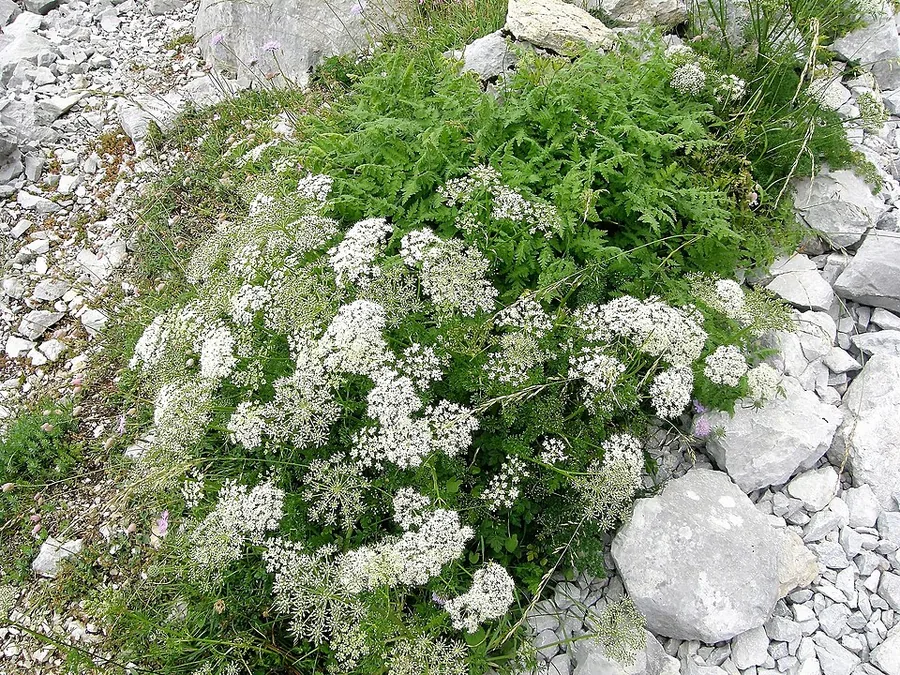
Mature plants stay compact at 18 to 24 inches (45 to 60 cm), carrying feathery basal leaves and flat white umbels that open in mid-summer. As the flowers senesce the seed develops and dries to a gray-brown, the visual cue for harvest. The whole plant is aromatic, releasing the scent of anise when brushed.
The defining cultural fact is its intolerance of root disturbance. Anise produces a taproot that resents being moved, so it is direct-sown in its permanent position and left undisturbed. Provided with sun, warmth, and a sufficiently long season, it grows reliably and asks little intervention.
Care
The short version: full sun, light well-drained soil, and consistent moisture during establishment. Sow seed directly after frost, fertilize once at a light rate, and allow a long warm season for the seed to ripen fully.
Light
Anise requires full sun, and yield rises with the amount received. Strong light drives seed ripening and keeps the soft stems compact, whereas shade produces weak plants and a diminished crop.
Water
Maintain evenly moist soil through germination and any dry spell, since establishment depends on consistent moisture. An established plant tolerates brief drought, but saturated soil causes root rot, so a free-draining medium is essential.
Soil
Grow anise in light, well-drained loam amended with compost. A pH of 6.0 and 7.0, near neutral, suits it, and an open structure lets the taproot descend straight without obstruction.
Temperature
Anise performs across 50°F to 86°F (10°C to 30°C) with a warm-end preference. A sustained mild period is needed to ripen seed, which is why cold, short summers leave the crop green and unfinished.
Humidity
Average outdoor humidity near 40% to 60% is adequate and requires no management. Air movement is the greater concern, because stagnant, damp foliage encourages aphids and fungal rot.
Feeding
Anise is a light feeder, so a single pre-sowing incorporation of compost or balanced fertilizer suffices. Surplus nitrogen produces soft, elongated stems prone to lodging once the umbels fill with seed.
Pruning
Intervention is minimal. A single pinch of young plants encourages branching, but transplanting must be avoided because the taproot resents disturbance. The umbels are left intact so the seed can complete ripening.
Repotting
Anise is not a container subject. It is direct-sown as an annual in the ground, so no repotting applies and no roots circle a pot. Sow it in its final position and let it complete the season there.
Size & spacing
Plants attain 18 to 24 inches (45 to 60 cm) in height with a narrow spread of 8 to 12 inches (20 to 30 cm). Allow each that spacing, or sow in a tight block so adjacent stems provide mutual support.
When to plant
Because anise depends on accumulated heat and a long season to ripen, it is sown only after the last frost when the soil has warmed. Sow in place in late spring, expect white umbels in mid-summer, and harvest the seed once it dries to gray-brown in late summer or fall.
Northern hemisphere
Southern hemisphere
Typical months for a temperate climate: start earlier in warm zones, later where spring frosts linger.
- Sow: Generally avoided; the taproot resents transplanting, so direct sowing is preferred
- Plant: After the last frost once soil is warm (about 60°F); needs roughly 120 frost-free days to ripen seed
- Harvest: White flower umbels appear in mid-summer; harvest seed when ripe and gray-brown in late summer to fall
Hardiness
USDA hardiness zones: 4–11
Temperature: down to -34°C
Troubleshooting
Anise is largely trouble-free, yet a few predictable issues arise. They surface on the foliage or the seed heads and almost always trace to a season too short or soil too rich for a light feeder. Identify the symptom below and intervene before it advances.
Seed undried at the close of the season
Anise will not finish its seed without sustained heat, so a short or cool season halts ripening and leaves the umbels green and soft. Sowing as early as frost allows lengthens the warm window the crop has to work with, and the warmest, sunniest site supplies the accumulated heat it draws on. A row cover raises the local temperature and partly compensates for a cool summer.
Fix:
- Plant as early as safely possible after last frost
- Grow in the warmest, sunniest available site
- Use row covers to extend warmth
Sap-feeding insects and honeydew on the umbel foliage
The clustered, soft-bodied insects are aphids, and the sticky film is honeydew, the sugar-rich waste they excrete as they feed on sap. They settle on leaf undersides, so inspect there first, then dislodge the colonies with a strong jet of water. Persistent populations respond to insecticidal soap, and easing off nitrogen removes the soft new growth they favor.
Fix:
- Dislodge with a strong jet of water
- Apply insecticidal soap if needed
Stems collapsing under maturing umbels
This is lodging, the failure of a stem to hold a load it can no longer carry, and it sets in once the umbels gain weight and wind levers them over. Excess nitrogen and crowding compound it by producing soft, elongated growth with little structural strength. Light staking transfers the load, and sowing in a tight block lets neighboring stems brace one another.
Fix:
- Provide light staking or grow in blocks for mutual support
Toxicity
The verdict is favorable: anise is a culinary herb and is safe around pets, livestock, and people. It is absent from the ASPCA's toxic list, and the seed is used to lure and reward dogs in training. Only the concentrated essential oil warrants caution, so store it out of reach. Note also that this is true anise, distinct from the unrelated star anise.
Safe for
People · Cats · Dogs · Horses · Rabbits · Livestock · Birds
Cats Safe
The ASPCA does not classify anise among plants toxic to cats, so the foliage carries no documented hazard. A small taste of the feathery leaves is harmless, though a large volume of any unfamiliar green can provoke a mild, self-limiting stomach upset.
Dogs Safe
Anise is recognized as safe for dogs, and the seed is applied as a scent lure in training precisely because dogs respond to it. The plant itself presents no toxicological risk when chewed.
Horses Safe
Horses may graze near anise without consequence. It contains none of the compounds that render certain garden plants hazardous to grazing livestock.
Rabbits Safe
Rabbits tolerate the lacy foliage with no adverse effect. As with any supplement to the diet, the portion should stay modest and accompany the established ration of hay and greens.
Livestock Safe
Cattle, goats, and sheep can occupy ground near anise safely, and the herb has a documented history as fodder and as a flavoring for milk.
Birds Safe
Neither the seed nor the foliage is harmful to birds, and many will forage on the ripe umbels in the garden.
People Safe
Anise functions as a culinary herb in every sense. The leaves and seed are eaten and flavor products ranging from bread to liqueurs, and only the concentrated essential oil warrants measured handling.
Foliage and seed are non-toxic, but concentrated anise essential oil should still be kept away from pets.
Varieties
The selection is narrow. Anise is cultivated almost exclusively as the unimproved species, so the practical concern is verifying plant identity rather than choosing among cultivars.
Common anise (species type)
Cultivation rests almost entirely on the unimproved species, because named cultivars are few, and the species must not be conflated with the unrelated star anise.
How to propagate
Anise is propagated solely from seed, sown directly into its growing position. Success turns on matching the sowing to the warm soil the crop requires and avoiding any transplanting of the seedlings.
SeedModerate
Direct sow after the last frost once soil has warmed · Germinates in about 1 to 2 weeks; reaches seed maturity in roughly 100 to 120 days
Propagation is by seed alone, sown directly into the final position because the taproot does not recover from transplanting. Once frost has passed and the soil has warmed, sow in place and expect emergence within 1 to 2 weeks. An overnight soak hydrates the seed coat and shortens germination. The crop then requires 100 to 120 days to ripen its seed, which is why an early sowing is consequential in a temperate season.
Myths
Anise and star anise are the same spice.
Their resemblance is purely sensory and traces to a shared aromatic compound, anethole. True anise is Pimpinella anisum in the carrot family, a soft annual herb, whereas star anise is Illicium verum, a woody tree placed in an unrelated family. The two are not interchangeable plants.
Anise transplants as easily as most herbs.
Anise develops a deep taproot intolerant of disturbance, so a transplanted seedling commonly stalls or fails outright. Sow the seed in its permanent position rather than raising it in cells for later transfer.