Herb · Apiaceae
Cumin
Cuminum cyminum
Provide full sun and a long, hot summer, and cumin will mature its own aromatic seed.
Full sun
Every 3–7 days
50–95°F · 10–35°C
100–120 days
Overview
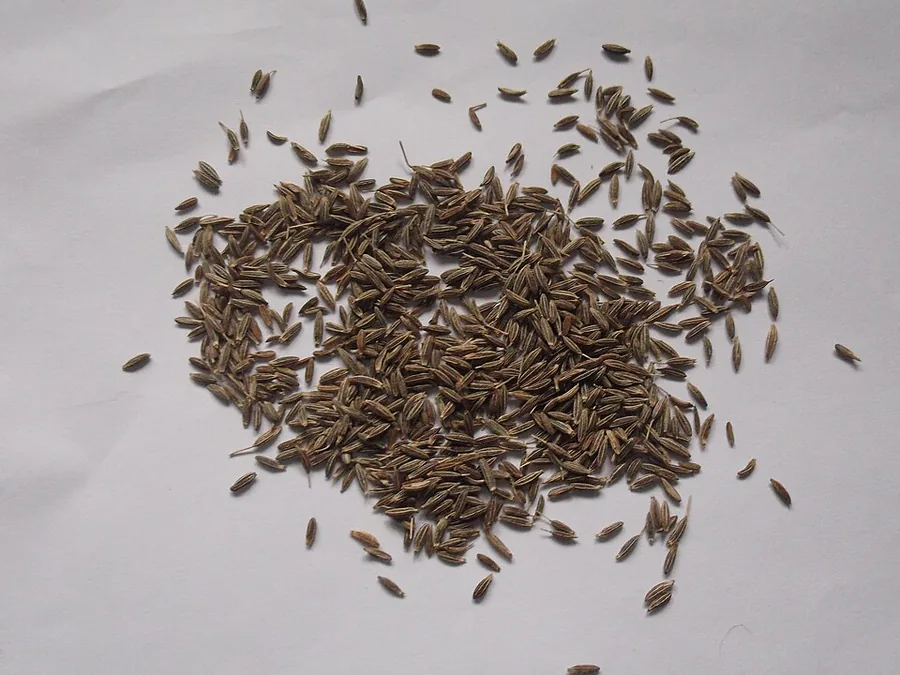
Cumin is the warm-climate spice that flavors so much of the world's cuisine, and the same aromatic compounds that scent the dried seed are already present in the growing plant. It is a member of the Apiaceae, the carrot and parsley family, recognizable by its finely dissected thread-like leaves and its compound umbels of small white to pink flowers in summer. The harvested product is the seed, which matures later in the season as those umbels dry and turn brown.
This is not a forgiving herb for the beginner. Cumin requires a sustained run of 100 to 120 days of heat to carry its seed to full maturity, which restricts reliable production to warm regions and frustrates growers working with a short summer. Where heat is adequate, the plant performs as a compact annual of modest stature, completing its entire life cycle within a single season.
The reward for that exacting demand is realized at harvest. A well-matured stand yields a quantity of home-grown seed for toasting and grinding. With correct timing and sufficient heat the crop is manageable, but an inadequate or rushed season leaves the umbels green and the seed unripened.
Care
The short version: full sun, warm well-drained soil, and even moisture through establishment, then a deliberate reduction in watering as the umbels ripen, with a long, hot season supplying the heat the crop accumulates.
Light
Cumin requires full sun with no useful shade tolerance. The greater the direct insolation and resulting warmth, the higher the probability that the seed reaches maturity before the season closes.
Water
Maintain evenly moist soil through germination and early establishment, the stage at which the seedlings are most vulnerable to setback. As the umbels form and ripen, reduce irrigation so the seed heads dry down and the risk of disease falls.
Soil
Site cumin in well-drained sandy loam, since the species will not tolerate waterlogged conditions. It accommodates a broad pH band of 6.8 to 8.3, leaving it suited to neutral through moderately alkaline soils.
Temperature
Cumin is adapted to heat, broadly 50°F to 95°F (10°C to 35°C), with no cold tolerance. Frost terminates the plant, and a cool summer arrests seed development short of ripeness.
Humidity
The species favors a dry atmosphere, around 40%, consistent with its hot, arid origin. Humid, stagnant air elevates disease pressure, particularly during the ripening of the umbels.
Feeding
Apply a single light dose of a balanced, low-nitrogen fertilizer at planting and nothing further. Excess nitrogen drives soft vegetative growth that attracts aphids and contributes nothing to seed yield.
Pruning
Routine pruning is unnecessary. The relevant cultural operations are thinning the seedlings to relieve crowding and removing weeds early, since this small plant competes poorly.
Repotting
not applicable (annual, direct-sown or transplanted once)
Size & spacing
Cumin remains compact, attaining only 8 to 20 inches (20 to 50 cm) in height with a spread of 6 to 12 inches (15 to 30 cm). Allow each plant adequate spacing so air circulates and the umbels dry cleanly.
When to plant
Cumin is governed by temperature and has no tolerance for frost or a cool, abbreviated summer. Sow after the last frost once the soil has warmed, or start it indoors a few weeks ahead where the season is short, and allow it to ripen its seed from late summer into autumn.
Northern hemisphere
Southern hemisphere
Typical months for a temperate climate: start earlier in warm zones, later where spring frosts linger.
- Sow: 4-6 weeks before last spring frost where the season is short
- Plant: After last frost when soil is warm (above 15°C/60°F); needs a long hot season of roughly 100-120 days
- Harvest: Small white to pink flowers in compound umbels in summer; harvest seed when umbels turn brown and seed is ripe in late summer to fall
Hardiness
USDA hardiness zones: 5–11
Temperature: down to -29°C
Troubleshooting
Cumin problems concentrate in two areas: sap-feeding pests on the soft young foliage, and a season that closes before the seed matures. Monitor the leaves early and the umbels late, and intervention remains effective while it can still alter the outcome.
Umbels that fail to mature before frost
Seed maturation in cumin depends on accumulated heat across roughly 100 to 120 days, so a season that is short or cool simply cannot drive the umbels to dry down and ripen. The practical levers are heat capture and an early effective start: site the crop in the hottest, sunniest position and delay sowing until the soil itself has warmed. Where the frost-free window is too brief, indoor sowing extends the effective season by the few weeks the plant needs to finish.
Fix:
- Start seed indoors to extend the effective season
- Choose the hottest, sunniest site and plant after soil is fully warm
Vascular wilt and root decay in wet soil
Progressive yellowing, wilting, and collapse usually reflect root rot or a soilborne wilt advancing through roots that sit in soil held too wet, where the excess moisture favors the pathogen. Lifting a symptomatic plant reveals browned, decayed roots in place of the firm white tissue of a healthy specimen. Because no treatment restores an infected plant, the sound response is to remove and destroy it, correct the drainage that allowed the infection, and rotate the planting site the following season to break the disease cycle.
Fix:
- Remove and destroy affected plants
- Improve drainage and avoid overwatering
Distorted foliage glazed with honeydew
Curled, deformed new growth and a sticky glaze point to aphids drawing sap from the soft tissue, with the honeydew a byproduct of that feeding. Confirm it by inverting several of the finely divided leaves and looking for colonies of small soft-bodied insects on the undersides. A forceful jet of water physically dislodges them, and insecticidal soap follows only where the colony rebuilds, since the soap works on contact and leaves no lasting residue.
Fix:
- Spray plants with a strong jet of water to dislodge aphids
- Apply insecticidal soap to affected foliage if infestation persists
Toxicity
Cumin is a culinary spice and is regarded as safe across the board. The seed is a routine kitchen ingredient, and neither the foliage nor the seed contains a toxin that endangers pets, livestock, or people. No precaution beyond ordinary garden and kitchen hygiene is warranted.
Safe for
People · Cats · Dogs · Horses · Rabbits · Livestock · Birds
Cats None
Cumin presents no toxic risk to cats. A nibble of the feathery foliage will not poison a cat, though, as with any unfamiliar plant, a large quantity can produce transient digestive upset.
Dogs None
Cumin carries no toxin that affects dogs. Both the plant and its seed are non-toxic, and a small amount mixed into food has no adverse effect.
Horses Safe
Cumin is safe in the vicinity of grazing horses. No constituent of the leaves, stems, or seed functions as an equine toxin.
Rabbits Safe
Cumin poses no hazard to rabbits. The finely divided foliage contains no toxic principle, so incidental browsing is of no consequence.
Livestock Safe
Cumin is safe around cattle, goats, and sheep. It contains no compound recognized as harmful to ruminant grazers.
Birds Safe
Cumin presents no risk to birds. The mature seed is a recognized food source and safe for them to consume.
People Safe
Cumin seed is a routine culinary spice and safe for human consumption. Neither the foliage nor the seed contains a toxin, so harvesting and cooking require no special precaution.
No special handling precautions are required; the seed is a common food spice.
Varieties
Cumin is grown almost entirely as the unimproved species rather than a range of named cultivars. There is effectively a single entity to recognize.
Common cumin (species type)
Cultivated cumin is almost exclusively the unimproved species rather than any named cultivar, and it should not be conflated with the taxonomically unrelated black cumin, nigella, or caraway with which it is commonly confused.
How to propagate
Cumin is propagated from seed only, and the limiting factor is heat rather than horticultural technique. With the timing set correctly, the remainder of the cycle proceeds on its own.
SeedDemanding
After last frost in warm soil, or started indoors 4-6 weeks earlier where the season is short · Roughly 100-120 days from sowing to ripe seed
Propagation of cumin is by seed alone, and germination is gated by soil temperature rather than by any specialized method. Sow once the frost period has passed, or sow indoors 4 to 6 weeks ahead where summers are brief, because the crop requires a sustained 100 to 120 days of heat to carry seed through to ripeness. It is direct-sown or transplanted a single time and then grown out across the full season without further intervention.
Myths
Cumin grows easily in any climate, just like other garden herbs.
Cumin has a markedly higher heat requirement than most culinary herbs, depending on a sustained run of roughly 100 to 120 days to mature its seed. In a short or cool summer the umbels do not dry and brown ahead of frost, so the crop yields nothing, which makes climate suitability the controlling factor rather than cultural skill.