Bulb · Asparagaceae
Hyacinth
Hyacinthus orientalis
Set the bulbs in fall and the cold does the rest, yielding dense, sweet-scented spikes in spring.
Full sun
Every 5–10 days
USDA 4–8
6–12 in · 15–30 cm
Overview
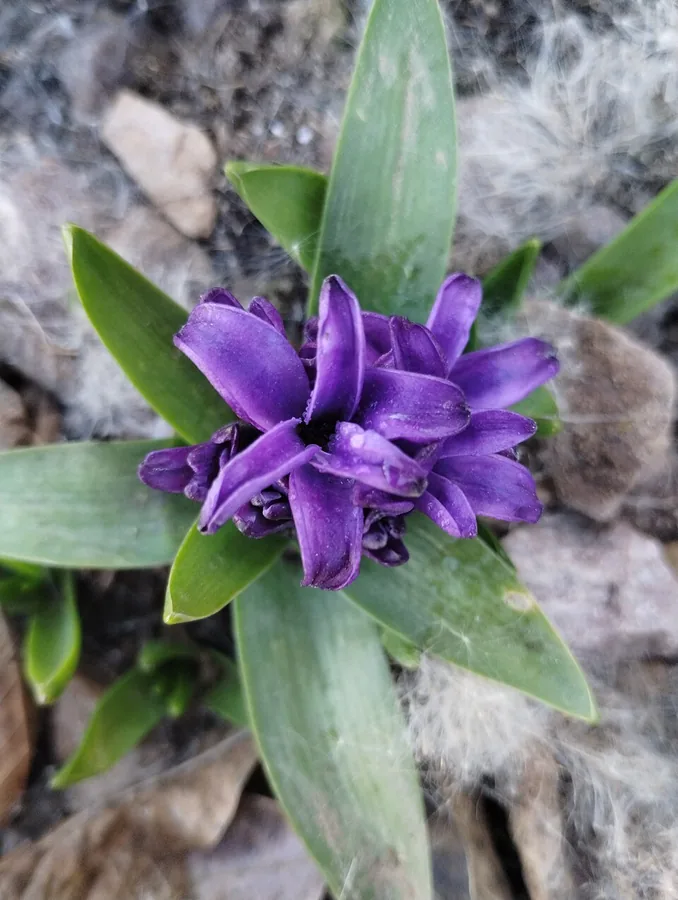
Hyacinths are spring-flowering geophytes prized for their thick, densely packed racemes and a fragrance that carries across a garden. A single bulb produces one stout stem crowded with starry, waxy florets across blues, purples, reds, pinks, and white. The species sits in the asparagus family and originates in the eastern Mediterranean, while the plump commercial cultivars now sold are products of Dutch breeding.
These are undemanding bulbs. Planted in fall and left through winter, they flower reliably in mid-spring, because the cold period they receive in the ground is what breaks dormancy and initiates the bloom. The same bulb performs equally well naturalized in a border, grouped in a container, or forced indoors to flower ahead of the outdoor season.
One qualification governs their use: every part of the plant is toxic, and the bulb carries the highest concentration. The tissue responsible for the spring fragrance can sicken an inquisitive animal and produce dermatitis on unprotected skin, so the plant warrants deliberate placement away from children and pets.
Care
The short version: plant the bulbs in fall in full sun and rich, well-drained soil, keep them moist through spring growth, then reduce the water and allow the foliage to die back on its own so the bulb can recharge for next year's bloom.
Light
Site hyacinths in full sun, where high light holds the stems short and keeps the flower spike dense. They tolerate partial shade and still bloom, but under reduced light the stalks elongate and lean toward the source.
Water
Maintain evenly moist soil from fall planting through the spring growth phase, then reduce water as the flowers fade and the bulb enters dormancy. The critical limit is waterlogging, since standing water induces the bulb rot that destroys the plant.
Soil
Use rich, well-drained loam amended with organic matter. A pH of 6.0 to 7.5 is suitable, but drainage outranks every other factor, because saturated soil around the bulb is the primary cause of loss.
Temperature
Hyacinths are hardy, withstanding winter lows near -20°F (-29°C) and spring warmth to about 75°F (24°C). The cold is not a stress but a requirement, since the winter chill is the physiological cue that initiates flowering.
Humidity
Ambient outdoor humidity suffices, so no target level applies. Adequate air movement around the foliage limits the fungal problems that accompany stagnant, damp conditions.
Feeding
Incorporate a balanced bulb fertilizer into the bed at fall planting, then apply a light feed as shoots emerge in early spring. This supply supports the plant through bloom and replenishes the bulb's reserves for the following season.
Pruning
Cut the spent flower spike promptly so the bulb is not diverting reserves into seed. Retain the leaves until they yellow and wither, because that senescing foliage returns energy to the bulb for next spring's flowers.
Repotting
Lift and divide clumps every few years as flower size declines or the bulbs become congested. Separating and replanting relieves the crowding and restores flowering vigor.
Size & spacing
Mature plants reach 6 to 12 inches (15 to 30 cm) in height with a narrow 3 to 6 inch (8 to 15 cm) spread. Plant the bulbs 4 to 6 inches (10 to 15 cm) deep and the same distance apart to produce a full, even stand.
When to plant
Hyacinth timing follows an autumn-to-spring sequence dictated by cold. Plant the bulbs in mid-fall once soil temperatures have dropped, allow winter to supply the chilling that triggers flowering, and the blooms appear in mid-spring around April or May. For an earlier display, pot and chill bulbs in fall and force them into growth indoors.
Northern hemisphere
Southern hemisphere
Typical months for a temperate climate: start earlier in warm zones, later where spring frosts linger.
- Sow: For forcing, pot bulbs in fall and chill at about 35-48 degrees F for roughly 12-13 weeks (6-8 weeks in mild coastal areas) before bringing into warmth
- Plant: Mid fall, once soil temperatures drop below about 60 degrees F, 4-6 inches deep and 4-6 inches apart
- Harvest: Mid-spring (April to May)
Hardiness
USDA hardiness zones: 4–8
Temperature: down to -34°C
Troubleshooting
The majority of hyacinth problems originate at the bulb below ground and present above as rot or as stunted, deformed growth. Diagnosis usually means lifting a suspect bulb and reading its condition directly. The third common complaint affects the grower's skin rather than the plant.
Soft, decaying bulbs that fail to emerge or grow poorly
This pattern points to bulb rot driven by soil that holds too much moisture. Saturated, poorly drained ground creates the anaerobic conditions in which fungi and bacteria colonize and break down bulb tissue before growth begins. Lift and discard the mushy bulbs, reset the firm ones into fast-draining, organically rich soil, and reduce irrigation as flowering ends and the bulb enters dormancy.
Fix:
- Remove and discard rotted bulbs
- Replant healthy bulbs in well-drained, organically rich soil
- Reduce watering, especially as bulbs head toward dormancy
Distorted, stunted top growth over internally damaged bulbs
Deformed, stunted foliage above a hollowed bulb indicates feeding by bulb mites or narcissus bulb fly larvae within the bulb. Because these pests destroy the storage tissue the shoot depends on, the top growth emerges weak and misshapen. Excavate a suspect plant and examine the bulb for tunneling, soft spots, or mites, then discard heavily infested stock and replant only firm, clean bulbs under a consistent sanitation program.
Fix:
- Discard heavily infested bulbs
- Plant only firm, healthy bulbs
- Practice good sanitation and rotation
Reddened, itching skin following bare-handed bulb contact
The calcium oxalate crystals and other irritant compounds concentrated in hyacinth bulbs provoke contact dermatitis on exposed skin. Reaction develops where unprotected skin met the bulb tissue, which is why it typically follows bare-handed planting. Wash the affected area with soap and water to remove residual irritants, and wear gloves for any further handling of the bulbs.
Fix:
- Wash the affected skin with soap and water as soon as possible
- Wear gloves when handling bulbs
Toxicity
Every part of a hyacinth is toxic, and the bulb holds the highest concentration. The bulbs contain alkaloids and calcium oxalate crystals that cause drooling, vomiting, and diarrhea in animals and people, and even bare-handed contact can irritate the skin. Handle the bulbs as a poison to be kept clear of pets and children, and never consume any part of the plant.
Toxic to
Cats · Dogs · Horses · Rabbits · Livestock · Birds · People
Cats Toxic
In cats, ingestion of any part generally begins with hypersalivation and progresses to vomiting and diarrhea. The bulb concentrates the toxic principles, so a substantial dose can produce severe vomiting, marked depression, and tremors.
Dogs Toxic
Dogs commonly excavate and chew the bulbs, the tissue in which the alkaloids are most concentrated. The expected response is drooling, vomiting, and diarrhea, with tremors and lethargy possible after a larger ingestion.
Horses Toxic
Horses that consume bulbs or foliage salivate, lose interest in feed, and develop colic with diarrhea. Because the bulb holds the highest toxin load, stored bulbs should be secured well beyond a horse's reach.
Rabbits Toxic
Hyacinth is unsuitable browse for rabbits. The same alkaloids and oxalate crystals irritate the oral cavity and digestive tract, producing salivation, loss of appetite, and evident distress.
Livestock Toxic
Cattle, goats, and sheep are subject to poisoning from the bulbs and leaves, typically presenting salivation, gastrointestinal upset, and weakness. Exclude them from planted beds and any discarded bulbs by fencing.
Birds Toxic
The bulbs and foliage are toxic to birds, so both companion and backyard species should be kept clear of the plant and any bulb debris. Even a minor nibble can disturb the gut and leave a bird lethargic.
People Caution
No part of the hyacinth is edible, and the bulb specifically can induce vomiting and diarrhea if swallowed. Bare-handed handling frequently causes reddened, itching skin, so gloves are advised and bulbs should be stored away from children.
The bulbs can cause skin irritation (contact dermatitis), so wear gloves when handling them, and the bulbs should not be eaten.
Helpline numbers

United States
ASPCA Animal Poison Control: (888) 426-4435 (fee applies)
Poison Control: (800) 222-1222



Canada
Poison Centres: 1-844-764-7669
Varieties
Hyacinth cultivars span a wide color range and differ chiefly in the shade of the flower spike. The three below mark the boldest points across that spectrum.
Blue Jacket
A long-standing standard bearing dense spikes of deep navy that approach cobalt under strong light.
Woodstock
Distinguished by rich maroon to burgundy-purple florets, the darkest tone among these selections.
Jan Bos
Notable for deep red to carmine-pink spikes that carry strong color early in the spring bed.
Companions
Hyacinths shine when planted with other spring bulbs that bloom around the same time, building a layered show in beds and borders.
Plant near
Daffodils (Narcissus): Mix well with other spring-flowering bulbs for layered bloom and naturalizing displays.
Crocus: Pairs well in beds and borders as an early companion spring bulb.
Tulips: Combine effectively with other spring bulbs in mass plantings and borders.
How to propagate
Hyacinths increase vegetatively through the offset bulbs they form at the base, and dividing congested clumps accelerates that increase. Seed propagation is possible but slow, so few growers pursue it.
Offsets & pupsEasy
Lift in summer dormancy after foliage dies back, or at fall planting · One to two growing seasons for offsets to reach flowering size
Mature bulbs generate small offset bulblets at their base through vegetative reproduction, and these give the most reliable increase. Detach them during summer dormancy once the foliage has senesced, or at fall planting, and plant each separately. Allow one to two growing seasons for the offsets to reach flowering size.
DivisionEasy
Every few years when clumps become crowded or flowering declines · One to two seasons
As a clump becomes congested and bloom size falls, lift and separate it every few years. Redistributing the bulbs relieves the competition for resources and restores the room each needs to recharge its storage tissue. The divisions reestablish and flower well within one to two seasons.
SeedDemanding
Sow when ripe · Several years to reach flowering size
Seed propagation is slow and seldom justified in practice. Sow the seed as soon as it ripens, then expect several years before the seedlings accumulate enough reserves to flower. Most growers forgo it and deadhead instead, redirecting the bulb's energy into next year's bloom rather than into seed set.
Myths
Hyacinth bulbs are safe to handle bare-handed because they are ordinary garden bulbs.
The bulbs are coated with irritant compounds and oxalate crystals capable of producing reddened, itching skin after planting. Extension authorities are consistent on this point, which is the basis for their glove recommendation. Wear gloves whenever you handle hyacinth bulbs.
Hyacinths present no hazard to pets.
The ASPCA classifies hyacinth as toxic to cats, dogs, and horses, with the bulb the most poisonous tissue of all. An animal that ingests it may vomit, develop diarrhea, and decline further with a larger dose. Keep bulbs and plants well away from animals.