Bulb · Asparagaceae
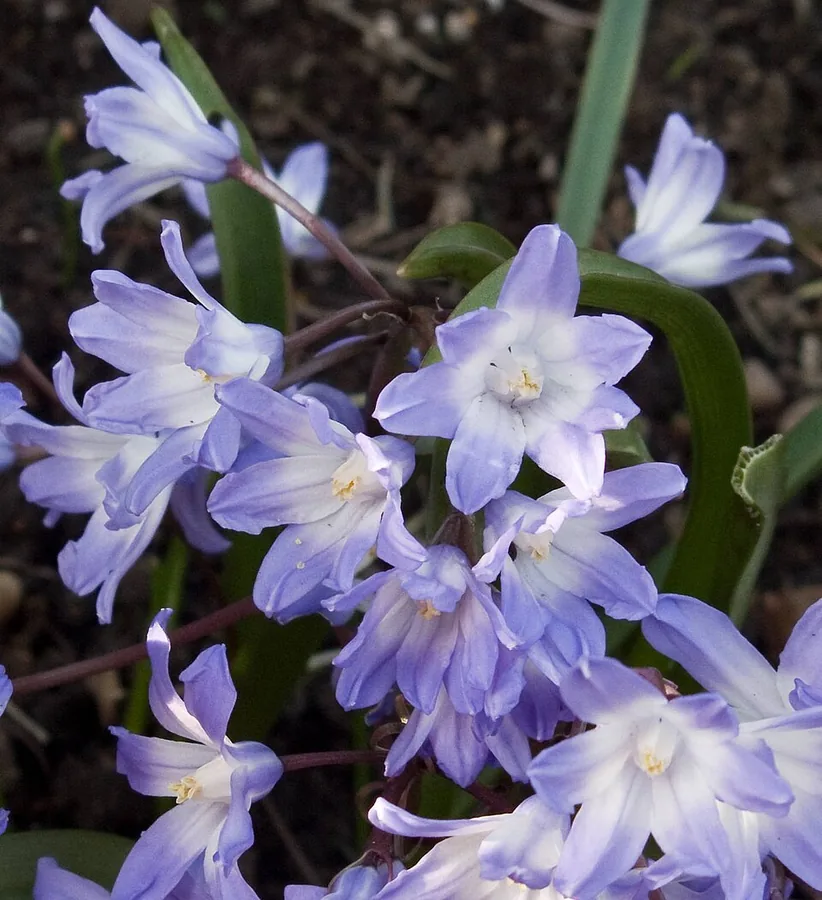
Glory-of-the-snow
Chionodoxa forbesii
Among the first bulbs to flower, glory-of-the-snow blankets the ground in blue before winter has released its grip.
Full sun
Every 5–10 days
USDA 3–8
6–12 in · 15–30 cm
Overview
Glory-of-the-snow produces some of the earliest flowers of the year, frequently pushing through a thin crust of late snow. It is a small spring bulb in the asparagus family, native to the mountains of Turkey, where flowering coincides with the onset of snowmelt. Cultivated plants follow the same pattern, raising star-shaped blue flowers with bright white centers while the surrounding bed remains largely bare.
Its defining trait is a strong capacity to increase. The bulbs multiply through offsets and the plant self-seeds, so a modest planting consolidates into broad drifts over a few years. It naturalizes in lawns, rock gardens, and open ground beneath deciduous trees, where flowering precedes canopy leaf-out and the shade that follows.
Cultural demands are minimal. Hardy from zone 3 to zone 8, it withstands severe cold, tolerates deer and black walnut, and returns with greater vigor each spring. Plant the bulbs in fall, leave the colony undisturbed, and it manages its own increase.
Care
The short version: plant the bulbs in fall in well-drained soil, sited in full sun or the light shade beneath deciduous trees. Supply moisture through spring growth and bloom, then withhold it as the foliage fades into summer dormancy.
Light
Glory-of-the-snow flowers most freely in full sun but performs nearly as well in partial shade. The light shade beneath deciduous trees suits it because it blooms in early spring, before those trees leaf out and impose real shade on the site.
Water
Maintain evenly moist soil through spring growth and bloom, watering every 5 to 10 days when rainfall is insufficient. Reduce watering as the flowers fade and the foliage yellows, and keep the bulbs dry through summer dormancy, since a resting bulb is prone to rot in wet soil.
Soil
Provide average, well-drained soil of medium moisture and it needs little else. Drainage is the decisive factor, because a bulb held in saturated ground will rot.
Temperature
This is a markedly cold-hardy bulb, enduring winter lows to -29°F (-34°C) and growing up to roughly 75°F (24°C). Severe cold poses no threat; on the contrary, the bulbs require winter chilling to flower reliably.
Humidity
Ambient outdoor humidity meets its needs, so there is no level to regulate. For this bulb, soil moisture and drainage are far more consequential than atmospheric moisture.
Feeding
Incorporate a balanced bulb fertilizer, or compost and aged manure, into the soil in fall and again in early spring. A seasonal feed suffices, and the bulb draws on those reserves as it grows and recharges for the next cycle.
Pruning
No pruning is required. Allow the foliage to die back after bloom and leave it until it yellows completely, since the leaves are replenishing the bulb for the following year.
Repotting
These bulbs are rarely disturbed and are best left in place for years. Lift and divide only when clumps become congested and flowering declines, or when offset bulbs begin surfacing.
Size & spacing
The plants remain small, reaching 6 to 12 inches (15 to 30 cm) in height with a 3 to 6 inch (8 to 15 cm) spread. Set the bulbs about 2 to 3 inches apart, allowing them to consolidate into drifts over successive seasons.
When to plant
Glory-of-the-snow operates on a compressed spring cycle. Plant the dormant bulbs in fall, about 3 inches deep, and they emerge and flower in early spring, from February to April depending on climate. After bloom the foliage yellows and dies back, and the bulb enters summer dormancy.
Northern hemisphere
Southern hemisphere
Typical months for a temperate climate: start earlier in warm zones, later where spring frosts linger.
- Plant: Plant bulbs in fall, about 3 inches deep and 2-3 inches apart.
- Harvest: Early spring, typically February to April (mid-March to mid-April in the St. Louis area).
Hardiness
USDA hardiness zones: 3–8
Temperature: down to -40°C
Troubleshooting
Glory-of-the-snow is an undemanding bulb with few disorders, and nearly every problem originates below ground in excess moisture. Lifting one or two bulbs when a clump appears compromised is diagnostic, since the cause is usually evident on excavation. Identify the pattern below, then intervene before rot advances through the planting.
Wilting, twisted leaves and clumps that never fill out
Distortion and stunting that runs across an entire clump most often traces to a nematode infestation feeding in the soil, while saturated, poorly drained ground produces a similar decline through root and bulb damage. Confirm the cause by lifting a few bulbs; a soft, rotting bulb points to the moisture problem. Excavate the affected bulbs together with the surrounding soil, correct the drainage, and establish the next planting on clean ground rather than the same site, since the pest persists there.
Fix:
- Lift and discard affected bulbs and surrounding soil
- Improve drainage and avoid replanting bulbs in the same infested spot
Soft, mushy bulbs that never come up
A bulb that softens and fails to emerge has succumbed to bulb rot, the predictable result of prolonged moisture around a bulb that requires sharp drainage. On lifting, the diagnosis is clear from the mushy tissue, foul odor, or fungal growth. Remove and destroy every rotted bulb, then replant only firm, sound stock in well-drained soil or a raised bed where excess water can move away from the bulb.
Fix:
- Discard rotted bulbs
- Replant healthy bulbs in well-drained soil or raised beds
Toxicity
Site and handle this plant with care around pets and children. As a member of Scilla, every part contains cardiac glycosides, with the highest concentration in the bulb. Ingestion typically causes drooling, vomiting, and diarrhea, so store bulbs beyond reach and wash hands after planting.
Toxic to
Cats · Dogs · Horses · Rabbits · Livestock · Birds · People
Cats Mild
A cat that ingests foliage, or the bulb in particular, commonly shows drooling, regurgitation, and diarrhea. Because glycoside concentration is highest in the bulb, stored bulbs are the priority to secure out of a cat's reach.
Dogs Mild
A dog that unearths and chews a bulb typically develops drooling, vomiting, and loose stools within a few hours. Signs usually remain mild, but ingestion of several bulbs raises the glycoside dose enough to risk cardiac involvement.
Horses Caution
Horses seldom target these small spring bulbs, yet the cardiac glycosides render both foliage and bulbs unsuitable grazing. Anticipate salivation and gastrointestinal upset in the event a horse consumes any part.
Rabbits Caution
Since the glycosides are distributed throughout the plant, it does not qualify as safe browse for rabbits. A small quantity can provoke drooling and loose stools, and the bulb warrants the most careful exclusion.
Livestock Caution
Grazing cattle, goats, and sheep are susceptible where a patch is accessible, presenting first with gastrointestinal upset and, at higher intake, a slowed and irregular heartbeat. Excluding stock from naturalized drifts is the practical safeguard.
Birds Caution
The same glycosides place poultry and pet birds at risk, so access to bulbs and foliage should be prevented. The material is best regarded as toxic rather than forage.
People Caution
No part is edible, and ingestion of the bulb can produce oral pain, nausea, abdominal cramping, vomiting, and diarrhea, with a slowed heartbeat following a large dose. Exclude young children and wash hands after planting.
Keep bulbs and plants away from pets and children; wash hands after handling and store bulbs out of reach.
Helpline numbers

United States
ASPCA Animal Poison Control: (888) 426-4435 (fee applies)
Poison Control: (800) 222-1222



Canada
Poison Centres: 1-844-764-7669
Varieties
The species is the form most widely grown, though several named selections extend the color range and increase flower size. The following are the selections worth seeking out.
Blue Giant
A vigorous selection distinguished by enlarged blue, white-centered flowers borne on 6 to 12 inch (15 to 30 cm) stems that can each carry up to 10 blooms.
Pink Giant
Substitutes soft pink tepals for the typical blue while retaining the same bright white central eye.
Alba
A pure white form suited to gardeners seeking the early drift without the blue coloration.
Companions
Glory-of-the-snow pairs best with other early bulbs that bloom alongside it and with the deciduous trees it naturalizes beneath.
Plant near
Daffodils (Narcissus): Both are early-spring bulbs that naturalize together and bloom in overlapping seasons for layered color.
Crocus: Another very early small bulb that combines well in drifts, lawns, and rock gardens.
Deciduous trees and shrubs: Glory-of-the-snow thrives and naturalizes in the partial shade beneath deciduous trees, blooming before the canopy leafs out.
How to propagate
This bulb increases largely on its own, so most growers simply permit it to spread, though propagation can be hastened by lifting offsets, dividing clumps, or planting fresh bulbs.
Offsets & pupsEasy
After foliage dies back in late spring/summer, or lift and separate in fall. · 1 to 2 seasons
Vegetative increase is the plant's own strategy: each bulb produces offsets that build into spreading colonies without intervention. To propagate deliberately, lift a clump once the foliage has died back in late spring or summer, or in fall, detach the small offset bulbs, and replant them at depth. Expect establishment and flowering within a season or two as each offset builds reserves.
Bulbs & cormsEasy
Fall · 1 season
Starting from purchased bulbs is the most direct method, since a mature bulb already holds the reserves to flower. Plant the dormant bulbs about 3 inches deep in fall and they emerge to bloom the following spring, a single season from planting to flower.
SeedModerate
Self-sows in spring/early summer; can be direct sown outdoors in fall. · 2 to 3 years to flowering
Left undisturbed the plant self-sows readily in spring and early summer, and seed may also be direct-sown outdoors in fall. The limiting factor is time, since a seedling must build a flowering-sized bulb over 2 to 3 years before it will bloom.
DivisionEasy
When clumps become crowded, lift and divide after foliage dies back. · 1 to 2 seasons
Once congestion within a clump begins to suppress flowering, division restores vigor by relieving competition among the bulbs. Lift the crowded clump after the foliage has died back, separate it, and reset the divisions at spacing, and they re-establish over one to two seasons.
Myths
Glory-of-the-snow is completely safe because it is not on the ASPCA toxic plant list.
Omission from the ASPCA list is not evidence of safety. As a member of Scilla, every part contains cardiac glycosides and the genus is documented as poisonous, so ingestion can produce genuine gastrointestinal upset. Keep the bulbs and plants away from pets and children.