Bulb · Asparagaceae
Siberian Squill
Scilla siberica
Set the bulbs once and a naturalized sheet of early blue reappears each spring unaided.
Full sun
Every 7–14 days
USDA 2–8
3–6 in · 8–15 cm
Overview
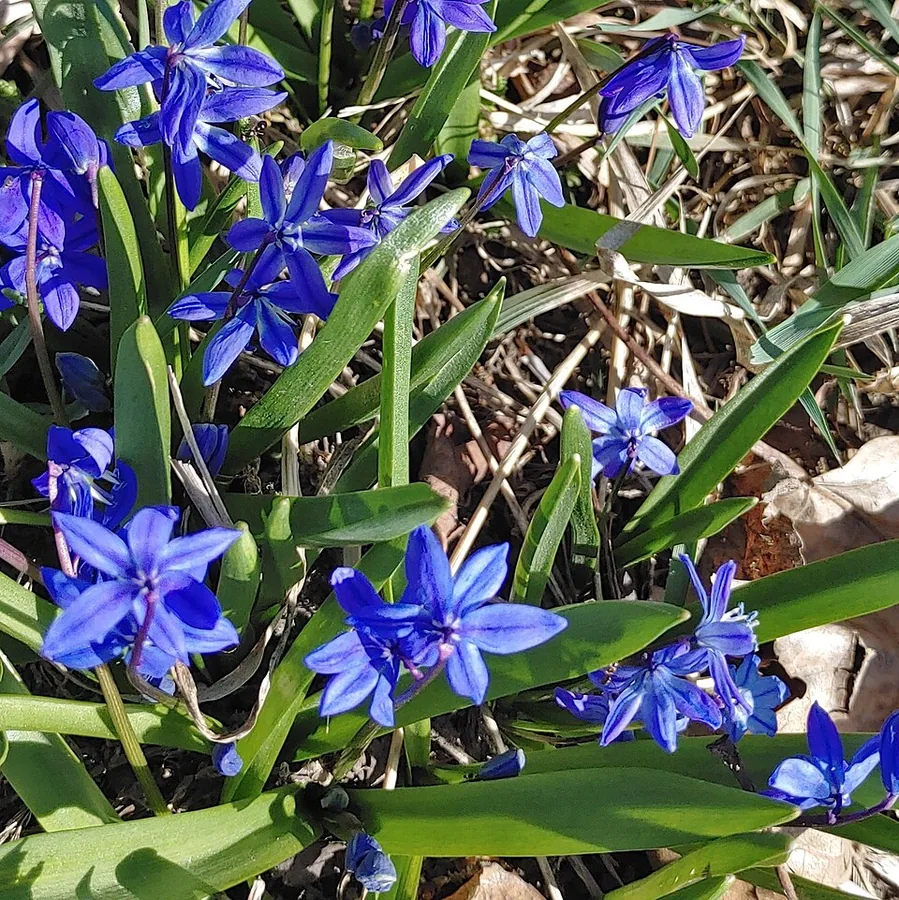
Scilla siberica ranks among the first bulbs to break dormancy each year, raising deep blue bells in early spring just behind the snowdrops. Mature plants reach only 3 to 6 inches (8 to 15 cm), a stature suited to mass planting, so it performs best in drifts beneath deciduous trees, along paths, or through turf left unmown early in the season.
Two traits define its garden behavior. The bulbs are exceptionally cold hardy, tolerating minima of -40°F (-40°C), and place almost no demand on the gardener once established. The same vigor drives rapid naturalization, since the plant reproduces both by self-sown seed and by offset bulbs, which lets colonies escape cultivated beds into lawn and woodland; it is regarded as invasive in parts of the US.
One constraint outweighs the rest. All tissues are poisonous, the bulb most concentrated, because every part carries cardiac glycosides, so it is ill-suited to gardens used by grazing pets or by small children who dig. Site it accordingly and it delivers years of dependable, low-input color.
Care
The short version: plant the bulbs 2 to 3 inches deep in fall, provide full sun to partial shade over well-drained soil, maintain moisture through spring growth and withhold it during summer dormancy, and deadhead to check the self-seeding.
Light
Flowering is heaviest in full sun, though the plant tolerates partial sun and partial shade. Because bloom precedes canopy leaf-out, a site under deciduous trees still receives full light during the plant's active period.
Water
Supply medium moisture through spring growth and flowering, then reduce it as the foliage senesces. The bulbs enter summer dormancy and require little supplemental water, and saturated soil at that stage is the primary cause of loss.
Soil
The essential requirement is sharp drainage in an otherwise average soil, with no particular pH preference. Drainage governs bulb survival far more than fertility, especially across the dormant summer when standing water proves fatal.
Temperature
Cold tolerance is extreme: the bulb is hardy through zones 2 to 8 and endures lows of -40°F (-40°C). Growth occurs in cool early-spring conditions, and the plant returns to dormancy as temperatures rise above roughly 75°F (24°C).
Humidity
Ambient outdoor humidity is immaterial to this bulb, so no target range applies. What governs performance instead is soil that dries during the summer rest.
Feeding
Nutrient demand is low in average soil. An annual topdressing of compost or a balanced bulb fertilizer applied in fall or early spring meets its needs, and heavier feeding confers no benefit.
Pruning
No pruning is warranted. Allowing the foliage to senesce naturally after bloom lets the bulb replenish its reserves, and only the spent flower heads are removed, and then only to suppress heavy self-seeding.
Repotting
Established bulbs seldom require lifting. The indication for division is reduced bloom in a congested clump or bulb masses heaving to the surface, at which point the clump is dug and separated.
Size & spacing
Mature dimensions are small, about 3 to 6 inches (8 to 15 cm) in height and comparable in spread, which is why the species is used in drifts. Bulbs are set 2 to 3 inches deep in fall and spaced to allow the colony to coalesce into continuous cover.
When to plant
Its phenology follows a strict early-spring pattern. Fall planting establishes the bulbs before winter, and flowering follows around April, close on the heels of the snowdrops.
Northern hemisphere
Southern hemisphere
Typical months for a temperate climate: start earlier in warm zones, later where spring frosts linger.
- Plant: Plant bulbs in fall, 2-3 inches deep
- Harvest: Blooms in early spring (around April), shortly after snowdrops
Hardiness
USDA hardiness zones: 2–8
Temperature: down to -46°C
Troubleshooting
Few bulbs are lower maintenance, so its short list of problems reduces to poor drainage, a single bulb pest, and its own capacity to spread. Identify the disorder below and intervene early, before a modest patch becomes a colony.
Soft, rotting bulbs with a collapsed crown
This presentation is crown and bulb rot, a physiological consequence of persistently wet soil rather than a treatable pathogen. Squill will not endure saturated conditions, particularly through summer dormancy. Lift affected bulbs to assess for soft, brown, foul-smelling tissue, discard any that are compromised, and relocate the planting to sharper-draining ground.
Fix:
- Remove and discard affected bulbs
- Improve drainage or move planting to a better-drained site
- Reduce watering, especially during dormancy
Hollowed bulbs and impaired or absent growth
A distorted or non-emergent bulb points to the narcissus bulb fly, whose larva excavates the interior and leaves a hollow shell filled with frass. Sectioning a suspect bulb typically reveals a single stout cream-colored maggot. Excavate and destroy every infested bulb, then cultivate the soil to bring the pupae to the surface.
Fix:
- Dig and destroy infested bulbs
- Cultivate soil to expose pupae
Colonies appearing well beyond the original planting
Scilla siberica is an aggressive self-seeder that also increases by bulb offshoots, so populations advance into lawn, bed, and adjacent woodland. It is classified as invasive in parts of the US. Mow or deadhead before seed set, dig and thin congested clumps, and exclude it from natural areas.
Fix:
- Mow or deadhead while in bloom to remove seed heads before seed sets
- Dig and thin clumps before seeds mature
- Compost removed material at temperatures above 130 degrees F
Toxicity
Classify this as a genuinely poisonous plant. All parts contain cardiac glycosides, concentrated in the bulb, and ingestion produces drooling, vomiting, and cramping, with a dangerously slowed or irregular heartbeat at higher doses. Keep it clear of pets, livestock, and children, and consult a veterinarian or poison control after any ingestion.
Toxic to
Cats · Dogs · Horses · Rabbits · Livestock · Birds · People
Cats Severe
A cat that ingests any part may drool and vomit within a short interval. The bulb holds the highest cardiac glycoside load, so a substantial mouthful can provoke arrhythmia, which warrants emergency care.
Dogs Severe
Dogs most often exhume and bite the bulb, the most hazardous portion. Early signs are drooling, vomiting, and diarrhea, progressing to a slowed or irregular heartbeat with larger ingestions.
Horses Severe
The cardiac glycosides act on horses as well, producing colic and a lethargic, unsteady animal. A heavy dose can disrupt cardiac rhythm, a serious outcome in an animal of that mass.
Rabbits Toxic
Squill is unsuitable browse for rabbits. Both bulb and foliage disturb the digestive tract and, in quantity, affect the heart, so the plant should stay out of reach.
Livestock Toxic
Cattle, sheep, and goats can be poisoned by grazing the foliage or unearthing bulbs. Expect drooling, gastrointestinal upset, and an abnormal heartbeat, and exclude the stand from pasture.
Birds Toxic
The cardiac glycosides render every part hazardous to birds, including backyard poultry that scratch up bulbs. Keep hens and pet birds away from plantings.
People Caution
No part is edible. Ingestion causes mouth pain, nausea, vomiting, and cramping, and the bulb in quantity can slow or destabilize cardiac rhythm, so keep inquisitive children away and contact poison control after any ingestion.
Keep bulbs and plants away from pets and children; wear gloves when handling, as sap can cause minor skin irritation in susceptible individuals.
Helpline numbers

United States
ASPCA Animal Poison Control: (888) 426-4435 (fee applies)
Poison Control: (800) 222-1222



Canada
Poison Centres: 1-844-764-7669
Varieties
The cultivated range is narrow. Aside from the wild species, a single named selection predominates in the trade, and the two are readily distinguished.
Spring Beauty
It closely resembles the wild species but is somewhat larger, flowers over a longer period, and displays a deeper blue.
Scilla siberica (species)
The straight species produces 3 to 4 slender scapes, each bearing 1 to 3 nodding, bell-shaped, deep blue flowers accented by blue anthers.
Companions
Squill pairs best with the other earliest bulbs that bloom alongside it and naturalize the same way, building a layered carpet of late-winter and early-spring color.
Plant near
Galanthus (snowdrops): Both are very early spring bulbs that bloom in sequence and naturalize well together in drifts.
Crocus: Similar early-spring bulb that can be naturalized in lawns and beds alongside squill for layered bloom.
How to propagate
Propagation is straightforward because the plant multiplies on its own. The gardener can accelerate increase by dividing established clumps or setting new bulbs, or simply permit self-sowing.
Offsets & pupsEasy
Lift and separate dormant bulbs after foliage dies back · One growing season
Division of naturally formed offsets is the most reliable method. After the foliage has senesced and the bulbs are dormant, a congested clump is lifted and the offset bulbs are separated by hand. Replanted offsets reestablish within one growing season.
Bulbs & cormsEasy
Plant bulbs 2-3 inches deep in fall · Blooms the following spring
Planting purchased bulbs is the simplest approach. Set them 2 to 3 inches deep in fall and leave them undisturbed, and they flower the following spring. The bulbs are durable and extremely cold hardy, so severe winters cause no injury.
SeedEasy
Self-sows in spring as seed matures · Several years to flowering size
Seed propagation requires no intervention, since the plant self-sows in spring as the capsules ripen. This unassisted dispersal is precisely what produces its aggressive naturalization. Seedlings need several years to reach flowering size, making this the slowest route to increase.
Myths
Siberian squill is an innocuous spring bulb that poses no risk to pets.
In fact all tissues contain cardiac glycosides and the plant rates as a high-severity poison. Ingestion can produce vomiting, diarrhea, and a lowered heart rate, and a substantial dose may prove fatal. Keep the bulbs and plants away from pets and children.
As a small ornamental bulb, it remains confined to where it is planted.
In practice it naturalizes rapidly by self-seeding and bulb offshoots, moving out of beds into lawn and woodland. It is considered invasive in parts of the US, so deadhead it and keep it away from natural ground.