Bulb · Asparagaceae
English Bluebell
Hyacinthoides non-scripta
Set the bulbs in fall and let them carpet the shade in violet-blue each spring.
Partial shade
Every 5–10 days
USDA 5–8
12–18 in · 30–46 cm
Overview
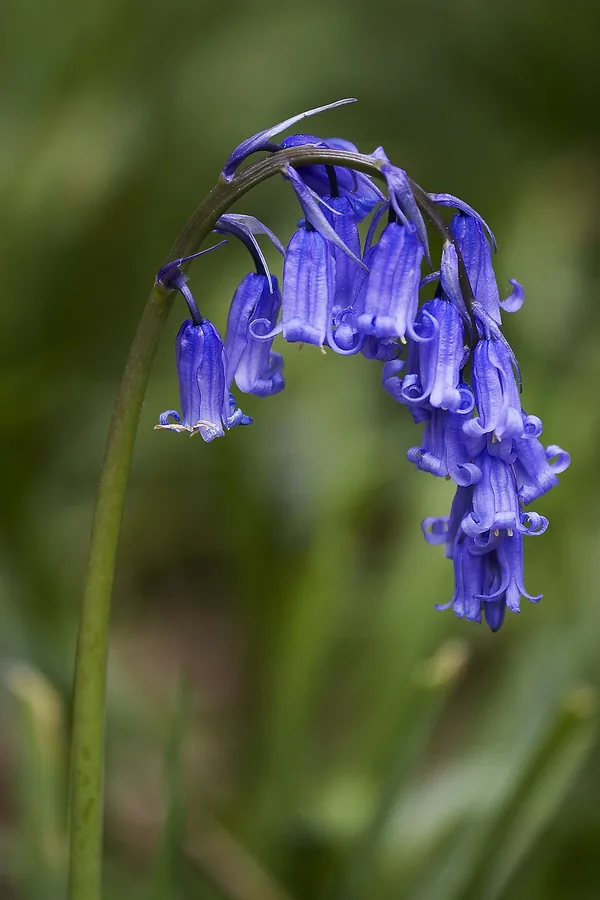
A woodland floor sheeted with English bluebells is one of spring's defining sights. The plant is a bulbous geophyte in the asparagus family that produces narrow strap-shaped leaves and a one-sided arching scape of fragrant violet-blue bells from April into May. Hardy across zones 5 to 8, it is undemanding once established in suitable ground.
Optimal performance comes in the dappled light beneath deciduous trees, the woodland part shade the species evolved with, though it tolerates full sun and full shade. After anthesis the foliage senesces and the plant enters summer dormancy, persisting underground as a bulb until the following spring. Left undisturbed in good soil, a modest planting naturalizes outward season by season.
The decisive caveat is that the entire plant is toxic. Bulbs, leaves, flowers, and sap all hold cardiac glycosides, with the bulb the most concentrated tissue. It is best treated as an ornamental for viewing only, sited well clear of pets, grazing animals, and small children.
Care
The short version: site bluebells in dappled part shade with moist, well-drained, humus-rich soil, plant the bulbs deep in autumn, and let the foliage senesce naturally because that withdrawal of reserves is what powers next year's bloom.
Light
Bluebells perform best in the dappled part shade beneath deciduous trees, the light regime of their native woodland floor. They tolerate full sun and full shade, but the filtered light under a high canopy yields the strongest flowering and the most natural habit.
Water
Maintain the soil evenly moist but well drained through the spring growth period, supplementing with water every 5 to 10 days when rainfall is insufficient. Once the foliage yellows and the bulb enters summer dormancy, demand falls to almost nothing, and waterlogged ground will rot the bulb.
Soil
Plant into sandy, humus-rich, well-drained soil and avoid heavy, unamended clay. The species accepts a pH from 5.5 to 7.5, so most garden soils are workable once compost or leaf mold is incorporated.
Temperature
Bluebells are cold-hardy from roughly -20°F to 75°F (-29°C to 24°C). They require winter chilling to flower reliably and withstand hard frost, which is precisely why they belong in the ground outdoors rather than on a windowsill.
Humidity
Ambient outdoor humidity meets their needs, so no target value applies. The woodland conditions that suit them tend to hold moderate moisture at ground level without intervention.
Feeding
Apply a light feed in fall and again in early spring, using a balanced bulb fertilizer or compost worked into the soil. An annual top-dressing of organic matter usually sustains a naturalized stand without further input.
Pruning
No pruning is required beyond timing. Let the foliage die back on its own after flowering so the bulb can recharge through reserve withdrawal, then remove the spent leaves only once they have yellowed completely.
Repotting
Bulbs left in the ground need lifting only every 3 to 4 years, and only when clumps become congested and flowering declines. Lift and divide after flowering, replanting the offsets at adequate spacing.
Size & spacing
Mature plants reach about 12 to 18 inches (30 to 46 cm) in height with a narrow spread of 3 to 6 inches (8 to 15 cm). Space the bulbs 4 to 6 inches apart to allow vegetative increase into a drift over successive years.
When to plant
Bluebells follow a woodland phenology. Plant the dormant bulbs in autumn so they root before winter, expect bloom from April into May, then allow the foliage to yellow and abscise as the plant returns to dormancy through summer.
Northern hemisphere
Southern hemisphere
Typical months for a temperate climate: start earlier in warm zones, later where spring frosts linger.
- Sow: Not typically started indoors; sow seed or plant bulbs directly outdoors
- Plant: Plant bulbs in fall, 3-4 inches deep and 4-6 inches apart
- Harvest: April to May
Hardiness
USDA hardiness zones: 5–8
Temperature: down to -29°C
Troubleshooting
Bluebells are low-maintenance, and much of what reads as a problem is simply the species running through its seasonal cycle. The genuine issues reduce to congestion, weak flowering, and uncontrolled spread. Match the symptom below and intervene while it remains effective.
Reduced flowering tied to congested bulb clumps
Weak flowering most often traces to overcrowding, as accumulated bulb offsets compete for the same water, nutrients, and root space and suppress one another. Deep shade and thin, impoverished soil compound the effect by limiting the resources a bulb needs to build a flower. Lift the clump after flowering, separate the offsets, and replant them at spacing in rich, well-drained ground.
Fix:
- Lift and divide congested clumps after flowering
- Replant offsets at proper spacing in well-drained, humus-rich soil
Naturalizing spread and hybrid seedlings in the bed
English bluebells reproduce by two routes at once, vegetative offset bulbs below ground and self-sown seed above, which lets a confined clump naturalize into a colony. The greater concern is the Spanish bluebell in proximity, since the two interbreed and the resulting hybrids dilute the native genotype. Deadhead the spent scapes before seed sets, and isolate the planting from Hyacinthoides hispanica.
Fix:
- Deadhead spent flower stems before seed sets to limit self-seeding
- Avoid planting near Hyacinthoides hispanica to prevent hybridization
Post-bloom yellowing and collapse of the foliage
This is almost always summer dormancy rather than pathology. After flowering the bulb withdraws stored reserves from the leaves, so the foliage senesces and slumps on schedule as part of the plant's annual cycle. Allow it to die down fully, and reserve concern for cases where the soil ran bone dry during spring growth and triggered a premature collapse.
Fix:
- Leave foliage in place until fully yellowed so the bulb can recharge
- Remove leaves only after they have completely died down
Toxicity
This is an ornamental of real beauty and real toxicity. Every part contains scillaren-type cardiac glycosides, concentrated most in the bulb, and ingestion can produce gastrointestinal upset and disturbance of the heartbeat. Keep the bulbs, foliage, flowers, and sap well away from pets, livestock, and children.
Toxic to
Cats · Dogs · Horses · Rabbits · Livestock · Birds · People
Cats Severe
Ingestion of any part by a cat typically presents first as vomiting, abdominal pain, and diarrhea. Because the glycosides act directly on cardiac muscle, a larger dose can slow or destabilize the heartbeat, so any genuine mouthful warrants veterinary assessment.
Dogs Severe
Dogs most readily excavate and chew the bulb, which holds the highest glycoside concentration of any part. Drooling, vomiting, and diarrhea appear first, and a substantial dose can depress the heart rate or disturb its rhythm.
Horses Toxic
The same cardiac glycosides reach horses through grazed foliage or bulbs exposed in a pasture. Colic, weakness, and an irregular pulse are the signs to monitor, and the plant should be excluded from any paddock they can access.
Rabbits Toxic
Bluebell has no place in a rabbit's diet. The leaves and bulbs carry enough glycoside to provoke gastrointestinal upset and load the heart, so it should be fenced off from any rabbit with free range of the garden.
Livestock Toxic
Cattle, sheep, and goats can be poisoned where they browse the foliage or root out bulbs, although the plant's bitterness usually deters them when better forage is available. A genuine feed produces digestive upset followed by cardiac effects.
Birds Caution
Documented data on avian exposure is limited, which argues for caution rather than a clean bill. The cardiac glycosides that affect mammals provide sound reason to keep pet birds and poultry away from the bulbs, sap, and foliage.
People Caution
No part of the plant is edible, and consuming the bulbs or leaves can produce nausea, vomiting, and a disturbed heartbeat. The sap is also a contact irritant that can redden and itch the skin, so wash after handling bulbs and keep children away.
Keep bulbs, foliage, and flowers away from pets and children; sap may also cause minor skin irritation. In reported companion-animal cases, signs are most often gastrointestinal, but cardiac glycoside content warrants caution.
Helpline numbers

United States
ASPCA Animal Poison Control: (888) 426-4435 (fee applies)
Poison Control: (800) 222-1222



Canada
Poison Centres: 1-844-764-7669
Varieties
Bluebells occur in more than one form, and the distinction with practical and conservation value is separating the true English species from its Spanish congener.
Hyacinthoides non-scripta (species, English bluebell)
The species is identified by a slender scape that arches to one side beneath fragrant, deep violet-blue bells with recurved tips and creamy-white pollen, in contrast to the Spanish bluebell, which holds an upright stem with flowers arranged all around it and almost no scent.
How to propagate
Bluebells multiply on their own, and a grower can accelerate increase by planting bulbs, detaching offsets, dividing congested clumps, or raising seed for the patient.
Offsets & pupsEasy
Lift after flowering as foliage dies back · 1 to 2 seasons
Bluebells propagate vegetatively, generating small offset bulbs around the parent without intervention. Lift a clump once flowering ends and the foliage begins to die back, detach the offsets, and replant them at the desired site. Each requires roughly a season or two to establish and flower.
Bulbs & cormsEasy
Plant dormant bulbs in fall, 3-4 inches deep and 4-6 inches apart · One growing season to first bloom
The most reliable establishment method is dormant bulbs planted in autumn at 3 to 4 inches deep and 4 to 6 inches apart. Set at that depth they overwinter in situ and flower the following spring, after which they naturalize and extend outward each year wherever soil and light conditions permit.
DivisionEasy
Divide congested clumps after flowering · 1 to 2 seasons
Division both increases stock and corrects a declining clump. Once congestion sets in and flowering falls off, lift the clump after blooming, separate it into smaller sections, and replant at spacing. Floral display recovers over the next season or two as the divisions re-establish.
SeedModerate
Self-sows; collect and sow ripe seed in summer · Several years to flowering size
Seed is the slow route. Plants self-sow readily, but a seedling needs several years to reach flowering size, so bulbs are the practical choice for most growers. Collect and sow ripe seed in summer to raise your own, and deadhead the remainder to prevent self-sowing from generating unwanted spread.
Myths
Bluebells are harmless because animals and people avoid eating them.
Avoidance behavior is not evidence of low toxicity, and bluebell is a textbook counterexample. All tissues contain scillaren-type cardiac glycosides, concentrated most in the bulb, and the genus is classified as highly toxic and potentially fatal if eaten.