Bulb · Liliaceae
Tulip
Tulipa spp.
Plant in fall, satisfy the long cold winter each bulb needs, and tulips return the boldest color of spring.
Full sun
USDA 3–8
9–24 in · 23–61 cm
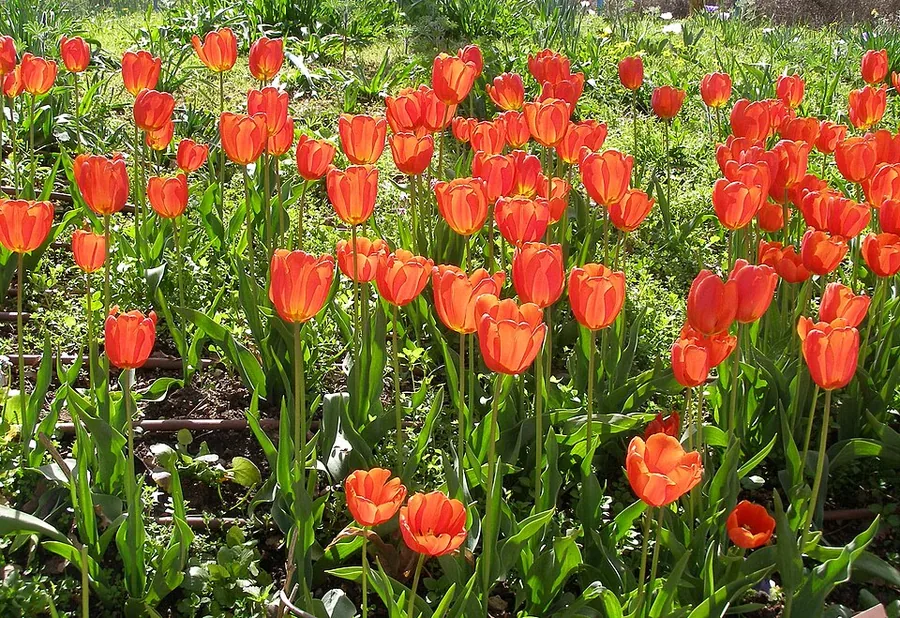
Overview
Tulips are members of the lily family, and they originate in the mountains of central Asia, where cold winters and dry summers selected for their growth pattern. Each plant is a spring-flowering geophyte, storing a full season of energy in the bulb until warmth arrives. That reserve is what allows one bulb to raise a strong stem and a single cupped flower within a few weeks of spring.
The controlling requirement is cold. A tulip bulb needs 12 to 16 weeks of chilling to initiate a flower, so growers in mild zones pre-chill the bulbs or grow them for a single season. Most modern hybrids also lose vigor after a year or two, which is why many gardeners replant fresh bulbs every fall and treat the display as an annual.
The payoff is considerable. Tulips range from 9 to 24 inches (23 to 61 cm) tall across nearly the full color spectrum, from a 6 inch species tulip to a taller Darwin hybrid. Give them full sun and sharp drainage, and they produce the first major display of the season.
Care
The short version: tulips need full sun, fertile well-drained soil, and a planting depth of 6 to 8 inches (15 to 20 cm) set in fall. Water once at planting to settle the bulb, keep the soil from staying soggy, and let the foliage die back on its own after bloom so the bulb recharges.
Light
Tulips require full sun, ideally 6 or more hours daily, because photosynthesis during and after bloom both fuels the flower and recharges the bulb for next year. They accept some partial sun, but shade limits that energy capture and produces weak flowers or none.
Water
Water the bulbs thoroughly at planting to settle them, then withhold. Tulips are intolerant of soggy soil, which suffocates the bulb and invites rot, so keep the site dry once the foliage dies down and the bulb enters dormancy.
Soil
Plant in organically rich, fertile, well-drained soil. Drainage is the decisive factor, because a bulb held in saturated ground rots before it can flower, and no other input compensates for standing water.
Humidity
Ambient humidity is not a meaningful variable for tulips, so there is no target to manage. Drainage and air circulation matter far more, since stagnant, damp conditions are precisely what allow tulip fire and bulb rot to establish.
Feeding
Apply a balanced slow-release fertilizer such as a 5-10-5 at planting and again after bloom, when the bulb is rebuilding reserves. Bone meal is unnecessary because most soils already supply adequate phosphorus, and it attracts digging animals, so a balanced feed is the sounder choice.
Pruning
Deadhead spent flowers to stop the plant from diverting energy into seed production. Leave the foliage intact until it yellows and browns on its own, around late June into July, because photosynthesis during that period is what refills the bulb, and cutting it early starves next year's flower.
Repotting
Lift and divide crowded clumps every few years once the foliage has died back, replanting the bulbs at the correct depth. Crowding manifests as smaller flowers and reduced bloom as offsets compete for resources, or as bulbs pushing toward the surface.
Overwintering
Tulips are hardy in zones 3 through 8 and overwinter in place, where the ground supplies the chilling they require. In zone 9 and warmer, the natural cold is insufficient, so pre-chill the bulbs for 12 to 16 weeks or replant fresh stock annually.
Size & spacing
Mature height runs 9 to 24 inches (23 to 61 cm) depending on the class. Space the bulbs 3 to 6 inches (8 to 15 cm) apart and plant them 6 to 8 inches (15 to 20 cm) deep, roughly two to three times bulb height, with the pointed end up.
When to plant
Tulip timing inverts the usual growing calendar because the flower forms in response to cold. Set the bulbs in fall before the ground freezes, let a long winter satisfy the chilling requirement, and the flowers open from April into late May.
Northern hemisphere
Southern hemisphere
Typical months for a temperate climate: start earlier in warm zones, later where spring frosts linger.
- Plant: September–November (fall before ground freezes; October ideal)March–May
- Bloom: April–May (early April to late May by division)October–November
Hardiness
USDA hardiness zones: 3–8
Temperature: down to -40°C
Troubleshooting
Most tulip problems originate at the bulb or come from browsing animals, and each traces back to a specific cause. Bulb rot, deer damage, and the natural decline of exhausted hybrids account for most failures. Identify the symptom below, then intervene early, since fungal and viral problems spread through the planting.
Scorched, twisted foliage bearing gray mold
This is tulip fire, caused by the fungus Botrytis tulipae, and it spreads rapidly under damp, cool, overcast conditions that favor sporulation. Remove and destroy every affected plant, and never plant a bulb bearing black pinhead sclerotia on its husk, since those structures carry the fungus over. Rotating the bed to fresh ground denies the pathogen a reservoir to reinfect from.
Fix:
- Remove and destroy infected plants
- Apply fungicide as leaves emerge
- Discard damaged or spotted bulbs
Soft, foul bulbs with weak or absent growth
This is bulb rot, and saturated, poorly drained soil is the usual driver, since waterlogged tissue cannot resist fungal invasion. Lift a suspect bulb, and discard it if the tissue is soft and discolored. Correct the drainage before replanting, because a bulb returned to wet ground simply rots again.
Fix:
- Discard rotted bulbs
- Improve drainage before replanting
New holes and missing bulbs after planting
Squirrels, chipmunks, voles, and mice excavate freshly planted bulbs, and bone meal in the hole accelerates the problem by advertising a food source. Omit the bone meal and lay hardware cloth or chicken wire over the bed. An exclusion barrier is far more effective than any repellent, which the animals learn to ignore.
Fix:
- Cover beds with hardware cloth/chicken wire
- Skip bone meal
Streaked petals with mottled, stunted growth
Irregular streaking that is not a cultivar trait indicates tulip breaking virus, which aphids transmit as they move between plants. No treatment cures an infected plant, so dig and destroy it entirely, bulb included, to remove the source. Controlling aphids interrupts transmission before the virus reaches the rest of the planting.
Fix:
- Dig and destroy infected plants and bulbs
- Control aphids
Ample foliage but few or no flowers
These are blind tulips, and most modern cultivars reach this state after 3 to 5 years as the bulb divides and weakens. Removing foliage before it dies back deprives the bulb of the energy it needs to form a flower, and insufficient sun does the same. Allow the leaves to yellow naturally, plant in full sun, and replace exhausted clumps with fresh bulbs.
Fix:
- Replace exhausted bulbs with fresh ones
- Let foliage die naturally
- Site in full sun
Shoots, buds, and flowers grazed in spring
Deer rank tulips among their preferred spring forage, and rabbits browse them as well. Repellents provide marginal protection, but a hungry deer feeds through them. Only physical exclusion by fencing reliably protects the planting, so anticipate grazing wherever the bed is left open.
Fix:
- Fence or exclude with wire
- Apply repellents (less effective)
Distorted shoots and aphids on bulbs and leaf bases
The tulip aphid colonizes leaf sheaths, the plant base, and bulbs in storage, where pale-green colonies build undetected. Because these aphids vector the breaking virus, early control is essential. Immerse infested bulbs in insecticidal soap, and treat active plants with soap or, for persistent colonies, a stronger insecticide.
Fix:
- Immerse infested bulbs in insecticidal soap
- Treat plants with insecticidal soap, pyrethroid or systemic
Progressively fewer and smaller blooms each year
Most modern hybrids decline after the first year because the bulb fragments into smaller offsets, and a warm climate that fails to deliver enough chilling compounds the loss. Grow hybrids as annuals with fresh bulbs, or select species and Darwin hybrid types that perennialize more reliably. In mild zones, pre-chill the bulbs before planting to supply the missing cold.
Fix:
- Replant fresh bulbs annually
- Choose species or Darwin hybrid types
- Pre-chill bulbs in warm zones
Toxicity
Every part of a tulip is toxic, and the bulb carries the highest concentration. The active irritants are tulipalin A and B, which inflame the gut lining and provoke stomach upset in animals and people. Store and plant bulbs out of reach of animals and children, and wear gloves during handling to avoid skin contact.
Toxic to
Cats · Dogs · Horses · Rabbits · Livestock · Birds · People
Cats Moderate
Ingestion causes drooling, vomiting, and diarrhea, often accompanied by lethargy. The bulb holds the highest toxin load, so keep stored and planted bulbs inaccessible.
Dogs Moderate
Signs include drooling, vomiting, and diarrhea after a dog digs up or chews a bulb. A whole bulb swallowed by a small dog can additionally cause an intestinal obstruction.
Horses Moderate
The bulb induces gastrointestinal upset and a dull, depressed demeanor. Keep tulip plantings and stored bulbs away from areas where horses graze.
Rabbits Toxic
Tulips contain irritant compounds that rabbits should never ingest, with the bulb the most hazardous tissue. Exclude the plants by fencing and store bulbs well away from any hutch.
Livestock Moderate
Cattle, goats, and sheep exposed to the bulbs and foliage develop drooling, vomiting, and diarrhea, and larger quantities can produce cardiac and respiratory distress.
Birds Toxic
The bulbs and foliage are toxic to birds. Keep poultry and pet birds away from tulip beds and from bulbs in storage.
People Caution
No part of a tulip is edible, and the bulbs are occasionally mistaken for onions or shallots. Ingestion causes vomiting and diarrhea, and bare-handed contact with bulbs can produce dermatitis, so wear gloves.
Bulb is most toxic; handling bulbs can cause 'tulip fingers' contact dermatitis
Helpline numbers

United States
ASPCA Animal Poison Control: (888) 426-4435 (fee applies)
Poison Control: (800) 222-1222



Canada
Poison Centres: 1-844-764-7669
Varieties
Tulips are classified into 15 official divisions, but only a few appear routinely in gardens. These are the classes worth recognizing.
Darwin hybrid
This class produces large, sturdy mid-spring flowers, offers the longest display, and perennializes more reliably than other hybrids.
Triumph
Triumph is the largest class and delivers the classic cup-shaped single flower in mid-spring across an extensive color range.
Parrot
Parrot tulips are distinguished by petals that are fringed, twisted, and feathered.
Species/botanical (e.g. Tulipa tarda)
These low-growing species tulips are the longest-lived, naturalize without intervention, and bear white flowers centered with a yellow eye.
Tulipa batalinii
This species tulip produces soft-yellow single flowers on 6 to 10 inch stems in April.
How to propagate
Tulips reproduce vegetatively through offsets that form around the parent bulb, and dividing them speeds the increase. Seed propagation is possible for species types but demands considerable patience.
Bulbs & cormsModerate
Lift and separate offsets when dormant in summer · 1-3 years to flowering size
Lift a crowded clump during summer dormancy and detach the small daughter bulbs that have formed around the parent. Most are too small to flower in their first year, so replant them and allow them to size up. Expect 1 to 3 years before they reach flowering size.
SeedDemanding
Sow ripe seed; mainly for species tulips · 4-7 years to first bloom
Seed propagation is slow and applies mainly to species tulips. Sow ripe seed and wait, because a seedling requires 4 to 7 years to reach first bloom. Hybrids do not come true from seed, so the offspring will not match the parent.
Myths
Tulips return larger and more vigorous each year.
Most modern hybrids in fact decline over 1 to 3 years as the parent bulb splits into weaker offsets, which is why many growers treat them as annuals. Species tulips are the ones that genuinely perennialize.
Set the bulbs as deep as the ground allows.
Plant at roughly 2 to 3 times the bulb's height, which comes to about 6 to 8 inches. Excessive depth forces the bulb to expend its stored energy simply reaching the surface.
Tie, braid, or cut the foliage immediately after bloom for neatness.
Leave the foliage until it dies back and browns, because it is refilling the bulb during that time. Cutting green leaves early starves the bulb and yields blind, flowerless plants the next spring.
Bone meal is essential when planting bulbs.
Most soils already contain sufficient phosphorus, so bone meal rarely improves growth, and it draws squirrels and other diggers to the bed. A balanced slow-release fertilizer serves the plant better.
A late spring snow kills tulips that have already emerged.
Emerged tulip foliage tolerates frost and light snow, and the snow layer actually insulates it. Only a hard, unprotected freeze below the mid-20s°F (about minus 4°C) causes genuine injury.
Sources
- ASPCA Animal Poison Control
- Iowa State University Extension
- Iowa State University Extension
- University of Illinois IPM (Report on Plant Disease 609)
- NIH/NCBI PubMed Central
- Missouri Botanical Garden Plant Finder
- Royal Horticultural Society
- NC State Extension
- Iowa State University Extension
- University of New Hampshire Extension
- University of Georgia Extension
- Iowa State University Extension