Vegetable · Amaranthaceae
Spinach
Spinacia oleracea
Grown cool, watered evenly, and cut young, spinach yields a flush of tender leaves in roughly six weeks.
Full sun
Every 2–4 days
32–77°F · 0–25°C
40–50 days
Overview
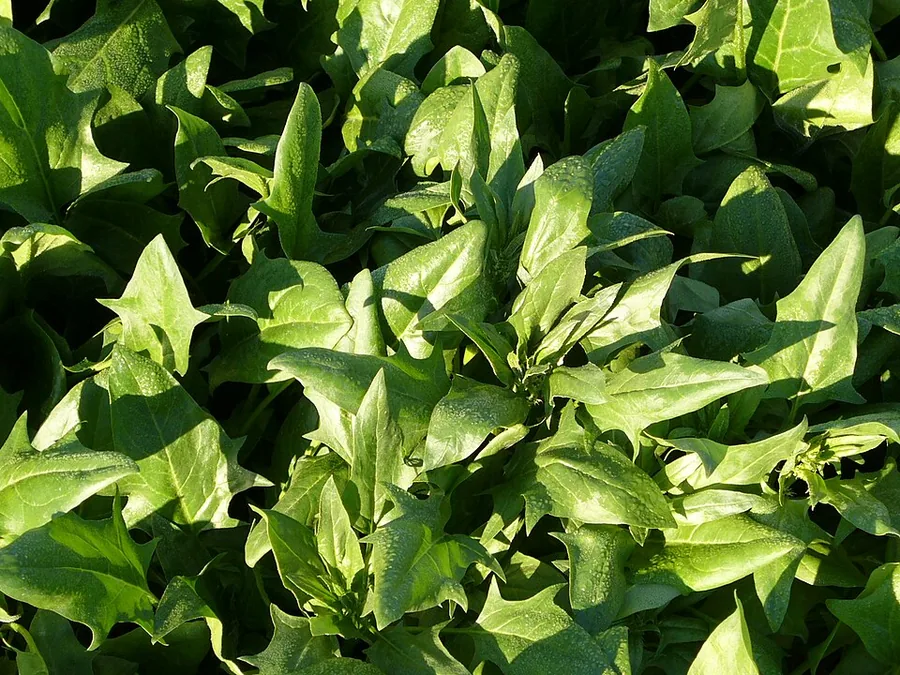
Spinach is a fast cool-season annual that performs in the temperate shoulders of spring and fall. Because it races from germination to a harvestable rosette in about 40 to 50 days, it ranks among the earliest spring crops and the latest in fall. Sown into the heat of midsummer, though, long days and high temperatures trigger it to bolt within a matter of days.
Its habit stays compact, forming a rosette only 6 to 12 inches (15 to 30 cm) across, which suits interplanting, raised beds, and containers alike. The crop is grown for its foliage, and taking the outer leaves first leaves the central growing point intact to keep producing. That cut-and-come-again response is why a single sowing can be cropped repeatedly over several weeks.
Nutritionally, spinach lives up to its reputation as a high-oxalate leaf. Those oxalates are harmless in the amounts people normally eat, but they are the reason the foliage should be offered to pets and livestock as an occasional item rather than a staple.
Care
The short version: establish spinach during the cool weeks of spring or autumn, site it in full sun to partial shade in rich, moisture-retentive soil, and crop the outer leaves regularly so it stays productive until rising heat forces it to bolt.
Light
Spinach crops well in full sun through the cool season and tolerates partial shade without loss. As temperatures climb, afternoon shade becomes an asset, because reducing the heat and light load slows the physiological switch to bolting.
Water
Maintain even soil moisture, inspecting the bed every few days, since the shallow root system and thin leaves dehydrate quickly. Consistent moisture sustains rapid leaf expansion and postpones the bolting that warmth tends to accelerate.
Soil
Grow spinach in rich, well-drained soil high in organic matter. It tolerates a pH range of 6.0 to 7.5, so acidity is rarely limiting, but ground enriched with compost supplies the steady nitrogen this crop draws on for fuller, quicker leaf growth.
Temperature
Temperature is the decisive variable. Spinach grows from near freezing to roughly 77°F (25°C), and it develops fastest and holds quality at the lower part of that band, which is why cool spring and autumn plantings outperform a summer sowing.
Humidity
Ambient outdoor humidity is adequate, and no target figure applies. The practical concern is air movement, because still, humid conditions around crowded leaves favor infection by downy mildew.
Feeding
Spinach is a heavy feeder with a high nitrogen demand that drives continuous leaf production. Incorporate compost or a balanced, nitrogen-rich fertilizer before sowing, then side-dress during growth if foliage color pales, a sign of nitrogen shortfall.
Pruning
Formal pruning is unnecessary. Harvesting the outer leaves serves the same purpose, relieving the plant of mature foliage while the central point continues to generate new growth; remove any yellowing or bolting tissue as it appears.
Repotting
Because spinach is cultivated as an annual and rarely persists beyond one season, it is not repotted. Once a planting is exhausted, remove it and re-sow rather than attempting to relocate established plants.
Size & spacing
Mature plants remain small, 6 to 12 inches (15 to 30 cm) tall and comparably wide. Thinning seedlings to 3 to 6 inches apart gives each plant the air circulation and canopy room it needs to develop fully.
When to plant
Spinach is physiologically tuned to cold and intolerant of heat, so the calendar governs success. Direct sow the moment spring soil can be worked, repeat in late summer for an autumn crop, and harvest through the cool interval that precedes bolting.
Northern hemisphere
Southern hemisphere
Typical months for a temperate climate: start earlier in warm zones, later where spring frosts linger.
- Sow: Usually direct-sown; optionally start 4-6 weeks before the last spring frost if transplanting.
- Plant: Early spring as soon as soil is workable (about 4-6 weeks before last frost) once soil reaches 45°F, and again in late summer for a fall crop.
- Harvest: Harvest leaves roughly 40-50 days after sowing, before plants bolt; grown for foliage rather than bloom.
Hardiness
USDA hardiness zones: 2–11
Temperature: down to -46°C
Troubleshooting
Spinach problems concentrate on the foliage or announce themselves as premature flowering. Early recognition preserves most of the harvest. Identify the symptom below and intervene before the leaves become unpalatable or a pathogen moves through the planting.
Yellow lesions above, gray-violet sporulation below
The symptom is downy mildew (Peronospora effusa), an oomycete disease favored by cool and wet conditions in crowded stands. Its diagnostic signs are gray to violet sporulation beneath the leaves paired with yellow lesions on the upper surface. Remove infected foliage, increase spacing to improve air circulation, and irrigate at the base early in the day so leaves dry rapidly.
Fix:
- Remove and destroy infected leaves and plants
- Improve air circulation and avoid overhead watering
A central stalk elongates and the leaves grow bitter
This response is bolting, the reproductive shift that long days and warming temperatures induce. As the plant redirects resources from foliage into a seed stalk, the remaining leaves shrink and accumulate bitter compounds. Harvest the whole plant as soon as the stalk emerges, then sow a fresh crop under cooler conditions.
Fix:
- Harvest the entire plant promptly once bolting begins
- Remove bolted plants and sow a fresh cool-season planting
Pale winding mines traced within the leaf tissue
The trails are galleries excavated by leafminer larvae feeding inside the leaf, between the epidermal layers where contact sprays cannot penetrate. Because the larvae are protected, the practical control is to remove and destroy mined leaves promptly. A floating row cover excludes the adult flies before they can lay eggs on the crop.
Fix:
- Pick off and destroy mined leaves
- Remove badly infested plants
Toxicity
Spinach is an edible green with no toxic principle, so it poses no poisoning risk. The one qualification is its high oxalate content, which is a dietary consideration for people susceptible to kidney stones and the basis for offering it to cats, dogs, and horses in small quantities rather than large feeds.
Toxic to
Cats · Dogs · Horses
Safe for
People · Rabbits · Livestock · Birds — the leaves
Cats Caution
A small taste of spinach is harmless to a cat, but the leaves are rich in soluble oxalates. Consumed regularly or in a large serving, they can burden the kidneys and irritate the digestive tract, so restrict intake to an occasional small amount.
Dogs Caution
A modest portion suits most dogs, though oxalate intake accumulates. Large or repeated feedings can inflame the gut and place added load on the kidneys, a concern of particular note for dogs predisposed to renal problems.
Horses Caution
Spinach carries no toxin dangerous to horses, but a high oxalate intake can impair calcium availability and tax the kidneys when fed in bulk. Limit it to an occasional small handful.
Rabbits Safe
Rabbits may take spinach within a varied selection of leafy greens. Given the oxalate content, alternate it with other greens instead of feeding it daily.
Livestock Safe
Cattle, goats, and sheep consume spinach and its trimmings safely in moderate amounts, as the foliage contains no compound hazardous to a grazing animal.
Birds Safe
Poultry and pet birds readily consume spinach. Provide it within a mix of greens so that oxalates remain a minor part of the overall diet.
People Edible
Spinach is a nutritious leafy vegetable suitable raw or cooked. Its natural oxalate content is relevant only to individuals prone to kidney stones, and cooking reduces those levels.
Spinach is high in oxalates, a human dietary consideration (relevant to kidney-stone-prone individuals); cooking reduces oxalate levels.
Helpline numbers

United States
ASPCA Animal Poison Control: (888) 426-4435 (fee applies)
Poison Control: (800) 222-1222



Canada
Poison Centres: 1-844-764-7669
Varieties
Spinach cultivars divide broadly into savoy, semi-savoy, and smooth-leaf classes, and a short list of reliable selections serves most gardens. The selections below are the ones to know.
Bloomsdale Long Standing
A savoy heirloom bearing thick, deeply crinkled dark-green foliage with good cold tolerance.
Tyee
A semi-savoy hybrid noted for heat-driven bolt resistance and harvest readiness in about 45 days.
Melody
A 1977 All-America Selections honoree that combines slow bolting with fine flavor and lightly crinkled foliage.
Companions
Spinach grows best alongside other cool-season crops, especially legumes that share its early timing and feed nitrogen back into the bed.
Plant near
Peas: Shares cool-season preferences and the legume fixes nitrogen, making it an efficient early-spring interplant.
Bush beans: Listed on cool-season interplanting guides as a compatible companion that supplies nitrogen.
Brassicas: Cool-season brassicas pair well with spinach for interplanting in spring and fall beds.
How to propagate
Spinach is among the most straightforward greens to raise, sown in place from seed with no transplanting required.
SeedEasy
Direct sow in early spring once soil reaches about 45°F and again in late summer for fall. · Germinates in about 7-14 days; harvestable in roughly 40-50 days.
Spinach is essentially always established by direct seeding in place. Sow at 1/4 to 1/2 inch deep once soil temperature reaches about 45°F (7°C), then thin to a spacing of 3 to 6 inches. Germination follows in 7 to 14 days, and leaves reach harvest size in roughly 40 to 50 days.
Myths
Spinach is an outstanding, highly bioavailable source of iron.
Spinach does supply iron, but in the non-heme form, and its intrinsic oxalates bind a large fraction of it in the digestive tract. Its usable iron falls well short of the Popeye reputation, so it is better valued for other nutrients.
Spinach requires full sun throughout the day to grow well.
It grows well in full sun yet accepts partial shade without penalty. In hot weather a measure of afternoon shade is beneficial, since easing the heat load delays the bolting that high temperatures induce.