Vegetable · Asparagaceae
Asparagus
Asparagus officinalis
Establish the crowns once and a sound asparagus bed yields every spring for 15 to 20 years.
Full sun
Every 5–7 days
50–77°F · 10–25°C
730–1095 days
Overview
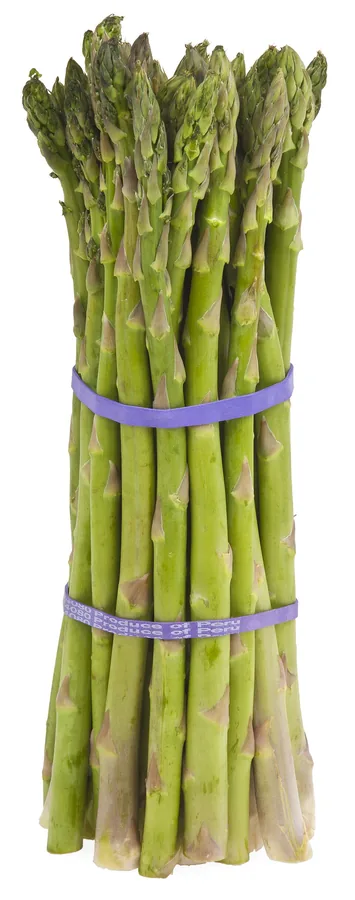
Asparagus is a long-lived perennial vegetable, planted once and cropped for decades. A well-managed bed continues producing spears for 15 to 20 years or more, which is what justifies its slow establishment. The plant is notably cold-hardy, persisting through winters as severe as USDA zone 3, and its crowns break dormancy early, sending up tender shoots before most annual crops are even sown.
Its annual cycle is governed by the relationship between spear and fern. The spears harvested in spring are emerging shoots, and those left uncut expand into tall, feathery ferns that photosynthesize through summer to refill the crown's reserves. Since that stored energy sets the next season's yield, the ferns are left intact until they senesce and yellow in fall. Asparagus is also dioecious, so each plant is either male or female, and only female plants form the small red berries.
Establishment demands restraint more than effort. A new crown needs two to three years to accumulate reserves before it can support a full cutting, and harvesting earlier draws the crown down faster than the ferns can replenish it. Sited in deep, well-drained soil under full sun and on ground not previously cropped to asparagus, the bed converts that early patience into decades of yield.
Care
The short version: full sun, deep and well-drained soil, and steady moisture across spring and summer, together with the restraint to forgo harvest for the first couple of seasons while the crowns accumulate reserves.
Light
Asparagus performs best in full sun, a position receiving 8 or more hours of direct light, because spear vigor depends on the photosynthate the ferns fix. It tolerates light afternoon shade, but sustained shading reduces that energy supply and yields thin spears and weakened crowns over time.
Water
Hold the bed evenly moist at roughly 1 to 2 inches of water a week, most critically during spear emergence and fern expansion when demand peaks. An established bed is fairly drought-tolerant, yet consistent moisture improves spear quality. Avoid saturated soil, which favors crown and root rot.
Soil
The crowns require deep, well-drained, fertile loam high in organic matter, though sandy soils serve once amended with compost. Target a pH of 6.5 to 7.5, near neutral, a setting that matters because the crowns occupy the same soil for decades without relocation.
Temperature
Active growth occurs between 50°F and 77°F (10°C to 25°C), and the plant requires a genuine winter chill to enter dormancy and reset for spring. That cold requirement explains why asparagus thrives in northern gardens and performs poorly where winters remain mild.
Humidity
Ambient outdoor humidity of about 40% to 70% is adequate, since asparagus is undemanding on this point. Air movement through the ferns matters more, because still, persistently wet foliage creates the conditions rust exploits.
Feeding
Apply nutrients in early spring ahead of spear emergence and again after harvest concludes, matching the crown's two main demand periods. A balanced complete fertilizer such as 10-10-10, or compost worked into the bed, sustains crown vigor year after year.
Pruning
Retain the green ferns through summer and fall, as they are actively replenishing the crowns for next season. Once they yellow and brown, cut them to ground level in late fall or early spring to remove overwintering asparagus beetles and rust inoculum.
Repotting
Asparagus is not repotted. It is a permanent in-ground planting holding one position for 15 to 20 years or more, which makes careful site selection a decision with long consequences.
Size & spacing
Mature summer ferns reach 4 to 6 feet (120 to 180 cm) in height and spread 2 to 4 feet (60 to 120 cm) wide. Spacing the crowns to that width keeps air moving through the canopy, which dries the foliage and limits rust establishment.
When to plant
Asparagus operates on an extended timeline driven by crown development. Dormant crowns go in early spring as soon as the soil can be worked, after which cutting is withheld for two to three years while the crowns build reserves. Once mature, the bed yields spears for several weeks each spring, and the ferns then sustain it through the summer growing season.
Northern hemisphere
Southern hemisphere
Typical months for a temperate climate: start earlier in warm zones, later where spring frosts linger.
- Sow: Late winter to early spring, about 10-12 weeks before the last expected frost, if starting from seed
- Plant: Early spring as soon as the soil is workable; set one-year-old crowns in trenches
- Harvest: Harvest spears in spring (roughly 6-8 weeks once a bed is mature). Do NOT harvest the first 2 seasons after planting crowns; take a light harvest in year 2-3 and a full harvest from about year 3 onward to let crowns establish. Inconspicuous yellow-green flowers form on ferns in summer; female plants set red berries.
Hardiness
USDA hardiness zones: 3–8
Temperature: down to -40°C
Troubleshooting
Asparagus problems concentrate in two structures: the spears and the ferns that succeed them. Weak spears generally trace to the condition of the crown, whereas pustules, discoloration, and pests register on the foliage. Match the symptom below and intervene before it reduces the following season's crop.
Fusarium crown and root rot in wet soil
Yellowing ferns and shrinking spears over rotted tissue point to Fusarium crown and root rot, a soil-borne fungus that colonizes the crown most aggressively where saturated soil weakens it. No treatment cures an infected crown, so the response is to remove the worst plants and correct the drainage that favors the pathogen. Establishing each new bed from clean crowns on fresh ground, never in old asparagus soil, avoids the carryover inoculum that drives reinfection.
Fix:
- Remove severely affected plants
- Improve drainage
- Replant in a new, well-drained site with disease-free crowns
Thin, spindly spears from a depleted crown
Spear diameter tracks the energy reserves held in the crown, so thinning spears report a crown drawn down by youth or by a harvest extended too far. Stop harvesting once spears fall below pencil thickness and allow them to fern out, since the foliage rebuilds those reserves through the season. Feeding in early spring and removing weed competition restores diameter the following year.
Fix:
- Stop harvesting and let spears fern out to rebuild crown energy
- Fertilize in early spring and after harvest
- Control weeds and maintain consistent moisture
Asparagus beetle feeding on spears and ferns
The chewing comes from asparagus beetles, the bluish-black common species or the spotted one, whose slug-like larvae scar the spears and defoliate the ferns. Handpicking adults and larvae and rubbing out the dark eggs cemented to spear tips suppresses each generation directly. Because the adults overwinter in spent fern litter, a thorough fall cleanup removes the reservoir that seeds the next year's population.
Fix:
- Handpick adults and larvae
- Remove and destroy infested ferns in fall
- Apply an approved insecticide if populations are heavy
Asparagus rust pustules on stems and ferns
Rusty orange pustules on the foliage identify asparagus rust, a fungus whose spores germinate where standing air and a film of leaf moisture let them establish. Cutting out and destroying infected ferns removes the inoculum before it overwinters, and wider spacing dries the foliage by improving air movement. Resistant cultivars and irrigation that keeps water off the leaves both deny the pathogen the wet surface it needs.
Fix:
- Remove and destroy infected ferns
- Improve spacing and air flow
- Use rust-resistant cultivars and fungicide if needed
Saponin-bearing red berries on female plants
Because asparagus is dioecious, only female plants set the pea-sized red berries, and the steroidal saponins they contain account for the gastrointestinal upset reported when a child or pet eats them. The fruit poses no threat to the plant, so management is simply clearing fallen berries from areas used by children and animals. Selecting an all-male cultivar removes the female flowers and the fruit altogether.
Fix:
- Remove berried female ferns where children or pets browse
- Grow all-male hybrid varieties to avoid berries
Toxicity
The harvested spears are a safe, familiar vegetable, but the remainder of the plant is not. Both the mature ferns and, more so, the bright red berries of female plants contain steroidal saponins capable of causing gastrointestinal upset. Keep berries and senesced foliage away from pets, livestock, and small children, and wear gloves if the sap irritates the skin.
Toxic to
Cats · Dogs · Horses · Rabbits · Livestock · Birds
Safe for
People
Cats Mild
The steroidal saponins concentrated in the red berries irritate a cat's digestive tract, producing vomiting, diarrhea, or abdominal discomfort. Keeping berried ferns beyond reach removes the exposure.
Dogs Mild
In dogs the same berry saponins drive vomiting, loose stools, and a tender abdomen, while contact with the foliage can provoke an itchy allergic rash in sensitive individuals. Both routes warrant denying access.
Horses Caution
The saponins present in both the berries and the mature ferns can disturb a horse's gut. Horses generally avoid the plant, but fencing them away from a fruiting bed removes the risk entirely.
Rabbits Caution
A rabbit's small body tolerates the saponins in the berries and ferns poorly, so even a small ingestion can trigger digestive upset. Restricting any sharing to the tender spears is the safe course.
Livestock Caution
Goats, sheep, and cattle can develop digestive upset from the berries and aged foliage through the same saponin action. Most graze around it, though a hungry animal may not, so caution is warranted near a fruiting bed.
Birds Caution
Wild birds consume the berries without evident harm and act as seed dispersers, yet the saponins make the fruit an unsuitable offering for pet birds. Cage birds should be kept clear of it.
People Spears safe
The harvested spears are a safe, routine vegetable. The red berries are the exception, since their saponins can cause stomach upset, so they should not be eaten and should be kept from small children.
The tender harvested spears are non-toxic and a safe food. Toxicity concern is limited to the red berries and mature fern foliage; wear gloves if you develop skin irritation from the sap, and keep berried female ferns away from pets and small children.
Helpline numbers

United States
ASPCA Animal Poison Control: (888) 426-4435 (fee applies)

United Kingdom
Animal PoisonLine: 01202 509000 (fee applies)

Australia
Animal Poisons Helpline: 1300 869 738
Varieties
A small set of cultivars accounts for most home plantings, divided chiefly between high-yielding all-male hybrids and the older open-pollinated heirlooms. The following are the ones worth knowing.
Jersey Knight
An all-male hybrid that diverts energy from seed to spear, cropping heavily with almost no berries and carrying strong resistance to rust, fusarium, and crown rot.
Mary Washington
The classic open-pollinated heirloom selected for rust resistance, though as a non-hybrid it yields a mix of male and female plants.
Purple Passion
A purple-speared selection sweeter and more tender than the green types, with the pigment reverting to green during cooking.
Jersey Giant
A vigorous all-male hybrid valued for cold hardiness, disease tolerance, and thick, productive spears.
Companions
Asparagus keeps to a permanent bed, so it has few planting neighbors, but its long partnership with tomatoes is the one gardeners come back to.
Plant near
Tomatoes: A classic reciprocal pairing: asparagus is reported to help deter root-knot nematodes while tomatoes produce solanine that can help repel asparagus beetle.
How to propagate
Two propagation routes lead into an asparagus bed, and the choice between them determines how soon the first full harvest arrives.
DivisionEasy
Early spring, planting dormant one-year-old crowns · 2-3 years to first full harvest
The standard method sets dormant one-year-old crowns 6 to 8 inches deep in trenches in early spring. Because the crown arrives with a year of reserves already built, this is the most reliable route to a productive bed and brings a first full harvest in about 2 to 3 years. That head start delivers spears a full season earlier than seed-grown plants reach the same stage.
SeedModerate
Start indoors in late winter/early spring 10-12 weeks before last frost; transplant after danger of frost · 3-4 years to first full harvest
Seed is cheaper and broadens cultivar choice, but it adds a season because the seedling must first build the crown a purchased crown already has. Sow indoors 10 to 12 weeks before the last frost and transplant after frost danger passes, then expect 3 to 4 years to a full harvest, roughly a year beyond crowns. Unless the seed is an all-male line, the resulting stand will include both male and female plants.
Myths
White asparagus is a different plant from the green kind.
Both are the same plant, Asparagus officinalis, separated only by culture. Growers mound soil over the emerging spears to exclude light, a practice called blanching. Deprived of sunlight, the spear cannot synthesize chlorophyll, so it stays white.
Female plants are better because they make berries.
The opposite holds in yield terms. Male plants out-produce females because energy that females commit to flowering, seed, and berries goes instead into spear production. That allocation is why all-male hybrids are the standard choice, and it also prevents the volunteer seedlings that scattered berries would establish.
You can cut spears heavily the first year after planting.
Newly set crowns must first build their reserves. Skip the harvest for the first season or two, then limit cutting to a light take in year 2 or 3. Allowing the ferns to mature is what accumulates the crown energy that sustains productive cropping across the bed's two-decade lifespan.