Houseplant · Asparagaceae
Cast Iron Plant
Aspidistra elatior
Place it in the darkest corner of the room and the cast iron plant carries on regardless.
Low light
50–68°F · 10–20°C
USDA 7–11
1–3 ft · 0.3–0.9 m
Overview
The cast iron plant lives up to its name. It withstands low light, dry air, skipped waterings, and broad temperature swings, which is why it filled Victorian parlors and why it still works in a dim hallway or an overlooked corner today. A slow growing evergreen from the lily-of-the-valley branch of the asparagus family, it originates on the shaded woodland floor of southern Japan.
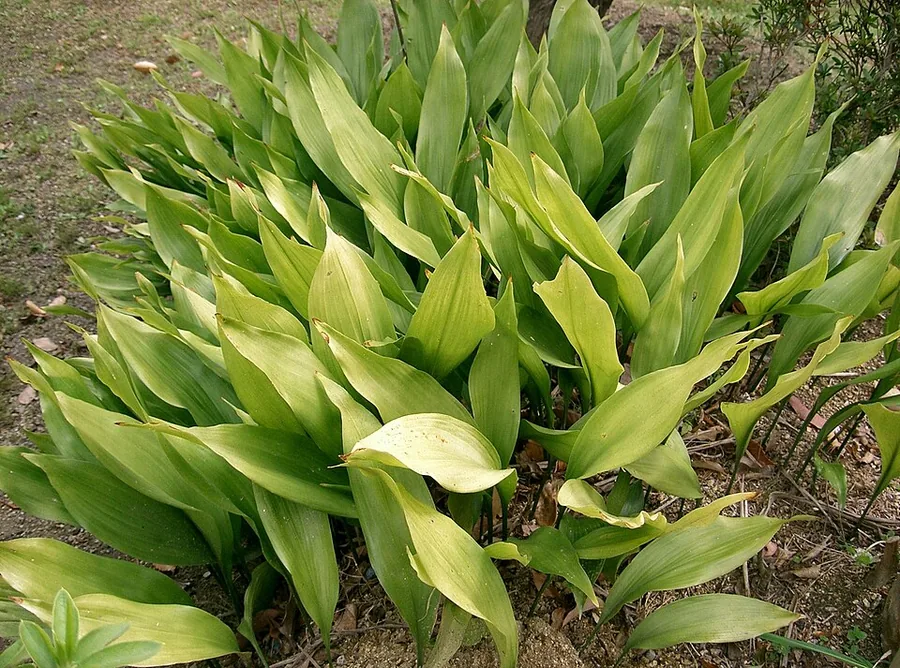
The result is a clump of upright, leathery dark green leaves rising straight from the soil, each one long, glossy, and durable enough to withstand what fells more demanding houseplants. No conspicuous bloom is on offer. The plant does flower, but the small cup-shaped blooms sit at soil level and are easily overlooked, so it is grown for foliage and endurance rather than display.
For homes with animals, the decisive point is that the cast iron plant is non-toxic and pet-safe. The ASPCA records it as safe for cats, dogs, and horses, so it can be positioned within reach of a curious nose without concern.
Care
The short version: provide low to medium indirect light, free draining soil, and water only once the top few inches have dried, then largely leave it to its own devices.
Light
This is a plant built for shade, comfortable across the range from deep shade to bright indirect light. The sole hazard is direct sun, which bleaches the chlorophyll and scorches the foliage. A north-facing window or a shaded corner answers its needs precisely.
Water
Allow the soil to dry down 2 to 3 inches (about 5 to 8 cm) before watering, then water until it drains through freely, and never let the pot stand in a saucer of water. Scale back further during winter dormancy. Because saturated soil deprives roots of oxygen and is the foremost cause of root rot, staying on the dry side is the safer error.
Soil
Use a rich, free draining potting mix containing some peat. The plant copes with sandy, loamy, or clay soils, but it will not tolerate one that stays wet, so drainage outweighs every other soil consideration.
Temperature
Standard room warmth suits it well, with a comfortable band of 50°F to 68°F (10°C to 20°C). It endures cool spells better than most houseplants, though hard frost should be avoided.
Humidity
The plant thrives in low humidity and demands nothing extra, a trait that explains much of its indoor resilience. The dry household air that distresses other species leaves it unaffected.
Feeding
Apply a general houseplant fertilizer sparingly, roughly once a month from spring to late summer, then suspend feeding for the remainder of the year. Variegated forms call for an even leaner regime, since nutrient-rich soil erases their markings.
Pruning
Pruning is minimal. Cut away any damaged, yellowed, or scorched leaves at the base as they appear to keep the clump looking tidy.
Repotting
Given its slow rate of growth, it can remain in one pot for several years, moving up just a single size once roots emerge through the drainage holes. It in fact performs better when kept slightly pot-bound.
Size & spacing
A mature clump stands roughly 1 to 3 feet (30 to 91 cm) tall and spreads 12 to 24 inches (30 to 61 cm) across, advancing slowly enough to hold its form for years.
Troubleshooting
Few plants resist harm as well as this one, so the rare problems nearly always come down to excess sun or excess water. The leaves give early warning, and reading them lets you intervene before damage spreads. Find your symptom below, then respond.
Yellowing leaves and a soft, mushy base
Waterlogged soil starves the roots of oxygen and brings on root rot, which is how this otherwise indestructible plant is most often lost. Watch for a softening base and roots that have turned brown and slimy, conditions almost always traced to water left standing in the saucer. Withhold water until the mix dries, then lift the plant, excise the rotted roots, and repot into fresh, free draining medium.
Fix:
- Stop watering and let the soil dry out
- Unpot, cut away rotten roots, and repot in fresh well-drained mix
- Discard standing water from the saucer
Leaf stippling, webbing, or immobile waxy bumps
Fine stippling paired with delicate webbing indicates spider mites, which multiply fastest in warm, dry air; fixed tan bumps point to scale, and white cottony clusters reveal mealybugs. Begin by wiping the foliage and removing every pest you can reach, then apply insecticidal soap or horticultural oil. Quarantine the plant away from the rest of the collection until the population is cleared.
Fix:
- Wipe leaves and remove visible pests
- Treat with an appropriate insecticidal soap or horticultural oil
- Isolate the plant until the infestation is controlled
Sun-bleached patches and browned leaf tissue
The single weakness of this plant is direct sun, which bleaches the chlorophyll and burns the leaf tissue, leaving pale patches and brown scorched zones. The damage typically shows up after the plant is relocated somewhere brighter. Return it to filtered light or shade, and trim the worst leaves away at the base.
Fix:
- Move the plant out of direct sun to a low-light, filtered, or shaded position
- Remove badly scorched leaves at the base
Brown leaf tips and margins on green foliage
Browning tips most often signal an accumulation of fertilizer salts in the root zone, with prolonged drought as a secondary cause. Because soluble salts draw moisture away from the root tips, the remedy is to halt feeding and leach the pot through with plenty of plain water. Trim the dead tips for appearance, then return to light, monthly feeding restricted to the growing season.
Fix:
- Stop fertilizing and flush the pot with plenty of plain water to leach out salts
- Trim browned tips for appearance
- Resume only light, monthly feeding in the growing season
Variegation reverting as leaves emerge solid green
Cream and white markings depend on lean conditions, so when a variegated plant sits in rich soil or insufficient light, the pigment-free tissue gives way and fresh leaves emerge solid green. Withhold fertilizer to keep the soil nutrient-poor, which is what preserves the patterning. Position these cultivars in steady indirect light rather than the deepest shade.
Fix:
- Grow variegated cultivars in lean, nutrient-poor soil and avoid heavy feeding
- Provide adequate (but not direct) light rather than very deep shade
Toxicity
Reassuring news for pet owners and parents: the cast iron plant is non-toxic in every respect. The ASPCA records it as safe for cats, dogs, and horses, and the leaves hold nothing harmful to other animals or to people. It can be sited anywhere without concern over an opportunistic nibble.
Safe for
People · Cats · Dogs · Horses · Rabbits · Livestock · Birds
Cats None
Per the ASPCA, this plant is non-toxic to cats, so an exploratory bite carries no risk of poisoning. The fibrous leaves could still unsettle a delicate stomach if eaten in quantity, but nothing toxic is present.
Dogs None
Dogs are equally safe, as the ASPCA rates the species non-toxic to dogs. The tough, leathery foliage rarely tempts chewing, and it contains no harmful compounds.
Horses None
The ASPCA extends the same clearance to horses, with no toxicity expected. A grazing horse can browse the foliage without consequence.
Rabbits None
Rabbits run no risk of poisoning here, since the plant holds no known toxins. Its dense leaves rarely attract much nibbling regardless.
Livestock None
Goats, sheep, and cattle are safe around it. The leaves carry none of the compounds that trigger the digestive or neurological distress caused by genuinely toxic plants.
Birds None
Pet birds can share a space with it freely, because the foliage contains no compounds that harm them. A pecked leaf does no damage.
People None
For households with children, the plant is safe to keep within reach, with no poisonous parts. It is not a food crop, but an accidental taste is harmless.
Varieties
The typical cast iron plant is plain glossy green, but a few cultivars exchange some of that durability for striped or spotted foliage. These are the selections you are most likely to encounter.
'Variegata'
Leathery dark green blades streaked with irregular creamy white, though the markings persist only in lean, nutrient-poor soil.
'Milky Way'
Broad lance-shaped dark green leaves dusted with small white spots that resemble scattered starlight.
'Big Spotty'
A bolder spotted selection documented by Clemson, distinguished by larger markings across the foliage.
'Goldfeather'
A variegated cultivar recorded by UF/IFAS for its patterned leaves.
'Snow Cap'
A further variegated form listed by UF/IFAS, valued for its pale markings.
How to propagate
A single dependable method produces new cast iron plants, and it asks nothing more than patience.
DivisionEasy
Spring and early summer, while actively growing · Several weeks to a few months (slow)
Propagation is reliably done by dividing the rhizome clump in spring or early summer, while growth is active and the plant recovers quickest. Lift it from the pot, gently separate the tangled rhizomes, and ensure every section retains two or more leaves. Expect a slow start, as the divisions take several weeks to a few months to root and establish.
Myths
A plant this tough can take direct sun.
Its reputation rests on tolerating shade, neglect, and broad temperature swings, yet direct sun remains the one stress it cannot absorb. Intense light strips the chlorophyll and scorches the tissue, leaving bleached and browned leaves. Site it anywhere from bright indirect light through to deep shade.
A plant that cannot be killed will tolerate unlimited water.
Drought and irregular watering it handles without complaint, which is exactly where the legend comes from. The danger lies at the opposite extreme. Saturated soil suffocates the roots and causes the rot that is the leading cause of death for this plant.