Houseplant · Asparagaceae
Madagascar Dragon Tree
Dracaena reflexa var. angustifolia
Supply bright indirect light and fluoride-free water, and the dragon tree's slow metabolism forgives most other lapses.
Bright indirect
60–70°F · 16–21°C
USDA 10–12
6–20 ft · 1.8–6.1 m
Overview
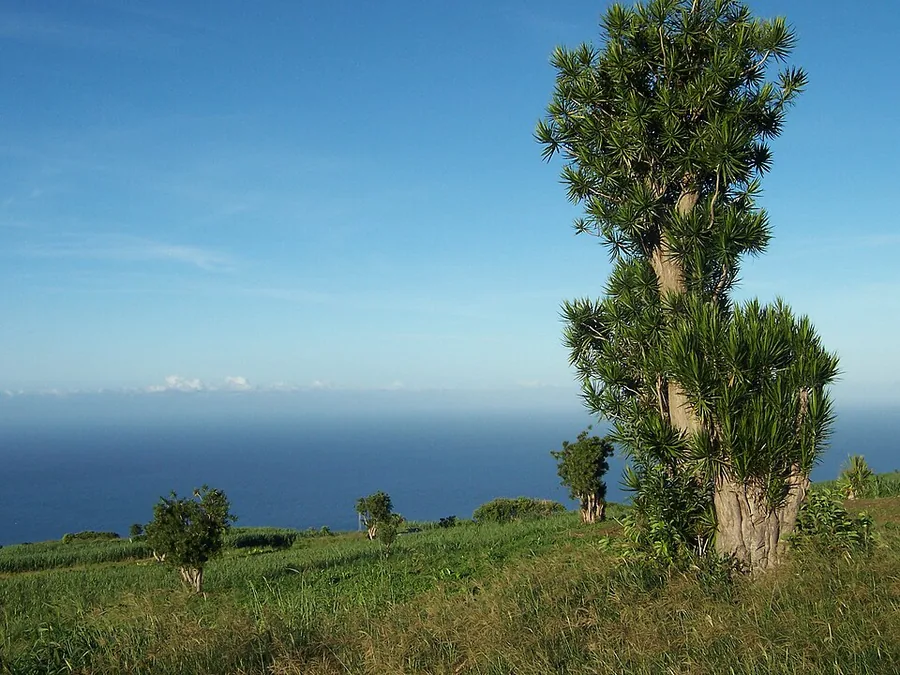
Among houseplants, the Madagascar dragon tree ranks as one of the more tolerant subjects a grower can keep. It produces slender canes terminating in arching, sword-shaped leaves margined in red, and once established it makes few demands. Native to Madagascar and the surrounding islands, it develops slowly indoors into a sculptural, tree-like habit that occupies a bright corner without overwhelming the room.
Much of its tolerance traces to a slow metabolism that buffers it against neglect. It performs best under bright indirect light yet accepts medium and even low light, and its unhurried growth means repotting and intervention are rare. Its one real intolerance is the fluoride present in ordinary tap water, which accumulates in the foliage and scorches the leaf tips, so distilled water or rainwater keeps the margins clean.
Several named forms are grown, ranging from leaves striped in three colors to canes suffused with deep red, which lets you match a selection to the room. Whichever cultivar you choose, the same undemanding plant lies beneath the variation in color.
Care
The short version: bright indirect light, watering with distilled water or rainwater once the surface dries, a warm range of 60°F to 70°F (16°C to 21°C), and light feeding through spring and summer.
Light
The dragon tree grows best under bright indirect light, yet it carries far more latitude than most foliage plants. It tolerates medium light, low light, and partial shade, but adequate brightness drives the pigment that holds the leaf color and keeps internodes short rather than stretched.
Water
Allow the upper layer of soil to dry before watering, then water thoroughly and discard what collects in the saucer, since standing water deprives the roots of oxygen. Hold it evenly moist through spring and summer and reduce supply from fall into late winter as growth slows. Use distilled water or rainwater, because tap-water fluoride concentrates in the foliage and scorches the tips, and avoid cold water.
Soil
Grow it in a loamy, peaty, well-drained mix high in organic matter, which holds moisture while still admitting air to the roots. Target a slightly acidic pH of 6.0 to 6.5, a range that also limits how readily fluoride becomes available at the root zone.
Temperature
Hold it within a warm 60°F to 70°F (16°C to 21°C), with nights a few degrees cooler in line with its tropical origin. It has no reserve against cold drafts, and a sharp chill can provoke rapid leaf drop.
Humidity
Average indoor humidity satisfies it, and it persists down to roughly 30%. Raising the moisture in dry, heated rooms eases the plant and suppresses spider mites, which exploit hot, dry air.
Feeding
Feed monthly through spring and summer with a liquid houseplant fertilizer while the plant is actively growing, then withhold over the cooler dormant months. Apply sparingly and avoid superphosphate formulations, since their fluoride load burns the foliage just as tap water does.
Pruning
The dragon tree withstands pruning well, so cutting a cane back when it overreaches prompts it to resprout from below the cut. The lowest leaves abscise on their own as the cane elongates, leaving the diamond-shaped scars that mark the bare stem.
Repotting
As a slow grower it needs repotting only every 2 to 3 years, or once roots circle the container, emerge from the drainage holes, or water passes straight through, all signs the medium can no longer hold moisture. Left undisturbed, it tolerates a snug pot.
Size & spacing
Indoors it usually levels off near 6 feet, though unchecked it attains 6 to 20 feet (1.8 to 6 m) in height and a spread of 3 to 10 feet (91 cm to 3 m), so a mature specimen needs clearance for its arching crown.
Troubleshooting
Because the dragon tree responds to stress through its foliage, the leaves register trouble before the rest of the plant does, and water quality or the surrounding air drives most of it. Reading those early signals lets you correct a fault before it compounds. Identify the pattern below, then act while intervention still changes the outcome.
Softened, mushy stems on a declining plant
Saturated soil with browning leaves and a softening base indicates root rot, which develops when the roots remain waterlogged and oxygen-starved. Healthy roots are firm and pale, so brown, mushy tissue confirms the diagnosis. Reduce watering, repot into fresh well-drained medium and excise the rotted roots, and ensure the pot drains freely with no standing water in the saucer.
Fix:
- Reduce watering and let the soil surface dry between waterings
- Repot into fresh, well-drained mix and trim rotted roots
- Ensure the pot has drainage holes and empty saucers
Rapid drop of many leaves together
When a dragon tree sheds heavily in a short span, the usual driver is shock from a cold draft, an abrupt relocation, or a temperature swing that the plant cannot buffer. Saturated soil and a serious pest outbreak produce the same response. Stabilize it at 60°F to 70°F (16°C to 21°C), clear of drafts and heat sources, correct the watering, and inspect the foliage for insects.
Fix:
- Move the plant away from drafts and heat/cold sources and keep temperatures 60-70°F
- Correct watering and ensure the pot drains freely
- Inspect for and treat insect infestations
Fine webbing and pale stippling on the foliage
Fine webbing on the leaf undersides with a stippled scatter of pale flecks indicates spider mites, which build up in hot, dry indoor air. Rinsing the foliage and raising humidity makes the environment less favorable to them. Treat with insecticidal soap or horticultural oil and repeat until the population is cleared.
Fix:
- Rinse foliage and raise humidity
- Treat with insecticidal soap or horticultural oil, repeating as needed
Cottony tufts or hard bumps with a sticky residue
Cottony white clusters seated in the leaf axils are mealybugs, while hard or soft bumps along the stems are scale, and both excrete the sticky honeydew you can see. Dislodge them with a swab of rubbing alcohol, then follow with insecticidal soap or horticultural oil as the infestation requires. Isolate the plant from your others to halt their spread.
Fix:
- Wipe or dab insects with an alcohol-moistened swab
- Treat with insecticidal soap or horticultural oil, repeating as needed
- Isolate the plant to prevent spread
Browned, scorched margins along the leaf tips
This pattern is almost always fluoride damage, since the dragon tree is unusually sensitive to the fluoride carried in ordinary tap water, which accumulates in the foliage. Soluble salts from heavy feeding or superphosphate fertilizer produce the identical scorch. Move to distilled water or rainwater, hold the pH between 6.0 and 6.5, reduce feeding, and trim the spoiled tips for appearance.
Fix:
- Switch to distilled water or rainwater, or let tap water stand 24 hours before use
- Maintain soil pH between 6.0 and 6.5
- Stop using fertilizers containing superphosphate and avoid over-fertilizing
- Trim damaged tips for appearance
Yellowing and loss of the lowest leaves
This reflects normal aging rather than any disorder. As a cane elongates it abscises its oldest basal leaves and leaves behind the diamond-shaped scars that characterize the dragon tree, while the apical rosette remains green and healthy. Remove the spent leaves if you prefer a clean look, and cut a leggy cane back to induce branching, since it will resprout.
Fix:
- No action needed; remove spent leaves for tidiness
- Cut back leggy canes if a fuller habit is wanted - they will resprout
Discrete dead spots and lesions on the leaves
Discrete spots or necrotic patches typically stem from a leaf spot disease, though thrips and other chewing insects can mimic the marks. Remove the affected leaves, improve air movement around the plant, and keep water off the foliage so spores find no film in which to germinate. Where insects are present, treat them as well.
Fix:
- Remove affected leaves
- Improve air circulation and avoid wetting foliage
- Treat insect pests if present
Toxicity
The dragon tree is toxic to pets because its tissues contain saponins, surface-active compounds that irritate the gastrointestinal lining when an animal chews and swallows the leaves, and cats, drawn to the thin foliage, are the most frequent offenders. People are essentially safe, but since none of the plant is meant to be eaten, position it beyond the reach of pets and small children.
Toxic to
Cats · Dogs · Horses · Rabbits · Livestock · Birds
Safe for
People
Cats Moderate
Cats are the most inclined to chew the thin leaves, and the saponins affect them most severely. Expect vomiting, at times streaked with blood, together with drooling, anorexia, and a flat, depressed demeanor, with dilated pupils serving as a characteristic sign.
Dogs Moderate
A dog that ingests the leaves may vomit, occasionally with traces of blood, and become dull and disinterested in food, commonly accompanied by heavy salivation.
Horses Moderate
The ASPCA records the dragon tree as toxic to horses as well, where the same saponins produce gastrointestinal upset, hypersalivation, and a lethargic, depressed manner.
Rabbits Caution
The saponins that affect other animals would likewise irritate a rabbit's digestive tract, so keep the leaves well beyond reach and regard any nibbling as grounds to consult a veterinarian.
Livestock Caution
Grazing stock such as goats and sheep can respond to the same saponins with salivation and digestive upset, so exclude the plant from any area they range.
Birds Caution
A pet bird that samples the foliage may develop an irritated crop and a subdued, off-color interval, making placement well away from the cage the safer choice.
People Low
People are essentially safe around the dragon tree, where a stray taste yields little beyond a faintly bitter note. Even so, no part is intended for consumption, so keep young children away from the leaves.
Keep out of reach of pets; cats in particular may chew the thin leaves. Ingestion of any plant material can also cause general GI upset
Helpline numbers

United States
ASPCA Animal Poison Control: (888) 426-4435 (fee applies)

United Kingdom
Animal PoisonLine: 01202 509000 (fee applies)

Australia
Animal Poisons Helpline: 1300 869 738
Varieties
The dragon trees in commerce reduce to a few named selections, separated chiefly by leaf pigmentation rather than form. These are the cultivars worth recognizing.
'Tricolor'
Three colors occur on a single blade, with stripes of green, cream, and red running its length.
'Colorama'
The most highly colored selection, its broad reddish margins flushing the entire plant pink.
'Bicolor'
A simpler two-tone form, its green leaves striped with reddish bands.
'Magenta'
Named for the deep reddish-purple that edges every leaf.
'Tarzan'
The robust selection, bearing thicker canes and a fuller, more upright crown of leaves.
How to propagate
The dragon tree propagates readily from its own vegetative tissue, so a single leggy specimen yields several new plants drawn from the same canes.
Stem cuttingsEasy
Spring or late summer · Several weeks to root
Stem cuttings are the simplest route to new dragon trees. Take them in spring or late summer, working from tip cuttings, sections of bare cane, or basal shoots drawn from the base. Insert them in a moist medium, where they need several weeks to initiate roots.
Air layeringModerate
Spring or summer · Several weeks
Air-layering suits a tall, leggy cane you want to reduce without sacrificing the top growth. Perform it in spring or summer and allow the cane to root in place over several weeks before severing the new plant.
DivisionModerate
Spring at repotting · Several weeks
Division is the orderly method at repotting in spring. Separate the basal shoots and offsets from the parent, pot each independently, and allow several weeks for them to root into self-supporting plants.
Myths
A dragon tree will clean the air in your home.
The evidence does not support it: a review of chamber studies found that potted plants do almost nothing for indoor air at any realistic scale. A single plant's clean-air output is negligible, and you would need 10 to 1,000 plants per square meter to rival what ordinary ventilation already delivers. Keep the dragon tree for its form, not as an air purifier.
Dropping lower leaves means the plant is dying.
Loss of the basal leaves is simply the mechanism by which the canes gain height. The plant abscises its oldest leaves and leaves the diamond-shaped scars that mark the bare stem, while the crown above remains full and green. A measure of leaf drop from the base is healthy, not a warning sign.