Ornamental · Amaranthaceae
Celosia
Celosia argentea
Set in full sun and warm, well-drained soil, celosia drives flame-bright plumes from summer through to frost.
Full sun
USDA 2–11
0–3 ft · 0.2–0.9 m
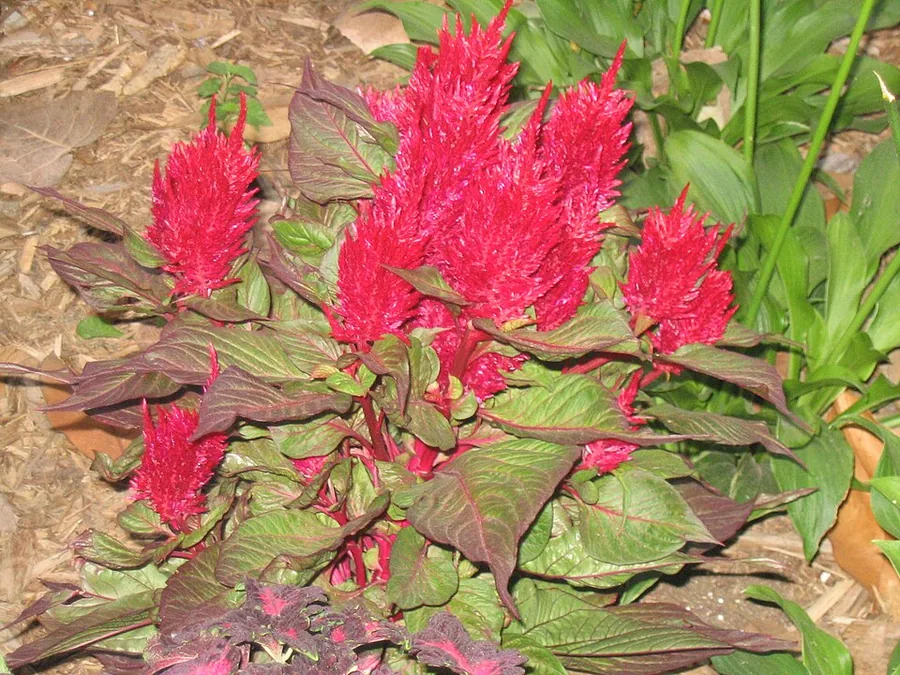
Overview
Celosia is among the most saturated of garden annuals. Its inflorescence takes one of three forms depending on the group, ranging from soft feathery plumes to the velvety fasciated crests that genuinely resemble a rooster's comb, and the coloration runs through hot reds, golds, oranges, and pinks. A member of the amaranth family, it grows quickly enough that a spring sowing reaches full bloom within a single season.
Its requirements follow directly from its origins. As a plant of warm regions, celosia tolerates drought and dry soil because its physiology is built for heat, and it asks chiefly for warm, well-drained ground in full exposure. The two conditions it cannot withstand are cold and a saturated root zone, the first arresting growth and the second inducing rot, so both must be excluded.
Its value is twofold. The blooms retain pigment whether cut for the vase or air-dried, and the same species is grown as a leafy vegetable known as Lagos spinach throughout much of Africa and Asia. Because the entire plant is non-toxic, it suits a garden shared with pets and children without reservation.
Care
The short version: full sun and warm, well-drained soil to match its heat-loving physiology, even moisture during establishment then a drier regime as roots take hold, a light monthly feed, and routine deadheading to sustain bloom.
Light
Celosia demands full sun, since strong direct light drives the compact, well-colored growth the plant is grown for. Provide an open site with at least 6 hours of sun, because in shade the stems etiolate and the plumes emerge pale and sparse.
Water
Maintain even moisture while plants are young to support establishment, then reduce input and water only once the top inch or so of soil has dried. An established plant withstands heat and drought, but a saturated root zone induces root and stem rot, so well-drained ground is non-negotiable.
Soil
Use moderately fertile, humus-rich soil with free drainage. Fertility supports flowering, yet drainage is the decisive factor, because soggy or cold wet soil is the direct cause of root and stem rot.
Humidity
Ambient outdoor air is sufficient, so no target value applies. Air movement matters more than humidity here, since dense, damp foliage in humid conditions creates the leaf-surface wetness that leaf spot and flower rot require to establish.
Feeding
Celosia is a light feeder, so a single monthly application through the growing season meets its needs. Restraint is deliberate, because over-rich, saturated conditions favor root rot rather than increased bloom.
Pruning
Deadhead spent inflorescences to redirect the plant toward continued flowering rather than seed set. Remove damaged or diseased tissue as it appears, which limits inoculum and keeps the canopy open.
Size & spacing
Mature height runs from 6 to 36 inches (15 to 91 cm) by group, spanning dwarf crested forms to tall cutting types. Each plant occupies about 6 to 18 inches (15 to 46 cm) of spread, so spacing at that interval sustains the air movement that suppresses foliar disease.
When to plant
Celosia is a frost-tender warm-season annual, so timing follows soil temperature rather than the calendar. Sow indoors in early spring to gain a head start, then move plants out small only after frost has passed and the ground has warmed, which lets the plumes carry from early summer to the first fall frost.
Northern hemisphere
Southern hemisphere
Typical months for a temperate climate: start earlier in warm zones, later where spring frosts linger.
- Sow: Start indoors about 6 to 8 weeks before the last spring frost.
- Plant: Set out or direct sow after the last spring frost once soil has warmed.
- Harvest: Early summer to the first fall frost.
Hardiness
USDA hardiness zones: 2–11
Temperature: down to -46°C
Troubleshooting
Two stresses underlie most celosia disorders: excess moisture and cold. Both compromise either the root system or the plant's heat-driven growth, so inspect the foliage and the crown for early signs, then match the symptom below and intervene before it advances.
Sudden collapse with basal rot in cold, saturated soil
Wilting and collapse with a blackened stem base typically indicate root and stem rot, often driven by Phytophthora, establishing in cold, waterlogged soil. Once the roots have decayed the plant cannot recover, so it should be removed and discarded. Correction is cultural: reduce irrigation, improve drainage, and replant only into warm, well-drained ground where the pathogen is far less active.
Fix:
- Remove and discard affected plants
- Stop overwatering and improve soil drainage
- Replant only in warm, well-drained soil
Chlorotic stippling and faint webs on foliage in dry heat
Hot, dry, dusty conditions and drought stress favor spider mites, which feed on leaf cells and remove chlorophyll until the foliage bronzes and fades. Examine the undersides, where tiny moving specks and a thin web confirm them. Dislodge them with a strong water spray, apply insecticidal soap or horticultural oil on the indicated schedule, and maintain soil moisture, since well-watered plants are far less attractive to them.
Fix:
- Rinse foliage with a strong spray of water to dislodge mites
- Treat with insecticidal soap or horticultural oil, repeating as directed
- Remove and discard heavily infested leaves
Spotted leaves and rotting flower heads
Discrete leaf lesions, sometimes with softening flower heads, indicate fungal leaf spot, which is promoted by humidity, rain, crowding, and persistent leaf wetness. Remove affected leaves and rotted inflorescences to reduce the spore load. Increase spacing for air movement and irrigate at the base, because keeping foliage dry denies the pathogen the conditions it needs.
Fix:
- Remove and discard spotted leaves and rotted flower heads
- Improve air circulation by spacing or thinning plants
- Water at the base to keep foliage dry
Premature flowering on dwarfed, checked plants
Cold exposure or root disturbance imposes a growth check that arrests vegetative development and triggers premature flowering on short stems. A severely checked plant seldom regains normal stature, so replacement with a fresh young transplant is usually the efficient response. Prevent it by sowing into warm soil, growing seedlings warm and on the dry side, and transplanting while young and small after frost.
Fix:
- Replace severely checked plants with fresh young transplants
- Keep new plantings warm and unstressed to encourage recovery
Colonies of soft-bodied pests and honeydew at the shoot tips
Clusters on the shoot tips are aphids, and the glaze they secrete is honeydew. Light numbers do little, but a colony distorts the expanding leaves and fouls the plant. Displace them with a firm spray, treat the worst growth with insecticidal soap, and conserve lady beetles and other predators that regulate them naturally.
Fix:
- Knock aphids off with a strong water spray
- Apply insecticidal soap to affected growth
- Encourage or release natural predators such as lady beetles
Toxicity
For households with animals the verdict is clear: celosia is non-toxic to cats, dogs, and horses, per the ASPCA. Because the same species is cultivated as an edible green, no part of the plant warrants restriction around pets, livestock, or children.
Safe for
People · Cats · Dogs · Horses · Rabbits · Livestock · Birds
Cats None
The ASPCA lists celosia as non-toxic to cats, so an ingested plume or leaf presents no toxicological concern. Vomiting after a large intake reflects mechanical irritation from the roughage, as occurs with any plant.
Dogs None
Celosia is non-toxic to dogs, so chewing the foliage or flowers causes no harm. A large quantity may produce transient gastrointestinal upset, consistent with ingestion of any plant material.
Horses None
The ASPCA rates celosia safe for horses, so it presents no poisoning hazard in or adjacent to a paddock. No special exclusion is warranted.
Rabbits Safe
Rabbits may graze celosia without toxic risk, and the foliage is consumed as a cooked green in many regions. Introduce any new fresh forage gradually to maintain digestive stability.
Livestock Safe
Cattle, goats, and sheep face no toxic hazard from celosia, and the species is grown as a leaf vegetable for human consumption across parts of Africa and Asia. Browsing produces no poisoning.
Birds Safe
Both companion and wild birds may consume the seeds and foliage safely, as the plant contains no toxins relevant to them.
People Safe
Celosia is safe around children, and the young leaves and shoots constitute a common cooked green known as Lagos spinach. No part of the plant poses a hazard.
Varieties
Celosia is classified into three groups by inflorescence form, and a few named series account for most of what is grown. The following are the ones worth recognizing.
'Century' and 'Fresh Look' (Plumosa Group)
These plume types produce upright, densely packed feathery heads in red, gold, orange, and pink whose pigment holds in both fresh and dried use.
'New Look' (Plumosa Group)
It pairs feathery red plumes with bronze-purple foliage on a neat, compact habit.
Jewel Box Series (Cristata Group)
A dwarf crested cockscomb of only about 6 to 8 inches in height, bearing dense brain-like crests.
Big Chief Series (Cristata Group)
A tall crested cockscomb reaching roughly 36 inches, which suits it well to cutting.
'Flamingo Feather' (Spicata Group)
A wheat celosia producing slender, upright spikes that grade from pink to white like heads of grain.
How to propagate
Celosia is propagated almost exclusively from seed, and germination is rapid once soil temperature is adequate, which is why few growers bother with any other method.
SeedEasy
Start indoors about 6 to 8 weeks before the last spring frost, or direct sow after frost once soil is warm (70 to 75°F). · Germinates in about 1 week at 70 to 75°F and blooms the same season.
Celosia establishes readily from seed. Sow indoors about 6 to 8 weeks ahead of the last spring frost, or direct sow once soil has warmed to 70°F to 75°F (21°C to 24°C), at which point emergence follows in roughly a week. Grow the seedlings warm and on the dry side and transplant them while young and small, because a chill or a late move checks growth and forces premature bloom. A spring sowing flowers within the same season.
Myths
Celosia is poisonous to pets.
The ASPCA classifies celosia as non-toxic to cats, dogs, and horses, so an exploratory nibble carries no risk of poisoning. The plant is safe to grow throughout a household with animals. Indeed, the species is cultivated elsewhere as an edible leafy green.
Transplant timing and plant size make no difference to celosia.
It is intolerant of cold and transplant disturbance, both of which check growth and force bloom on short, stunted stems. Sow into warm soil and establish the plants young and small after the last frost. Transplanting late or roughly fixes a stunted habit that does not reverse.
Thriving celosia requires perpetually moist, nutrient-loaded soil.
It is adapted to heat and drought and requires only warm, well-drained ground. Saturated or cold wet soil is precisely the condition that induces root and stem rot. Maintain a lean, comparatively dry root zone once the plant is established.