Ornamental · Polemoniaceae
Garden Phlox
Phlox paniculata
Given full sun, open spacing, and even moisture, garden phlox tops the border with fragrant color from midsummer onward.
Full sun
Every 3–7 days
USDA 4–8
2–4 ft · 0.6–1.2 m
Overview
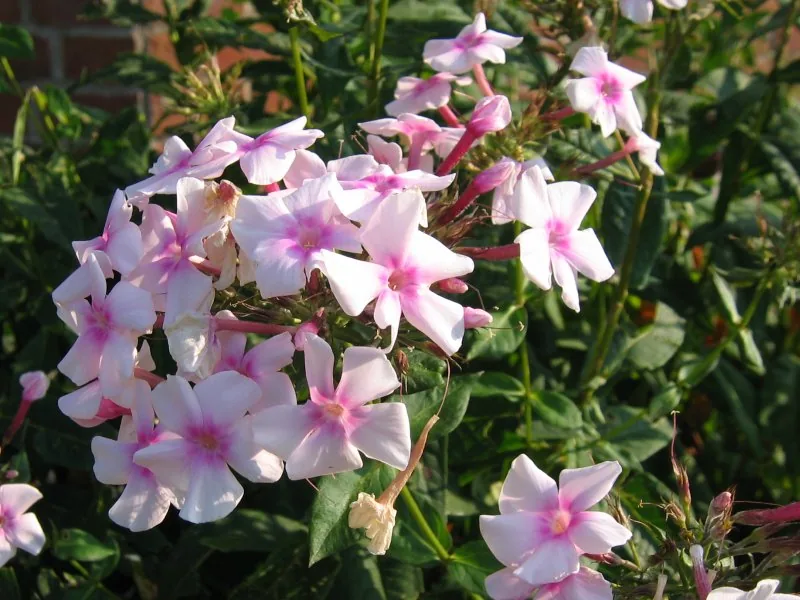
Garden phlox ranks among the most dependable perennials for the summer border, throwing up tall stems capped by wide, fragrant flower heads. This cold-hardy perennial is native to the eastern United States, and an established clump returns larger each season. Bloom color ranges across pink, white, lavender, and red, and the panicles keep butterflies and other pollinators working the plant through the season.
The real value of phlox lies in when it flowers. Its peak falls in midsummer to fall, the window when many spring perennials have gone over, and it sustains color for weeks past that point. Because the clump widens slowly from the crown, one plant matures into a dense, leafy mass that holds the back of a border.
Its single weakness is powdery mildew, a fungus that thrives in the stagnant, humid air of a tightly planted bed. Spacing plants apart and directing water to the roots rather than the leaves keeps the foliage dry enough to deny the fungus a foothold. Pair that with a mildew-resistant variety and the disease rarely registers.
Care
The short version: full sun to part shade in rich, moist, well-drained soil, with reliable water through dry spells. Space each clump so air can circulate, water at the base to keep foliage dry, and divide every few years to sustain strong bloom.
Light
Bloom is heaviest in full sun, though garden phlox accepts partial shade and partial sun without complaint. Deeper shade cuts the flowering, stretches the stems, and leaves the plant more open to mildew.
Water
Hold the soil evenly moist, watering every 3 to 7 days and more frequently during a dry summer, since phlox has no drought tolerance. A mulch layer conserves that moisture and holds the roots cool through heat. Direct water to the base rather than the foliage, which keeps leaf surfaces dry and denies powdery mildew its start.
Soil
Set plants in moist, fertile, well-drained ground high in organic matter, from loam to a heavier clay. It tolerates a broad pH of 6.0 to 8.0, so most garden soil serves once you dig in some compost.
Temperature
Garden phlox is thoroughly cold-hardy, enduring winter lows to -29°F (-34°C) and summer highs to 95°F (35°C). That wide tolerance spans many climates, which explains its standing as a reliable border perennial.
Humidity
Ordinary outdoor humidity suffices, so no target reading applies. What counts far more is air movement, because the still, congested conditions of a crowded planting are precisely what powdery mildew requires.
Feeding
Feed once in spring, using a balanced fertilizer or a generous amount of compost dug into the soil. A single seasonal feeding on already fertile ground supplies enough to carry the plant through its long flowering.
Pruning
Deadhead the faded panicles to extend the bloom and check unwanted self-seeding. Thin crowded stems early to open up airflow, and in winter cut the plant to the ground and clear the debris so disease has no litter in which to overwinter.
Repotting
Rather than a pot, garden phlox grows in open ground, but it still requires periodic division. Lift and split each clump every 2 to 4 years in spring or fall; a congested center bearing smaller blooms and weaker stems signals that the work is overdue.
Size & spacing
Plants stand 2 to 4 feet (61 to 122 cm) tall and build clumps 2 to 3 feet (61 to 91 cm) across. Allow each that full width so air passes freely and mildew finds less purchase.
When to plant
As a perennial, garden phlox regrows on its own each year, which makes planting a single task carried out in spring after the last frost or in early fall. After that it keeps to the seasons unaided, pushing up new shoots in spring and flowering from midsummer into fall.
Northern hemisphere
Southern hemisphere
Typical months for a temperate climate: start earlier in warm zones, later where spring frosts linger.
- Sow: Late winter to early spring (species seed; cultivars do not come true from seed)
- Plant: Spring after last frost or early fall
- Harvest: Mid-summer to mid-fall (July to September)
Hardiness
USDA hardiness zones: 4–8
Temperature: down to -34°C
Troubleshooting
Nearly every problem with garden phlox appears on the foliage, and powdery mildew outweighs the rest by a wide margin. Spotting the early symptoms lets you halt most issues before they mar the display. Compare what you see with the entries below, then treat it while intervention still counts.
Sudden wilt and stem failure at a decayed crown
Saturated soil starves the roots of oxygen and opens the door to crown and root rot, which turns the base of the plant brown and soft. The telling sign is a clump that wilts while the ground around it stays wet, because the damaged roots can no longer draw water up. A severely rotted plant cannot recover, so lift it, correct the drainage, and hold back on watering to stop the rot spreading.
Fix:
- Remove and destroy severely affected plants
- Improve soil drainage
- Avoid overwatering and waterlogged sites
Gray-white fungal growth developing on the foliage
That dusty white layer is powdery mildew, the signature ailment of garden phlox. The fungus establishes where humidity lingers around the foliage and the air stays motionless, so opening up the clump breaks the conditions it depends on. Thin the stems to let air pass through, direct water to the soil so leaf surfaces dry, and remove the most infected leaves. Planting a resistant selection such as David or Jeana removes the problem before it starts.
Fix:
- Thin stems to improve air circulation
- Avoid overhead watering and water at the base
- Remove and destroy infected foliage
- Cut plants to the ground in winter and clear debris
Bronzed, stippled foliage and silk strands under hot, dry conditions
Spider mites arrive during prolonged heat and drought, colonizing the leaf undersides where they pierce cells and drain them until the foliage turns dull and bronze. Because the pests build up fastest on stressed plants, a forceful spray of water knocks their numbers back while steady soil moisture keeps the phlox out of drought. Persistent colonies respond to insecticidal soap or horticultural oil.
Fix:
- Spray foliage with a strong stream of water to dislodge mites
- Keep plants well watered during heat
- Apply insecticidal soap or horticultural oil if needed
Toxicity
Garden phlox is safe throughout the household. The ASPCA classifies it as non-toxic, with no harmful compounds in any part of the plant, so pets, livestock, and children can share the garden with it without restriction. An occasional nibble of leaf or flower has no effect.
Safe for
People · Cats · Dogs · Horses · Rabbits · Livestock · Birds
Cats None
The ASPCA records no toxic principles in phlox for cats, which makes it safe in any garden a cat can reach. An exploratory bite of foliage or bloom carries no consequence.
Dogs None
Phlox holds nothing harmful to dogs, so a garden they roam is no concern. A chewed stem or flower head will pass through without upset.
Horses Safe
No compounds in phlox affect horses, so a mouthful taken in passing does no damage.
Rabbits Safe
Phlox foliage is a frequent target for browsing rabbits and stays harmless to them, since the plant holds no toxins in their case.
Livestock Safe
Grazing cattle, goats, and sheep run no risk near garden phlox, because not one part of the plant is poisonous.
Birds Safe
Phlox presents no hazard to birds; its flowers work as a draw for pollinators rather than a threat to any visitor.
People Safe
There is no poisoning risk to people from garden phlox, children who pull at the bright flowers included.
Safe to grow where pets have access; no special handling required for toxicity.
Varieties
Hundreds of garden phlox cultivars have been selected for color, scent, and mildew resistance. A few stand out enough to know by name.
David
Prized for crisp white panicles paired with a strong, dependable resistance to powdery mildew.
Jeana
Bears tight heads of lavender-pink flowers, holds up strongly against mildew, and draws pollinators more heavily than most selections.
Eva Cullum
Displays clean pink flowers marked by a deeper red eye at the throat of each bloom.
Companions
Garden phlox pairs well with other sun-loving perennials that share its taste for moist, fertile soil and add their own form to the summer border.
How to propagate
Garden phlox propagates readily, and the method to choose depends on your goal. Division and cuttings both reproduce a named variety exactly, whereas seed yields the wild species and an unpredictable spread of colors.
DivisionEasy
Spring or fall · One growing season
Division is the most reliable method for increasing garden phlox and renewing an aging clump at the same time. Dig a mature clump in spring or fall, separate it into sections, and set them back out; each piece establishes roots across a single growing season. Repeating this every 2 to 4 years also prevents the clump from dying out at its center.
Stem cuttingsModerate
Late spring to summer · Several weeks to root
Softwood cuttings reproduce a named cultivar true to type, which seed cannot manage. Cut them from soft new shoots in late spring or summer; they need several weeks to form roots before they are ready to pot on.
SeedModerate
Late winter to spring · One season or more to flowering
Seed sown in late winter or spring will grow the wild species, though flowering takes a season or more. Cultivars do not reproduce true this way, so sow saved seed only when any resulting mix of colors is acceptable.
Myths
Phlox species are universally harmful to household pets.
Phlox appears on the ASPCA non-toxic list for cats and dogs alike, with no harmful compounds documented. A pet that samples a leaf or a flower will come to no harm.
Seed-raised offspring of a named phlox cultivar replicate the parent exactly.
Seed from a named cultivar produces variable offspring rather than a copy of the parent, so a seedling seldom resembles it. Remove the spent panicles to prevent stray self-seeding, and increase the cultivars you value through division or cuttings instead.