Ornamental · Saxifragaceae
Pigsqueak
Bergenia cordifolia
Tough, evergreen, and happy in the shade, bergenia carpets the ground and flowers when little else does.
Partial shade
Every 5–10 days
USDA 3–8
12–18 in · 30–46 cm
Overview
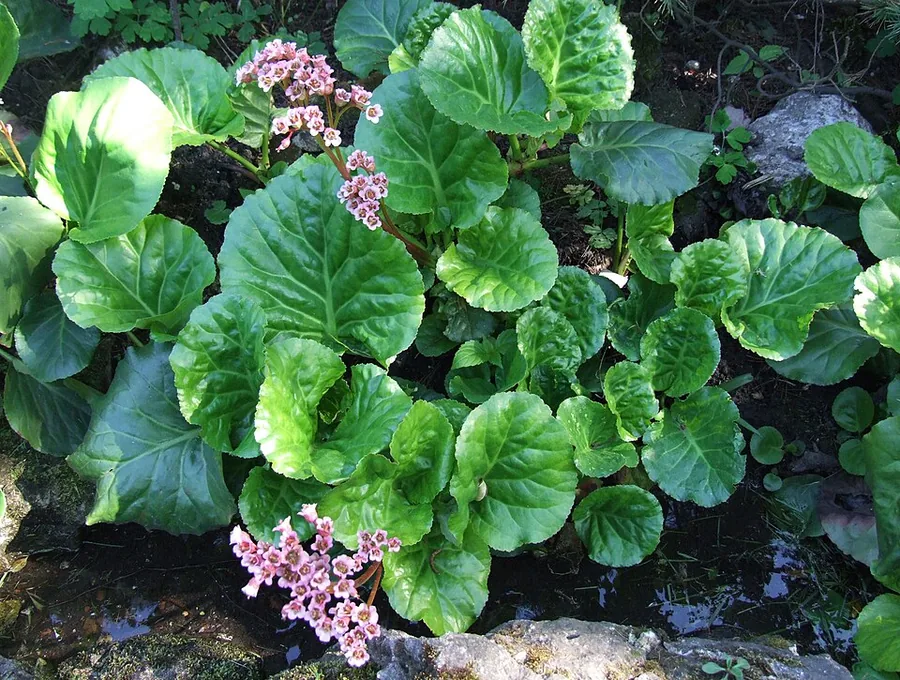
Bergenia, the pigsqueak of common usage and named for the squeak its leaves make under friction, ranks among the most durable groundcovers available to the temperate garden. A member of the saxifrage family, it advances by thick rhizomes that interlace into a low, persistent leafy mat. The broad, rounded, leathery blades account for the alternate name elephant's ears.
Its defining trait is sheer constitutional toughness. It performs in deep shade, accepts full sun where the substrate remains moist, and survives winters to -40°F (-40°C) in the coldest zones. Deer and rabbits generally decline it, and serious pests and diseases seldom establish on it.
Flowering arrives early in the season. Clusters of pink, red, or purple blooms ascend on stout scapes in spring, advancing into winter in mild southern gardens. Many selections further develop a rich bronze or red pigmentation as temperatures drop, so the foliage sustains the planting's interest through the dormant period.
Care
The short version: part shade with consistent moisture is the optimum, though the plant adapts to a broad range of conditions. Provide organically rich, well-drained soil, irrigate through dry intervals, and divide the clumps periodically to maintain flowering vigor.
Light
Bergenia attains its best form in part shade, yet tolerates a wide light range. It accepts full shade and full sun alike, though under hot, exposed sun the substrate must stay moist to prevent leaf scorch from excess transpiration.
Water
Maintain consistently moist soil, particularly during establishment and wherever sun exposure is high. Established clumps withstand brief drought, so irrigating about every 5 to 10 days suffices, with greater frequency in full sun where water loss is faster.
Soil
Average, organically rich, well-drained soil is ideal, and the plant accommodates sand, loam, or clay equally. It tolerates a broad pH from 5.5 to 8.0, so most garden substrates support it without amendment.
Temperature
This is a genuinely cold-hardy species, persisting through winters as low as -40°F (-40°C) and tolerating summer heat to roughly 86°F (30°C). The evergreen foliage may appear degraded after a harsh, windy winter even though the crown survives unimpaired.
Humidity
Ambient outdoor humidity meets its needs, so no target range applies. Consistent soil moisture is far more determinative of performance than atmospheric humidity.
Feeding
Apply a light spring feeding of balanced general-purpose fertilizer, or top-dress with compost or leaf mold. A single seasonal application satisfies this low-demand plant.
Pruning
Cut back damaged leaves in late winter to early spring so the new flush can replace them, and remove spent flower stems as the blooms finish. That annual cleanup constitutes most of the required maintenance.
Repotting
In the ground, lift and divide the clumps every 3 to 4 years once they congest or hollow at the center. Crowded woody clumps, open centers, and diminished flowering are the indicators that division is due.
Size & spacing
Plants remain low at 12 to 18 inches (30 to 46 cm) in height and spread 9 to 24 inches (23 to 61 cm) wide. That slow, mat-forming habit makes bergenia a reliable groundcover for the front of a shaded border.
When to plant
Because bergenia is evergreen, its seasonal calendar is undemanding. Establish it in spring or early fall, expect bloom in April and May, and clear the winter-damaged foliage as the new flush initiates.
Northern hemisphere
Southern hemisphere
Typical months for a temperate climate: start earlier in warm zones, later where spring frosts linger.
- Sow: Late winter to early spring (seed is slow and variable; division is preferred)
- Plant: Spring or early fall
- Harvest: April to May (as early as December in warm southern climates)
Hardiness
USDA hardiness zones: 3–8
Temperature: down to -40°C
Troubleshooting
Bergenia is largely trouble-free, and the disorders that do arise are almost entirely foliar rather than systemic. Interpreting the early symptoms below lets you correct the underlying cause before the planting deteriorates. The crown is consistently more resilient than the condition of the leaves implies.
Faded or thin foliage that fails to color
Dull, sparse leaves trace to excess direct sun combined with insufficient moisture, since high light and a dry root zone push transpiration past what the plant can sustain and the foliage thins. Relocating to afternoon shade lowers that water demand, and even moisture keeps the leaves turgid. Incorporating compost raises the soil's water-holding capacity, which restores both density and color.
Fix:
- Move to part or afternoon shade in hot climates
- Keep soil consistently moist and add organic matter
Brown, ragged foliage following a severe winter
The damage is winter burn: because the leaves are evergreen, cold and desiccating wind keep stripping moisture from exposed tissue faster than frozen roots can replace it, so the blades scorch while the crown stays intact. Frost heaving compounds the injury by lifting the rhizome and exposing it. Remove the spent foliage in late winter and the crown regenerates a fresh flush from the base.
Fix:
- Cut back damaged foliage in late winter to early spring
- Allow fresh new growth to emerge from the crown
Toxicity
For households with animals the assessment is favorable: bergenia is not known to be toxic. It does not appear on the ASPCA toxic plant lists, and its leaves have a documented history of being brewed as Siberian tea. The plant can be sited among pets, livestock, and children without concern.
Safe for
People · Cats · Dogs · Horses · Rabbits · Livestock · Birds
Cats Safe
No toxic compound is documented in bergenia, so ingestion by a cat carries no recognized risk. Any plant eaten in quantity can mechanically irritate the gut, which may produce transient drooling or mild stomach upset.
Dogs Safe
The species is absent from the ASPCA canine toxic list and is not reported as poisonous to dogs. The leathery, fibrous foliage offers little palatability, so deliberate browsing is uncommon and an incidental bite produces no clinical effect.
Horses Safe
No constituent of bergenia is known to be toxic to horses. Grazing animals typically reject the rigid, glossy leaves before any meaningful intake occurs.
Rabbits Safe
Bergenia is among the genera rabbits routinely avoid, and browsing carries no toxic consequence. The thick, leathery blades are usually left intact.
Livestock Safe
Cattle, goats, and sheep face no documented poisoning hazard from bergenia. It contains none of the compounds responsible for toxicity in the problem species of grazed land.
Birds Safe
No harmful constituent has been identified in bergenia, so exposure presents no recognized risk to wild birds or poultry. The plant can be grown around them without concern.
People Safe
The foliage is non-toxic to handle and has an established record of use brewed as Siberian tea. Routine hand washing after garden work remains sound general hygiene.
No special handling required; wash hands after gardening as a general practice.
Varieties
Since the genus shares a uniformly rugged habit, the named selections are differentiated chiefly by floral color and winter foliage response. The three below are widely available and represent the range.
Winterglut (Winter Glow)
Selected for deep rosy-red flowers, it returns interest in winter as the foliage develops a bronzy-red pigmentation.
Miss Piggy
Its bright bubblegum-pink flowers are carried on stiff red scapes above glossy leaves, giving stronger color than the older selections.
Abendglocken (Evening Bells)
The cultivar takes its name from reddish-purple, bell-shaped flowers, and the foliage colors to a warm red through the cold months.
Companions
Bergenia pairs best with other plants that like rich, moist shade, where its bold leaves play off finer foliage around them.
Plant near
Hosta: Shares preference for moist, part-shade woodland conditions and contrasts in leaf texture.
Brunnera macrophylla: Both are shade-tolerant groundcovers that thrive in rich, evenly moist soil.
Heuchera (coral bells): Companionable Saxifrage-family relative for the front of a shady border with complementary foliage.
How to propagate
Bergenia is readily increased, and division of an established clump is the most reliable means of producing plants identical to the parent.
DivisionEasy
Late winter to early spring (or early fall) · One growing season
Division is the dependable method because it propagates the rhizome vegetatively and keeps the parent's traits intact. Lift a congested clump in late winter to early spring, or in early fall, and separate the thick rhizomes into sections that each retain roots and an active growing point. The divisions re-establish over a single growing season.
SeedModerate
Late winter to early spring · Slow; one or more seasons to reach flowering size
Seed is viable but demands patience. Sow in late winter to early spring and anticipate slow, uneven germination, with a season or more elapsing before seedlings attain flowering size. Because named cultivars do not breed true from seed, propagate those clonally by division to preserve the selection.
Myths
Bergenia is dangerously poisonous and will burn a dog's mouth.
The record contradicts this: bergenia is absent from the ASPCA toxic plant database and is not reported as poisonous to cats or dogs by reliable references. The burning-mouth assertion originates with commercial plant-seller listings rather than verified toxicology sources. Handled as the tough ornamental it is, the plant presents no documented poisoning risk to pets.