Ornamental · Asparagaceae
Hosta
Hosta
Match it to shade, steady moisture, and rich soil, and the hosta forms dense, long-lived mounds of foliage season after season.
Partial shade
Every 3–7 days
USDA 3–9
0–3 ft · 0.1–0.9 m
Overview
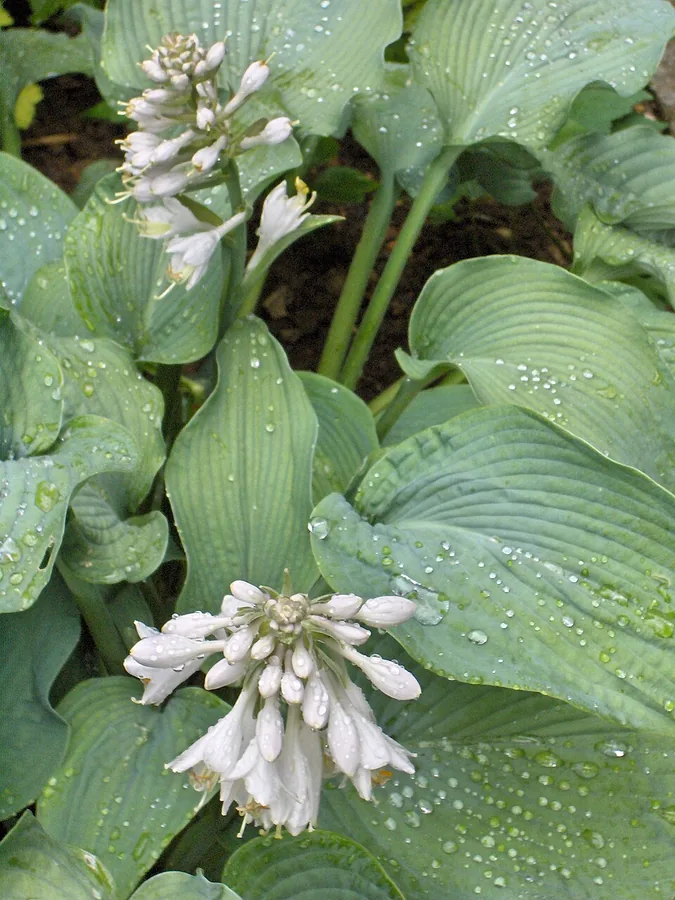
Hostas are foliage plants first, valued for their leaves rather than the flowers, and they anchor the shade garden because so little else thrives there. Growth begins each spring as tightly furled spears that expand into broad mounds in shades of green, blue, and gold, some carrying crisp white margins. As long-lived perennials, they establish across a broad geographic range and demand little maintenance once rooted.
The scale of the genus is considerable. A miniature may hold at 4 inches (10 cm) tall while a large form spreads to 4 feet (122 cm) across, which is why one selection edges a border and another fills a shaded bed. Tall summer scapes carry pale, sometimes fragrant flowers above the leaves, yet the horticultural value rests in the bold, layered foliage that persists through the season.
The governing requirements are shade and consistent soil moisture. Sited in rich, moisture-retentive soil out of harsh afternoon sun, hostas persist for years with minimal intervention. Two pressures account for most failures: slugs, which chew the foliage ragged, and crown rot, which develops when the soil remains saturated.
Care
The short version: provide filtered or dappled shade and rich soil held evenly moist at roughly an inch of water a week, then mulch to conserve that moisture while keeping the material clear of the crown.
Light
Site hostas in filtered or dappled shade rather than full sun or full dark, which suits their woodland-understory habit. Gold and yellow forms take a little morning sun to color up, whereas blue-leaved types need the deepest shade to preserve their waxy bloom and avoid scorch.
Water
Supply about an inch of water a week, applied deeply and evenly, keeping the soil moist but never saturated, since standing water starves the roots of oxygen. A 2 to 4 inch (5 to 10 cm) mulch layer conserves that moisture and buffers the soil through dry intervals.
Soil
Grow them in rich, well-drained soil high in organic matter, which meets their appetite for both moisture and nutrients. A pH from 6.0 to 7.5 is acceptable, so most garden soils qualify once compost is incorporated.
Humidity
Ambient outdoor humidity is sufficient, so no target figure applies. The more consequential factor is airflow through dense clumps, which dries the foliage and suppresses the pests and rots that favor stagnant, damp conditions.
Feeding
A balanced garden fertilizer applied in spring as the leaves emerge meets the plant's needs, and only where a soil test confirms a deficiency. Withhold feeding after late July so growth hardens off and winter hardiness is not compromised.
Pruning
Cut the spent flower scapes once bloom finishes, and remove yellowed foliage in late fall or early spring. Clearing the dead leaves serves a second purpose, since it eliminates the moist litter that harbors slugs.
Size & spacing
Mature dimensions run 4 to 36 inches (10 to 91 cm) tall and 6 to 48 inches (15 to 122 cm) wide according to selection. Set spacing to each cultivar's ultimate width so the mounds close in without competing.
When to plant
As hardy perennials, hostas return unaided each year, so the calendar governs establishment rather than any harvest. Plant new stock in spring once the soil warms and the growing tips break the surface, or in early fall, and expect flower scapes to rise above the foliage through summer.
Northern hemisphere
Southern hemisphere
Typical months for a temperate climate: start earlier in warm zones, later where spring frosts linger.
- Sow: Seed is not recommended as cultivars do not come true; not typically started indoors
- Plant: Spring after the soil warms and growing tips emerge, or early fall
- Harvest: Flowers in summer on tall scapes above the foliage
Hardiness
USDA hardiness zones: 3–9
Temperature: down to -40°C
Troubleshooting
The great majority of hosta disorders register on the foliage, whether from feeding pests or environmental scorch, while a smaller number reach the crown and threaten the plant. Match the symptom below and intervene early, before a superficial blemish escalates into loss of the clump.
Collapsing plant with a soft, discolored crown
Wilting above a soft, discolored crown signals crown and root rot, a disease that takes hold where the base stays saturated or sits under mulch heaped against the stem. The trigger is oxygen-starved, waterlogged tissue, so the pattern tracks soggy sites and heavy mulch on the crown. Raking excess mulch clear in spring and correcting drainage restore aeration to the root zone, but a crown that has already rotted cannot recover and the plant should be dug out.
Fix:
- Remove excess mulch from around the crown in spring
- Improve drainage
- Remove and destroy badly affected plants
Vein-bounded brown streaking across the blade
Dead tissue that halts abruptly at each vein is diagnostic of foliar nematodes, microscopic worms that migrate through a film of surface water into the leaf. Confined by the veins they cannot cross, the lesions form the angular, wedge-shaped bands that become obvious by mid to late season. Removing and destroying infested leaves reduces the inoculum, base watering denies the pest the water film it travels in, and discarding severely riddled plants prevents it establishing in the bed.
Fix:
- Remove and destroy infested leaves
- Avoid overhead watering that spreads nematodes
- Remove and discard severely infested plants
Ragged feeding holes low on the plant with slime trails
Ragged holes concentrated near ground level, paired with silvery trails, point to slugs and snails feeding under cover of darkness. Because they are nocturnal, night hand-picking into soapy water removes the active population, while morning-checked traps intercept the rest. A copper barrier works by deterring the soft-bodied pests on contact, and pulling mulch back from the crown denies them the moist, shaded refuge they need to survive the day.
Fix:
- Hand-pick at night and drown in soapy water
- Set traps and remove slugs each morning
- Use copper barriers to deter slugs
- Pull mulch back from the crown
Scorched brown tissue on the most exposed foliage
Brown, desiccated leaf surfaces indicate sunscald, which develops when direct sun or a moisture deficit dries the tissue faster than the plant can replace it. The pattern gives the diagnosis away, since damage concentrates on leaves facing the sun during hot, dry spells. Relocating the plant to deeper shade lowers the radiant load, added irrigation offsets the deficit, and mulch buffers soil moisture between waterings. Blue-leaved selections, whose waxy coating is prone to scorch, benefit most from the deepest shade.
Fix:
- Move or transplant the hosta to a shadier location
- Increase watering during heat
- Mulch to retain soil moisture
Toxicity
Hostas are toxic to animals. Every part contains a class of natural compounds called saponins, and the ASPCA lists the plant as poisonous to cats, dogs, and horses. Handling and cultivation pose no risk to people, but foliage and prunings should be kept clear of pets and grazing animals.
Toxic to
Cats · Dogs · Horses · Rabbits · Livestock · Birds
Safe for
People
Cats Mild
In cats the saponins irritate the gut, producing initial drooling that gives way to vomiting, loose stools, and a listless, subdued state.
Dogs Mild
Ingestion by a dog irritates the digestive tract, so vomiting and diarrhea follow, accompanied by a marked drop in energy.
Horses Mild
The saponins provoke gastrointestinal upset in horses, presenting as colicky stomach distress, loose droppings, and a dull, depressed demeanor.
Rabbits Toxic
Because the same saponins are present throughout the plant, the foliage disagrees with rabbits, causing digestive upset and lethargy, so exposure is best prevented.
Livestock Toxic
Goats, sheep, and cattle that browse the leaves ingest the saponins and can develop digestive distress, which argues for fencing plantings out of their reach.
Birds Caution
Evidence of birds feeding on hosta is scant, yet since saponins occur in every part, pet birds are best kept from sampling it as a precaution.
People Low
No part of the plant is eaten, and the saponins make ingestion inadvisable, though handling poses no hazard. The practical concern is therefore keeping pets and grazing animals away from the foliage.
No special skin handling precautions are required for people, but keep plants and trimmings away from pets and grazing animals.
Helpline numbers

United States
ASPCA Animal Poison Control: (888) 426-4435 (fee applies)

United Kingdom
Animal PoisonLine: 01202 509000 (fee applies)

Australia
Animal Poisons Helpline: 1300 869 738
Varieties
The genus runs to thousands of registered cultivars, but a handful recur in gardens on the strength of their size, coloring, or margins. These are the reference selections worth knowing.
Sum and Substance
Ranking among the largest hostas in cultivation, it carries massive chartreuse-gold leaves and tolerates more sun than most selections.
Halcyon
Its heart-shaped blue-gray foliage retains that coloring best under deeper shade, where less light preserves the waxy bloom.
Blue Mouse Ears
A miniature notable for thick, rounded blue-green leaves whose form genuinely resembles small mouse ears.
Patriot
Its dark green leaves carry wide, crisp white margins that read as sharp contrast in a shaded planting.
How to propagate
Hostas propagate readily, and one method is dependable because seed does not come true: lift an established clump and divide it into separate plants.
DivisionEasy
Early spring as the eyes or growing tips emerge (can also divide in early fall) · One to two growing seasons to fill back in
Division is the reliable means of propagation, since seed does not reproduce the cultivar true, and the ideal window is early spring as the eyes emerge, with early fall as a workable alternative. Lift the entire clump and cut it into sections, ensuring each retains growing tips and a proportion of the root system, then replant at the original depth and water in thoroughly. Expect one to two growing seasons for the divisions to knit back into full clumps.
Myths
Hostas need full shade and will not grow where any sun reaches them.
Most hostas perform best in filtered or dappled shade rather than deep gloom. Gold and yellow selections in fact require 2 to 3 hours of morning sun to develop their coloring, and only the blue-leaved forms genuinely demand the deepest shade.
Hostas are completely harmless to pets.
Saponins are present in every part of the plant, and the ASPCA classifies hosta as toxic to cats, dogs, and horses. An animal that ingests plant material can consequently show vomiting, diarrhea, and a depressed, low affect.