Ornamental · Saxifragaceae
Astilbe
Astilbe × arendsii
Give it shade and soil that stays damp, and astilbe fills the dark corners with feathery plumes.
Partial shade
Every 2–4 days
USDA 3–9
1–4 ft · 0.3–1.2 m
Overview
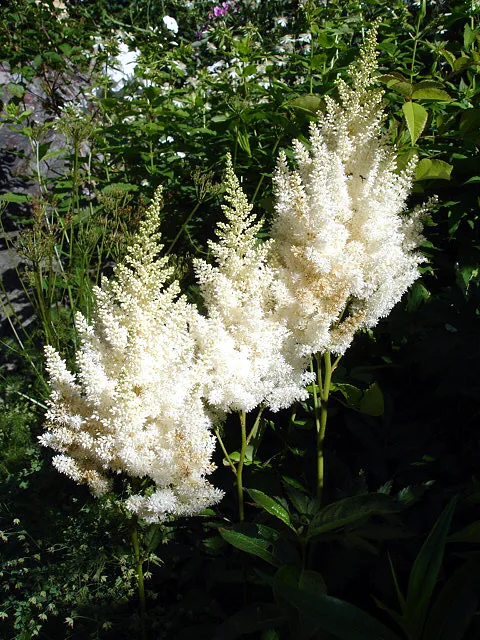
Astilbe is the answer for that damp, shaded pocket where most perennials sulk. Feathery flower plumes lift above ferny green foliage from early to midsummer, ranging from white through pink to deep crimson. The hybrid in most gardens, Astilbe x arendsii, is a tough perennial that returns each year across zones 3 through 9.
What separates astilbe from the usual shade plants is that it blooms, and blooms generously, well out of direct sun. The soft, branching plumes are what earned it the names false spirea and false goat's beard. Below the flowers, the cut-leaf foliage holds its looks all season and knits together as a groundcover under trees and along a shaded north wall.
Its single non-negotiable is moisture. Keep the soil rich and steadily damp and astilbe is nearly hands-off, shrugging off deer and asking only for division every few years. Let the roots dry in the sun and the leaf margins scorch and the plant turns sullen, because it draws water faster than dry soil can return it.
Care
The short version: part to full shade, soil kept evenly moist and high in organic matter, and a compost mulch through summer to lock that moisture in.
Light
Astilbe performs best in part to full shade, one of the few perennials that flowers dependably away from the sun. In cooler regions it accepts more sun, but only where the soil never dries, and deep afternoon shade serves it well in hot-summer climates.
Water
This is the plant's one firm requirement. Hold the soil evenly moist, watering every 2 to 4 days and soaking deeper in summer heat, because the roots cannot draw enough from dry ground. Let it dry out and the leaf edges brown and decline, sometimes pushing the plant into early dormancy.
Soil
Plant into rich, humusy loam that retains moisture yet still drains, with generous compost worked through. Astilbe is relaxed about pH, growing well across 5.5 to 7.5, so texture and moisture count for far more than the exact reading.
Humidity
Ordinary garden humidity suits it, and there is no target to chase. Crowded, damp leaves in still air do invite powdery mildew spores, so give clumps room to breathe and the issue tends to resolve itself.
Feeding
A balanced all-purpose fertilizer through the growing season keeps the plumes coming. A summer compost mulch earns its keep twice over, feeding slowly while holding the moisture astilbe relies on.
Pruning
Deadhead the spent plumes for a clean look, or leave them up for winter interest, since the dried heads hold frost handsomely. Cut the foliage back in late fall or early spring before new shoots emerge.
Size & spacing
Depending on cultivar, plants stand 1 to 4 feet (30 to 120 cm) tall, from low edgers to back-of-border forms. Each clump widens to 12 to 24 inches (30 to 60 cm), so set them at that spacing to fill in without crowding.
When to plant
Because astilbe is raised from divisions rather than seed, its schedule turns on planting and bloom instead of sowing. Set divisions out in spring or early fall, and expect plumes from late spring through summer, with many cultivars cresting in June and July.
Northern hemisphere
Southern hemisphere
Typical months for a temperate climate: start earlier in warm zones, later where spring frosts linger.
- Sow: Seed is difficult and slow; most gardeners start from divisions rather than seed.
- Plant: Plant divisions in spring or early fall.
- Harvest: Late spring through summer (varies by cultivar; many bloom June-July).
Hardiness
USDA hardiness zones: 3–9
Temperature: down to -40°C
Troubleshooting
Astilbe's troubles nearly all surface in the foliage, and dry soil drives more of them than any pest or pathogen. Match the symptom below to its cause, then act before scorch or a fungus spreads through the whole clump.
Scorched leaf margins and a plant that quits early
What you are seeing is drought stress. Astilbe pulls more water than its roots can supply once the soil dries, which is why the trouble follows too much sun or a hot stretch. The leaves crisp at the edges and the plant often drops into early dormancy to cut its losses. Water deeply so the soil stays evenly moist, lay a compost mulch over the root zone to slow evaporation, and shift it into more shade if the spot bakes.
Fix:
- Water deeply and consistently to keep soil evenly moist
- Apply a compost or organic mulch to retain soil moisture
- Move or site plants in part to full shade
A dusty white film coating the leaves
This is powdery mildew, a fungus whose spores take hold when air sits humid and still around a crowded clump. It seldom kills astilbe, but it disfigures the foliage. Break up the stagnant air by spacing plants and dividing tight clumps, strip out the worst-affected leaves, and keep water off the foliage so spores have less to work with.
Fix:
- Improve air circulation by spacing and dividing crowded clumps
- Remove affected foliage
- Avoid overhead watering
Foliage chewed to lace in midsummer
Japanese beetles are almost always the cause. They graze the soft tissue between the veins and leave the leaf skeleton behind, so the damage looks like lace. The metallic adults are easy to find right on the plant. Pick them off into a bucket of soapy water in the cool of the morning while they are sluggish, and turn to an approved insecticide only when the feeding becomes heavy.
Fix:
- Hand-pick beetles into soapy water
- Treat with approved insecticide if infestation is heavy
Toxicity
Astilbe is a safe plant to keep around animals and children. The ASPCA does not list it as toxic, and approved sources record no poisoning in pets, so you can plant it along paths and play areas without concern.
Safe for
People · Cats · Dogs · Horses · Rabbits · Livestock · Birds
Cats None
Astilbe does not appear on the ASPCA toxic list, so a cat that samples a leaf is in no danger. At most, a mouthful of the fibrous foliage might prompt a little drool.
Dogs None
A dog can rub against the plant or chew a plume with no ill effect. Any large helping of greenery can loosen a dog's stomach briefly, but astilbe holds no toxin of its own.
Horses Safe
There is no recorded toxicity for horses, and the plant is too low to figure into their grazing in any real way.
Rabbits Safe
Rabbits can browse the foliage safely. The tough, ferny leaves make astilbe a plant they usually skip in favor of more tender greens.
Livestock Safe
Cattle, goats, and sheep are at no risk from astilbe, since it carries none of the toxins that make certain garden plants a pasture concern.
Birds Safe
The plant is no hazard to birds, whether they nest in the foliage or peck at it.
People Safe
Astilbe is safe to handle and to grow near children, though it is an ornamental and not a plant intended for eating.
Varieties
Astilbe is sold in dozens of named cultivars that diverge mainly in plume color and height. The three below appear most often and span the range well.
Fanal
A compact selection bearing what may be the deepest crimson-red plumes in the genus, paired with foliage that opens bronze and settles to dark green washed with red.
Bridal Veil (Brautschleier)
Named for its arching white plumes, which carry a light, gauzy, bridal quality.
Amethyst
A taller cultivar whose lilac-purple plumes open comparatively early in the season.
How to propagate
Astilbe is increased by division, the same operation that rejuvenates an aging clump. It is easy work, and it costs nothing.
DivisionEasy
Early spring or fall, dividing clumps every 3 to 4 years when overcrowded. · One growing season to re-establish, often flowering the following year.
Astilbe is propagated almost wholly by division, not seed. In early spring or fall, lift a crowded clump, cut the rootball into sections, and set the pieces back into rich, moist soil at the same depth they grew before. Repeat every 3 to 4 years; each division needs a full season to root in and generally blooms again the next year.
Myths
Astilbe demands deep shade and refuses to bloom in any sun.
It does favor part shade, yet in cooler climates it grows and flowers in full sun without trouble. The true limiting factor is moisture, not light, so keep the soil damp and sun matters far less than people assume.
Astilbe is poisonous to pets.
Nothing supports this. Astilbe is absent from the ASPCA toxic plant list, and approved sources note no toxicity to cats or dogs, making it a sound pick for a garden shared with animals.