Ornamental · Asteraceae
Yarrow
Achillea millefolium
Site it in full sun and poor, dry soil, then leave it undisturbed, and yarrow flowers all summer.
Full sun
USDA 3–9
1–3 ft · 0.3–0.9 m
Overview
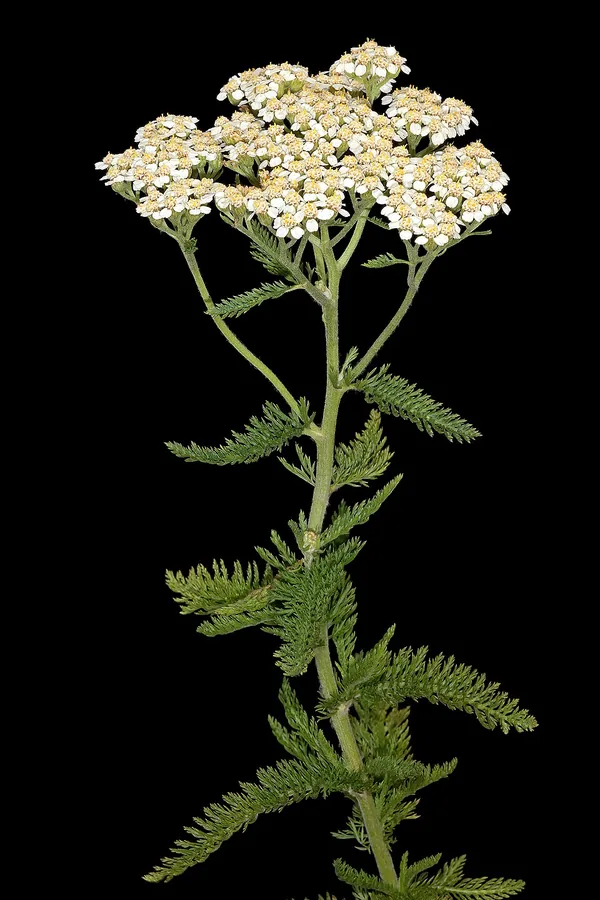
Yarrow ranks among the most durable perennials available to the temperate garden. It presents flat-topped corymbs above finely dissected, fern-like foliage that is aromatic when bruised, and the flat landing platform of each cluster draws butterflies and other pollinators from early summer into fall. Once its root system is established, it withstands heat, drought, and infertile ground that would defeat less resilient species.
As a hardy herbaceous perennial rated for zones 3 to 9, it dies back to the crown in winter and regenerates from the base each spring. The botanical species flowers cream to white, while cultivated selections extend the palette into red, rose, gold, and salmon. Most attain 1 to 3 feet (30 to 91 cm) in height with a comparable spread.
The trait to anticipate is its colonizing habit. Yarrow advances by rhizomes and self-sows readily, so an isolated clump can develop into a broad stand if left unmanaged. Allocate adequate spacing and divide it periodically, and that same vigor becomes an asset in filling ground quickly.
Care
The short version: full sun and lean, dry, well-drained soil. Water it sparingly, withhold fertilizer, and divide the clump every few years to sustain vigor and keep it contained.
Light
Provide full sun, six hours daily or more, to develop sturdy stems and abundant bloom. It will tolerate light afternoon shade, but reduced light elongates the stems and thins the flowering, since the plant is adapted to high-radiation, open habitats.
Water
This is a drought-adapted perennial that requires the soil to dry between waterings. Irrigate young plants until the root system establishes, then withdraw water, because sustained saturation triggers crown rot. Established plants generally subsist on natural rainfall.
Soil
Lean, sharply drained soil is the governing requirement. It accepts loam, sand, and poor or alkaline substrates across a pH of 6.0 to 8.0. Fertile soil is counterproductive, producing weak, elongated stems, so amendment is best avoided.
Humidity
Ambient outdoor humidity is not a factor to regulate. The relevant variable is air movement through the canopy, since stagnant, humid air around the foliage promotes powdery mildew and rust.
Feeding
Fertility should be kept low. Flowering and longevity both improve in nutrient-poor soil, and applied fertilizer yields soft, weak growth prone to lodging. Reserve any feeding for genuinely depleted ground.
Pruning
Deadhead the spent inflorescences through the season to extend bloom and suppress self-seeding. Cut back sprawling stems as they develop, then shear the whole plant once flowering concludes to restore form.
Size & spacing
Mature plants reach 1 to 3 feet (30 to 91 cm) in height with a similar spread. Space them 12 to 18 inches (30 to 45 cm) apart to maintain airflow and prevent the clumps from crowding one another.
When to plant
Yarrow tracks the temperate season closely. Sow seed indoors in late winter or direct sow in spring, transplant once frost has passed, and the flat inflorescences carry the display from June into September.
Northern hemisphere
Southern hemisphere
Typical months for a temperate climate: start earlier in warm zones, later where spring frosts linger.
- Sow: Start seed indoors 6 to 8 weeks before the last spring frost.
- Plant: Transplant after danger of frost has passed in spring, spacing plants 12 to 18 in apart.
- Harvest: Blooms June to September, with flat-topped flower clusters from early summer into fall.
Hardiness
USDA hardiness zones: 3–9
Temperature: down to -40°C
Troubleshooting
Nearly every disorder in yarrow originates in one error: managing a xeric plant as though it were thirsty and hungry. Excess water, insufficient light, and overly fertile soil drive the rot, mildew, and lodging described below. Interpret the early symptoms correctly and the correction is almost always to reduce inputs, not add them.
Crown collapse in poorly drained, saturated soil
A plant that softens and fails at the base is showing root and crown rot, a response to waterlogged soil rather than a pathogen you can treat with a spray. Yarrow is adapted to lean, dry substrates, so its tissues break down where oxygen is displaced by standing moisture. Relocate it to a sunny, free-draining position, withdraw supplemental irrigation once it has rooted, and excise the necrotic crowns before dividing the sound peripheral growth.
Fix:
- Move or replant in a well-drained, full-sun site
- Stop supplemental watering once established
- Remove rotted crowns and divide healthy outer growth
Powdery white colonies on the foliage
A superficial white bloom on the leaves is powdery mildew, a foliar fungus that establishes when humidity is high and crowded stands trap moist, stagnant air around the canopy. It is largely cosmetic and seldom lethal, though it dulls the foliage. Thinning the stand restores air movement, base watering keeps the leaf surface dry, and full sun with sharp drainage discourages the spores from germinating.
Fix:
- Improve air circulation by thinning and proper spacing
- Avoid overhead watering
- Site in full sun with good drainage
Lodging stems collapsing into a tangled mat
Stems that buckle under their own inflorescences are lodging, a structural failure that traces to soft, elongated tissue grown in soil that is too fertile or a site that is too shaded and moist. Culturing yarrow hard, in full sun on lean, dry ground, yields shorter internodes and mechanically stronger stems that hold upright. Shearing after bloom and dividing congested clumps both reduce the top-heavy growth that precipitates collapse.
Fix:
- Grow in full sun and lean, dry soil for sturdier, more compact growth
- Cut back or shear after flowering
- Divide crowded clumps
Orange spore pustules erupting on leaves and stems
Raised orange to brown pustules are the fruiting bodies of rust, a fungus whose spores require prolonged leaf wetness to infect. Removing and destroying colonized foliage lowers the local spore load before it disperses to healthy tissue. Opening the canopy for airflow, keeping the leaf surface dry, and holding the plant in full sun with good drainage together deny the fungus the moisture it depends on.
Fix:
- Remove and dispose of infected foliage
- Improve air circulation and avoid wetting foliage
- Maintain full sun and good drainage
Toxicity
Yarrow is a mild caution around animals rather than a serious poison. Its foliage and flowers contain glycoalkaloids, monoterpenes, and sesquiterpene lactones that irritate the gut and skin, so keep grazing pets and inquisitive nibblers away from the plant. Despite a long record in herbal use, it is not food, and its volatile oils can leave sensitive skin reddened and itchy.
Toxic to
Cats · Dogs · Horses · Rabbits · Livestock · Birds · People
Cats Mild
In cats the glycoalkaloids and volatile oils provoke drooling and gastric irritation, presenting as vomiting or loose stools after ingestion. The response registers as a mild caution rather than a systemic threat, and dermal contact with the sap can inflame the skin.
Dogs Mild
Dogs that browse the foliage typically develop drooling, vomiting, and diarrhea, with occasional anorexia and lethargy as the compounds irritate the gut. The clinical picture stays a mild caution, since most cases resolve without intervention.
Horses Mild
A grazing horse may salivate, scour, or exhibit colic, the severity scaling with the quantity consumed. The reaction remains mild in most cases, though the volatile oils can sensitize and inflame the skin on contact.
Rabbits Caution
The alkaloids and aromatic oils that irritate other herbivores make yarrow ill-suited to rabbits, whose sensitive digestive tract tolerates such compounds poorly. Regard it as a caution and exclude it from the hutch.
Livestock Caution
Cattle, sheep, and goats generally reject yarrow on account of its bitterness, but an underfed animal consuming it in bulk can develop the same gastrointestinal upset. It warrants a caution wherever forage is limited.
Birds Caution
There is no dietary rationale for offering yarrow to pet or backyard birds, and the achilleine content classifies it as a caution rather than suitable forage. Keep cut stems and seed heads inaccessible.
People Caution
Although yarrow has a long history in herbal medicine, it is not a culinary green, and its sesquiterpene lactones can produce contact dermatitis in sensitive individuals. Use gloves when cutting it, and treat any ingestion as a caution.
Sesquiterpene lactones and volatile oils can cause contact dermatitis in sensitive people; consider gloves when handling or cutting plants.
Helpline numbers

United States
ASPCA Animal Poison Control: (888) 426-4435 (fee applies)
Poison Control: (800) 222-1222



Canada
Poison Centres: 1-844-764-7669
Varieties
Because the botanical species spreads aggressively and flowers only cream to white, most gardeners select a named cultivar for improved color or a more restrained habit. The following are worth knowing.
Paprika
A mat-forming cultivar bearing dusty-red florets with yellow eyes that age to pink and creamy yellow, valued for color but prone to sprawling and lodging more than most.
New Vintage Rose
A compact rose-pink selection bred for stronger stems and a more restrained habit than the botanical species.
Strawberry Seduction
A cultivar producing deep strawberry-red inflorescences with yellow centers that fade to softer tones as the flowers mature.
How to propagate
Yarrow propagates readily by two methods, division of established clumps or germination from seed.
DivisionEasy
Divide established clumps in spring or fall, every 2 to 3 years. · Divisions root and re-establish within one growing season.
Division is the most reliable method of propagation and doubles as the primary tool for containment. Lift an established clump in spring or fall on a 2 to 3 year cycle, separate the vigorous peripheral growth from the spent center, and replant the divisions 12 to 18 inches (30 to 45 cm) apart. Rooting is prompt, and the pieces re-establish within one growing season.
SeedEasy
Sow indoors 6 to 8 weeks before last frost or direct sow in spring. · Germinates readily; flowers the first or second season.
Seed propagation is equally straightforward. Sow indoors 6 to 8 weeks ahead of the last frost or direct sow in spring; germination is rapid and plants flower in their first or second season. Because the species self-sows prolifically, deadheading the spent inflorescences is the standard control for unwanted volunteers.
Myths
Yarrow needs rich soil and frequent watering and feeding to thrive.
The horticulture runs counter to this. Yarrow performs best in lean, dry, well-drained soil under full sun, and increasing fertility only produces softer, floppier, shorter-lived plants. High fertility is a liability, not a benefit, because the resulting wet, rich conditions favor the root rot that kills it.
Yarrow is a tidy clump that stays where you plant it.
The botanical species is a colonizer. It advances laterally by rhizomes and recruits freely from self-sown seed, so a single crown can occupy a broad patch within a season or two. Routine division and deadheading keep it contained, and a sterile named cultivar removes the seeding vector altogether.