Ornamental · Asteraceae
Blanket Flower
Gaillardia × grandiflora
Site it in full sun and lean, dry soil, and the blanket flower carries color from June to frost.
Full sun
USDA 3–10
1–3 ft · 0.3–0.9 m
Overview
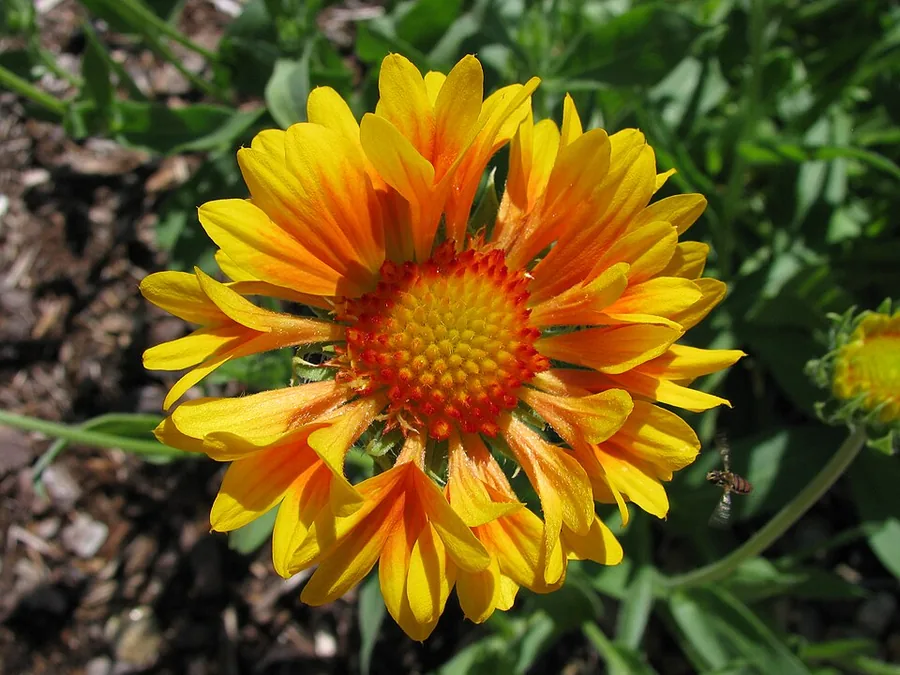
Blanket flower is a sun-demanding member of the Asteraceae, the daisy family, named for the bands of warm red, orange, and yellow that ring its flower heads like a woven blanket. Its long bloom season and low demands make it a dependable choice for difficult positions. Placed in a hot, dry exposure, it flowers from early summer into fall.
Its defining trait is tolerance of stress. It withstands drought, heat, and poor soil and continues flowering where less adaptable perennials decline. That tolerance has a corollary worth understanding: fertility and excess moisture, not deprivation, are what shorten its life.
It behaves as a short-lived perennial, so an individual clump loses vigor after a few years. This is a manageable trait rather than a drawback. Periodic division every couple of seasons, or natural self-sowing, sustains the planting with minimal intervention.
Care
The short version: full sun, lean and well-drained soil, and restrained watering. Deadhead through the season to prolong flowering, and withhold fertilizer.
Light
Blanket flower requires full sun, and flowering intensity scales with exposure. A hot, open position drives the heaviest bloom. In shade the stems etiolate and lodge, and flowering falls off sharply.
Water
Irrigate steadily while a young plant establishes, then taper off. Once established it is drought tolerant and fares better dry than wet, since saturated conditions deprive the roots of oxygen. Overwatering and slow-draining clay are the principal causes of root rot.
Soil
Grow it in well-drained loam or sandy soil amended with some organic matter. It tolerates a broad pH band from 6.0 to 8.0, so most soils are acceptable. The single exception is waterlogged clay, which it will not survive over winter.
Humidity
Ambient outdoor humidity is adequate, so no target applies. The more important variable is air movement, because stagnant, humid air within a crowded planting favors powdery mildew on the foliage.
Feeding
This plant performs best on lean soil and resents fertility. A single light feeding during the growing season suffices, since restricted nutrients produce sturdier, more floriferous plants. Excess fertilizer promotes soft growth that lodges and reduces flowering.
Pruning
Deadhead spent flower heads through the season to redirect energy from seed production back into new blooms and to maintain form. Cutting the plant back when it grows ragged stimulates a renewed flush.
Size & spacing
Mature plants reach 1 to 3 feet (30 to 91 cm) in height with a spread of 12 to 24 inches (30 to 61 cm). Space them 12 to 18 inches apart to maintain the air circulation that suppresses mildew.
When to plant
This species is governed by heat and intolerant of cold, wet conditions. Sow seed indoors in late winter or direct sow once frost has passed, and the plants flower from early summer through fall, a window that deadheading extends.
Northern hemisphere
Southern hemisphere
Typical months for a temperate climate: start earlier in warm zones, later where spring frosts linger.
- Sow: Start seeds indoors about 4 to 6 weeks before the last frost.
- Plant: Transplant or direct sow after the last spring frost; space plants 12 to 18 inches apart.
- Harvest: Blooms from early summer (June) through fall (September); deadheading extends the season.
Hardiness
USDA hardiness zones: 3–10
Temperature: down to -40°C
Troubleshooting
Nearly every disorder of blanket flower resolves to a single cause: soil that holds too much water or air that does not circulate. Correct drainage and spacing and most of these problems do not arise. Match the symptom below and intervene before it progresses.
Sudden wilt with dark stem bases and decay at the crown
These symptoms point to root and crown rot, the disorder most likely to kill a blanket flower, and it develops where saturated soil deprives the roots of oxygen. The diagnostic sign sits below ground, where affected roots turn brown and soft rather than firm and white. Correct the underlying drainage by amending with sand or organic matter, relocate the crown to a raised, faster-draining position, and reduce irrigation so the soil can dry.
Fix:
- Improve drainage by amending soil with organic matter or planting in a raised or sandier site
- Reduce watering and remove severely affected plants
Chlorotic, stunted shoots bearing malformed flowers
This presentation indicates aster yellows, a phytoplasma that leafhoppers transmit as they feed, and the infection has no cure once a plant carries it. Diagnostic markers include greened or malformed flowers and stunted, witches-broom growth that does not recover. The only effective response is to remove and destroy the infected plant before it acts as a reservoir, then suppress the leafhopper vectors and weedy hosts that sustain the cycle.
Fix:
- Remove and destroy infected plants promptly
- Control leafhoppers that spread the disease
Powdery white deposit forming across the foliage
The white bloom on the foliage is powdery mildew, a fungal growth that establishes where humid, still air lets spores germinate on crowded leaf surfaces. It rubs away easily, but it returns wherever the conditions that favored it persist. The remedy is cultural rather than chemical: open the planting by spacing or dividing the clumps to move air through it, remove the most affected foliage, and keep moisture off the leaves.
Fix:
- Improve air circulation by spacing and dividing plants
- Remove affected foliage
Discrete brown lesions appearing on foliage
Discrete lesions on the foliage are fungal leaf spots, a cosmetic disorder that seldom causes meaningful damage to the plant. The infection stays superficial and does not threaten its survival. Manage it by removing the marked leaves, watering at the base so foliage stays dry, and improving air movement through the planting.
Fix:
- Remove affected leaves
- Avoid overhead watering and improve air flow
Toxicity
For households with pets, the verdict is reassuring: blanket flower is non-toxic and is absent from the ASPCA toxic plant list. Cats, dogs, and grazing animals are unaffected by it. The one documented hazard concerns people, because the fuzzy hairs on the foliage and flowers can irritate sensitive skin.
Safe for
People · Cats · Dogs · Horses · Rabbits · Livestock · Birds
Cats None
No toxicity is recorded for cats. The ASPCA does not classify it as toxic, so ingestion by a cat carries no expected effect.
Dogs None
No toxicity is recorded for dogs. Its absence from the ASPCA toxic list means a dog that chews it should show no ill effect.
Horses Safe
Horses may graze in proximity without risk, as none of the plant's tissues contain a recognized toxin.
Rabbits Safe
Rabbits face no toxic hazard, since the foliage and flowers hold no toxin, though it remains advisable to offer it only occasionally.
Livestock Safe
Cattle, goats, and sheep can be kept around it safely, because it contains nothing known to harm them.
Birds Safe
Birds incur no risk from it, whether they take the seed heads or the foliage.
People Safe
The plant is safe for people, with one qualification: the fuzzy hairs on the leaves and flowers can provoke mild contact irritation in sensitive skin, so gloves are advisable during prolonged deadheading.
Generally regarded as non-toxic and not listed on the ASPCA toxic plant list. Contact with the fuzzy foliage and flowers can cause mild skin irritation (contact dermatitis) in sensitive people; wearing protective gloves when handling is recommended.
Varieties
Named cultivars of blanket flower differ chiefly in stature and in how the flower color is distributed. The following selections are representative.
Goblin
A compact dwarf selection that holds a low, restrained habit and bears red flowers margined cleanly in yellow.
Burgundy
A taller selection valued for uniform wine-red blooms that lack the typical bicolor margin.
Oranges and Lemons
A subtler selection whose peachy-orange ray florets grade to pale yellow toward the tips.
How to propagate
Blanket flower propagates readily, which is useful given its short individual lifespan. It can be divided from an established clump or raised from seed.
DivisionEasy
Spring; divide clumps every 2 to 3 years to maintain vigor. · One growing season
Because this is a short-lived perennial, routine division in spring every 2 to 3 years renews vigor in the clump while yielding additional plants at no cost. Lift the clump, separate it into sections, and replant promptly. The divisions reestablish over a single growing season.
SeedEasy
Start indoors 4 to 6 weeks before last frost or direct sow after frost. · Blooms in the first or second season
Seed propagation is equally straightforward. Sow indoors 4 to 6 weeks before the last frost, or direct sow once frost has passed, and the plants flower in the first or second season. The species self-sows readily, but because the parents are hybrids, the resulting seedlings do not come true and often diverge in appearance from the parent.
Myths
Gaillardia does best when supplied with fertile soil and a generous watering schedule.
The requirement runs the opposite way. Blanket flower performs best in lean, well-drained ground and tolerates drought once established. Rich, fertile, poorly drained soil holds excess moisture around the crown, which shortens the plant's life and reduces flowering, so lean conditions are what sustain it.
Blanket flower is poisonous to pets.
The record does not support that. The species is regarded as non-toxic and does not appear on the ASPCA toxic plant list for cats or dogs. The relevant hazard is dermatological and limited to people, because the plant's fuzzy hairs can irritate sensitive skin on contact.