Ornamental · Asteraceae
Aster
Symphyotrichum
Site it in full sun and well-drained soil, and the aster extends the garden's color well into fall.
Full sun
USDA 3–8
1–5 ft · 0.3–1.5 m
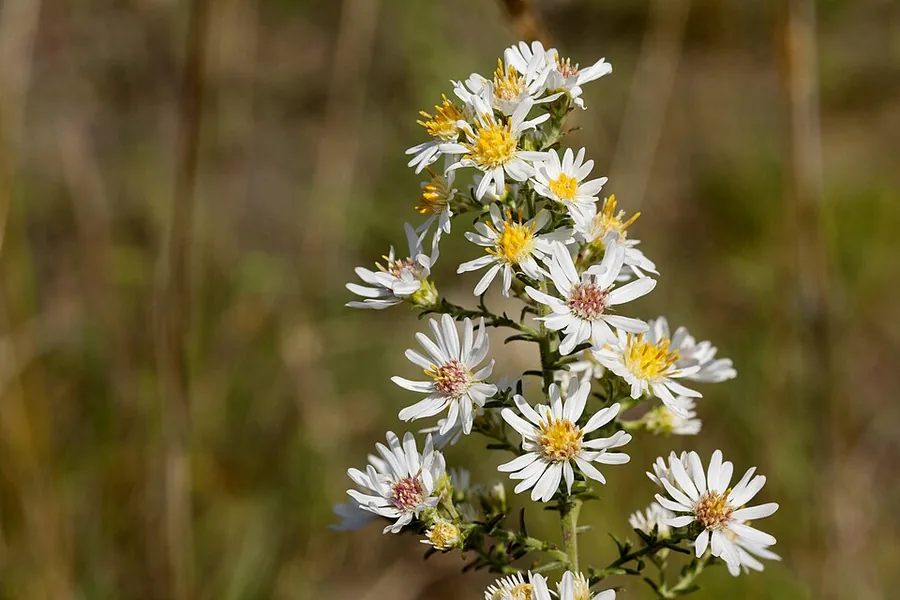
Overview
Asters open their daisy-like flowerheads as most of the garden enters decline, filling the late-season gap in the border. The genus sits within the same family as sunflowers and daisies, and the hardy garden types grow as clump-forming perennials that gain in mass and flower from year to year. Habit ranges from a low front-of-border mound to a tall, open stand, so the genus supplies a form for nearly any sunny position.
The display rests on sheer flower numbers. Heads open in blue-violet, pink, and white, often in such density that they largely obscure the foliage beneath. Because bloom runs from late summer into fall, commonly August through October, asters serve as one of the last substantial nectar sources available to pollinators ahead of frost.
Cultural demands are modest. Full sun, free-draining ground, and a single midsummer pinch to firm the stems meet most of the plant's needs. Sited in damp shade, however, asters substitute mildew and lax, floppy growth for bloom, so adequate spacing in a sunny position remains the decisive factor in performance.
Care
The short version: full sun and well-drained soil of almost any texture, with consistent moisture through the growing season. Pinch the stems in June to build sturdier plants, and divide crowded clumps every few years to sustain flowering.
Light
Asters flower most freely in full sun and accept only light partial shade. In deeper shade the available energy goes to elongation rather than bloom, producing tall, floppy stems and a thin scatter of flowers.
Water
Maintain average, consistent moisture through the growing season, since drought stress suppresses bloom. Established plants tolerate a brief dry interval, but the soil must drain freely, because sustained saturation predisposes the plant to wilt.
Soil
Asters succeed in loam, sandy loam, or clay provided the ground drains well and carries some organic matter. They accommodate a broad pH span of 5.5 to 8.0, which covers most cultivated garden soils.
Humidity
Outdoor humidity follows the season and is of little consequence to the plant. Air circulation is the governing factor, since crowded, stagnant air raises leaf-surface humidity and initiates powdery mildew.
Feeding
A single light spring application of balanced general-purpose fertilizer supplies the season's requirement. Restrict nitrogen, since an excess drives soft, weak stems that lodge and divert resources away from flowering.
Pruning
Pinch the stems by a few inches from early to late June to promote branching and a self-supporting habit that reduces the need for staking. Cease pinching after early July to preserve the developing flower buds, and cut the spent foliage to ground level once bloom concludes.
Size & spacing
Mature height ranges from 1 to 5 feet (30 to 150 cm) by species, with a spread of 2 to 4 feet (60 to 120 cm). Allowing each clump its full width sustains the air movement that keeps mildew in check.
When to plant
Aster culture is keyed to the cool ends of the season. Sow seed indoors in late winter or outdoors in spring, transplant after the last frost once the soil has warmed, and expect the display to arrive late, with flowers from August into October.
Northern hemisphere
Southern hemisphere
Typical months for a temperate climate: start earlier in warm zones, later where spring frosts linger.
- Sow: Late winter to early spring; seed germinates in about 15 days indoors
- Plant: After last frost in spring once soil has warmed
- Harvest: Summer into late fall (commonly August to October)
Hardiness
USDA hardiness zones: 3–8
Temperature: down to -40°C
Troubleshooting
The recurring aster problems trace to a short list of cultural faults: crowding, impeded drainage, and inadequate light. Reading the early signs on the foliage and stems allows correction through siting or spacing before damage spreads. Match the symptom below, then intervene before it moves through the clump.
Yellowing and stem collapse concentrated on one side of the plant
One-sided decline of this kind indicates verticillium or aster wilt, a soil-borne fungus favored by heavy, poorly drained ground and incurable once it colonizes the plant. Because the pathogen disrupts the vascular system, the plant wilts even where soil moisture remains adequate. Remove and destroy the affected plants, correct the drainage that allowed the fungus to build, and avoid returning susceptible asters to the same ground.
Fix:
- Improve soil drainage
- Remove and destroy severely affected plants
- Avoid replanting susceptible species in the same spot
Reduced flower production on a vegetatively healthy plant
Sparse bloom on an otherwise sound plant traces almost always to insufficient light or drought stress. Asters are sun-driven bloomers, so shade limits the energy available for flower production, and dry soil through the season suppresses bloom directly. Relocating the plant to full sun and holding consistent soil moisture, particularly during hot spells, restores the flower count over the season.
Fix:
- Relocate or site plants in full sun
- Maintain consistent soil moisture during the growing season
White, powdery colonies developing on the upper leaf surfaces
That dusting is powdery mildew, a fungus that establishes where crowding and stagnant air raise humidity at the leaf surface, typically by late summer. Thinning and spacing restores the air movement that suppresses it, while keeping foliage dry denies the spores the conditions they need. Strip the worst leaves, and on a stubborn infection a fungicide on a 10 to 14 day schedule maintains protection as new growth emerges.
Fix:
- Improve air circulation by thinning and spacing plants
- Avoid overhead watering
- Remove and discard heavily infected foliage
- Apply an appropriate fungicide on a 10 to 14 day schedule if needed
Distorted shoot tips colonized by clustered, sticky insects
The soft-bodied insects massed on the shoot tips are aphids, and the gloss they leave is honeydew, the sugary residue of their sap feeding. A firm jet of water dislodges colonies before they distort much new growth, and insecticidal soap is warranted once populations climb. Restraint with nitrogen matters here, since the lush, tender shoots that excess nitrogen drives are precisely the tissue aphids prefer.
Fix:
- Dislodge with a strong spray of water
- Apply insecticidal soap if populations are high
Toxicity
For households with pets or children, the verdict is straightforward: asters are safe throughout. The ASPCA lists them as non-toxic to cats, dogs, and horses, and they present no meaningful risk to other animals or to people. The most a casual nibble produces is the mild, nonspecific stomach upset that almost any plant can cause.
Safe for
People · Cats · Dogs · Horses · Rabbits · Livestock · Birds
Cats None
Garden asters carry no recognized feline toxin, and the ASPCA classifies the plant as non-toxic to cats. Ingestion of foliage may produce mild gastric upset, a nonspecific response common to most plant material rather than a poisoning.
Dogs None
Asters present no toxic principle to dogs, so a dog in the garden is at no real risk. Chewing a stem may at most prompt brief drooling or transient gastrointestinal upset.
Horses None
Asters are non-toxic to horses and safe in or adjacent to pasture. Grazing on the foliage yields nothing beyond an occasional mild digestive disturbance.
Rabbits Safe
Rabbits may browse asters without exposure to any harmful compound. As with the sudden introduction of any fresh forage, modest quantities help keep digestion settled.
Livestock Safe
Cattle, goats, and sheep can graze in proximity to asters without harm, as the plant contains no toxin of consequence to ruminants. Routine grazing carries no documented risk.
Birds Safe
No part of the aster is hazardous to birds, and the persistent autumn seedheads supply forage that attracts finches and other songbirds. The plant poses no toxic exposure.
People Safe
Asters hold no toxin of concern to people and present no risk to an inquisitive child. They are ornamental rather than culinary, so there is no occasion to consume them.
Varieties
The genus runs to hundreds of asters, but a few species recur in cultivation across temperate gardens. The following are the ones worth knowing by name.
Symphyotrichum novi-belgii (New York aster)
A dependable front-of-border perennial that attains 3 to 4 feet and bears blue-violet, pink, or white flowerheads from August to October, hardy to zone 4.
Symphyotrichum dumosum (Bushy aster)
A compact, densely branched North American species cloaked in small button-like flowerheads, well matched to a low border.
Symphyotrichum oblongifolium (Aromatic aster)
A drought-tolerant species notable for its aromatic foliage and a bloom period extending very late into fall, hardy through zones 3 to 8.
How to propagate
Asters propagate readily by either of two routes, division of an established crown or sowing from seed. Division preserves the identity of named cultivars, whereas seed offers the more economical option for the straight species.
DivisionEasy
In October as flowering deteriorates, or in early spring · One growing season
Division remains the most reliable means of maintaining vigor, since periodically splitting the crown relieves the congestion that otherwise reduces flowering and invites disease. Lift and divide crowded clumps every few years, in October as flowering declines or in early spring, and reset the divisions into well-drained soil. Each division re-establishes over a single growing season.
SeedEasy
Sow indoors in late winter or outdoors in spring · Germinates in about 15 days indoors or 20 to 30 days outdoors
Seed propagation is straightforward, with sowing indoors in late winter or outdoors in spring yielding germination in about 15 days under cover or 20 to 30 days in the open ground. Because named cultivars seldom come true from seed, propagate them by division to preserve the parent's characteristics.
Myths
Asters are poisonous to dogs and cats.
The ASPCA classifies garden asters, China aster included, as non-toxic to dogs, cats, and horses. A pet that nibbles one faces no real danger, although ingestion of any plant material can provoke a mild, self-limiting gastric upset.
Asters need rich, constantly moist soil to thrive.
Asters perform well in average, well-drained soil across a broad range of textures and pH, and established plants withstand brief dry intervals. Soggy, poorly drained soil is the actual hazard, because saturated ground favors the very wilt and mildew that prove most damaging to the genus.