Houseplant · Moraceae
Weeping Fig
Ficus benjamina
Hold its light, warmth, and moisture constant, and Ficus benjamina forms a dense, weeping canopy indoors.
Bright indirect
65–85°F · 18–29°C
USDA 10–12
2–50 ft · 0.6–15.2 m
Overview
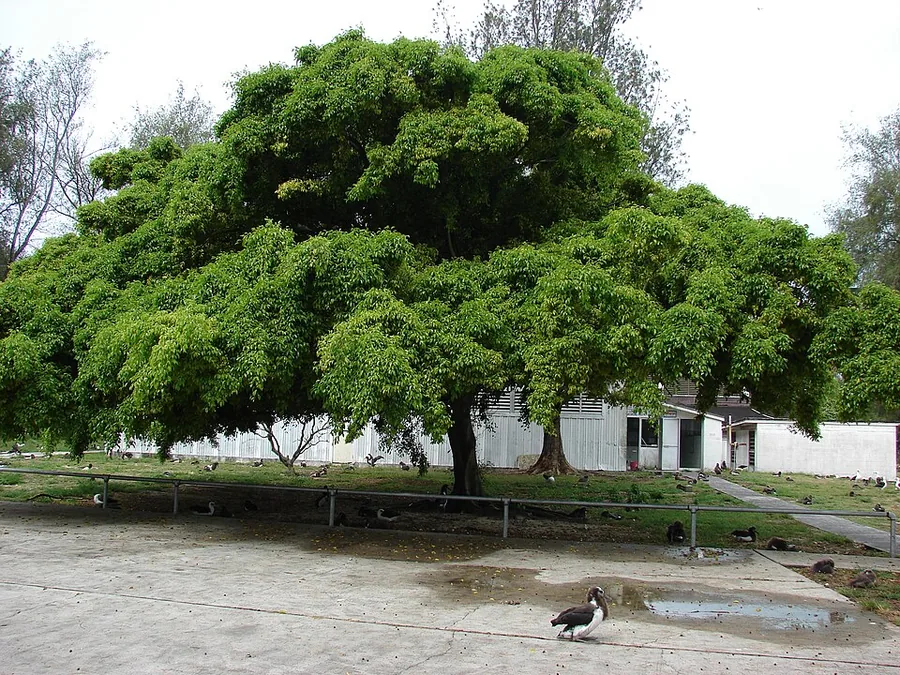
Ficus benjamina, a member of the Moraceae, is among the most widely grown indoor trees, prized for its slender, weeping branch habit and small, glossy foliage. Its native range across tropical Asia and northern Australia explains its cultural preferences directly: it performs best given warmth, bright light, and consistent soil moisture. Confined to a container indoors it holds to roughly 2 to 10 feet (60 cm to 3 m), a small fraction of the canopy tree it forms outdoors in frost-free regions.
Its defining trait is a low tolerance for environmental change. Relocation, a cold draft, or an altered watering regime disrupts the plant enough to trigger abscission, the shedding of leaves. The response reflects sensitivity rather than poor health. Established in a stable position, it maintains a full, cascading form over many years.
Two properties warrant attention before acquisition. Cut tissue exudes a milky latex that irritates skin and is a documented allergen, and the ASPCA classifies the species as toxic to cats, dogs, and horses. Managed with gloves and sited beyond the reach of animals, it remains a durable, refined specimen for interior use.
Care
The short version: bright indirect light, sustained warmth away from drafts, and even soil moisture that never becomes waterlogged. Fix it in a single position, because relocation is the principal trigger for leaf loss.
Light
Provide bright, indirect light, ideally diffused through a sheer curtain, to sustain vigor. It endures partial shade, and variegated selections tolerate somewhat lower light, but insufficient illumination produces attenuated growth and leaf loss.
Water
Maintain even soil moisture during active growth, then permit the surface to dry marginally between waterings in winter. Standing water in the saucer must be avoided. Both excess and deficit induce leaf drop, so regularity governs success more than quantity.
Soil
Grow it in a well-drained, soil-based medium. The species is indifferent to pH across the acidic-to-alkaline span, approximately 6.0 to 8.0, provided drainage remains free.
Temperature
Hold a stable 65°F to 85°F (18°C to 29°C), with night temperatures slightly below day. Because thermal shock and cold drafts drive abscission, position it clear of doorways and HVAC outlets and never allow it below about 55°F (13°C).
Humidity
The species favors high humidity; dry interior air stresses it and predisposes it to spider mites. Cluster it with other plants, use a pebble tray, or operate a humidifier through the heating season.
Feeding
Apply a balanced liquid houseplant fertilizer monthly through spring and summer. Suspend feeding in autumn and winter as growth slows, since a resting plant assimilates little.
Pruning
Only light pruning is required to maintain form and dimension, best performed in late autumn or winter. Wear gloves, as the cut stems release a milky latex that irritates skin and is a recognized allergen.
Repotting
Repot infrequently; the species tolerates and even prefers a mild root-bound state. Advance it one pot size in late winter or early spring, prompted by slowed growth or conspicuously smaller new leaves.
Size & spacing
Under interior conditions it remains within the 2 to 10 foot (60 cm to 3 m) range, far below the 40-foot tree it attains in habitat. Allow lateral clearance for the arching branches, which extend several feet at maturity.
Troubleshooting
Most disorders in Ficus benjamina converge on one visible sign, leaf drop, so diagnosis rests on identifying the precipitating change. Determine whether the plant was relocated, chilled, watered inconsistently, or held in insufficient light. Match the pattern below, correct the cause, and allow a recovery interval.
Abscission following relocation of the plant
This is shock leaf drop, the species' characteristic response to almost any change in conditions. A new position, a cold draft from a doorway or vent, irregular watering, or a recent repot each initiates it, and the leaves yellow and abscise within days. Stabilize light, warmth, and watering, hold it above 55°F (13°C), and shedding ceases as new growth resumes once conditions settle.
Fix:
- Move the plant to its new location gradually, in stages, rather than all at once
- Stabilize light, temperature, and watering and keep it away from drafts and heat/AC vents
- Keep it above ~55°F (13°C)
- Be patient - once conditions are adequate it stops dropping and pushes healthy new growth
Yellowing and drop with persistently wet soil
Saturated substrate indicates overwatering, compounded by water retained in the saucer. Deprived of oxygen, the roots decline, the lower leaves yellow, and they fall. Empty the saucer, let the surface dry before rewatering, and confirm the container drains freely.
Fix:
- Empty the saucer and never let the pot stand in water
- Allow the soil surface to dry slightly before the next watering
- Ensure the pot drains freely
Stippling, honeydew, or webbing on foliage
Sap-feeding arthropods are responsible, most commonly spider mites under low humidity. Note the fine webbing and stippling, the sticky honeydew, the raised scale, or the cottony mealybug masses. Rinse the foliage, remove visible individuals, apply insecticidal soap or horticultural oil, and raise humidity to suppress mite recurrence.
Fix:
- Rinse foliage and wipe off visible pests
- Treat with insecticidal soap or horticultural oil, repeating as needed
- Raise humidity to discourage spider mites
Etiolated growth shedding interior leaves
Pale, elongated stems that drop their interior leaves indicate insufficient light, at times combined with underfeeding. Transition the plant, in stages, to a brighter position with indirect light. Feed monthly through spring and summer with a balanced liquid fertilizer to restore density.
Fix:
- Move (gradually) to a bright, indirect-light location
- Feed monthly with a balanced liquid fertilizer during the growing season
Leaf spotting or progressive twig dieback
Discrete lesions signal leaf-spot disease, and advancing twig dieback may accompany them, though disease is uncommon on plants kept indoors. Excise the affected leaves and prune out dead wood. Improved air movement and dry foliage generally resolve it.
Fix:
- Remove affected leaves and prune out dead wood
- Improve air circulation and avoid wetting foliage
Toxicity
This species is not pet-safe. Its latex contains ficin, a proteolytic enzyme, and psoralen, and the ASPCA lists Ficus benjamina as toxic to cats, dogs, and horses. The same latex irritates human skin and can provoke allergic reactions in sensitized individuals, so exclude it from pet access and glove up before pruning.
Toxic to
Cats · Dogs · Horses · Rabbits · Livestock · Birds · People
Cats Toxic
The latex contains ficin and psoralen, and the ASPCA classifies the species as toxic to cats. A cat that ingests leaf tissue may hypersalivate, paw at an irritated mouth, and vomit.
Dogs Toxic
Dogs are affected identically. Ingestion of leaf or stem tissue produces salivation, oral and dermal irritation, and gastrointestinal upset.
Horses Toxic
The ASPCA also lists horses. The irritant latex can inflame the mouth and induce salivation and digestive disturbance.
Rabbits Caution
Rabbit-specific data are absent, but the shared irritant latex justifies strict exclusion. Prevent any browsing of the foliage.
Livestock Caution
Grazing species seldom encounter it indoors, yet the foliar ficin renders it an unacceptable risk. Keep it away from goats, sheep, and cattle.
Birds Caution
Companion birds may sample low foliage, and the irritant latex does not justify the exposure. Position the plant beyond reach of inquisitive beaks.
People Caution
No part of the plant is edible. The latex irritates skin on contact and functions as a recognized respiratory and contact allergen in sensitized individuals, so glove during pruning and wash the hands afterward.
Cut stems and broken leaves exude a milky latex; the latex is a documented cause of contact reactions and IgE-mediated respiratory allergy (rhinitis/asthma) in sensitized people, with cross-reactivity to fig fruit and papain. Wear gloves when pruning and wash hands afterward
Helpline numbers

United States
ASPCA Animal Poison Control: (888) 426-4435 (fee applies)
Poison Control: (800) 222-1222



Canada
Poison Centres: 1-844-764-7669
Varieties
Several named cultivars extend the species to different situations and preferences, from variegated foliage to dwarf forms suited to bonsai. The following are encountered most often.
'Variegata'
Selected for its cream-and-green variegation, this cultivar, like most variegated figs, accepts marginally lower light than the species type.
'Danielle'
A compact, slow-growing cultivar with deep green foliage that retains its form with minimal intervention.
'Too Little'
A genuine dwarf whose scale recommends it as a bonsai subject.
'Pandora'
A restrained cultivar reaching about 6 feet (1.8 m) indoors, useful where headroom is limited.
How to propagate
Ficus benjamina propagates vegetatively, though it asks more patience than the simplest houseplants. Stem cuttings serve for small material, while air-layering is the more reliable method for a large or leggy specimen.
Stem cuttingsModerate
Best taken in summer · Several weeks to root
Collect cuttings in summer to maximize rooting success. The severed end exudes milky latex, so wear gloves and allow the flow to cease before potting. Rooting proceeds over several weeks.
Air layeringModerate
Can be done in any season · Several weeks to months to root before severing
Air-layering is the dependable technique for a large or leggy specimen and may be initiated in any season. Roots develop on the wrapped stem across several weeks to a few months, after which the layer is severed from the parent.
Myths
A weeping fig that drops its leaves is dying and should be thrown out.
Leaf drop is the species' physiological reaction to change, not terminal decline. Provide constant light, warmth, and watering, and shedding stops and new growth follows once the plant acclimates.
The weeping fig is a harmless, non-toxic houseplant.
The ASPCA classifies it as toxic to cats, dogs, and horses because the latex contains ficin and psoralen. That latex is additionally a documented respiratory and contact allergen in sensitized people, which warrants deliberate handling.
Sources
- Plants of the World Online, Royal Botanic Gardens Kew
- NC State Extension Gardener Plant Toolbox
- ASPCA Animal Poison Control
- Missouri Botanical Garden Plant Finder
- Missouri Botanical Garden - Gardening Help FAQ
- Clemson Cooperative Extension HGIC
- PubMed - Allergy (1998): Asthma caused by Ficus benjamina latex
- Atlas of Florida Plants, Institute for Systematic Botany, University of South Florida