Houseplant · Moraceae
Fiddle-leaf Fig
Ficus lyrata
Supply bright indirect light and one unchanging position, and Ficus lyrata answers with broad, lacquered, violin-shaped leaves.
Bright indirect
USDA 10–12
2–10 ft · 0.6–3 m
Overview
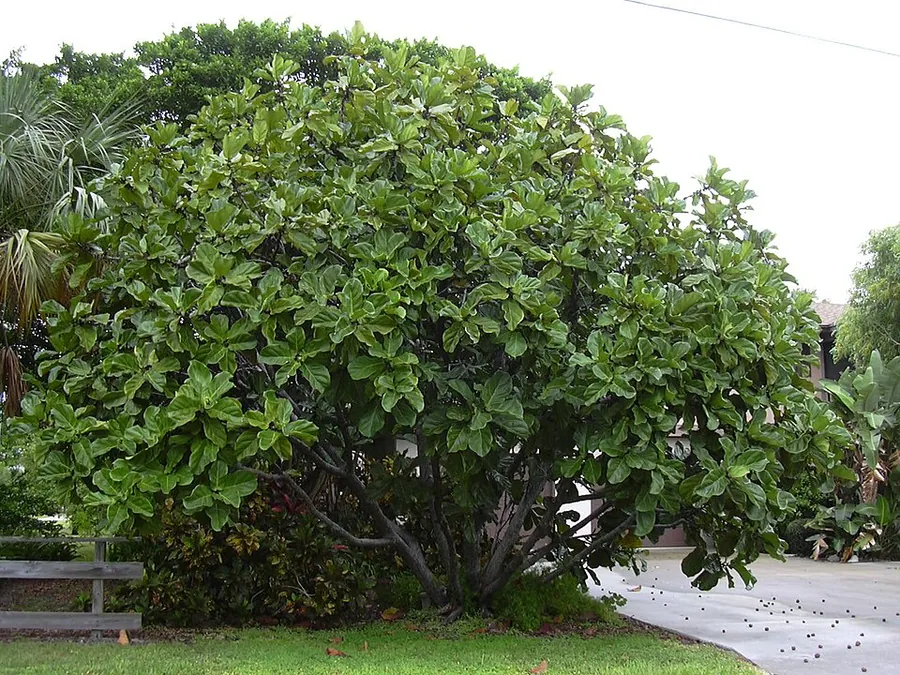
Ficus lyrata has earned its place as the houseplant chosen when a room calls for one commanding green focal point. A member of the fig family from the tropical lowland forests of western and west-central Africa, it matures into a genuine tree in the wild. Confined to a container, it holds a tall, columnar form as a specimen plant, its branches hung with wide, glossy leaves shaped like a violin.
The notion that it is temperamental overstates the case. What the plant actually demands is consistency: an unchanging bright corner, a repeating watering interval, and freedom from sudden relocations or cold drafts. Meet those conditions and it overlooks lesser lapses. Shuffle it around the home or swing the watering between extremes and it registers the stress as brown lesions and shed leaves.
Cultivated attentively, it ascends from a tabletop subject toward ceiling height across several seasons, attaining 2 to 10 feet (60 cm to 3 m) under interior conditions. That stature comes paired with a milky latex that irritates skin and endangers animals, which is reason enough to position it beyond the reach of cats, dogs, and children.
Care
The short version: bright indirect light, a repeating watering interval that lets the top few centimeters of substrate dry, a fast-draining acidic mix, and one warm, draft-free position the plant can keep for the long term.
Light
Position it in bright indirect light, near a window where direct rays never land squarely on the foliage. The plant accepts part shade, but unfiltered afternoon sun scorches the leaf surface, so diffuse the light or draw the specimen back from its strongest point.
Water
Irrigate once the top few centimeters of substrate have dried, gauged with a finger inserted about 2 inches down. Because the species resents both extremes, neither let the rootball desiccate and shrink from the pot wall nor leave it standing in moisture. Lengthen the interval through fall and winter.
Soil
Set it in a fast-draining, loamy, acidic potting mix that retains a little moisture yet never turns waterlogged. Target a pH at or below 6.0 and always plant into a container with drainage holes so excess water exits at once.
Temperature
Hold it warm, above 55°F (12.8°C), and clear of cold glass and drafts. Abrupt swings in temperature rank among the leading reasons the leaves spot or abscise, so a steady interior position serves it best.
Humidity
Ordinary room humidity meets its needs, so no figure is worth pursuing. Wiping the broad leaves periodically pays off more than misting, since a clean surface absorbs light more efficiently.
Feeding
Across spring and summer, supply a diluted liquid fertilizer at a 3-1-2 (N-P-K) ratio weekly, delivered with the watering. The nitrogen-forward formula matches the plant's leaf-driven growth. Withhold feed once seasonal growth tapers off.
Pruning
Ficus lyrata responds well to the knife, so cut it back to refine its shape or restrain its size whenever the need arises. Keep gloves on, since the latex weeping from severed stems irritates the skin.
Repotting
Move it up every 1 to 2 years once it has outgrown the current pot, though a degree of potbinding causes it no harm. The cues are roots emerging through the drainage holes or substrate that dries fast and shrinks from the container edge.
Size & spacing
24–120 in (61–305 cm) tall
Troubleshooting
Nearly all of this fig's complaints register in the canopy, and the underlying cause is usually irrigation or some disruption to its environment. Diagnose the signal promptly and you can correct the source before the decline advances. Locate your symptom below, then respond accordingly.
Discolored brown lesions developing on the foliage
Despite appearances, brown lesions on this fig signal overwatering and the root rot that follows, not a plant gone thirsty: saturated soil starves the roots of oxygen and the damage surfaces in the canopy. Cold drafts, proximity to a heat vent, and watering that alternates between drenched and parched produce the same symptom. Examine the substrate and rootball, relocate the specimen clear of drafts, and stabilize the watering interval before applying more water.
Fix:
- Let the soil dry appropriately and confirm the pot drains freely
- Move the plant away from drafts, vents, and cold windows
- Re-establish a consistent watering routine; trim rotted roots if root rot is present
Foliage abscising and falling from the stem
Leaf abscission in Ficus lyrata is a stress response to a shift in its conditions. Erratic watering heads the list of triggers, though a cold draft, an abrupt temperature change, or relocating the specimen to fresh surroundings will each prompt shedding. Settle it in a single position and hold the watering interval even, and the canopy stabilizes.
Fix:
- Keep watering consistent
- Avoid moving the plant once it is settled
- Protect from cold drafts and hot/dry air from vents
Honeydew, fine webbing, or insects across the leaves
Cultivated indoors, figs attract the familiar guild of sap-feeding insects: scale, aphids, mealybugs, thrips, and spider mites, with mites favoring the dust and low humidity of heated rooms. Invert each leaf and scout for live insects, gossamer webbing, or the sticky honeydew they excrete. Sponge and rinse the canopy, apply insecticidal soap or horticultural oil, and quarantine the specimen from your collection until the population collapses.
Fix:
- Wipe leaves and rinse foliage
- Treat with insecticidal soap or horticultural oil as directed
- Isolate the plant until the infestation is controlled
Bleached, sun-burned zones on window-facing foliage
Bleached, parched patches are leaf scorch, the result of direct sun overwhelming the leaf tissue. The diagnostic clue is location: injury concentrates on the surface oriented toward the glass, and it worsens after the intensity of afternoon exposure. Return the specimen to bright indirect light or screen it from the fiercest sun, and the foliage that follows emerges undamaged.
Fix:
- Move to bright indirect light
- Shield from direct afternoon sun
Broad leaves muted and grayed under a dust film
The species carries unusually large leaf surfaces, and a settled coat of dust intercepts the light those leaves rely on while obstructing gas exchange at the surface. A muted, grayish sheen is the signal that vigor is slipping. Sponge both the upper and lower surfaces with a damp cloth and the natural gloss returns.
Fix:
- Wipe the top and bottom of the leaves with a damp cloth or paper towel
Toxicity
Keep this species clear of any animal that might browse it. Throughout the plant runs a milky latex carrying the enzyme ficin, which inflames the mouth and digestive tract of cats, dogs, and other species and induces drooling and vomiting once chewed. That same latex irritates human skin, and no portion is fit to eat, so handle it gloved and position it away from animals and children.
Toxic to
Cats · Dogs · Horses · Rabbits · Livestock · Birds · People
Cats Toxic
Should a cat bite into a leaf, the latex inflames the mouth, triggers heavy salivation, and commonly provokes vomiting within a short window. Contact with the sap can also leave the skin reddened and sore.
Dogs Toxic
A dog that chews the foliage develops oral and gastric irritation, profuse drooling, and vomiting. Latex smeared on the muzzle or paws tends to redden and inflame the skin there as well.
Horses Toxic
The ficin-bearing latex irritates an equine mouth and digestive tract alike, producing salivation and gastric upset. Site the plant where a horse cannot reach it.
Rabbits Toxic
No portion of this fig is suitable for a rabbit to sample. Because the latex inflames both mouth and gut, regard every part of the plant as off-limits.
Livestock Toxic
Browsing stock such as goats and sheep develop oral and gastric irritation from the latex. The plant offers them nothing that justifies the hazard.
Birds Toxic
The irritant latex poses a danger to pet birds, which may react to even a fragment. Keep them away from both the leaves and any pruned stems.
People Caution
Nothing on the plant is edible, and contact with the latex can leave skin reddened, itchy, and inflamed. Glove up before pruning or handling cut stems, then wash the hands afterward.
The milky sap (latex) can irritate skin; wear gloves when pruning or handling cut stems
Helpline numbers

United States
ASPCA Animal Poison Control: (888) 426-4435 (fee applies)
Poison Control: (800) 222-1222



Canada
Poison Centres: 1-844-764-7669
Varieties
What the trade offers is overwhelmingly the unimproved species, yet a handful of named selections surface, generally smaller in stature or variegated in leaf. The following are the ones worth recognizing.
Bambino
Bred as a dwarf, it remains markedly more compact than the true species and therefore suits a tabletop or a confined corner.
Compacta
Reaching roughly 5 feet with denser, smaller leaves, it presents a fuller, bushier habit than the lankier species.
Little Sunshine
A small-statured variegated form valued for its modest size and its patterned leaves.
Variegata
Distinguished by green-and-cream variegated foliage and seldom stocked in trade, making it a notable acquisition when located.
How to propagate
A second fiddle-leaf fig can be raised from the specimen already in your care, and the dependable route is a stem cutting. What it asks of you is patience and a pair of gloves.
Stem cuttingsModerate
Spring through summer during active growth · Roots over several weeks under warm, humid conditions
Propagating fiddle-leaf figs dependably means taking a stem cutting during spring or summer, when active growth supplies the energy for rooting. Held in warm, humid conditions, the cutting forms roots over several weeks. Don gloves before you begin, as the milky latex irritates the skin.
Myths
Fiddle-leaf figs are nearly impossible houseplants to keep alive.
The fearsome billing outpaces the actual record. For all the fuss it attracts, stable light, measured watering, and a single fixed position account for most of its needs. Supply those and the plant grows steadily and without theatrics.
Brown spots on the leaves always mean the plant is thirsty.
Adding water tends to compound the problem rather than solve it. Spotting arises far more readily from saturated soil and root rot, or from cold drafts and unstable temperatures, than from drought. Read the substrate moisture and the plant's location before deciding to irrigate again.