Tree · Moraceae
Osage Orange
Maclura pomifera
Plant it once and let it run. The Osage orange is just about indestructible, thorns, hedge apples, and all.
Full sun
Every 7–21 days
2555–3650 days
USDA 4–9
Overview
The Osage orange earned its place as the tree that built the prairie fence. Before barbed wire, growers planted seedlings in tight rows and headed them repeatedly until they interlaced into a living barrier that was, in the period phrase, horse-high, bull-strong, and hog-tight. A member of the mulberry family, it still carries on its lower branches the stout thorns that gave that hedge its stock-proof edge.
The fruit is what draws attention today. As a dioecious species, only the female trees set the heavy, yellow-green, brain-textured syncarps the size of a grapefruit, the hedge apples that drop each fall. Despite the name they are neither an orange nor edible, and the small green flowers that precede them in early summer are easy to overlook.
As a subject to grow, its value lies in tolerance. It withstands drought, poor ground, clay, salt, and severe cold, puts on fast growth, and lays down some of the most rot-resistant wood in North America, a durability that once made it prized for fence posts. The offsetting traits are the thorns and the fruit litter, which is why nursery stock is almost always a thornless, fruitless male clone.
Care
The short version: site it in full sun on almost any soil, water it through establishment, and then leave it alone. Once the root system takes hold, this is a tree whose durability lets it thrive on neglect.
Light
Site it in full sun, where it develops the best form and the densest canopy. It tolerates partial sun and light shade, but a tree in the open grows fuller, and notably it lays down the heaviest thorns precisely on those well-lit branches.
Water
Irrigate young trees through establishment while the root system extends, then reduce supplemental water. Once established the species is deeply drought tolerant and copes with both dry and wet ground, so intervals anywhere from a week to three are appropriate.
Soil
Soil is where its adaptability is clearest. It performs on poor, dry, clay, sandy, shallow rocky, and even alkaline substrates across a pH from 6.0 to 8.5, though it makes its fastest growth on rich, moist, well-drained bottomland.
Temperature
Thermal tolerance underpins its dependability. The tree withstands winter lows near -29°F (-34°C) and summer highs approaching 100°F (38°C), a span that lets it perform across much of the central part of the continent.
Humidity
Ambient outdoor air is sufficient, and no humidity target applies. It grows across a broad range of climates without regard to atmospheric moisture.
Feeding
Fertility requirements are low, and feeding is rarely warranted. Withhold fertilizer unless growth has clearly stalled, in which case a single balanced slow-release application in spring suffices.
Pruning
Prune from late winter into dormancy to remove dead, crossing, or low thorny limbs and to shape the crown, working while the tree is leafless for clearer structure. Wear gloves and eye protection throughout, since the thorns are stout and the latex sap irritates.
Repotting
Container culture is short-lived for this species. Move a nursery seedling on as soon as roots begin circling, escaping the container, or shedding water straight through, and establish it in the ground before growth stalls.
Size & spacing
Account for a large tree at maturity, 30 to 60 feet (9 to 18 m) tall with an even greater spread of 35 to 50 feet (11 to 15 m). Allow open ground well clear of buildings, walks, and overhead lines.
When to plant
Osage orange rewards a long horizon. Sow seed in late winter after breaking dormancy with a soak or a chill, set young trees out in spring once frost has passed, and expect the small greenish flowers in June followed by the heavy fruit that ripens on female trees through September and October.
Northern hemisphere
Southern hemisphere
Typical months for a temperate climate: start earlier in warm zones, later where spring frosts linger.
- Sow: Late winter, after soaking seed 48 hours or cold-stratifying about 30 days.
- Plant: Spring after the last frost, or fall in mild areas.
- Harvest: Insignificant greenish flowers late spring to early summer (June); fruit ripens September to October on female trees.
Hardiness
USDA hardiness zones: 4–9
Temperature: down to -34°C
Troubleshooting
Pests and disease seldom trouble this species, so the practical problems are the ones the tree itself presents rather than any pathology. Thorns, falling fruit, and the irritating latex account for nearly every complaint. Identify your issue below and address the cause before it escalates.
Puncture injuries from stiff axillary thorns during close work
The species arms its leaf axils with stout woody thorns up to 1 inch (2.5 cm) long, and thorn expression concentrates on the sun-exposed lower branches, which is exactly where a person works and where clothing and skin get torn. Heavy gloves, eye protection, and thick sleeves stop the punctures during pruning, and removing the low thorny branches reduces the surfaces you contact. Where the species will grow beside traffic, a thornless male cultivar avoids the hazard by genetics rather than by pruning.
Fix:
- Wear heavy gloves, eye protection, and thick clothing when pruning
- Prune off low thorny branches to reduce contact
- Use thornless male cultivars in high-traffic areas
Dermatitis-like redness and itching following contact with the latex
Wounded tissue anywhere on the plant exudes a milky latex sap, and that latex is the irritant behind red, itchy skin after contact with broken stems, leaves, or cut fruit. Washing the area with soap and water removes the residue before the reaction spreads, and keeping clean hands away from the eyes prevents a worse response on thin mucous membranes. Because the sap only irritates on contact, a barrier of long sleeves and gloves eliminates the exposure at its source.
Fix:
- Wash the area with soap and water
- Wear gloves and long sleeves when handling the plant or fruit
- Avoid touching the eyes or face until hands are washed
Accumulating fruit drop beneath female trees through autumn
Because the species is dioecious, only mature female trees set the syncarps, and each autumn they release dozens of hard, grapefruit-sized fruits that collect under the canopy as a slip and impact hazard. Prompt raking clears the drop zone before the fruit accumulates, and siting female trees well back from walks, drives, and parking keeps the fall out of traffic. Since the trait is sex-linked, planting a fruitless male cultivar removes the litter entirely.
Fix:
- Rake and remove fallen fruit promptly
- Site female trees away from walkways, drives, and parking
- Plant male (fruitless) cultivars where litter is a concern
Toxicity
The toxicological picture here is reassuring. Osage orange is absent from the ASPCA's toxic lists, and the bitter hedge apple, whatever its folklore, poisons neither pet, person, nor livestock. Two mechanical or contact hazards remain: the milky sap, which can redden and irritate skin or a chewed mouth, and a whole fruit large enough to obstruct the throat of a grazing animal.
Safe for
People · Cats · Dogs · Horses · Rabbits · Livestock · Birds
Cats Safe
No systemic toxin is present, so a cat that bats the fruit around suffers no poisoning. The one exposure worth noting is the latex, which can leave a chewed mouth or paw locally irritated.
Dogs Safe
The species carries no compound toxic to dogs. The concern is purely mechanical, since the tough, fibrous fruit can lodge as an obstruction in a small dog that swallows one whole, and the latex may irritate a gnawing mouth.
Horses Safe
Feeding trials confirmed the fruit holds no poison, so the horse apple nickname overstates the risk. The real hazard is obstructive, since a whole fruit can lodge in the esophagus, making choke rather than toxicity the concern.
Rabbits Safe
Neither the foliage nor the fruit contains anything toxic to rabbits. The latex can irritate a sensitive mouth on contact, which is reason enough not to offer it as forage.
Livestock Safe
Controlled feeding disproved the early accounts of hedge apples killing cattle. No poison is involved, but a whole fruit can obstruct the throat of an animal that bolts it, and the latex may irritate the mouth.
Birds Safe
The tree presents no toxin to birds. The dense, hard fruit is also largely unpalatable, so most birds leave it untouched.
People Safe
No part of the tree is poisonous, and the bitter fruit falls outside the human diet. The only caution is the latex on cutting or handling, since it can redden and irritate skin or the mouth through direct contact.
The milky latex sap can cause mild contact dermatitis in some people; wear gloves when pruning or handling fruit. Watch for sharp thorns.
Varieties
Nursery stock for landscape use is almost entirely named male clones, selected to eliminate the thorns and the fruit. These are the selections to request.
White Shield
A male selection that sets no fruit and ranks among the most nearly thornless clones available, which explains its use where a clean, tidy specimen is wanted.
Wichita
A male, thornless, fruitless clone grown as a shade tree in situations that call for the species' durability without its litter or thorns.
Park
A further male, thornless, fruitless selection chosen for landscape use where fruit drop would otherwise create a nuisance.
How to propagate
Few trees regenerate as readily. Osage orange comes true enough from seed and roots freely from cuttings and root pieces, while reproducing a named thornless male true to type requires grafting.
SeedEasy
Sow in spring after soaking seed in water about 48 hours or cold-stratifying 30 days; historically sown to grow dense hedgerow living fences. · 1-2 growing seasons to a transplantable seedling
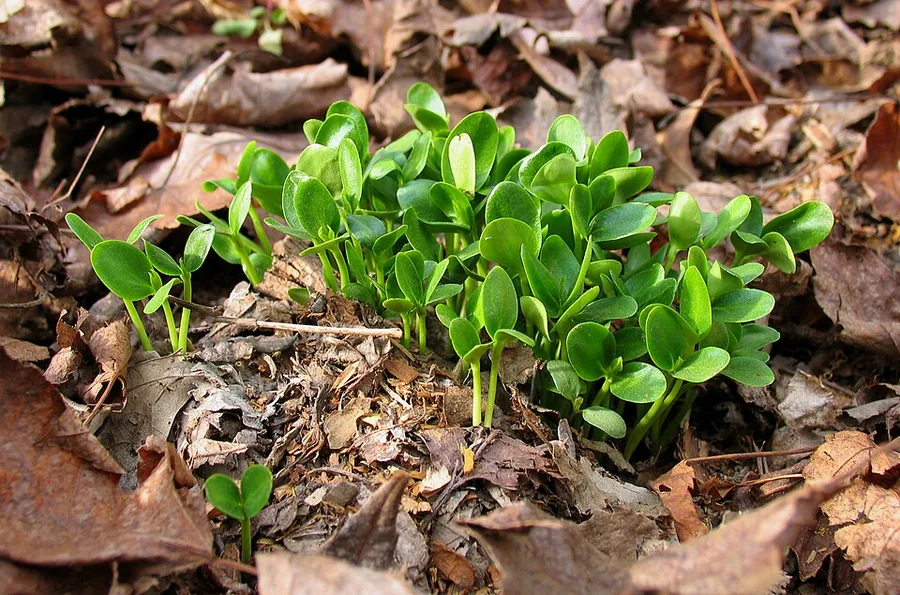
Extract the seed from the softened fall fruit, then break dormancy with a 48 hour soak or roughly a month of cold stratification before a spring sowing. Under full light on bare mineral soil the seed germinates freely, the same reliability that let settlers raise entire living fences from it. Expect one to two seasons before a seedling reaches transplant size.
Stem cuttingsModerate
Take softwood or greenwood cuttings in summer, or hardwood/dormant cuttings in winter. · One growing season to root
Two windows work, soft greenwood cuttings in summer and hardwood cuttings taken during winter dormancy. The dormant wood roots with notable vigor and typically establishes within a single growing season, and taking material from the upper, thornless growth carries that thornless trait into the resulting plants.
DivisionModerate
Lift and separate root cuttings or root suckers in the dormant season. · One growing season
The species suckers freely and regenerates readily from root fragments, so lift and separate root cuttings or suckers during dormancy. A divided root cutting or sucker establishes in roughly one growing season.
GraftingDemanding
Chip-bud or graft thornless male clones onto seedling rootstock in the growing season. · 1-2 seasons
Grafting is the demanding method and the only technique that reproduces a named thornless, fruitless male true to type, since sexual seed will not fix the trait. Chip-bud or graft the clone onto seedling rootstock during the growing season, and expect the union to knit over one to two seasons.
Myths
The fruit releases enough repellent compound to drive spiders and insects out of a house.
This repellent claim is the one most often attached to the tree, and the evidence does not support it. Iowa State work showed that compounds isolated from the fruit can deter insects, yet only at concentrations far above those the intact fruit delivers. A whole hedge apple releases far too little of the active compound to affect the insects around it.
The fruit contains a toxin hazardous to humans and livestock.
The fruit is bitter and inedible, a sensory cue that likely seeded the poison rumor, yet bitterness is not toxicity. Controlled feeding experiments closed the old case of hedge apples killing cattle. The documented risk is obstruction, a whole fruit choking a grazing animal, not any toxic principle within the tissue.