Houseplant · Commelinaceae
Silver Inch Plant
Tradescantia zebrina
Given bright light and periodic pinching, this trailing inch plant fills a container quickly.
Bright indirect
64–75°F · 18–24°C
USDA 8–12
6–9 in · 15–23 cm
Overview
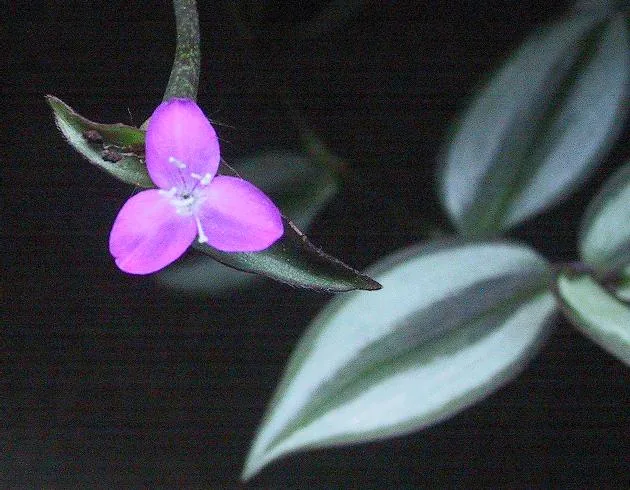
The silver inch plant is a fast-growing trailing houseplant valued for foliage banded with silver and deep purple on the upper surface and flushed purple beneath. A member of the spiderwort family, it originates from Mexico south to Colombia, where it grows as a creeping groundcover. Under cultivation the stems trail over the pot rim and continue to extend well beyond it.
Its reputation for durability rests on real traits: the stems grow rapidly, form roots at any node in contact with soil, and regenerate quickly after severe pruning. The single non-negotiable requirement is adequate light, since the purple and silver pigmentation depends on strong illumination and reverts to plain green in shade.
A note on nomenclature is warranted. The traditional common name derives from an antisemitic legend and is now widely discontinued in favor of inch plant, silver inch plant, or wandering dude, the terms adopted by most growers and horticultural references.
Care
The short version: bright indirect light sustains the pigmentation, watering once the soil surface dries with a winter reduction protects the roots, and frequent tip pinching maintains a dense rather than leggy habit.
Light
Provide bright indirect light for optimal coloration, supplemented by brief direct morning sun where feasible. The plant persists in low light, but the purple and silver pigments fade to plain green and the internodes elongate into leggy growth.
Water
Irrigate generously during active growth, then allow the soil surface to dry before rewatering, and reduce the frequency through fall and winter. Avoid a saturated substrate, since sustained waterlogging is the principal cause of root and stem rot.
Soil
Grow it in a well-drained peaty or loam and sand medium in a container with drainage. It is indifferent to pH and performs across the range 6.0 to 8.0, from acidic to alkaline.
Temperature
Standard interior warmth suits it, ideally 64°F to 75°F (18°C to 24°C). Protect it from cold drafts and chilled windowsills during winter.
Humidity
Average household humidity is sufficient, so no specific target applies. In very dry air, a modest increase in humidity limits browning at the leaf tips.
Feeding
Apply a balanced houseplant fertilizer monthly through spring and summer during active growth. Withhold feeding in fall and winter as growth slows.
Pruning
Pinch the stem tips frequently to sustain a dense, bushy form and suppress legginess. The removed segments root readily, so they can be reinserted directly into the same pot.
Repotting
Repot every 1 to 2 years or when the roots crowd the container, reflecting its rapid growth. Indicators include roots circling the pot or emerging from the drainage holes, leggy growth despite good culture, and soil that dries almost immediately after watering.
Size & spacing
It remains low at 6 to 9 inches (15 to 23 cm) in height while trailing and spreading to 12 to 24 inches (30 to 61 cm) across. Position it at a shelf edge or in a hanging basket to accommodate the cascading stems.
Troubleshooting
Most disorders in this species trace to light or moisture. Faded pigment and elongated stems indicate insufficient light, whereas soft, collapsing stems indicate a substrate held too wet. Identify the pattern below and correct the underlying condition promptly.
Basal rot progressing to collapse
This is root and stem rot, driven by soil that stays saturated and starves the roots of oxygen, and it advances rapidly. Diagnostic signs are soft, darkened stem bases, a substrate that never dries, and at times a putrid odor from decaying tissue. Excise all rotted tissue, re-root the firm cuttings in fresh, free-draining medium, and discard the waterlogged substrate along with any specimen too degraded to recover.
Fix:
- Cut away all rotted tissue
- Take healthy cuttings and re-root them in fresh, well-drained mix
- Discard severely rotted plants and waterlogged soil
Sap-feeding pest complex on foliage
Several sap-feeding pests colonize this species, and their feeding distorts and yellows the foliage. Spider mites betray themselves through fine webbing, aphids form soft-bodied colonies, and mealybugs appear as white waxy tufts on stems and leaf undersides. Dislodge the initial population by rinsing or wiping the foliage, then apply insecticidal soap or horticultural oil, which smother soft-bodied pests, and repeat at intervals until control is achieved. Isolate the affected plant to interrupt spread to neighboring specimens.
Fix:
- Rinse or wipe down foliage to dislodge pests
- Treat with insecticidal soap or horticultural oil and repeat as needed
- Isolate the plant to prevent spread
Pigment loss and internode elongation in low light
The cause here is light starvation. The purple and silver pigments intensify under strong light, so in a shaded position they diminish and the foliage reverts toward plain green, while the stems elongate between nodes as the plant reaches for the light source. Reposition it into bright indirect light or gentle morning sun to restore pigment, then pinch the elongated shoots to bring back compact, colorful growth.
Fix:
- Move to a brighter spot with bright indirect light or some direct sun
- Pinch back stretched stems to encourage compact, colorful new growth
Basal leaf loss and unbranched trailing stems
Without regular tip removal the plant grows leggy as it ages, because apical dominance keeps each stem extending rather than branching, so foliage concentrates at the tips over a thin, woody base. Cutting the bare stems back hard releases the lower buds and forces new branching. The healthy tips you remove root readily, so return them to the same pot to rebuild density.
Fix:
- Pinch or cut back leggy stems to force branching
- Propagate the healthy tip cuttings to refill the pot for a fuller plant
Marginal desiccation at the leaf tips
Brown, brittle tips and margins reflect moisture stress, whether from a root zone that has dried too far or from very low ambient humidity, since the thin leaf extremities lose water fastest and desiccate first while the lamina stays sound. Rehydrate the plant thoroughly and maintain a consistent watering interval so the substrate never bakes dry for long. Where indoor air is very dry, a modest rise in humidity reduces further tip scorch.
Fix:
- Water thoroughly and resume a consistent watering routine
- Increase ambient humidity if air is very dry
Toxicity
This is a contact irritant rather than a systemic poison, but it merits careful handling. The sap irritates skin, producing redness and itching in people and pets at the site of contact, and ingestion of the foliage causes a pet mild gastric upset. Wear gloves during pruning and keep the trailing stems beyond the reach of animals inclined to chew.
Toxic to
Cats · Dogs · Horses · Rabbits · Livestock · Birds · People
Cats Mild
Contact between the sap and a cat's skin produces localized redness and itching along the point of exposure to a trailing stem. Ingestion of the foliage induces hypersalivation and mild gastric irritation, but the response remains minor.
Dogs Mild
A dog moving through the trailing stems can develop reddened, irritated skin from sap contact, and chewing a stem triggers some drooling with mild gastrointestinal upset. The reaction is seldom serious, though a habitual chewer is best denied access.
Horses Mild
The ASPCA records dermatitis in horses for this genus, so cutaneous contact with the sap leaves the skin reddened and irritated.
Rabbits Caution
The same irritant sap that affects cats and dogs makes this an unsuitable plant to offer a rabbit. Exclude it from access rather than risk oral irritation or gastric upset.
Livestock Caution
Grazing stock rarely encounter an indoor specimen, yet the irritant sap would still affect a goat or sheep that browsed it, which places it among the plants to avoid.
Birds Caution
Documented guidance for birds is limited, and the irritant sap warrants a cautious approach. Prevent a companion bird from pecking at or shredding the foliage.
People Caution
The sap is a recognized contact irritant, so handling the plant or taking cuttings can produce redness and itching on the hands. Use gloves during pruning and wash after contact, and keep young children from chewing the foliage.
Wear gloves when taking cuttings or handling extensively, as the sap can irritate skin; wash hands after contact
Helpline numbers

United States
ASPCA Animal Poison Control: (888) 426-4435 (fee applies)
Poison Control: (800) 222-1222



Canada
Poison Centres: 1-844-764-7669
Varieties
Apart from the familiar striped species, two selections appear regularly in cultivation and merit recognition by name.
'Burgundy'
This cultivar forgoes the striped pattern for deep, dark purple leaves whose color develops most fully under bright light.
'Quadricolor'
Its foliage displays four pigments together, striped in pink, purple, silver, and green, giving a more ornamental effect than the plain species.
How to propagate
This ranks among the most readily propagated of houseplants, since virtually any severed segment forms roots.
Stem cuttingsEasy
Any time during active growth · Roots in 1-2 weeks
Vegetative propagation is exceptionally reliable in this species. Take a stem or tip cutting while the plant is in active growth, place it in water or insert it into moist substrate, and adventitious roots emerge within 1 to 2 weeks. Root primordia form so readily that any node held against damp soil will strike on its own.
Myths
The old common name is merely a harmless traditional label.
That name derives from an antisemitic legend and is now widely regarded as an ethnic slur. Extension services and horticultural references have largely adopted inch plant, silver inch plant, or wandering dude in its place, and those are the preferred terms.
The inch plant poses no risk to pets or people.
The ASPCA classifies it as toxic to dogs, cats, and horses, in which the sap causes dermatitis. In people that same sap produces skin redness and irritation, and ingestion by a pet causes mild oral and gastric upset. The concern is contact and mild GI irritation, not systemic poisoning, but the plant is not the innocuous species it is frequently marketed as.