Houseplant · Asparagaceae
Ti Plant
Cordyline fruticosa
Steady bright indirect light and fluoride free water keep the ti plant in its pink, red, and burgundy color.
Bright indirect
50–95°F · 10–35°C
USDA 10–12
3–15 ft · 0.9–4.6 m
Overview
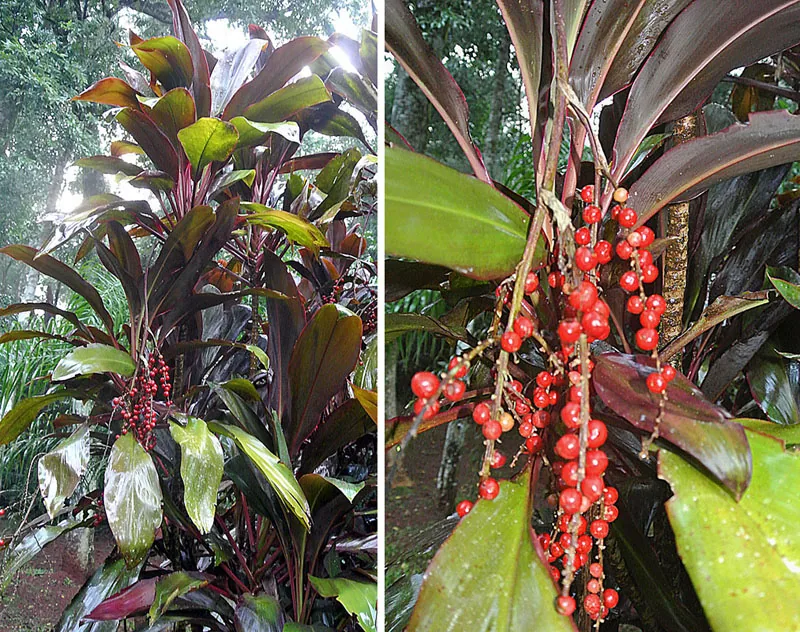
The ti plant is a tender evergreen from the tropical Pacific and Southeast Asia, grown for strappy foliage in pink, red, purple, and green. In its native range it carries long standing cultural weight as a good luck plant. Indoors it reads as an upright foliage specimen that keeps its coloration across the seasons.
That leaf color is pigment driven, and pigment expression tracks light. Under bright indirect light the pink and red tones hold their saturation. As light drops, the plant reverts toward plain green, which is the earliest and most reliable signal that it needs a brighter position.
In exchange it demands two things: clean water and high humidity. Fluoride and dissolved salts from tap water accumulate in the leaf tissue and scorch the tips, a disorder that dry indoor air compounds. Meet the water and light requirements and the ti plant behaves as an easy, long lived houseplant.
Care
The short version: provide bright indirect light, high humidity, and clean water low in fluoride. Hold the medium evenly moist through the growing season, taper off in winter, and feed a balanced fertilizer several times a year to sustain pigment in the foliage.
Light
Site the plant in bright indirect light to keep pigment strong. It endures partial and full shade, but coloration weakens toward green under low light. Screen it from direct afternoon sun, which scorches the foliage.
Water
Maintain an evenly moist medium from spring through fall, allowing the surface to dry slightly between waterings, then reduce watering over winter. Water chemistry is the critical factor: fluoride and salts in tap water scorch the leaf tips, so irrigate with distilled water or rainwater.
Soil
Grow it in a well drained, peaty medium, whether a fertile peaty loam or a peat based potting mix. Target a pH of 5.5 to 7.0, and rely on free drainage to keep the root zone from remaining saturated.
Temperature
The species is thermophilic and performs best from 50°F to 95°F (10°C to 35°C). It carries no real cold tolerance, so exclude it from cold drafts and chilled winter glass.
Humidity
This plant requires high humidity, above the ambient level of most interiors. Supplement with a humidifier or a pebble tray, since low atmospheric moisture is a principal driver of tip browning.
Feeding
Apply a balanced houseplant fertilizer during the spring through fall growth period. A handful of feedings across the year suffices and helps the foliage retain its coloration.
Pruning
Head back leggy canes to stimulate denser, lower growth. Also strip away spent or damaged lower leaves, which the plant abscises naturally as it matures.
Repotting
Repot every 2 to 3 years, or once rootbound, working in spring. Indicators include roots circling or emerging through the drainage holes, water passing straight through, and a slowdown in growth.
Size & spacing
At maturity the ti plant reaches 3 to 15 feet (90 cm to 4.6 m) in height with a spread of 3 to 8 feet (90 to 240 cm), staying considerably smaller under pot culture indoors. Allow clearance for its arching foliage.
Troubleshooting
Nearly every ti plant complaint registers first in the foliage, whether as tip scorch, loss of color, or a pest infestation. Diagnosing the symptom early keeps the remedy straightforward. Compare what you observe with the cases below, then correct the underlying cause.
Residue, stippling, or insects on the foliage
Sticky residue and fine stippling signal sap sucking pests, typically aphids, scale, mealybugs, or spider mites drawing fluids from the leaves. Inspect the undersides for scale bumps, cottony mealybugs, webbing, or aphid colonies, then wash the foliage and apply insecticidal soap or horticultural oil. Improved air circulation discourages reinfestation.
Fix:
- Wipe down or rinse foliage
- Treat with insecticidal soap or horticultural oil
- Improve air circulation
Brown, scorched tips at the leaf margins
Brown, scorched tips trace to fluoride and soluble salts in tap water, which accumulate in the leaf tissue and kill the tip cells; dry air intensifies the damage. Correct it by irrigating with distilled water or rainwater, leaching the pot periodically to flush salts, and raising humidity around the plant.
Fix:
- Water with distilled water or rainwater instead of fluoridated tap water
- Flush the pot periodically to leach out accumulated salts
- Raise humidity with a humidifier or pebble tray
- Trim damaged tips for appearance
Foliage color reverting to green
Loss of the pink, red, and purple tones and a shift toward green indicates insufficient light, since the coloring pigments depend on adequate illumination. Relocate the plant to bright indirect light to restore color, while avoiding harsh afternoon sun, which scorches the foliage rather than intensifying it.
Fix:
- Move to a spot with bright indirect light
- Avoid harsh direct afternoon sun, which can scorch leaves
Toxicity
Treat the ti plant as unsafe around animals. The whole plant contains saponins, and ingestion by a cat or dog can produce vomiting, at times with blood, along with hypersalivation, lethargy, and loss of appetite. People are not at risk from ingestion since no part is eaten, but the sap is a skin irritant, so glove up before cutting it.
Toxic to
Cats · Dogs · Horses · Rabbits · Livestock · Birds · People
Cats Moderate
Ingested leaf material provokes vomiting in cats, sometimes containing blood, with marked hypersalivation. Depression, anorexia, and persistently dilated pupils are additional signs to note.
Dogs Moderate
Dogs exposed to the same saponins vomit, at times with blood, and salivate heavily, accompanied by anorexia and a depressed, lethargic demeanor.
Horses Moderate
Horses are recorded as susceptible, with the green tissue inducing gastrointestinal upset and general discomfort.
Rabbits Caution
Saponins are a class of toxin that disturbs small grazers, so the foliage should be regarded as off limits and kept from any browsing rabbit.
Livestock Caution
Cattle, goats, and sheep seldom encounter a potted ti plant, yet the saponin content renders the foliage an unsafe browse for any that do.
Birds Caution
No source confirms safety for pet birds, so a curious bird is best kept away from the foliage rather than exposed to uncertain risk.
People Caution
The ti plant is not cultivated for consumption, and contact with the cut sap can produce an itchy dermatitis in some individuals. Wear gloves during pruning and prevent small children from mouthing the leaves.
Sap can cause contact dermatitis; wear gloves when handling or cutting the plant.
Helpline numbers

United States
ASPCA Animal Poison Control: (888) 426-4435 (fee applies)
Poison Control: (800) 222-1222



Canada
Poison Centres: 1-844-764-7669
Varieties
Named ti plant selections number in the dozens, sorted chiefly by leaf color and stature. The three most common in cultivation as houseplants follow.
'Baby Doll'
A compact, low growing selection bearing small, pink and green strap leaves that recommend it for indoor culture.
'Kiwi'
Its foliage is green, longitudinally striped with yellow and bordered by a band of red and pink.
'Red Sister'
Selected principally for color, it produces new growth in intense pink to burgundy.
How to propagate
The ti plant propagates readily, either from cane cuttings or by division of an established clump.
Stem cuttingsEasy
Spring to summer during active growth · Roots typically appear within a few weeks on moist media
The most reliable method uses cane sections, the same ti logs offered in the trade. Take them in spring or summer during active growth and set them on moist gravel or moist media, where roots and shoots emerge within a few weeks.
DivisionEasy
Spring, at repotting · Several weeks to establish in fresh soil
Division serves as the alternative, carried out at the spring repotting. Separate the rooted clumps or offsets, pot them individually, and allow several weeks for establishment in fresh medium.
Myths
An ornamental foliage plant such as the ti plant poses no risk to cats and dogs.
Appearance is no guide to toxicity. The ASPCA classifies the ti plant as toxic to cats and dogs, and the saponins it contains can induce vomiting, occasionally with blood, together with hypersalivation, reduced appetite, and lethargy. Keep it out of reach of pets.