Tree · Rutaceae
Tangerine
Citrus reticulata
Site it in full sun with sharp drainage and frost protection, and Citrus reticulata sets a heavy crop of sweet winter fruit.
Full sun
Every 7–14 days
USDA 9–11
12–15 ft · 3.7–4.6 m
Overview
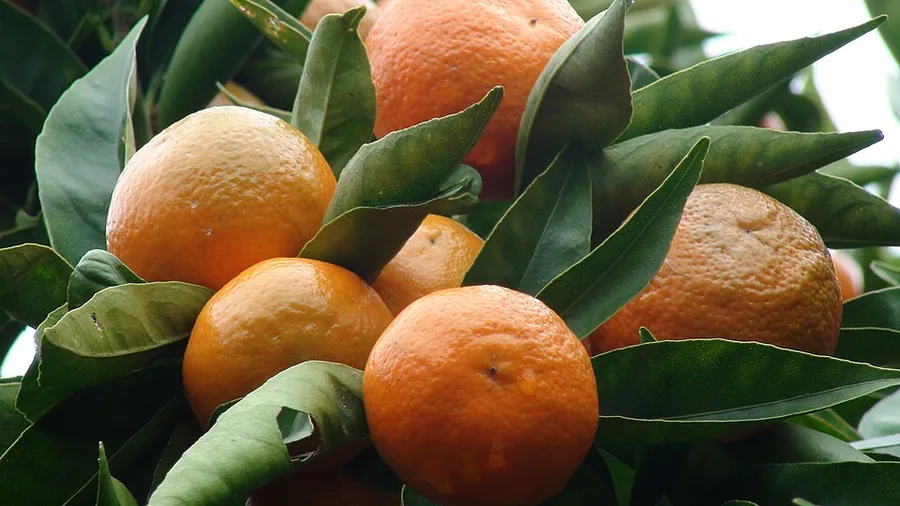
A tangerine is a mandarin, one of the deep red-orange, easy-peeling members of Citrus. Its fruit matures through the cool season, when few other crops do, which accounts for much of its value in the garden. Given a warm position, the tree produces fragrant spring bloom followed by a heavy set of sweet fruit.
These are subtropical trees by nature, most productive in the warm zones where hard frost is uncommon. In colder regions growers rely on large containers, moving the tree under shelter as temperatures fall. Tangerine adapts readily to container culture, which extends homegrown citrus well beyond the traditional groves.
The tree's requirements are straightforward: adequate light, free drainage, and a feeding program that sustains leaf color. Meet them and the plant persists for years, since tangerine is a long-lived perennial rather than a seasonal crop. The common failures reduce to three, namely waterlogged roots, nutrient-poor soil, and freeze injury.
Care
The short version: full sun, sandy well-drained loam on the acidic side, and steady moisture without waterlogging the root zone. Supply a citrus fertilizer across the growing season and protect the canopy from frost.
Light
Provide full sun, on the order of 6 to 8 hours daily, for the sweetest fruit and the densest canopy. The tree tolerates partial sun, but reduced light thins the crop and draws the growth out long and lax.
Water
Irrigate new trees roughly twice a week and established ones about weekly to every two weeks, scaling back in cool or wet conditions. Allow the top inch of soil to dry between waterings. Sustained saturation is the main hazard, since tangerine roots will not tolerate soggy soil.
Soil
Grow it in sandy, well-drained loam held slightly acidic, at a pH of 5.5 to 6.5. Within that band iron, manganese, and zinc stay soluble and available to the roots, and the free drainage prevents the root rot that follows waterlogging.
Temperature
The tree withstands a wide range, from about 39°F (4°C) up to 100°F (38°C), so heat is seldom limiting. Frost is the operative threat, since temperatures below freezing scorch the foliage and kill tender twigs, which makes a warm, sheltered microsite the priority.
Humidity
Average humidity near 40% to 60% is adequate. Outdoor trees need no intervention, and indoor specimens benefit only from a little added moisture in dry winter rooms.
Feeding
Apply a balanced citrus fertilizer supplying iron, manganese, and zinc from spring through fall, about February to October. Those micronutrients maintain deep green foliage and forestall the interveinal yellowing that citrus is prone to when they run short.
Pruning
Tangerine requires minimal pruning. Remove dead, damaged, or crossing wood, strip the rootstock suckers arising below the graft union, and thin lightly after harvest. Excessive pruning simply reduces the following crop.
Repotting
Repot a container tree into a larger vessel every 2 to 3 years, or sooner once roots circle the pot, water runs straight through, or growth slows. Renewing the medium and adding root volume restores vigor to a potted tangerine.
Size & spacing
Expect a mature height of roughly 12 to 15 feet (3.7 to 4.5 m) with a nearly equal spread. Allocate that footprint at planting, or restrict the tree to a manageable size in a large container.
When to plant
Tangerine growth tracks warmth, and a hard freeze sets it back badly. Transplant young trees in spring once frost has passed, expect fragrant white bloom as temperatures rise, and harvest the fruit from late fall into winter.
Northern hemisphere
Southern hemisphere
Typical months for a temperate climate: start earlier in warm zones, later where spring frosts linger.
- Plant: Spring, after all danger of frost has passed
- Harvest: Fragrant white flowers in spring; fruit ripens late fall to winter (about November to January)
Hardiness
USDA hardiness zones: 9–11
Temperature: down to -7°C
Troubleshooting
Most tangerine disorders register first in the foliage and the fruit, and the tree signals stress well before decline. Yellowing between the veins, sticky leaves, and dropping fruit each trace to a distinct cause. Identify the symptom below and correct the underlying condition.
Defoliation and twig dieback following a freeze
Leaf loss and dying twigs after a freeze are cold injury, and tender mandarins sustain it more readily than the hardier satsuma types. Delay pruning until new growth emerges, since that reveals the true extent of the damage. Protect young trees with covers and supplemental heat during freezing events to prevent recurrence.
Fix:
- Prune out dead wood only after new growth shows extent of damage
- Protect with covers or heat during freezes
Yellowing between still-green leaf veins
Yellow tissue framed by green veins signals a shortage of iron, manganese, or zinc. The usual driver is soil that has moved outside the 5.5 to 6.5 pH range, which renders those micronutrients insoluble and unavailable. Supply a citrus fertilizer carrying chelated micronutrients, bring the pH back into range, and improve drainage so the roots can take them up.
Fix:
- Apply a citrus fertilizer with chelated micronutrients
- Correct overly acidic or alkaline soil
- Improve drainage
Sticky leaves, sooty film, or stippled foliage
Sticky foliage under a sooty black film indicates sap-sucking pests, typically scale, mealybugs, or spider mites. The insects feed on the sap and excrete honeydew, which the sooty mold then colonizes, whereas mites instead produce fine stippling and webbing. Rinse light infestations with water, and apply horticultural or neem oil as the population expands.
Fix:
- Spray horticultural or neem oil per label
- Wash off light infestations with water
Immature fruit shedding before harvest
A tangerine abscises a portion of its young fruit naturally, and water stress increases the loss. This premature fruit drop commonly overlaps with alternate bearing, the tendency to crop heavily one year and lightly the next. Deep, consistent irrigation together with mulch stabilizes soil moisture and helps the tree retain more of its set.
Fix:
- Provide steady, deep irrigation
- Mulch to conserve moisture
Toxicity
The ripe flesh is a safe food for people. The concern lies in the peel, leaves, and stems, which hold essential oils and psoralens that provoke mild gastrointestinal upset in cats, dogs, and horses. Restrict pet access to the rind, the foliage, and any prunings, where the irritant oils concentrate.
Toxic to
Cats · Dogs · Horses · Rabbits · Livestock · Birds
Safe for
People
Cats Mild
Ingestion of the peel, leaves, or seeds may produce salivation, vomiting, and diarrhea in a cat, with possible skin irritation from the oils. The flesh is harmless, though most cats decline the sour fruit regardless.
Dogs Mild
A dog that chews the rind or foliage can develop gastrointestinal upset, loose stools, and lethargy. A portion of the peeled segment is harmless, but the bitter oils in the peel are not.
Horses Mild
The citrus oils and psoralens in the leaves and peel can leave a horse salivating, off its feed, and loose in the gut. Exclude prunings and peelings from the paddock.
Rabbits Caution
The oily peel and leaves are ill-suited to a rabbit's sensitive digestive tract and should stay out of reach. An occasional thin sliver of flesh is the upper limit worth offering.
Livestock Caution
Goats, sheep, and cattle may sample fallen fruit, but the peel and foliage can disturb the stomach in any quantity. Remove prunings rather than permitting the herd to browse them.
Birds Caution
A small portion of peeled flesh suits most pet birds, yet the peel and leaves carry the irritant oils and should be withheld. Exclude the rind and the seeds.
People Safe
The ripe fruit is a sweet, routine food and entirely safe to consume. Only the bitter peel and leaves hold the concentrated oils, so the edible portion poses no concern.
Keep peels, leaves, and seeds away from pets, where the irritating essential oils are most concentrated.
Helpline numbers

United States
ASPCA Animal Poison Control: (888) 426-4435 (fee applies)

United Kingdom
Animal PoisonLine: 01202 509000 (fee applies)

Australia
Animal Poisons Helpline: 1300 869 738
Varieties
Numerous mandarins reach market as tangerines, though a few selections recur. These are the ones worth knowing.
Dancy
The traditional Florida tangerine, distinguished by deep red-orange, loosely adhering skin and a December-to-January ripening period.
Clementine
A compact, sweet, nearly seedless mandarin that separates from its skin with minimal effort.
Owari Satsuma
The most cold-tolerant mandarin among these selections, seedless and early to mature.
Sunburst
A Florida-bred mandarin hybrid used as an early-maturing substitute for true tangerines.
How to propagate
A tangerine can be propagated three ways, and they differ markedly in speed and reliability. Grafting is the standard, seed is the slow and uncertain route, and air-layering falls between the two.
GraftingModerate
Spring to summer · Bears fruit in about 2 to 3 years
Grafting is the conventional method, uniting the desired cultivar with a selected rootstock in spring or summer. The technique preserves fruit type and confers the rootstock's disease and cold tolerance on the scion, and a grafted tree generally fruits within 2 to 3 years.
SeedEasy
Spring · Several years to first fruit
Sowing seed in spring is undemanding but slow. Seedlings frequently fail to reproduce the parent and pass through an extended juvenile phase, so first fruit may be several years away.
Air layeringModerate
Warm growing season · Several months to root
Air-layering in the warm growing season yields a clone on its own roots and requires several months to root. Because it omits a rootstock, it also forgoes the added disease and cold tolerance a rootstock would supply.
Myths
The tangerine is a distinct botanical species, separate from the mandarin.
The name is a market designation for certain deep red-orange mandarins, all belonging to the single species Citrus reticulata. It derives from the port of Tangier. In botanical terms, a tangerine is a type of mandarin, not a species in its own right.
All parts of a citrus are poisonous, so the fruit itself endangers pets.
The ripe flesh is not the issue. The ASPCA attributes citrus toxicity to the essential oils and psoralens concentrated in the peel, leaves, and seeds, and the effect is limited to mild gastrointestinal upset. The rind and foliage warrant exclusion from pets, whereas the segments do not.