Tree · Rutaceae
Mandarin Orange
Citrus reticulata
Provide full sun, free-draining soil, and shelter from hard frost, and a mandarin tree returns fragrant blossom and easy-peel fruit.
Full sun
Every 5–10 days
55–100°F · 13–38°C
USDA 8–11
Overview
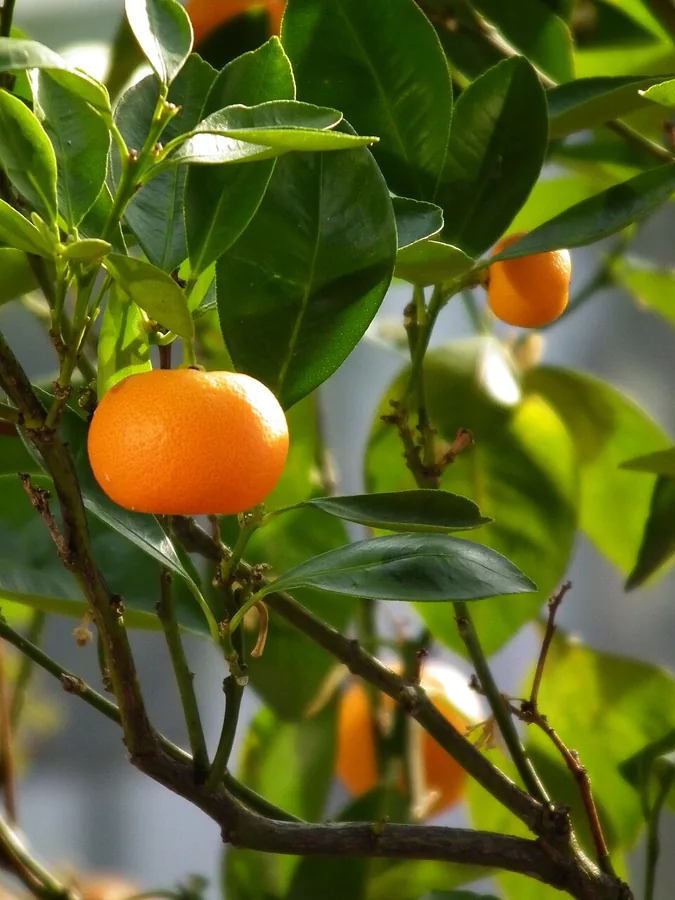
The mandarin is the easy-peel, loose-skinned segment of the citrus genus and the progenitor of clementines, satsumas, tangerines, and an extensive line of hybrids. Native to southeast Asia, it forms a small evergreen tree that holds glossy foliage through the year and produces fragrant white blossom in early spring. Its fruit matures across fall and winter, filling the season when most other garden crops have finished.
The species asks for informed care rather than specialist skill. It requires full sun, well-drained soil, and consistent moisture, and performs equally well in the ground across mild regions or in a large container that can be moved under cover as cold approaches. Fruiting mandarins are typically grafted, so the named scion is carried on a rootstock chosen for soil adaptability and disease resistance.
Cold is the decisive limiting factor, and sensitivity to it differs by cultivar. Satsuma is the most cold-hardy of the group, tolerating brief low temperatures that would injure most citrus, whereas clementines and the hybrids need a warmer, more sheltered position. Selecting the cultivar to suit local winters resolves most of the difficulty in growing the crop.
Care
The short version: full sun, free-draining soil rich in organic matter, and irrigation that maintains root moisture without waterlogging. Apply a citrus fertilizer through the growing season, prune only lightly, and protect young trees from hard frost.
Light
Mandarins demand full sun, ideally 8 or more hours daily, to develop sugars in the fruit and maintain a dense, productive canopy. Partial sun is tolerated, but reduced light thins the crown and lowers the crop.
Water
Allow the top inch (3 cm) of soil to dry between irrigations, then water thoroughly, on a cycle near every 5 to 10 days that shifts with heat and container volume. Young and potted trees transpire more and need water more often, while established in-ground specimens tolerate drought yet fruit best under steady moisture. Waterlogging is the principal hazard, since citrus roots are intolerant of saturation.
Soil
Grow in well-drained sandy loam amended generously with organic matter. A slightly acidic pH of 6.0 to 6.5 holds the micronutrients in available form, and drainage outweighs fertility, because standing water induces root rot.
Temperature
The species functions across a broad range, roughly 55°F to 100°F (13°C to 38°C). Growth peaks in warm conditions, but hard frost is the operative threat, so select a cold-hardy cultivar or be prepared to protect the tree as temperatures fall.
Humidity
Ambient humidity of 40% to 60% is sufficient, and misting is unnecessary. Adequate airflow through the canopy contributes more than any target figure, since air movement discourages pest and mold establishment.
Feeding
Fertilize from spring through late summer during active growth with a citrus formulation supplying micronutrients. The magnesium, manganese, iron, and zinc in such blends prevent the yellow, blotchy foliage that a deficient diet produces.
Pruning
Keep intervention minimal. In late winter to early spring, remove dead, damaged, or crossing branches together with suckers arising below the graft union, since those originate from the rootstock rather than the fruiting scion.
Repotting
Transfer container trees to a larger pot every 2 to 3 years, or when roots circle the interior, extend through the drainage holes, or water passes through too rapidly. Renew the medium at the same time to sustain steady growth and green foliage.
Size & spacing
At maturity the tree reaches roughly 10 to 20 feet (3 to 6 m) in height with a spread of 8 to 15 feet (2.4 to 4.5 m). Allocate that footprint, or restrain it to a compact form in a large container.
When to plant
The mandarin operates on a long developmental cycle. Set it out in spring once frost has passed, expect fragrant blossom in early spring, and allow the fruit to color and accumulate sugars from fall into winter, approximately November through January.
Northern hemisphere
Southern hemisphere
Typical months for a temperate climate: start earlier in warm zones, later where spring frosts linger.
- Plant: Spring after danger of frost has passed
- Harvest: Blooms in early spring; fruit ripens fall to winter (about November to January)
Hardiness
USDA hardiness zones: 8–11
Temperature: down to -12°C
Troubleshooting
Most disorders in mandarin register first in the foliage, whether the cause is a nutrient shortfall, cold injury, or insects feeding on the undersides. Learning to interpret those early signs allows intervention before the tree loses vigor. Identify the symptom below, then act while correction remains effective.
Interveinal yellowing with veins holding green
This signature belongs to a micronutrient deficiency, typically iron, manganese, or zinc, because those elements are least mobile within the plant and the newest tissue between the veins starves first. The trigger is usually soil that has drifted too alkaline, which locks the nutrients out of solution before the roots can take them up. Correct the root cause by bringing pH back toward 6.0 to 6.5, and use a chelated micronutrient foliar spray to restore green while that soil correction works through.
Fix:
- Apply a chelated micronutrient foliar spray
- Adjust soil pH toward 6.0 to 6.5
Defoliation and twig dieback tracing a cold event
The mechanism here is freeze or frost injury, where cell water crystallizes and ruptures the tissue, so the browning or wilting appears in the days after a hard cold event. Delay pruning until spring, because dormant buds on wood that reads as dead often break once temperatures rise, and only then does the true extent of loss declare itself. The durable defenses are choosing cold-hardy stock such as satsuma and covering young trees through freezes to buffer the tissue.
Fix:
- Wait until spring to prune out clearly dead wood
- Provide cold protection during freezes
Black sooty mold over a sticky leaf surface
The fungus draws no nutrients from the leaf; it colonizes the honeydew excreted by sap-sucking insects such as aphids, scale, or whitefly, so the mold is a symptom rather than the primary problem. Inspect the leaf undersides and stems to identify the feeders, then wash off the residue and treat with horticultural oil or insecticidal soap to smother them. Manage ants as well, since they defend these insects for the honeydew and displace the natural predators that would otherwise suppress the colony.
Fix:
- Wash foliage to remove mold and honeydew
- Apply horticultural oil or insecticidal soap
Toxicity
The peeled flesh is a wholesome food for people, but the remainder of the plant behaves very differently in animals. The peel, leaves, stems, and seeds contain essential oils and psoralens that irritate the gut and skin. Keep peelings and prunings away from pets and grazing animals, and consult a veterinarian if a large quantity is ingested.
Toxic to
Cats · Dogs · Horses · Rabbits · Livestock · Birds
Safe for
People
Cats Mild
The essential oils in peel and leaves irritate a cat's digestive lining, so ingestion brings vomiting, loose stool, and lethargy. Where the oils contact skin they can also raise redness and itching.
Dogs Mild
In dogs the same compounds in peel, leaves, or seeds provoke mild gastrointestinal upset, chiefly vomiting, diarrhea, and reduced energy. The oils can irritate skin on contact, though a small quantity rarely produces more than a passing reaction.
Horses Mild
The oils and psoralens carried in peel and foliage upset the equine gut and produce a dull, off-feed interval. Horses seldom seek citrus, so exposure most often comes from prunings discarded within reach.
Rabbits Caution
The peel, leaves, and seeds hold the same irritant oils, which is reason enough to exclude them from the hutch. A small portion of the flesh offered occasionally remains an acceptable treat.
Livestock Caution
Goats, sheep, and cattle can react to the oils in peel and prunings with digestive upset and reduced appetite as the earliest indicator. Dispose of clippings clear of the pasture rather than allowing animals to browse them.
Birds Caution
The concentrated aromatic oils in peel and leaves are poorly tolerated by birds, so restrict any offering to a small amount of the flesh and withhold the rind.
People Flesh safe
The segmented flesh is a nutritious food and safe to consume. Prolonged handling of peel can leave sensitive skin tingling or photosensitized by the oils, so washing after processing a large quantity is prudent.
The fruit flesh is generally low risk, but peels, leaves, and seeds contain irritating essential oils
Helpline numbers

United States
ASPCA Animal Poison Control: (888) 426-4435 (fee applies)
Poison Control: (800) 222-1222



Canada
Poison Centres: 1-844-764-7669
Varieties
Mandarin encompasses a broad group of easy-peel citrus, ranging from the cold-hardy satsumas to sweet clementines and a series of hybrids. The following cultivars merit recognition by name.
Satsuma (Citrus unshiu)
It ranks as the most cold-tolerant mandarin, combining easy-peel, nearly seedless fruit with the capacity to withstand brief exposure near 15°F (-9°C).
Owari
It is the foremost satsuma cultivar, cropped commercially across northern Florida on the strength of its dependable yields.
Clementine
It is a small, sweet, easy-peel mandarin of the Mediterranean group that has become the standard lunchbox selection.
Tangelo
It arises from a mandarin crossed with grapefruit or pummelo, uniting sweet citrus character with a tart counterpoint.
Tangor
It results from a mandarin crossed with a sweet orange, yielding a flavor richer and fuller than either parent.
How to propagate
Mandarins are propagated by two routes, and the decision turns on whether faithful reproduction of the parent fruit or a slower open-ended trial is the goal.
GraftingModerate
Spring or late summer · Bears fruit in about 2 to 4 years
Grafting is the commercial standard because it unites the scion with a vigorous, disease-resistant rootstock rather than relying on the scion's own roots. Performed in spring or late summer, the union yields a structurally sound tree that produces true-to-type fruit in about 2 to 4 years. The technique demands manual precision, but no other method matches its consistency of outcome.
SeedEasy
Spring · Several years and may not be true to type
Seed sowing in spring is straightforward but genetically unreliable. Mandarin seed is frequently polyembryonic, yet the resulting seedlings are slow and variable and commonly require several years to fruit, often not true to the parent. It suits experimentation rather than the faithful reproduction of a named variety.
Myths
Citrus is completely safe to share with cats and dogs.
The ASPCA classifies orange and citrus as toxic to pets because the peel, leaves, and seeds carry essential oils and psoralens that irritate the digestive tract. Only the flesh is low risk, and then in small amounts, so the rind and foliage are the parts to withhold from cats and dogs.
All mandarins are equally tender in the cold.
Cold tolerance varies markedly across the group. Satsuma mandarins are exceptional, enduring brief temperatures near 15°F (-9°C), well below the threshold of most citrus, which is precisely why they are the cultivar to specify in a marginal climate.