Herb · Lamiaceae
Spearmint
Mentha spicata
Meet its two real needs, consistent moisture and a contained root run, and spearmint yields leaves through the season.
Full sun
Every 2–4 days
59–77°F · 15–25°C
80–90 days
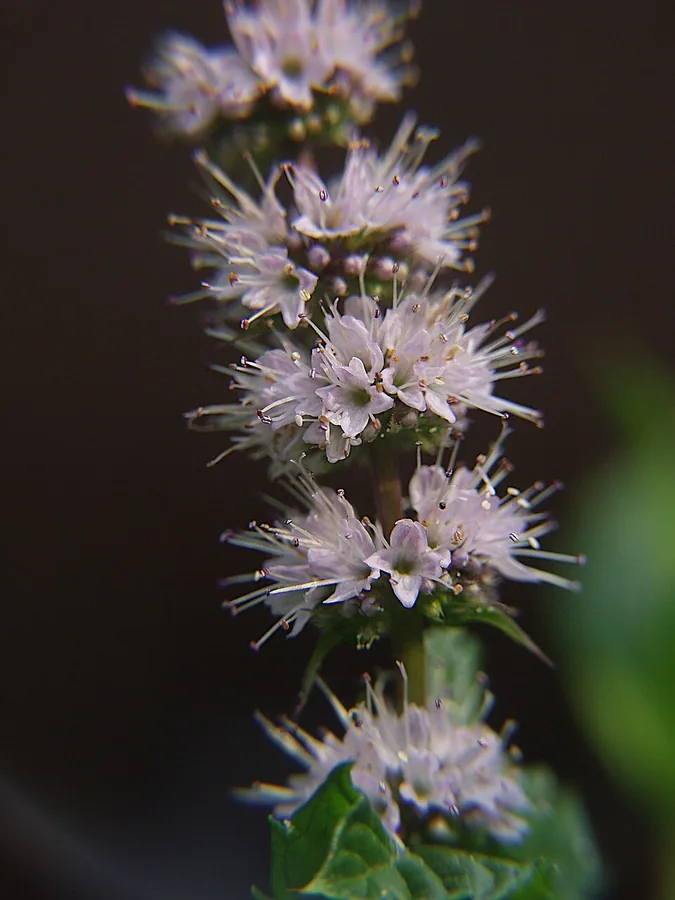
Overview
Spearmint, Mentha spicata, is the common garden mint that flavors sauces, teas, and cold drinks. As a member of the Lamiaceae family it grows as a cold-hardy perennial, retreating to its rootstock over winter and regenerating each spring with toothed, aromatic foliage rich in the volatile oils that carry its scent. Its ease of cultivation is well earned, though that same vigor is what demands management.
The plant spreads by rhizomes and stolons, horizontal runners that extend outward and root at intervals, so a single division colonizes an area rapidly. For that reason it is best grown in a sunken container, a dedicated bed, or behind a deep root barrier that interrupts the runners. Provided with that one constraint, it makes few other demands.
Frequent cutting governs quality. Pinching the growing tips holds the plant low and densely branched and keeps a steady supply of tender leaves, whereas allowing it to bolt into flower elongates the stems and diminishes leaf flavor. Harvesting early and often sustains cropping until the first hard frost ends the season.
Care
The short version: site it in full sun to partial shade, maintain evenly moist soil that never dries to the point of stress, and confine the root run so the runners cannot escape. Pinch the tips regularly to keep the habit dense.
Light
Spearmint performs best in full sun, which keeps growth compact and concentrates the essential oils responsible for leaf flavor. It also tolerates partial shade, a useful option in hot climates where afternoon shade limits water stress and wilting.
Water
Maintain evenly moist soil, since spearmint has little tolerance for drought and checks quickly once the root zone dries. Under normal conditions that means watering every 2 to 4 days, increasing the frequency in heat or in containers, which lose moisture far faster than open ground.
Soil
A rich, loamy soil high in organic matter suits it, holding moisture at the roots without becoming waterlogged. The preferred reaction is a pH of 6.0 to 7.0, essentially neutral, which most cultivated soils already provide.
Temperature
Active growth is strongest between 59°F and 77°F (15°C to 25°C). Below that range the plant slows and, in winter, dies back to the rootstock, a normal dormancy from which it regenerates in spring.
Humidity
Ambient humidity of 40% to 70% maintains healthy foliage. Persistently dry air favors spider mites, so a consistently moist root zone and occasional misting reduce the risk during hot, dry weather.
Feeding
A single application of balanced fertilizer or compost in spring meets the season's nutrient demand. Restrict nitrogen, because an excess drives soft, sappy growth and dilutes the leaf oils that determine flavor.
Pruning
Regular pinching and harvesting of the tips maintains a dense, bushy habit and prevents legginess, and a hard cutback after flowering renews the foliage. Flower spikes should be removed as they appear, since leaf flavor declines once a stem enters bloom.
Repotting
Container specimens should be repotted every 1 to 2 years, or sooner once rootbound, with division carried out at the same time. Roots circling the pot wall, soil that dries almost immediately, and progressively smaller leaves all indicate the plant has outgrown its container.
Size & spacing
Mature height runs 12 to 24 inches (30 to 60 cm), but the spread is greater, reaching 24 to 35 inches (60 to 90 cm) as the runners extend. Allow for that lateral growth, or confine it to a container, to prevent encroachment on adjacent plants.
When to plant
Rated for zones 5 through 9, spearmint is reliably cold hardy and returns from its roots each spring. Transplant in spring once hard frost has passed, harvest leaves across the full growing season, and remove the summer flower spikes to hold the foliage at peak quality.
Northern hemisphere
Southern hemisphere
Typical months for a temperate climate: start earlier in warm zones, later where spring frosts linger.
- Sow: Late winter to early spring (though division/cuttings are more reliable than seed)
- Plant: Spring, after danger of hard frost
- Harvest: Harvest leaves throughout the growing season; pinch off flower spikes in summer to preserve leaf quality
Hardiness
USDA hardiness zones: 5–9
Temperature: down to -29°C
Troubleshooting
Given its constitution, spearmint's problems are limited to a foliar disease, two heat-driven pests, and the consequences of its own spreading habit. Identify the disorder below and intervene early, before it progresses beyond a simple remedy.
Orange spore pustules on the lower leaf surface
The pustules are the sign of mint rust, caused by the fungus Puccinia menthae, which establishes where foliage stays wet and poorly ventilated. Remove and destroy affected leaves rather than composting them, since the spores persist, and thin the stand to improve air movement. A severely infected clump can be cut to ground level, from which it regenerates clean foliage.
Fix:
- Remove and destroy infected foliage (do not compost)
- Improve air circulation by thinning crowded growth
- Avoid overhead watering to keep foliage dry
- Cut back severely affected plants to ground level
Stippled, yellowing foliage with fine webbing
This pattern indicates spider mites, which proliferate in hot, dry air and feed on the leaves until the tissue looks dull and bleached. A forceful spray of water dislodges the colony, and raising humidity while keeping the soil moist makes conditions unfavorable to them. A severe infestation responds to insecticidal soap.
Fix:
- Rinse foliage with a strong spray of water
- Raise humidity and keep soil moist
- Apply insecticidal soap if severe
Shoots emerging well beyond the planted area
The advancing shoots arise from rhizomes and stolons, the horizontal runners that extend outward from the parent and colonize open ground. Containment is the only durable control, whether a sunken bottomless container, a dedicated bed, or a root barrier sunk at least 30 cm deep. Any runner that escapes should be dug out before it roots and establishes.
Fix:
- Grow in a buried bottomless container or dedicated bed
- Sink physical root barriers 30+ cm deep
- Dig out and remove escaped runners promptly
Reduced vigor and leaf size in an aging clump
Declining performance in an established plant reflects congested roots and runners that eventually exhaust the center of the clump and shrink the leaves. Lifting and dividing the plant, replanting the vigorous outer sections into fresh soil and discarding the woody core, restores it. Repeating the division every two to three years sustains productivity.
Fix:
- Divide the clump and replant healthy sections
- Refresh soil and discard the woody center
Toxicity
As an established culinary herb, spearmint poses no concern in food. The relevant hazard is its concentration of essential oils, which can produce mild gastrointestinal upset in cats, dogs, and horses when consumed in quantity, so grazing animals should be kept from a whole plant.
Toxic to
Cats · Dogs · Horses · Rabbits · Livestock · Birds
Safe for
People
Cats Mild
In cats the essential oils act as a mild gastrointestinal irritant, so a small nibble passes without effect while a large mouthful can provoke drooling, vomiting, and loose stools.
Dogs Mild
Dogs that ingest a substantial quantity of leaves may develop transient gastrointestinal upset, with vomiting and self-limiting diarrhea.
Horses Mild
A horse consuming a large amount can experience mild colic-like discomfort and softened manure attributable to the concentrated oils.
Rabbits Caution
A few leaves are tolerated, but the potent oils make spearmint unsuitable as a bulk food for rabbits.
Livestock Caution
Goats, sheep, and cattle seldom select mint, and incidental browsing is harmless, though a large intake can loosen the digestion.
Birds Caution
Most birds avoid the pungent foliage, and only a token quantity should be offered, as the oil concentration exceeds what a small body tolerates.
People Safe
For people spearmint is a long-established food herb, safe in teas, sauces, and salads at the amounts used in cooking.
Normal culinary amounts of spearmint leaf used in food are not a concern; the risk relates to ingestion of large quantities of the plant or concentrated essential oils.
Helpline numbers

United States
ASPCA Animal Poison Control: (888) 426-4435 (fee applies)

United Kingdom
Animal PoisonLine: 01202 509000 (fee applies)

Australia
Animal Poisons Helpline: 1300 869 738
Varieties
The species itself predominates in cultivation, but a small number of named selections are grown for either superior flavor or ornamental foliage.
Mentha spicata 'Kentucky Colonel'
Distinguished by large, crinkled leaves and an unusually strong spearmint flavor, it remains the standard selection for juleps and culinary use.
Mentha spicata var. crispa (Curly mint)
Recognized by tightly ruffled, curled leaf margins that give it an ornamental, frilly character while retaining the clean spearmint aroma of the species.
How to propagate
Spearmint propagates readily by vegetative means, and division or cuttings are preferred over seed because they come true and establish faster.
DivisionEasy
Spring or autumn · 2 to 4 weeks
Division is the most dependable method of increase. In spring or autumn, lift an established clump and separate it into sections that each retain a length of runner with attached roots and shoots, then replant them at once. Individual divisions root and establish within 2 to 4 weeks.
Stem cuttingsEasy
Spring through summer · 1 to 2 weeks
Stem cuttings root with minimal effort, reflecting the species' natural tendency to root at the nodes. From spring through summer, take a healthy stem tip and place it in water or insert it into moist soil, and adventitious roots form within 1 to 2 weeks before potting on.
Myths
Mint poses no threat in the garden because it is merely a small herb.
Stature is unrelated to spread. Because spearmint advances by underground runners, a single plant can occupy an entire bed within a season or two, so it should be grown in a sunken pot or behind a root barrier rather than planted directly into open soil.