Herb · Lamiaceae
Hyssop
Hyssopus officinalis
Sited in full sun and lean, fast-draining soil, hyssop delivers aromatic foliage and bee-worked blue flower spikes.
Full sun
Every 7–14 days
USDA 4–9
12–24 in · 30–60 cm
Overview
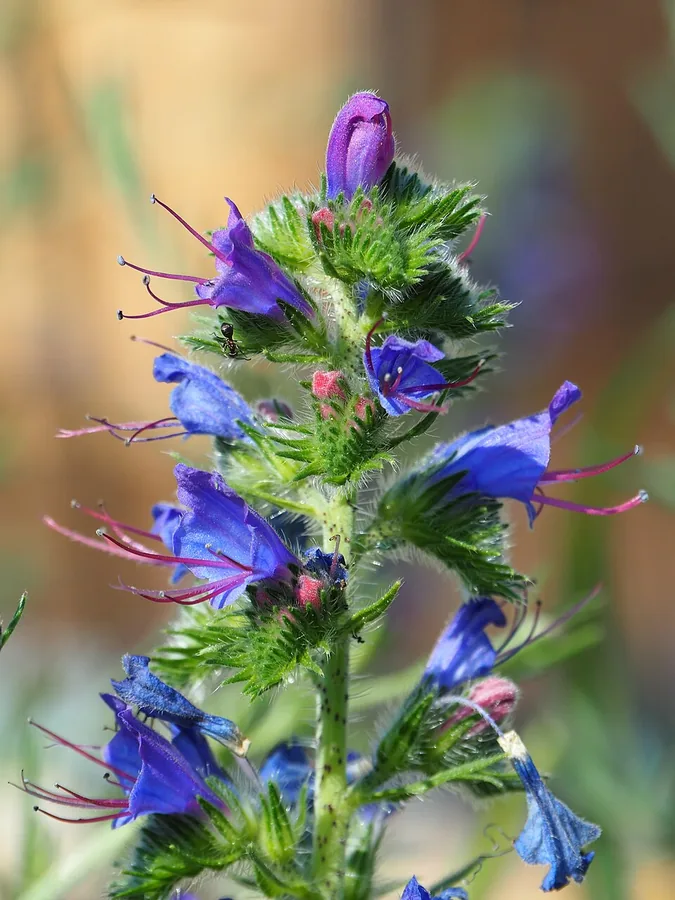
Hyssop is a hardy woody-based perennial of Mediterranean origin, cultivated for centuries as both a culinary and a medicinal herb in the mint family, Lamiaceae. It builds a low, bushy mound of narrow, deep green leaves that release a sharp, minty aroma, and in summer it raises spikes of blue-purple flowers that draw bees and butterflies. Rated for USDA zones 4 through 9, it withstands severe winter cold and extended drought equally well.
The plant's requirements are governed by its dryland heritage: full sun and free-draining soil above all. It performs in lean, sandy, or rocky substrates that would starve more demanding herbs, and it needs little attention once its root system is established. Its intolerance of waterlogging is the operative constraint, which is why site selection outweighs any routine care.
With age the crown lignifies and the habit opens at the base, a normal course for the species. A spring cutback and periodic hard renewal maintain density and leaf production, and because the plant self-seeds freely, replacement material is rarely in short supply.
Care
The short version: hyssop wants full sun, lean sharply drained soil, and only occasional irrigation once established. Cut it back in spring to hold a bushy form, feed it sparingly, and renew it every few years before the crown turns woody.
Light
Hyssop performs best in full sun, which drives compact growth, heavy flowering, and strong aromatic oil in the foliage. It tolerates partial shade, but reduced light produces an open, floppy habit and markedly fewer of the summer flower spikes.
Water
Allow the top half of the soil to dry between waterings, then irrigate deeply to encourage a downward-reaching root system. An established plant is drought-tolerant and needs only occasional water, because its dryland physiology cannot cope with the anoxic conditions of soggy, waterlogged ground.
Soil
Grow it in well-drained loam, sandy, or shallow rocky soil of the kind that defeats most herbs. It accepts a broad pH span of 6.0 to 8.0 and tolerates poor, dry substrates, so free drainage takes priority over fertility in siting the plant.
Temperature
The species is cold-hardy across a wide range from -22°F to 86°F (-30°C to 30°C). That lower limit is precisely what permits it to overwinter in the open as a perennial throughout USDA zones 4 to 9.
Humidity
Hyssop favors low humidity in the 30% to 50% band, consistent with its Mediterranean provenance. Because still, damp air promotes powdery mildew, adequate airflow around the plant matters more than any specific humidity figure.
Feeding
This is a light feeder that thrives on minimal inputs. A single spring application of balanced fertilizer or a little compost suffices, and excess nitrogen only forces soft, leggy shoots at the expense of the aromatic oils.
Pruning
Cut hyssop back by roughly one-third in early to mid spring to shape the plant and remove winter-damaged wood, then shear lightly after bloom. This regime counters the plant's tendency to grow leggy and woody, though periodic replacement every few years remains necessary.
Repotting
Container specimens require potting on only every 2 to 3 years. Move up when roots circle the pot or emerge from the drainage holes, when water runs straight through, or when growth stalls, all signs of a root-bound plant.
Size & spacing
Mature plants form a compact mound of about 12 to 24 inches (30 to 60 cm) in height and 12 to 18 inches (30 to 45 cm) in spread. Spacing to that width sustains the air movement that keeps foliage dry and healthy.
When to plant
Hyssop follows the phenology of a hardy perennial. Sow seed indoors in late winter, roughly 8 to 10 weeks ahead of the last frost, then transplant outdoors in spring once frost risk has passed. Flower spikes open from early summer into fall, and leaf flavor concentrates best when foliage is cut just before or at the onset of bloom.
Northern hemisphere
Southern hemisphere
Typical months for a temperate climate: start earlier in warm zones, later where spring frosts linger.
- Sow: Late winter to early spring, about 8-10 weeks before the last expected frost
- Plant: Spring, after danger of frost has passed
- Harvest: Blue-purple flower spikes from early summer into fall (roughly June-September), highly attractive to bees and butterflies; harvest aromatic leaves just before or at flowering for best flavor
Hardiness
USDA hardiness zones: 4–9
Temperature: down to -34°C
Troubleshooting
Hyssop is among the least troublesome herbs, and most disorders reduce to excess moisture or insufficient light. Reading the early symptoms on roots, stems, or foliage allows intervention before decline sets in. Identify the case below and treat it while correction still holds value.
Wilting and collapse traced to waterlogged roots
In saturated, oxygen-poor soil the roots suffocate and root rot follows, leaving them dark, mushy, and foul-smelling while the top wilts. Withhold water and let the profile dry, or relocate the plant to a raised, sandier position where excess water drains clear of the crown. Once rot has run through the root system the plant cannot recover, so remove and discard it.
Fix:
- Reduce watering and let soil dry
- Improve drainage or move to a raised/sandier site
- Remove and discard severely rotted plants
Open, leggy habit with a bare woody base
When foliage retreats to the stem tips and the base goes bare, the plant is stretching for light and missing the pruning that would break apical dominance, so the growth turns leggy. Site it in full sun and cut back by about one-third in spring to force fresh basal shoots and rebuild density. Even under good management hyssop lignifies with age, so renew stock every few years from cuttings or divisions.
Fix:
- Move to or site in full sun
- Cut back by about one-third in spring to encourage bushy regrowth
- Replace old woody plants with fresh divisions or cuttings
Loss of vigor over galled root systems
A plant that declines despite sound culture warrants lifting to inspect the roots, where swollen galls betray root-knot nematodes feeding in the soil. No practical cure exists once they are established, so remove and discard the affected plants and grow the next hyssop in clean ground. Incorporating organic matter supports the soil biology that suppresses these pests over time.
Fix:
- Remove and discard affected plants
- Rotate planting location
- Improve soil with organic matter
Powdery white colonies on the foliage
A rub-off white bloom on the upper leaf surfaces is powdery mildew, a fungus that colonizes when still, humid air lingers around crowded plants. Remove the worst-affected leaves, thin or space the planting to restore airflow, and keep irrigation off the foliage. The infection is largely cosmetic and seldom sets the plant back, though it degrades appearance.
Fix:
- Improve spacing and air circulation
- Remove affected foliage
- Avoid overhead watering
Toxicity
For households with pets or children, garden hyssop presents no toxicity concern. Its leaves and flowers have a long record as a culinary and tea herb, with no reported toxicity to cats, dogs, livestock, or people at normal intake. The single exception is the concentrated essential oil, which is chemically distinct in effect from the living plant.
Safe for
People · Cats · Dogs · Horses · Rabbits · Livestock · Birds
Cats None
The foliage carries no toxin recognized for cats, so an exploratory nibble presents no hazard.
Dogs None
Contact or chewing by dogs raises no concern, as the plant tissue holds nothing toxic to them.
Horses Safe
Horses grazing in proximity to hyssop face no documented risk from the plant.
Rabbits Safe
Rabbits may browse the leaves without harm, although the strong, minty aroma tends to deter most from feeding.
Livestock Safe
Cattle, goats, and sheep pasture safely alongside hyssop, and the aromatic foliage generally limits how much they consume.
Birds Safe
Birds incur no risk from the plant, whose summer inflorescences draw bees and butterflies far more than any avian visitor.
People Safe
The leaves and flowers have a long record as a culinary and tea herb and are safe to consume in normal amounts. The one exception is the concentrated essential oil, high in pinocamphone, which is hazardous in large doses.
Concentrated hyssop essential oil contains pinocamphone and can be neurotoxic and seizure-inducing in large doses; keep concentrated oil away from pets and children, but the garden plant and culinary leaf are regarded as non-toxic.
Varieties
The blue-flowered type species dominates cultivation, but two color forms merit note for gardeners seeking variation in the border.
Alba
Alba is a white-flowered selection that departs from the blue-purple pigmentation of the type species.
Rosea
Rosea carries soft pink flowers in place of the blue typical of the species.
How to propagate
Hyssop propagates by several routes with reliable success. Seed, softwood to semi-ripe cuttings, and division of established clumps all work, and each is straightforward enough for an inexperienced grower.
SeedEasy
Spring (start indoors in late winter or sow outdoors after frost) · Germinates in about 2-3 weeks; establishes over the first growing season
Seed is the most straightforward means of raising hyssop. Sow indoors in late winter or direct-sow outdoors once frost has cleared, and germination follows in about 2 to 3 weeks, with plants bulking up across the first growing season. Established specimens self-seed readily, yielding volunteer seedlings that transplant well elsewhere in the garden.
Stem cuttingsModerate
Late spring to summer from softwood/semi-ripe growth · Roots in several weeks; establishes over a few months
Cuttings preserve the traits of a selected parent plant. Take them from healthy, non-flowering shoots in late spring or summer while tissue is soft to semi-ripe, at which stage rooting proceeds over several weeks and full establishment over a few months.
DivisionEasy
Spring · Re-establishes within one growing season
Division is the fastest method to renew a mature clump. Lift an established plant in spring and separate it by hand or knife into sections, each of which re-establishes within a single growing season.
Myths
Garden hyssop is poisonous to people and pets.
The garden plant and its foliage have a long culinary and tea record, and extension sources report no toxicity for cats, dogs, or people. The genuine hazard lies solely in the concentrated essential oil, which contains pinocamphone capable of neurotoxic effects and seizures at large doses.
Hyssop and anise hyssop are the same plant.
The common names overlap but the genera do not. True hyssop is Hyssopus officinalis, a woody-based Mediterranean herb, whereas anise hyssop is Agastache foeniculum, a distinct species cultivated chiefly for its licorice fragrance.