Herb · Lamiaceae
Catmint
Nepeta × faassenii
Site it in full sun and lean, dry soil, and catmint draws bees while throwing lavender-blue spikes across the whole summer.
Full sun
Every 7–14 days
USDA 3–8
12–24 in · 30–60 cm
Overview
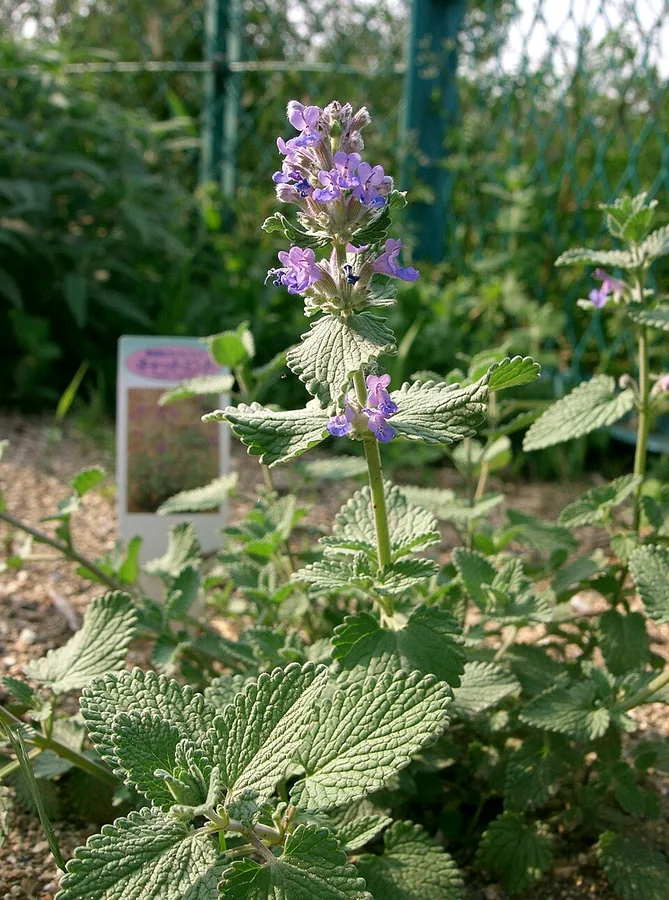
Catmint is a durable, undemanding perennial of the mint family, valued for the cloud of lavender-blue flowers held over soft gray-green foliage. It sits in the genus Nepeta alongside true catnip, and the catmint found in most gardens is the hybrid Nepeta x faassenii. After it establishes its root system, the plant requires next to nothing from you.
Growth takes the form of a low, spreading mound that bees and other pollinators visit from morning to evening. It withstands heat, drought, and thin soil, and both deer and rabbits generally pass it by. Cats are the exception: the nepetalactone in the leaves lures them in to roll and lounge, though the effect is gentler than that of true catnip.
Its chief requirements are sun and fast drainage. Give it lean ground, ration the water after it establishes, and shear it once the first bloom is spent, and it will flower from late spring well into summer. Treat it instead to rich soil and generous feeding, and the result is soft, open growth that splits apart at the center.
Care
The short version: site it in full sun on lean, well-drained soil, water deeply but only occasionally once it has established, hold back on feeding, and shear it after the first flush of bloom to keep it neat and flowering.
Light
Catmint blooms most heavily in full sun, where the growth holds dense and erect. It tolerates a measure of light shade, yet a shortfall of sun yields weak, floppy stems and a sharp drop in flowers.
Water
Water deeply but infrequently, on the order of every 7 to 14 days, allowing the upper half of the soil to dry between rounds. Once established it is truly drought-tolerant, and waterlogged ground is the surest route to root rot.
Soil
Set it in lean, well-drained soil rather than anything rich. It copes with dry to medium moisture and a broad span of textures, and a pH from 6.0 to 7.5 suits it well. Drainage counts for more than fertility here.
Temperature
This is an exceptionally hardy plant, enduring conditions from -40°F to 95°F (-40°C to 35°C). It comes through severe winters and brushes aside summer heat alike.
Humidity
Catmint prefers dry air, in the range of 30% to 50% humidity, and dislikes muggy, still conditions. Steady airflow keeps powdery mildew from settling on the leaves.
Feeding
Keep it spare. A single spring feeding of balanced fertilizer or a touch of compost covers the entire year. Rich soil or surplus nutrients only push soft, floppy stems.
Pruning
Shearing is what makes the difference in appearance. Cut it back by a third to a half once the first flush of bloom fades to hold its form and trigger a second round, then take the whole plant down to the ground in late winter.
Repotting
Catmint belongs in the ground rather than a pot. At intervals of 3 to 4 years, lift and split the clump to renew it, particularly when the center turns bare or flowering begins to wane.
Size & spacing
Mature plants reach 12 to 24 inches (30 to 60 cm) in height and spread 18 to 35 inches (45 to 90 cm) across. Allow each plant space to develop so air moves freely and mildew has no foothold.
When to plant
Catmint follows a straightforward seasonal cycle. Plant it out in spring after frost has cleared, take in the lavender-blue spikes from late spring through summer, and shear once the first flush is spent to bring on a second round of bloom.
Northern hemisphere
Southern hemisphere
Typical months for a temperate climate: start earlier in warm zones, later where spring frosts linger.
- Plant: Spring, after danger of frost has passed
- Harvest: Lavender-blue flower spikes from late spring through summer (roughly May to September); shear after the first flush to encourage a second bloom
Hardiness
USDA hardiness zones: 3–8
Temperature: down to -40°C
Troubleshooting
Catmint is seldom troublesome, and nearly every problem traces to excess water or an overly fertile site. Keep an eye on the stems and leaves, and most issues yield to a hard shearing or improved drainage. Find the match below, then respond promptly.
Sudden wilting and collapse in waterlogged ground
Soil that stays saturated lets Pythium or Phytophthora invade the roots and rot them, and by the time the top wilts the roots beneath have already gone black and soft. A plant this far gone cannot be recovered. Lift and discard it, correct the drainage, and set a replacement in a dry spot while easing off sharply on irrigation.
Fix:
- Improve drainage and remove affected plants
- Replant in well-drained soil and reduce watering
Stems splay outward and the crown opens once flowering ends
What you are seeing is flopping. As the first flush fades, the flowering stems gain weight and the clump pulls apart from the middle. Two conditions accelerate it: soil that is too rich and a site with too little sun, both of which yield soft, weak tissue that cannot stand on its own. Shear the plant back by a third to a half, then keep it in full sun and lean ground so the mound stays firm.
Fix:
- Shear the plant back by one-third to one-half after first flowering
- Grow in full sun and lean soil to keep growth compact
A chalky white film spreading over the leaves
This is powdery mildew, a fungal disease that establishes when air stays humid and the plant is packed in with poor airflow around the foliage. The remedy is to open up the canopy: widen spacing or divide congested clumps, cut away the most heavily coated growth, and deliver water at the base so the leaves stay dry.
Fix:
- Improve air circulation by spacing or dividing plants
- Shear affected growth and avoid overhead watering
Flowering tapers off once the first flush is done
Left in place, the spent flower spikes redirect the plant's resources toward setting seed rather than forming new buds. Cut those old spikes away after the first flush and keep the plant in full sun, and a second wave of bloom typically follows.
Fix:
- Shear flower spikes after initial flowering to promote continued bloom
Crushed, matted growth where cats have been rolling
The nepetalactone held in the leaves is what pulls cats in, and their rolling presses the stems flat. An established plant recovers, but a young one can be flattened past the point of return. Fence off new plantings with a low cage until the roots take hold, or position them where cats seldom travel.
Fix:
- Protect young plants with a low cage or grow where cats have less access
Toxicity
For pet owners, the verdict is straightforward: catmint is safe across the board. The ASPCA records Nepeta as non-toxic to cats and dogs, and it presents no hazard to horses, rabbits, livestock, birds, or people. Cats are merely drawn to the nepetalactone in the foliage, which sets them happily rolling and rubbing with no harm at all.
Safe for
People · Cats · Dogs · Horses · Rabbits · Livestock · Birds
Cats Safe
Catmint poses no danger to cats, and most head for it without hesitation. The nepetalactone in the foliage sets them rolling and rubbing in a harmless state of bliss that fades on its own. A cat that overindulges may be briefly unwell, but the upset clears quickly.
Dogs Safe
Dogs are in no danger and generally pay it little attention, since the scent holds no appeal for them. A curious one can sample the leaves without coming to any harm.
Horses Safe
Horses face no risk from it and can graze beside a planting with nothing to worry about.
Rabbits Safe
Rabbits can eat the foliage without harm, although the pronounced minty aroma usually steers them off before they try.
Livestock Safe
Cattle, goats, and sheep take no harm from it, and the aromatic leaves seldom appeal to them in any case.
Birds Safe
It poses no threat to birds. Its real value is drawing bees and other pollinators to the flowers.
People Safe
People are safe around it as well. The leaves have long served in herbal teas, and brushing past or handling the plant carries no risk.
Non-toxic. Contains nepetalactone and may mildly attract and excite cats (a harmless behavioral effect, generally weaker than true catnip, Nepeta cataria). Large ingestion may occasionally cause mild, self-limiting vomiting or diarrhea, but it is not a poison.
Varieties
Nearly all garden catmint descends from a small group of named hybrids, each differing in size and form. The following are the ones worth recognizing.
'Walker's Low'
Awarded Perennial Plant of the Year in 2007; the name misleads, since it builds a sizable mound, and it stands among the most widely grown long-blooming catmints.
'Six Hills Giant'
A vigorous, taller selection climbing to roughly 3 feet that produces abundant lavender-blue spikes.
'Purrsian Blue'
A neat, compact mound bearing deep periwinkle-blue flowers accented by reddish calyxes.
How to propagate
Catmint multiplies readily, but since the common garden hybrid is sterile, you increase it by division or cuttings rather than by saving seed.
DivisionEasy
Spring or early fall · About one growing season
For these sterile named hybrids, division is the standard approach. Dig a mature clump in spring or early fall, pull it into pieces, and reset them; the divisions root in over roughly one growing season.
Stem cuttingsModerate
Late spring to summer, from non-flowering shoots · A few weeks to root
Cuttings provide a second dependable option for sterile hybrids. Collect softwood from shoots that are not in flower during late spring or summer, and they form roots within a few weeks.
SeedModerate
Late winter to spring · Several weeks to germinate
Seed applies only to true species or seed-raised forms, not to this plant. Because Nepeta x faassenii is a sterile cross of N. racemosa and N. nepetella, it rarely produces viable seed, so propagate it by division or cuttings. Where seed is an option, sow from late winter into spring and allow several weeks for germination.
Myths
Catmint and catnip are one and the same, and they affect cats with equal force.
Catmint is the decorative relative of true catnip, the garden species Nepeta cataria. Both contain nepetalactone, so cats do react to it, but the response tends to be milder.
Catmint is poisonous to pets.
The ASPCA records Nepeta as non-toxic to cats and dogs alike. It is not a poison, and a cat that rolls in it or chews a leaf faces no harm.