Houseplant · Asparagaceae
Snake Plant
Dracaena trifasciata
Drought-adapted and forgiving of neglect, the snake plant wants bright light, a dry root zone, and little else.
Bright indirect
Every 14–42 days
55–84°F · 13–29°C
USDA 10–12
Overview
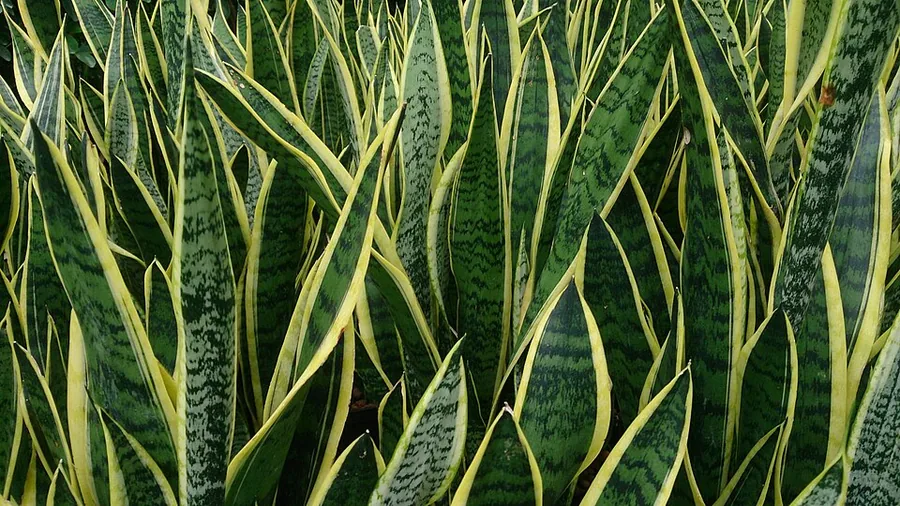
Few houseplants suit the absent-minded grower as well as the snake plant. Rigid, vertical blades emerge directly from the rhizome in bold green bands, and the species withstands the kind of neglect that ends more demanding plants. Taxonomists reassigned it from Sansevieria to the genus Dracaena a few years ago, yet the trade and most growers still apply the older name.
Its tolerance comes down to leaf physiology and a broad light range. The succulent blades bank water within their tissue, carrying the plant through extended droughts, and it accepts placements from a bright window to a shaded corner. Because its growth is slow, a specimen retains its form over a long period and demands almost no intervention.
Two points deserve attention before acquisition. The foliage contains saponins that sicken cats and dogs, which makes the species ill-suited to a household with inquisitive animals. And while it remains contained in a pot indoors, set outdoors in a warm region it spreads vigorously through underground rhizomes.
Care
The short version: give it bright indirect light, a coarse fast-draining medium, and water only after the soil has dried through completely. Hold it above 55°F (13°C) and feed sparingly while it is in active growth.
Light
The species performs best under bright indirect light, yet it endures low light, partial shade, and partial sun more readily than nearly any other houseplant. What changes is pace: a dimmer position slows growth, because the leaves capture less energy to build new tissue. Shield it from fierce, direct afternoon sun, which scorches the blades.
Water
Excess moisture accounts for most losses, so lean toward dryness. Allow the soil to dry through completely between waterings, which generally falls every 2 to 4 weeks during active growth and only every 4 to 6 weeks in winter. When uncertain, hold off.
Soil
Pot it in a well-drained sandy or cactus mix that drains freely rather than retaining water around the roots. The plant tolerates a wide pH band, accepting anything from 6.0 to 8.0. A container with a drainage hole counts for more than the precise composition of the medium.
Temperature
Standard interior warmth serves it well, across the range of 55°F to 84°F (13°C to 29°C). Its tropical origin means cold injures it, so maintain it above 55°F and shield it from cold drafts and frosted glass through the winter.
Humidity
Typical indoor air suits it, and arid rooms cause it no distress. Misting and humidifiers are unnecessary. Because the blades hold their own water reserve, they cope with dry winter air without ill effect.
Feeding
Its nutrient demand is minimal. Apply a balanced all-purpose fertilizer at half strength, once a month across spring and summer, and suspend it entirely once growth slows for winter. Overfeeding inflicts more damage than withholding feed altogether.
Pruning
Little pruning is called for. Simply sever any damaged or dead leaves at the soil line with a sterile blade and the plant keeps itself in order. A blade cut this way does not regenerate from the wound, so remove whole leaves rather than clipping their tips.
Repotting
The species favors a snug root zone, so repot only every 3 to 5 years or once the container is overfull. The cues are roots emerging from the drainage holes, a cracked or bulging pot, and rhizomes and pups massing at the surface. Advance a single pot size into fresh gritty medium.
Size & spacing
Grown indoors it attains 2 to 4 feet (60 to 120 cm) in height with a spread near 12 to 24 inches (30 to 60 cm). Allow a clump space to broaden, as it gradually fills its container with fresh upright blades.
Troubleshooting
Nearly every disorder in this species reduces to excess water at the root zone. Reading the condition of the blades and the base lets you intercept trouble early. Identify the symptom below, then correct the underlying cause before it reaches the roots.
Collapsing basal tissue standing in saturated soil
Collapsed, slimy tissue at the base signals root rot, a consequence of saturated soil starving the roots of oxygen until they blacken and decay, often with a foul smell. Lift the plant from its pot, excise all of the softened roots with a clean blade, settle it into a dry gritty medium, and cut your watering sharply.
Fix:
- Unpot and inspect roots
- Cut away rotted tissue
- Repot in dry, gritty mix
- Reduce watering
Blades splaying outward and losing their vertical set
Upright blades fall outward once their base loses rigidity, either because saturated soil has softened the rooting zone or because prolonged shade has weakened the foliage. Inspect soil moisture and press the base before acting: a firm base calls for brighter placement, while a mushy one means the rot at the roots must be addressed first.
Fix:
- Correct watering and check roots
- Move to brighter indirect light
Cottony white masses lodged in the leaf axils
Waxy white clusters lodged where the blades meet the soil are mealybugs, sap-feeding insects that shelter in those tight crevices to draw on the plant. Touch each colony with a swab dipped in alcohol, then apply insecticidal soap, and quarantine the specimen from the rest of your collection until no insects remain.
Fix:
- Wipe with alcohol-dipped swab
- Treat with insecticidal soap
- Isolate plant
Stippled, faded blades threaded with fine silk strands
A dusty, stippled surface threaded with delicate webbing is the work of spider mites, which establish quickly once the surrounding air turns dry. Hose down the foliage to dislodge the colony, then apply insecticidal soap or horticultural oil, and a routine wipe of the blades thereafter denies them a foothold.
Fix:
- Rinse foliage
- Apply insecticidal soap or horticultural oil
Softened, translucent lesions following cold exposure
As a tropical species, the snake plant suffers cold injury below 55°F (13°C), where chilled cells rupture and leave soft, translucent scarring, a pattern often traced to a leaf held against a frosty pane. Shift it to a warmer position, remove the spoiled blades, and shield it from cold drafts through the winter.
Fix:
- Move to warm spot above 13°C / 55°F
- Remove damaged leaves
Bleached, chlorotic zones on the sun-exposed face
Faded, parched markings concentrated on the window-facing surface are sun scorch, the result of intense direct light overwhelming foliage adapted to diffuse exposure. The species welcomes bright indirect light yet cannot withstand fierce afternoon rays, so draw it back from the glass into consistent indirect light and the fresh blades emerge unblemished.
Fix:
- Move out of hot direct sun to bright indirect light
Minimal fresh foliage and an etiolated, drawn habit
Stalled development most often reflects insufficient light, since the plant cannot fuel new blades without it, and a natural winter rest compounds the pause. Relocate it to brighter indirect light and growth resumes as daylength increases. A dim corner sustains the plant but yields little fresh foliage.
Fix:
- Move to bright indirect light
Flat foliage dulled by an accumulated layer of dust
The wide, level blades of this plant readily trap dust, which mutes their color and intercepts a portion of incoming light at the surface. The effect is purely cosmetic and quickly reversed. Pass a damp cloth over each blade on occasion and its rich green luster returns.
Fix:
- Wipe leaves with a damp cloth
Toxicity
This is not a pet-safe species. The foliage holds natural compounds known as saponins that trigger drooling, vomiting, and diarrhea in cats and dogs. People are largely unaffected, yet the blades are bitter and were never intended as food, so situate the pot beyond the reach of animals and small children.
Toxic to
Cats · Dogs · Horses · Rabbits · Livestock · Birds
Safe for
People
Cats Moderate
In cats, chewed foliage typically provokes salivation followed by vomiting, and diarrhea frequently accompanies it. Because the saponins taste bitter, most cats abandon the leaf after a single bite.
Dogs Moderate
Dogs show a comparable response, with salivation, vomiting, and loose stools after ingesting leaf tissue. Serious outcomes are uncommon, yet a substantial bite warrants a call to the veterinarian.
Horses Caution
Those same saponins will disturb an equine digestive tract, although a windowsill specimen sits far beyond a horse's reach.
Rabbits Caution
The bitter saponins render the foliage an unsuitable and hazardous forage for a rabbit, so position the plant beyond its access.
Livestock Caution
Browsing goats, sheep, and cattle may develop digestive upset from the saponins, though indoor cultivation rarely places the plant within their reach.
Birds Caution
An inquisitive companion bird that samples a blade can acquire the same gastrointestinal upset, so site the container where perching is impossible.
People Caution
People tolerate the saponins, but the foliage is bitter and inedible, and contact with the sap can leave sensitive skin slightly irritated. Prevent young children from mouthing the leaves.
Sap/saponins may irritate skin; keep leaves out of reach
Helpline numbers

United States
ASPCA Animal Poison Control: (888) 426-4435 (fee applies)

United Kingdom
Animal PoisonLine: 01202 509000 (fee applies)

Australia
Animal Poisons Helpline: 1300 869 738
Varieties
The species spans a wide assortment of forms and colorations, from tall striped blades to compact rosettes. The following selections are the ones most commonly encountered.
'Moonshine'
Recognized for wide, silvered pale-green blades that show virtually no banding or markings.
'Laurentii'
The well-known form bordered in vivid yellow margins, a chimeral trait that fails to carry through leaf cuttings and reverts to plain green.
'Hahnii' (Bird's Nest)
A compact selection arranging 6 to 12 blades into a low, funnel-shaped rosette rather than tall uprights.
'Black Gold'
Combines very dark, almost black-green blades with a clean golden-yellow margin.
'Bantel's Sensation'
Bears slender, sharply erect blades marked by lengthwise white striping.
How to propagate
Increasing a snake plant is straightforward by either of two methods: separating a mature clump at the rhizome, or rooting sections of an individual leaf. The first preserves leaf coloration faithfully, the second does not.
DivisionEasy
Anytime; best at spring repotting · A few weeks
Dividing an established clump is the most dependable method of increase. Any season works, though the spring repotting offers a natural opportunity. Tease the clump apart so that each rhizome and pup retains roots, then pot the divisions, which take hold within a few weeks. Since this propagates the existing plant rather than a leaf, variegated selections reproduce true to type.
Leaf cuttingsModerate
Spring to summer · Roots in about 2-3 months
A new plant can also be raised from a single blade. Divide a sound leaf into sections, set them upright in a moist medium during spring or summer, and roots develop gradually over about 2 to 3 months. The limitation is pigmentation: variegated selections like 'Laurentii' surrender their striping by this route and return to plain green, so divide if the pattern matters to you.
Myths
A snake plant detoxifies indoor air by absorbing pollutants.
The notion rests on a vintage NASA sealed-chamber experiment whose conditions bear no resemblance to a furnished room. Subsequent peer-reviewed research finds that a handful of potted plants barely shift indoor pollutant levels. A single open window does more for air quality than any houseplant.
Snake plants are basically unkillable.
Resilient as they are, they carry a clear vulnerability. Saturated soil rots the roots and ranks as the quickest cause of death, and a severe chill scars the foliage as well. Withhold water and they persist for many years.
The species can persist for months without any irrigation.
Few houseplants endure drought as gracefully, yet this one is no cactus. It will hold out for roughly a month, not indefinitely, after which it requires a thorough watering to remain in good health.
They thrive in a pitch-dark room.
Dim light and the absence of light are not the same condition. The plant endures a shaded corner, but it still depends on light to grow, and under genuine darkness it merely persists and gradually declines.
A leaf section of a variegated cultivar reproduces its variegation.
Variegation in selections such as 'Laurentii' arises from a chimera that no individual leaf can transmit. Propagate from a leaf section and the resulting plant returns to solid green. Preserving the striping requires dividing the plant at the rhizome instead.
By emitting oxygen nocturnally, they enhance bedroom air quality and promote sleep.
The nighttime oxygen idea rests on the plant's CAM photosynthesis, but the quantities involved are negligible. One or two pots will not alter the air in a bedroom, and no evidence connects the plant to better sleep.
Sources
- ASPCA Animal Poison Control
- NC State Extension Plant Toolbox
- Missouri Botanical Garden Plant Finder
- Penn State Extension
- Iowa State University Extension
- Clemson Cooperative Extension HGIC
- Cummings & Waring, J Expo Sci Environ Epidemiol (2020)
- UF/IFAS Extension Sarasota County
- University of Connecticut Home & Garden Education
- University of Arkansas Cooperative Extension (UADA)