Vegetable · Asteraceae
Salsify
Tragopogon porrifolius
Grow it in deep, stone-free soil across a long, cool season, and salsify develops a sweet, oyster-scented taproot.
Full sun
Every 4–7 days
50–77°F · 10–25°C
110–150 days
Overview
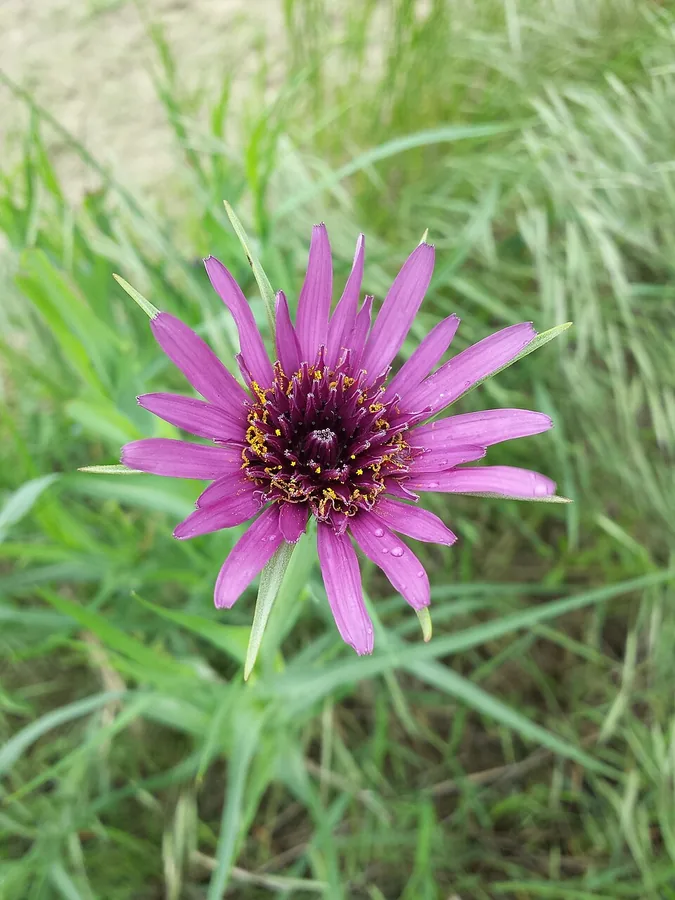
Salsify is a biennial root vegetable in the daisy family (Asteraceae), cultivated for a slender, fleshy taproot whose mild flavor recalls oysters, which is the origin of the common name oyster plant. A near relative of the dandelion, it carries the same starry purple flower heads, but only in the second year, in keeping with its biennial habit. Because flowering draws stored sugars and bulk out of the root, growers almost always lift it in the first season, before it blooms.
Success rests less on skill than on conditions. Salsify needs a long, cool season of about four to five months to size a root, and that root only develops straight and smooth where the soil below is deep and loose enough for the taproot to descend without deflection. Once the bed is right the crop is undemanding, since the plant resists most pests and needs little intervention.
The harvest is deliberately late. A few frosts sweeten the roots, and because they store well in place, the crop can be lifted fresh through winter for as long as the ground stays workable.
Care
The short version: site salsify in full sun and prepare a deep, loose, stone-free bed before sowing, because root form depends on it. Supply 1 to 2 inches of water a week to keep the roots straight, sow early to secure a long cool season, and harvest after the first frosts have sweetened the roots.
Light
Salsify performs best in full sun and tolerates only light partial shade. The reason is straightforward: greater light capture in the foliage translates into more energy driven down into the storage root.
Water
Apply about 1 to 2 inches of water a week and hold the soil evenly moist through the season. Consistency matters mechanically: fluctuating moisture disrupts smooth root expansion and produces forking or cracking, so the bed should never cycle between drought and saturation.
Soil
Soil preparation governs the outcome more than any other factor. Salsify requires a deep, loose, stone-free loam high in organic matter, cultivated a full 12 to 24 inches deep so the taproot can elongate straight rather than deflecting around obstacles. Target a pH of 6.0 to 7.5.
Temperature
As a cool-season crop, salsify grows best between roughly 50°F to 77°F (10°C to 25°C). It withstands cold without injury, and a late frost improves rather than harms the crop by sweetening the roots.
Humidity
Ambient outdoor humidity of 40% to 70% is entirely adequate, so no management is required. Air movement is the operative variable, because damp, stagnant conditions favor white rust on the foliage.
Feeding
Incorporate compost or a balanced fertilizer into the bed before sowing, which normally supplies the crop for the whole season. Avoid fresh manure, since excess available nitrogen promotes forking and hairy secondary rooting.
Pruning
No routine pruning applies. In the first year, however, remove any emerging flower stalk immediately, because bolting diverts resources from the storage root into reproductive growth and quality falls.
Repotting
not_applicable
Size & spacing
Once flower stalks develop, plants reach 1 to 4 feet (30 to 122 cm) in height on a narrow footprint of 6 to 12 inches (15 to 30 cm). Space accordingly so each taproot can swell to full girth without competition from its neighbors.
When to plant
Salsify follows a long developmental calendar. Direct sow in early spring as the ground first becomes workable, allow the root to bulk over a cool season of four to five months, and begin lifting in fall once frost has raised the sugar content. Because the root holds in the soil, harvest can extend across winter.
Northern hemisphere
Southern hemisphere
Typical months for a temperate climate: start earlier in warm zones, later where spring frosts linger.
- Plant: Direct sow in early spring as soon as the soil can be worked (about 2-4 weeks before the last frost); salsify needs a long, cool growing season.
- Harvest: Harvest roots in fall after the first frosts, which sweetens them; roots can overwinter in the ground and be dug through winter or early spring while the soil is workable.
Hardiness
USDA hardiness zones: 5–9
Temperature: down to -29°C
Troubleshooting
Salsify is largely trouble-free, and the disorders that do occur originate either in the soil or in seasonal conditions. Forked roots and premature bolting dominate the complaints, and each traces to bed preparation or sowing time. Identify the symptom below, then correct the underlying cause.
First-year bolting with a woody, inedible root
Bolting occurs when the plant produces a flower stalk in its first year, at which point the root turns woody and tough. Heat, drought, or sowing too late into warm soil are the usual triggers. Sowing early secures the cool season the crop needs, prompt removal of flower stalks conserves the root, and lifting before it hardens preserves quality.
Fix:
- Remove flower stalks as soon as they appear
- Harvest usable roots before they become woody
Rodent feeding on overwintered roots
Roots left in the ground over winter attract mice and voles, which tunnel along the rows and hollow the roots. The reliable remedy is to lift and store the crop before rodent pressure builds. Where overwintering in place is preferred, managing mulch and deploying rodent controls around the bed limits losses.
Fix:
- Harvest and store roots before deep winter rodent pressure
- Manage mulch and use rodent controls around the bed
Splitting, forking, or hairy secondary roots
Forked roots are almost always a soil disorder rather than a disease. Stones, compaction, or shallow cultivation deflect the descending taproot, while irregular watering and fresh manure aggravate the response. Cultivating the bed 12 to 24 inches deep, removing stones, and maintaining steady moisture allows the root to run long and unbranched.
Fix:
- Work the soil deeply (12-24 inches) and remove rocks before sowing
- Maintain even moisture of 1-2 inches of water per week
- Amend with compost rather than fresh manure
White pustules or powdery coating on leaves
Persistent leaf wetness and crowding favor white rust and powdery mildew, seen as white blister-like pustules or a powdery white film. Removing and destroying affected foliage, opening the stand to improve airflow, and keeping leaves dry all reduce infection pressure. Annual rotation to a fresh bed prevents the pathogens from carrying over.
Fix:
- Remove and dispose of affected foliage
- Improve airflow and reduce overhead moisture
- Rotate the crop to a new bed
Aphid colonies and honeydew on foliage
Aphids form soft-bodied colonies on leaves and stems and secrete sticky honeydew as they feed. A strong jet of water dislodges most, and insecticidal soap controls persistent colonies. Regular scouting and support of natural predators keep populations in check.
Fix:
- Dislodge with a strong jet of water
- Apply insecticidal soap if needed
Toxicity
Salsify is cultivated specifically as food, and no part of it is toxic. The roots, shoots, and young leaves are all edible, and the record shows it safe for pets, livestock, and people alike. The single caveat is the milky white latex released from cut roots, which can stain skin but poses no hazard.
Safe for
People · Cats · Dogs · Horses · Rabbits · Livestock · Birds
Cats None
Tragopogon porrifolius does not appear on the ASPCA toxic list, so a cat that samples a leaf faces no toxic risk. The milky sap may mark the fur but has no physiological effect.
Dogs None
A dog may excavate and chew the roots without toxic consequence, as no part of the plant is poisonous. A large quantity of any vegetable can loosen the stool, but salsify itself is harmless.
Horses Safe
Horses graze salsify without adverse effect, because it contains no compound toxic to them.
Rabbits Safe
Rabbits can consume the tender leaves and roots safely, and many favor the fresh greens. Introduce any new forage gradually to avoid digestive upset.
Livestock Safe
Cattle, goats, and sheep consume salsify in pasture without harm, a tolerance that partly explains its spread through grazing land. It carries no toxin of concern.
Birds Safe
Birds feed on the seeds and foliage without risk, and the plant presents no hazard to them. Backyard poultry can be given the trimmings safely.
People Safe
Grown as a food crop, salsify offers edible roots, shoots, and young leaves. The only inconvenience is the sticky white latex from cut roots, which rinses readily from the skin.
Cut roots and stems exude a milky white latex (typical of the daisy family) that can stain hands; wash after handling.
Varieties
Garden salsify comes down to two forms, an improved kitchen cultivar and the unimproved wild species. Both are worth understanding before choosing.
Mammoth Sandwich Island
The dominant white-rooted cultivar in cultivation, selected for long, smooth, evenly tapered roots that express the characteristic faint oyster flavor.
Common (purple) salsify
The wild species form, which in its second year produces mauve-purple, dandelion-like flower heads above roots of the same white flesh.
How to propagate
Salsify is propagated by seed alone, sown directly in its final position, because the long taproot does not survive transplanting intact.
SeedEasy
Direct sow in early spring as soon as the soil can be worked · Germinates in about 8-10 days; roots reach harvest size in roughly 110-150 days
Sow salsify directly in its permanent bed in early spring once the soil is workable, since the extended taproot does not tolerate transplanting. Germination follows in roughly 8 to 10 days, and the root matures over a long, cool interval of about 110 to 150 days. Use fresh seed each season, because salsify seed loses viability rapidly with age.
Myths
Salsify and black salsify are one and the same plant.
Culinary similarity masks a botanical difference: the two belong to separate species. Salsify is Tragopogon porrifolius, with white-skinned roots and purple flowers, whereas black salsify is Scorzonera hispanica, distinguished by black-skinned roots and yellow flowers.
Salsify roots must be lifted before frost or they will spoil.
The reverse holds true. Frost improves the roots by sweetening them, so they may be left in place and dug through winter or into early spring for as long as the soil remains workable.