Vegetable · Asteraceae
Lettuce
Lactuca sativa
Held cool, evenly moist, and growing fast, lettuce delivers crisp salad leaves in about a month.
Full sun
Every 2–3 days
55–64°F · 13–18°C
45–75 days
Overview
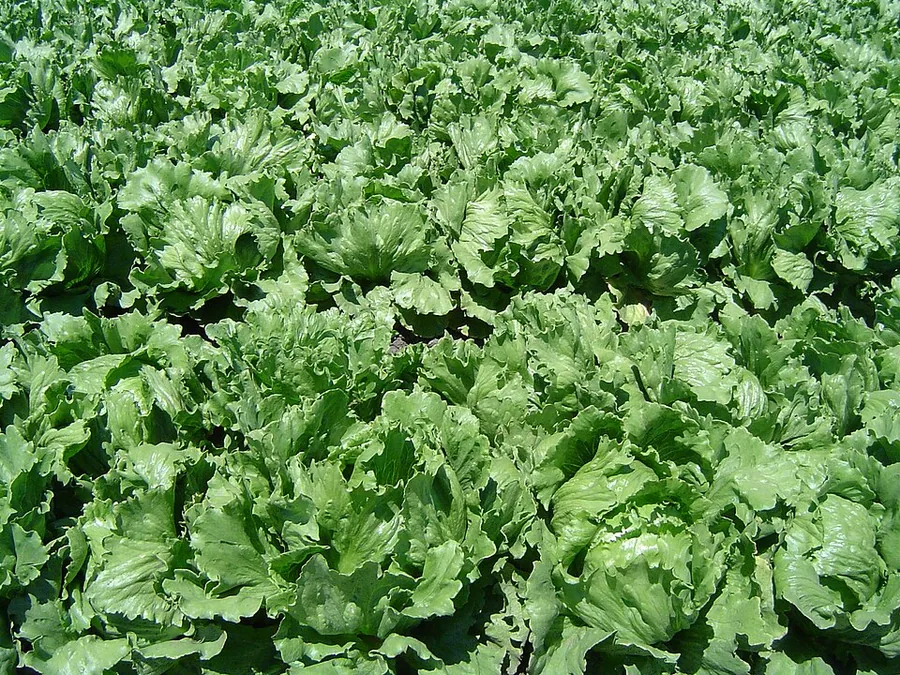
Lettuce returns a crop faster than almost anything else in the vegetable garden, maturing from seed in as little as 45 days. It sits within the daisy family and behaves as a cool-season annual, performing best through the moderate temperatures of spring and fall. It adapts equally to a garden bed, a raised box, or a container on a bright sill, and its cultural demands are modest.
Its forms span open rosettes of loose leaves, tall upright romaines, and soft, folded butterheads. The loose-leaf types support cut-and-come-again harvest of the outer leaves over an extended period, whereas heading types mature into a single cut. In every case the plant remains compact, seldom exceeding 12 inches (30 cm), so it makes efficient use of limited space.
Heat is the crop's principal constraint. Exposed to a hot, dry summer, the plant initiates a flower stalk and the foliage turns bitter as it bolts. Provided cool temperatures, consistent soil moisture, and adequate light, the leaves hold their sweet, crisp quality through to harvest.
Care
The short version: full sun with light afternoon shade under heat, soil held evenly moist, rich well-drained ground near a pH of 6.0 to 6.7, and cool temperatures between 55°F and 64°F (13°C to 18°C) to keep the foliage from turning bitter.
Light
Lettuce performs on full sun in cool weather, yet it tolerates partial shade and in fact benefits from it as temperatures rise. A site offering morning sun and afternoon shade keeps the foliage tender and slows the onset of bolting by reducing heat load.
Water
Maintain uniformly moist soil at all times, irrigating every 2 to 3 days and more deeply under heat. The root system is shallow, so any drought quickly stresses the plant and turns the leaves bitter. Water to a depth of about 6 inches and never allow the bed to dry.
Soil
Grow it in loamy, rich, well-drained ground amended with ample organic matter. A pH between 6.0 and 6.7 is optimal, and a medium that retains moisture without waterlogging supports the most consistent growth.
Temperature
This cool-season crop performs between 55°F and 64°F (13°C to 18°C). Beyond about 75°F it bolts, so schedule sowings for the moderate shoulders of the season.
Humidity
Ambient outdoor humidity is sufficient, so there is no target to manage. Consistent soil moisture is the decisive factor, since it is drought at the roots, not dry air, that turns the leaves bitter.
Feeding
Incorporate a 5-10-10 fertilizer before planting, then sidedress once with calcium nitrate during growth. That later application drives leaf production while supplying the calcium whose deficiency underlies tipburn.
Pruning
No formal pruning is warranted. Harvest the outer leaves progressively to sustain production, then remove the plant once it bolts, since the foliage only grows more bitter thereafter.
Size & spacing
Lettuce remains compact at 6 to 12 inches (15 to 30 cm) in height and comparable width. Allow each plant 6 to 12 inches (15 to 30 cm) of spacing so the leaves develop fully and air circulates between them.
When to plant
Lettuce is physiologically adapted to the cool ends of the season, not to high summer. Make the first sowing in early spring once the soil is workable, sow again in late summer for a fall crop, and pass over the hottest weeks between, when conditions only induce bolting.
Northern hemisphere
Southern hemisphere
Typical months for a temperate climate: start earlier in warm zones, later where spring frosts linger.
- Sow: 4-6 weeks before the last spring frost
- Plant: 2-4 weeks before the last spring frost; sow again in late summer for a fall crop
- Harvest: Spring and fall harvest (cool season)
Hardiness
USDA hardiness zones: 2–11
Temperature: down to -46°C
Troubleshooting
The great majority of lettuce disorders present on the foliage, and most resolve to one of three causes: heat, uneven soil moisture, or a feeding pest. Identified early, each responds to a straightforward correction that preserves the crop. Match the symptom below, then intervene before the disorder spreads through the planting.
A central seed stalk elongates and the foliage turns bitter
This is bolting, the reproductive transition in which the plant abandons leaf production for flowering once heat above 75°F (24°C) and lengthening days trigger the shift. As it bolts the leaves exude a milky sap and their sweetness is lost permanently. Harvest at the first sign of the crown lifting, supply afternoon shade through a hot spell to moderate the trigger, and select slow-to-bolt cultivars.
Fix:
- Harvest promptly before the plant fully bolts
- Switch to heat-tolerant, bolt-resistant cultivars
- Provide afternoon shade during hot spells
Distorted foliage bearing a sticky secretion
The culprits are aphids, small soft-bodied insects that colonize the leaf undersides and excrete a sticky honeydew as they feed. Their feeding on tender tissue is what deforms the emerging leaves. Dislodge the colony with a forceful jet of water, treat persistent populations with insecticidal soap, and conserve ladybugs and other predators to suppress what remains.
Fix:
- Dislodge with a strong spray of water
- Apply insecticidal soap
Necrotic browning along the margins of the inner leaves
This is tipburn, a localized calcium deficiency in the rapidly expanding heart rather than a pathogen or insect. Because calcium moves with the transpiration stream, warm conditions and low transpiration paired with uneven watering leave the fast-growing inner leaves unable to import enough, so their margins die back. Hold soil moisture even and restrain nitrogen so vegetative growth does not outrun the calcium the roots can supply.
Fix:
- Maintain even soil moisture
- Avoid excessive nitrogen that pushes rapid growth
Irregular chewed holes accompanied by mucus trails
The feeding damage points to slugs and snails, nocturnal grazers that leave glistening mucus trails and do their worst under damp conditions. Broadcast iron phosphate bait, hand-collect them under torchlight, and remove the moist mulch and debris that harbor them. Watering in the morning lets the surface dry before nightfall, which withholds the moisture they depend on to move and feed.
Fix:
- Apply iron phosphate bait
- Hand-pick at night
- Reduce damp mulch and debris near plants
Toxicity
Lettuce ranks among the safest crops in cultivation. Every part is non-toxic to people and to cats, dogs, rabbits, horses, livestock, and birds, which accounts for its place in so many diets. The single qualification is the milky sap, which may occasionally raise a mild rash on highly sensitive skin and presents no greater hazard.
Safe for
People · Cats · Dogs · Horses · Rabbits · Livestock · Birds
Cats None
For cats, lettuce carries no toxicity, so a nibbled leaf poses no risk. Most decline it, though a curious animal may chew it without consequence.
Dogs None
Dogs tolerate lettuce with no adverse effect. Its high water content means a large serving can loosen the stool, so limit intake to small amounts of plain washed leaves.
Horses None
Horses accept lettuce well as an occasional supplement to forage. Tear it into pieces and keep the quantity modest, as with any fresh green.
Rabbits None
Rabbits do best on the crisp darker leaves, which are more suitable for them than the pale, watery hearts. Wash it and present it as a complement to their staple hay.
Livestock None
Goats, sheep, and backyard stock can graze lettuce without harm. Plants that have bolted to seed remain safe, though the bitterness that develops reduces palatability.
Birds None
Chickens and pet birds forage on fresh lettuce leaves at no risk. The darker, leafier cultivars offer more nutritional interest than the watery crispheads.
People None
For people, lettuce is a salad staple consumed raw or cooked and is safe for all. The only reported effect is that the milky sap may occasionally provoke a mild rash on highly sensitive skin.
The milky sap may rarely cause mild contact dermatitis in sensitive individuals.
Varieties
The crop encompasses hundreds of cultivars across the leaf, romaine, and butterhead groups, but a small number remain reliable choices year after year. The following selections are the ones worth knowing.
Parris Island Cos
This established upright romaine produces tall, crisp green leaves and carries good disease resistance.
Tom Thumb
A miniature butterhead, it develops a compact single-serving head in roughly 70 days.
Simpson Elite
A fast-maturing green leaf type, it resists bolting longer than most comparable cultivars.
Red Sails
A bronze-red loose-leaf selection, it is valued for its pigmentation and its unusually slow progression to bolting.
Defender
A romaine bred for resistance to downy mildew and the other diseases common to the crop.
How to propagate
Lettuce is among the most straightforward crops to raise, and a single packet of seed sustains a salad bed for months when sown in successive intervals.
SeedEasy
Spring and late summer; sow in succession every 2-3 weeks for a continuous harvest · 7-14 days to germinate
Lettuce propagates readily from seed, whether direct-sown into the bed or started indoors as transplants. Sow shallow, about a quarter inch deep, because the seed requires light and cool soil to break dormancy, and it germinates in 7 to 14 days. Establish a succession by sowing a fresh increment every 2 to 3 weeks through spring and again in late summer, which spreads the harvest across months rather than concentrating it in a single flush.
Myths
Bitter lettuce is spoiled or rotten.
Bitterness is a normal physiological response to heat as the plant bolts, not decay. The foliage remains safe to eat, merely disagreeable in flavor. Grow it cool and harvest it early and the leaves retain their sweetness.
Lettuce needs full hot sun all day to grow well.
As a cool-season crop, prolonged intense sun accelerates its transition to bolting. Light afternoon shade during hot periods preserves tenderness, while the plant still requires ample light through the remainder of the day.