Vegetable · Asteraceae
Radicchio
Cichorium intybus
Head radicchio into cool fall weather and cold shifts it from harsh green to deep red and bittersweet.
Full sun
Every 3–7 days
60–85 days
USDA 3–9
Overview
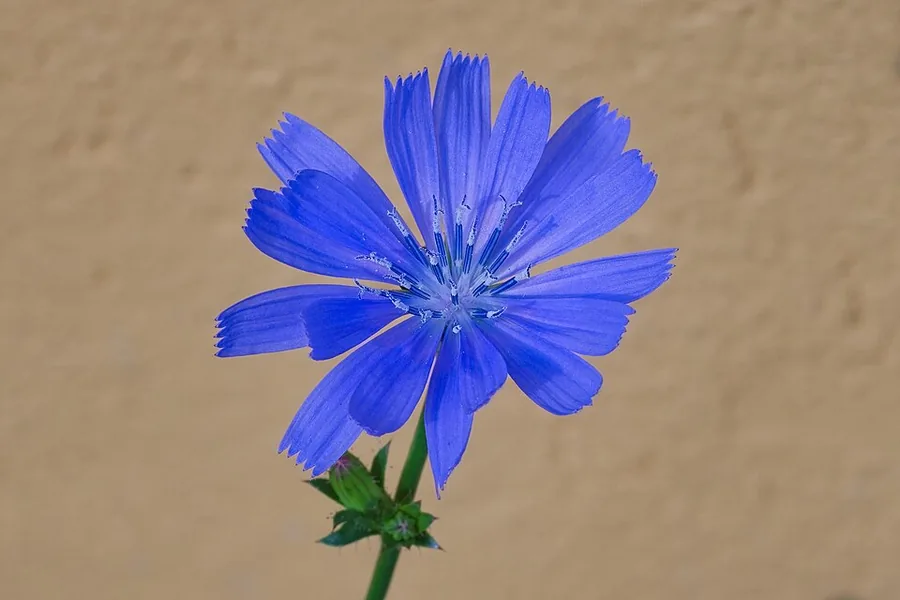
Radicchio is a red, bitter cultivated chicory long associated with Italian salads. In botanical terms it is a form of Cichorium intybus within the Asteraceae family, a biennial that most gardens raise as a single fall crop. The head firms into a cabbage-like form, yet the chicory bitterness persists, most balanced after a run of cold nights.
The trait that separates radicchio from lettuce is its response to temperature. Maturation under cool fall weather drives the deepening of red pigment and the moderation of bitterness, whereas heat during development pushes the plant to bolt and coarsen. Because of that response, the schedule, rather than any special technique, decides whether the heads come in firm and well colored.
Allow 60 to 85 days from sowing to a harvestable head. Consistent moisture and a fertile, well-structured soil supply the bulk of the plant's needs, and declining temperatures complete the process by improving color and flavor. Frost tolerance in young plants, down to roughly 20°F (-7°C), lets the crop hold in the garden after tender greens have failed.
Care
The short version: full sun, consistent irrigation of 1 to 2 inches a week, and a fertile, well-drained soil, with the crop timed so heading falls in the cool of autumn.
Light
Radicchio performs best in full sun and will accept partial shade where late-summer temperatures remain high. Ample light supports vigorous, sturdy plants, which in turn form firm, well-pigmented heads.
Water
Maintain evenly moist soil, on the order of 1 to 2 inches per week. Fluctuating or deficient moisture raises bitterness and yields weaker heads, so irrigation frequency should increase on sandy soils that drain quickly.
Soil
Grow radicchio in fertile, well-drained soil enriched with organic matter. A pH of 6.0 to 6.8, marginally acidic, provides the conditions under which nutrient availability suits the crop.
Temperature
As a cool-season crop, radicchio tolerates a range of 19°F to 75°F (-7°C to 24°C). Young plants withstand frost to about 20°F (-7°C), and the low temperatures of autumn are the mechanism that intensifies color and reduces bitterness.
Humidity
No specific humidity level applies, since the crop grows in open-air conditions. Air circulation is the more relevant factor, because dense, persistently wet foliage favors disease.
Feeding
Incorporate a complete fertilizer such as 10-10-10 before planting, then apply a nitrogen side-dressing roughly 4 weeks after transplanting. Withhold further nitrogen once heading begins, because late nitrogen promotes leaf growth at the expense of a compact head.
Pruning
Radicchio requires no pruning. Remove damaged or diseased outer leaves and clear plant debris, which lowers the reservoir of pests and pathogens around the crop.
Size & spacing
Mature plants are compact, reaching 6 to 12 inches (15 to 30 cm) in height with an 8 to 12 inch (20 to 30 cm) spread. Spacing at that width allows the heads to fill and maintains the air movement that limits disease.
When to plant
Treat radicchio as a cool-season crop. Sow in summer, transplant in late summer, and let heading proceed as temperatures fall, since the cool period is what develops the pigment and flavor.
Northern hemisphere
Southern hemisphere
Typical months for a temperate climate: start earlier in warm zones, later where spring frosts linger.
- Sow: Early to mid summer (start seeds indoors in July for transplanting in August for a late-season fall crop)
- Plant: Transplant in late summer (August) for fall harvest, or direct sow about 75-85 days before the anticipated maturity/harvest date
- Harvest: Fall (heads harvested as cool weather improves color and flavor)
Hardiness
USDA hardiness zones: 3–9
Temperature: down to -40°C
Troubleshooting
The majority of radicchio disorders reduce to a single factor: temperature at the wrong stage. Heat during heading produces bolting and loose heads, while foliar damage points to pests or a phytoplasma disease. Identify the symptom below and intervene at the first sign.
Chlorotic, distorted, and stunted growth with deformed shoots
These symptoms indicate aster yellows, a phytoplasma transmitted by leafhoppers for which no cure exists. Rogue out and destroy affected plants promptly to remove the inoculum source. Ongoing management of leafhopper vectors and weedy reservoir hosts is the only effective control.
Fix:
- Remove and destroy infected plants
- Control leafhoppers
An elongating flower stalk replaces the expected head
The plant is bolting, a reproductive response that summer heat almost invariably triggers. Once bolting begins, tissue coarsens and bitterness rises, so harvest without delay. The durable correction is chronological: schedule sowing so head development coincides with cool fall conditions rather than summer heat.
Fix:
- Harvest promptly before quality declines further
- Replant timing so heads mature in cool fall weather
Heads remain loose and fail to firm
A loose head typically reflects warmth during the heading phase or a soil that has become dry and low in fertility. Correct both by maintaining even moisture and adequate nutrition. Beyond that, align the planting date so heading occurs in cool autumn weather, the conditions radicchio requires to close tightly.
Fix:
- Ensure consistent moisture and adequate fertility
- Adjust planting date so heading coincides with cool weather
Foliage chewed and holed, with seedlings severed at soil level
Several pests feed on radicchio: cutworms sever seedlings at soil level, slugs produce slime trails and irregular holes, and flea beetles create characteristic shothole feeding. Handpick or trap where feasible and apply insecticidal soap against aphids and caterpillars. Routine scouting together with a weed-free bed suppresses most infestations.
Fix:
- Handpick or trap slugs and cutworms
- Use insecticidal soap or appropriate controls for aphids and caterpillars
Toxicity
Radicchio presents no toxicity concern. As a cultivated salad chicory grown for consumption, its foliage carries no toxic risk to people, pets, or livestock. Incidental ingestion by an animal has no harmful effect.
Safe for
People · Cats · Dogs · Horses · Rabbits · Livestock · Birds
Cats None
Radicchio is nontoxic to cats. A sampled leaf will not poison a cat, although such greens contribute little to feline nutrition.
Dogs None
Dogs are unaffected by these leaves. Consuming a stray piece of the salad green produces no harm.
Horses Safe
Radicchio poses no risk to horses. Chicory functions as a recognized forage and is not toxic to equines.
Rabbits Safe
Rabbits digest radicchio safely and often take to its bitterness. Present it within a varied selection of greens rather than as the sole item.
Livestock Safe
Cattle, goats, and sheep graze chicory without adverse effect, and the species is cultivated deliberately as pasture forage.
Birds Safe
Domestic fowl and other birds may feed on the foliage freely. Radicchio contains nothing harmful to them.
People Safe
For people, radicchio is an edible salad crop, consumed raw or grilled. Its bitterness is a culinary trait, not a toxicity signal.
No special handling precautions; an ordinary edible salad green.
Varieties
Only a small set of radicchio cultivars appears with any regularity in gardens, divided between the rounded Verona forms and the elongated Treviso forms. The following are the most established.
Rossa di Treviso
An Italian heirloom whose heads elongate and taper, marked with streaks of deep red against white.
Rossa di Verona
A cultivar that develops the rounded, classic radicchio head, deep red with pronounced white ribs.
Giulio
A dependable round-heading selection well suited to home garden conditions.
Firebird
A cultivar noted for consistent, reliable head formation.
How to propagate
Radicchio is propagated by seed, either sown directly in place or raised under protection for transplanting into a fall planting.
SeedModerate
Start indoors in summer (e.g., July) for transplanting in late summer, or direct sow; seeds germinate best at 65-70°F and germination drops above 80°F. · Roughly 60 to 85 days from sowing to a mature head depending on cultivar and conditions.
Radicchio is raised from seed by one of two routes. Direct sowing establishes a single strong taproot, while greenhouse-raised summer seedlings transplant successfully for a fall crop. Optimal germination occurs at 65°F to 70°F (18°C to 21°C) and declines sharply above 80°F (27°C); expect 60 to 85 days from sowing to a mature head.
Myths
Radicchio is simply a red form of lettuce.
The resemblance is superficial. Radicchio is a chicory within the Asteraceae family, not a lettuce, which accounts for its bitterness. It also requires a longer growing period of roughly 60 to 85 days, and its color and flavor develop only as cool autumn temperatures arrive.