Herb · Rosaceae
Salad Burnet
Sanguisorba minor
In full sun and lean, sharply drained soil, Sanguisorba minor concentrates the cucumber flavor that rich ground would only dilute.
Full sun
Every 5–10 days
50–77°F · 10–25°C
60–100 days
Overview
Salad burnet, Sanguisorba minor, is a hardy perennial in the rose family grown chiefly for the mild cucumber flavor of its immature foliage. It holds a low evergreen rosette of finely toothed leaflets that persists through much of the year and often overwinters where conditions stay mild. In the kitchen the young leaves season salads, infuse vinegars, and flavor cold summer drinks.
Its resilience comes down to a preference for spare, sharply drained ground. Salad burnet performs on dry, rocky, and alkaline (calcareous) soils that stall less adaptable herbs, and once its root system establishes it needs little supplemental water. Lean soil is preferred rather than merely tolerated, since rich ground reduces the concentration of the compounds that give the leaves their cucumber flavor.
The chief management task is controlling the reproductive shift. As flower stalks rise on tall stems, the plant turns toward flowering and its older leaves mature into coarse, low-flavor foliage. Cutting those stalks back holds the plant in vegetative growth, so it keeps producing the tender, well-flavored leaves that make it worth growing.
Care
The short version: full sun and lean, well-drained soil, with regular water only during establishment. Withhold heavy feeding, remove flower stalks as they emerge, and harvest young leaves frequently to keep the plant vegetative and mild.
Light
Full sun is ideal, with partial sun or light shade tolerated. Strong light keeps the rosette compact and the leaves well flavored, whereas shade produces loose, drawn growth and, by holding humidity around the foliage, raises the risk of powdery mildew.
Water
Irrigate young plants regularly to establish the root system, then reduce sharply, as the species is drought tolerant once established. Allow the upper half of the profile to dry between waterings; sustained saturation is what the plant will not tolerate, and it precedes root rot.
Soil
Grow it in lean, well-drained ground. It succeeds on dry, rocky, and alkaline substrates that defeat many herbs, across a pH of 6.0 to 7.8. Avoid rich, moisture-retentive soil, which both dilutes flavor and holds the water that invites rot.
Temperature
Growth is strongest in mild conditions of roughly 50°F to 77°F (10°C to 25°C). As a cold-hardy perennial it withstands winter without protection and commonly remains evergreen through milder seasons.
Humidity
Ambient humidity of 40% to 60% is entirely adequate, and outdoors it needs no adjustment. Air circulation is the operative factor rather than moisture level, because stagnant, humid air is the condition under which powdery mildew develops.
Feeding
Feed minimally. A single light balanced or low-nitrogen application in spring suffices, and even that is optional, because excess fertility reduces flavor concentration. Over-fed plants put on soft, water-rich foliage at the expense of the sharp cucumber character.
Pruning
Remove flower stalks as they emerge to keep the canopy tender and the flavor mild, since flowering coincides with the coarsening of the leaves. Cutting away the older, tougher outer leaves likewise stimulates a fresh flush of growth.
Repotting
In containers, repot every 1 to 2 years. Roots circling the pot, a slowdown in new leaf production, and a substrate that dries unusually fast all indicate the plant has filled its container and needs fresh medium and greater volume.
Size & spacing
Mature dimensions are modest: 12 to 24 inches (30 to 60 cm) in height and 12 to 18 inches (30 to 45 cm) in spread. Spacing plants to that width preserves the air movement through the rosette that discourages fungal disease.
When to plant
Rated hardy across zones 4 through 8, salad burnet goes in early. Start it indoors 6 to 8 weeks before the last frost, or sow direct once the soil is workable in early spring, after which young leaves can be cut from spring until fall.
Northern hemisphere
Southern hemisphere
Typical months for a temperate climate: start earlier in warm zones, later where spring frosts linger.
- Sow: 6 to 8 weeks before last spring frost
- Plant: After last spring frost, or direct sow in early spring
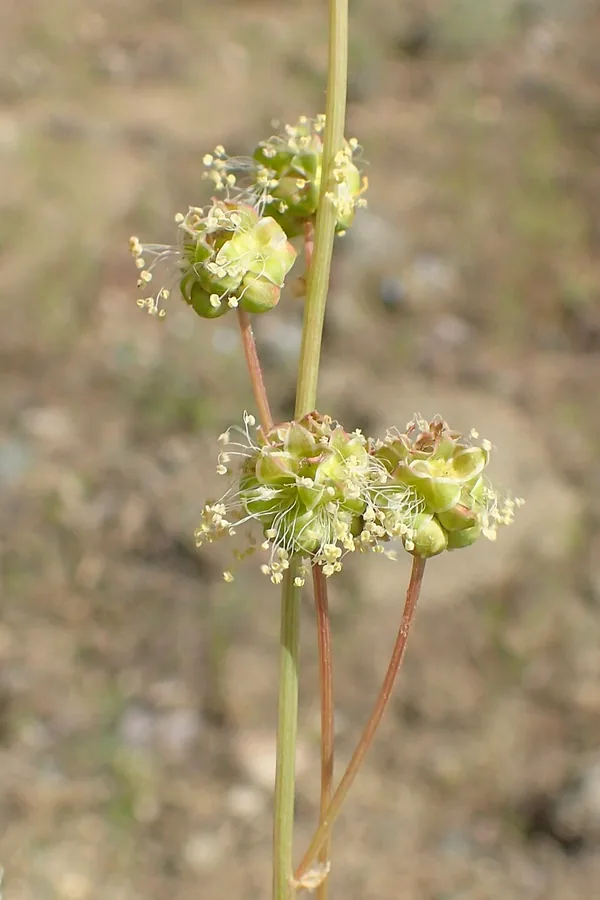
- Harvest: Harvest young leaves spring through fall; pinkish flower heads appear late spring to midsummer (May to July)
Hardiness
USDA hardiness zones: 4–8
Temperature: down to -34°C
Troubleshooting
Salad burnet is undemanding, and the disorders that do appear nearly all originate in excess moisture or restricted air movement. Reading the leaves and roots against the entries below lets you identify the cause and correct the underlying condition before it advances.
Yellowing, wilting, and collapse in saturated ground
Waterlogged soil drives root rot, a condition salad burnet has little tolerance for. The roots become soft, dark, and mushy, and once they have broken down the plant cannot be recovered. Reduce watering, correct the drainage, and move any survivors into a raised bed or a gritty, free-draining medium.
Fix:
- Improve drainage
- Reduce watering
- Replant in well-drained or raised beds
A powdery white deposit developing over the leaf surface
This is powdery mildew, a fungal infection favored by still air and close spacing in humid shade. Increase spacing to restore air movement, remove the most affected leaves, and relocate the plant to full sun, an exposure the fungus tolerates poorly.
Fix:
- Improve spacing and air flow
- Remove affected foliage
- Site plant in full sun
Foliage turns coarse and bitter and loses its cucumber flavor
The cause is bolting. Once the plant initiates flower stalks, its older leaves mature into large, leathery blades and shed the mild cucumber flavor that is the point of the crop. Remove the flower stems as they form, harvest only the young inner foliage, and cut the plant hard to drive a flush of tender regrowth.
Fix:
- Cut off developing flower stalks
- Harvest only young inner leaves
- Cut the plant back to force a flush of tender new growth
Toxicity
For pet-owning and child-safe households the verdict is straightforward: salad burnet is a culinary herb with no toxic constituents. Its young leaves are eaten raw by people, and it presents no hazard to cats, dogs, horses, rabbits, livestock, or birds.
Safe for
People · Cats · Dogs · Horses · Rabbits · Livestock · Birds
Cats None
Nontoxic to cats; an exploratory bite of the soft foliage produces no ill effect.
Dogs None
Dogs are unaffected, the plant containing no compounds that would trouble them even if a quantity is eaten.
Horses Safe
Horses may graze it without restriction, since none of its tissues are poisonous to equines.
Rabbits Safe
Rabbits can take the tender leaves as an occasional treat in small amounts with no harm.
Livestock Safe
Cattle, goats, and sheep graze it safely; its larger fodder subspecies was historically raised as stock feed.
Birds Safe
Poultry and wild birds take no harm from feeding on the leaves or seeds.
People Safe
For people the young leaves are an edible green, eaten fresh in salad for a mild, cucumber-like taste.
Leaves and young growth are commonly eaten by people in salads; no special handling precautions are required.
Varieties
The species carries few named cultivars, but two forms are worth distinguishing for the gardener.
Sanguisorba minor subsp. muricata
Designated fodder burnet, this is the larger, more vigorous form historically cultivated as forage and as a cover crop.
Sanguisorba minor (species type)
The species type presents a compact evergreen rosette of finely toothed leaflets, grown for the mild cucumber flavor the young leaves lend a salad.
Companions
Salad burnet sits happily beside herbs that share its taste for sun and lean soil, and does worst next to vigorous spreaders that swamp its low rosette.
How to propagate
Propagation is straightforward by either seed or division, and both are well within reach for a beginning grower.
SeedEasy
Early spring, indoors 6 to 8 weeks before last frost or direct sown · Germinates in about 1 to 2 weeks; harvestable within 8 to 10 weeks
Seed is the standard method and the one most growers use. Sow indoors 6 to 8 weeks ahead of the last frost or sow direct in early spring; germination follows in roughly 1 to 2 weeks. Leaves reach a usable size within 8 to 10 weeks, and a few flower heads left to mature will allow the plant to self-seed across the bed.
DivisionEasy
Spring or early fall · A few weeks to re-root and resume growth
An established clump divides readily in spring or early fall. Lift the entire plant, separate it into rooted sections by hand or knife, and replant the divisions immediately so they re-establish and resume growth over the following few weeks.
Myths
Salad burnet is simply another name for the medicinal great burnet.
The two are distinct species. Salad burnet (Sanguisorba minor) is the smaller culinary herb, whereas great burnet (Sanguisorba officinalis) is a taller plant with deep red flower heads and a separate tradition of medicinal use. Confirm the botanical name at purchase, as the common names are readily confused.
Mature leaves are as palatable as the young growth.
They are not. The mild cucumber flavor is concentrated in the young foliage, and leaves coarsen and turn bitter as they age. Harvest young and often to keep the flavor at its mildest.