Shrub · Rosaceae
Blackberry
Rubus fruticosus
Provide full sun and ample room, and a blackberry returns heavy crops for many seasons.
Full sun
Every 3–7 days
USDA 5–9
3–10 ft · 0.9–3 m
Overview
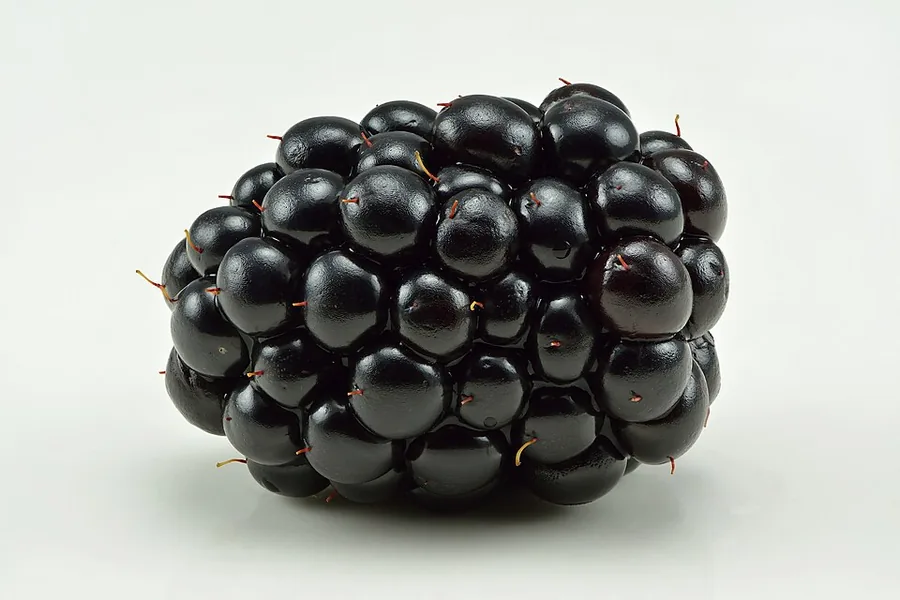
Blackberry is among the most productive fruits available to an inexperienced grower. Botanically it is a bramble in the rose family, producing long arching canes that root at the tips on contact with soil, a habit known as tip-layering. Without intervention a single plant readily colonizes the ground around it.
The plant's defining feature is its biennial cane cycle, and understanding it explains the entire pruning regime. A cane grows vegetatively in its first season as a primocane, then flowers and fruits in its second season as a floricane before dying. Once that two-year sequence is clear, pruning becomes a matter of removing what has finished and retaining what will fruit next.
These are hardy, fast-growing perennials that crop heavily with minimal input. Supply adequate sun, a well-structured soil, and an annual prune, and the canes yield abundantly in midsummer. The principal planning constraint is space, since a vigorous clump expands quickly by suckering and layering.
Care
The short version: site it in full sun in deep, well-drained soil, and supply roughly an inch or two of water weekly. Remove the spent fruited canes annually and allow generous room for the clump to expand.
Light
Cropping is maximized in full sun, on the order of six or more hours daily, because photosynthate drives both yield and sugar accumulation. A degree of afternoon shade is tolerated, but reduced light lowers both the weight and the sweetness of the fruit.
Water
Maintain the soil evenly moist but never waterlogged, since saturated soil starves the roots of oxygen. Aim for about 1 to 2 inches of water a week, increasing supply during flowering and fruit fill, when water stress directly produces small, crumbly berries.
Soil
Use a deep, well-drained loam with substantial organic matter to support the extensive root system. A pH of 5.5 to 7.0 is optimal, and sharp drainage is the single most effective defense against root and cane pathogens.
Temperature
The species is cold-hardy to -4°F (-20°C) and tolerates summer heat to 95°F (35°C). This range corresponds to hardiness zones 5 through 9, within which the plant overwinters without protection.
Humidity
Ambient humidity of 40% to 70% is acceptable. Air movement is more decisive than the relative humidity itself, because stagnant, moist air within a dense canopy creates the leaf-wetness duration that rust and blight require to infect.
Feeding
Apply fertilizer once in early spring as growth resumes, using a balanced 10-10-10 or a nitrogen-rich complete formulation to support primocane extension. A single seasonal application generally sustains the canes through the fruiting period.
Pruning
Pruning is dictated by the biennial cane habit. Remove spent floricanes to ground level after harvest, tip-prune primocanes in summer to stimulate fruiting laterals, and thin the planting to a limited number of vigorous canes.
Repotting
Blackberries are field-grown rather than containerized, so repotting is rarely relevant. Where a plant is held in a container, pot it on once roots circle the rootball or cane vigor declines and the medium dries rapidly.
Size & spacing
Canes attain 3 to 10 feet (90 cm to 3 m) in height with a comparable spread. Allocate that much space for arching and suckering, both to ventilate the canopy and to prevent the planting from encroaching on adjacent stock.
When to plant
Blackberries are planted in the dormant state to minimize transplant stress. Set out bare-root or containerized canes in late winter to early spring once hard frost has passed, expect flowering in late spring, and harvest ripe fruit through the heat of July and August.
Northern hemisphere
Southern hemisphere
Typical months for a temperate climate: start earlier in warm zones, later where spring frosts linger.
- Plant: Set out dormant bare-root or container canes in late winter to early spring after danger of hard frost has passed.
- Harvest: Blooms in late spring; berries ripen mid to late summer (typically July to August).
Hardiness
USDA hardiness zones: 5–9
Temperature: down to -29°C
Troubleshooting
Most blackberry disorders register on the canes or the fruit, so a routine inspection of the planting detects them while intervention is still effective. Match the symptom below, then act before a fungus or mite becomes established.
Bright orange pustules across the lower leaf surface
Those pustules are orange rust, a systemic fungus that colonizes the plant's vascular tissue rather than living only on the leaf surface, which is why the infection is permanent once spores erupt. An infected cane never recovers and remains an active spore source for the rest of the patch. The only sound response is to excavate the entire plant, roots included, and dispose of it away from the compost.
Fix:
- Dig out and destroy entire infected plants including roots
- Do not compost infected material
Dark girdling lesions on the canes with dieback above
These lesions point to cane blight and anthracnose, fungi that enter through wounds and girdle the conducting tissue, so the cane above the infection loses its water supply and collapses. Prune affected canes well below each lesion and thin the remaining canes so the canopy dries faster after rain. Confine all cutting to dry weather, because fresh wounds combined with surface moisture are the precise conditions the spores need to establish.
Fix:
- Prune out and destroy affected canes below the lesion
- Thin canes to improve air circulation
Crumbly, asymmetric berries with hard red druplets
A blackberry is an aggregate of many druplets, each set by its own ovule, so when some swell and others stay hard and red the usual cause is incomplete pollination, with redberry mite or a virus producing the same pattern. Improve fruit set by supporting nearby bee activity, and apply horticultural oil to the canes if mites are confirmed. A virus offers no cure, so rogue out and replace any plant you suspect carries one.
Fix:
- Encourage pollinator activity near the planting
- Apply horticultural oil to manage mites
Toxicity
There is no toxicological concern with this plant. The fruit, foliage, and canes are non-toxic to people, pets, and livestock, and the fruit is palatable to all of them. The sole hazard is mechanical, since most blackberries bear sharp prickles that abrade skin and catch fur.
Safe for
People · Cats · Dogs · Horses · Rabbits · Livestock · Birds
Cats None
No part of the plant carries a toxin that affects cats. The only meaningful risk is mechanical, since the prickles can lacerate an investigating paw or nose.
Dogs None
Ripe fruit is harmless to dogs, and many consume it readily. The sugar and fiber load of a large quantity can cause transient digestive upset, so portions should stay moderate.
Horses Safe
Horses browse the foliage and fruit without any toxic effect. The relevant hazard is the prickled cane, which can lacerate the sensitive tissue of the muzzle.
Rabbits Safe
Both foliage and fruit are non-toxic to rabbits, and the leaves are readily browsed. Berries are best limited, as the sugar content is high relative to a small herbivore's diet.
Livestock Safe
Ruminants including cattle, goats, and sheep browse brambles without toxicity, and goats in particular will defoliate a thicket. None of the plant poses a poisoning risk to them.
Birds Safe
Birds consume the ripe fruit avidly and act as the primary seed dispersers across the landscape. The fruit presents no toxicological hazard.
People Safe
The fruit is a long-established food eaten fresh and cooked, and the young leaves have a recorded history of use as a herbal tea. The only precaution is mechanical injury from the prickles during harvest.
The main hazard is physical rather than chemical: most wild and cultivated blackberries bear sharp thorns (prickles) along the canes that can scratch skin or injure pets, though thornless cultivars such as 'Navaho' and 'Apache' exist and are safer to handle.
Varieties
The genus contains hundreds of selections divided broadly into erect and trailing forms. The three below merit attention, two of them bred to eliminate prickles.
Navaho
A thornless erect selection from the University of Arkansas and USDA breeding program, valued for sweet, firm fruit borne on canes that can be handled without protection.
Marionberry
A trailing cultivar developed at Oregon State University from a cross of Chehalem and Olallie, long established as a regional standard in the Pacific Northwest.
Apache
A second thornless erect cultivar distinguished by very large fruit and strong field resistance to disease.
Companions
Blackberries do best kept apart from their own relatives and from the nightshade family, since both trade diseases that brambles are prone to.
Keep apart
Raspberry and other Rubus: Planting close to other brambles spreads shared diseases such as orange rust and viruses.
Tomato, potato, and other Solanaceae: They share susceptibility to Verticillium wilt, so avoid planting blackberries where solanaceous crops recently grew.
How to propagate
Blackberries propagate readily, and a single plant supports several vegetative methods. Layering and division require minimal skill, whereas cuttings call for closer attention to timing and conditions.
LayeringEasy
Late summer · Roots form in 6 to 8 weeks; transplant the following spring
Trailing types layer almost spontaneously because their cane tips readily form adventitious roots on contact with soil. In late summer, bend a tip to bare ground and pin it, and rooting follows within about 6 to 8 weeks. Keep the new plant attached to the parent through winter for support, then sever and lift it the following spring.
DivisionEasy
Late winter to early spring while dormant · One growing season
An established clump produces rooted suckers from its perennial crown and root system. Lift those suckers or split the crown in late winter to early spring while the plant is dormant and translocation is minimal, then replant immediately. Each division needs one full growing season to re-establish before it carries a meaningful crop.
Stem cuttingsModerate
Winter for root cuttings or summer for softwood cuttings · Several weeks to a few months
Cuttings demand more control of timing and conditions than layering or division. Take root cuttings in winter or softwood cuttings in summer, with rooting spanning several weeks to a few months depending on type. Root cuttings are the conventional nursery method for propagating the erect cultivars.
Myths
Blackberries and raspberries are the same fruit since both are brambles.
Both species sit in the genus Rubus, which accounts for the confusion, but their fruit morphology separates them. The blackberry retains its white receptacle when picked, the central plug that the druplets surround, whereas the raspberry abscises from the receptacle and leaves it on the plant, producing the characteristic hollow core.
Every blackberry has thorns.
Prickles are common in the genus but are no longer obligatory in cultivation. Modern cultivars such as Navaho and Apache are entirely thornless and fruit just as productively, so a full crop can be grown and harvested without any risk of laceration.