Houseplant · Davalliaceae
Rabbit's Foot Fern
Davallia fejeensis
Meet its needs and the mechanism takes care of itself: bright indirect light, steady moisture, and 50% to 70% humidity keep the surface rhizomes creeping and the fronds full.
Bright indirect
Every 5–10 days
55–75°F · 13–24°C
USDA 10–12
Overview
The rabbit's foot fern is a true fern from Fiji, grown indoors for its finely divided fronds and the fur-covered rhizomes that give it its name. Those rhizomes creep across the top of the pot and over the rim, resembling small animal feet. That surface-creeping habit is the single trait that governs how the plant is grown.
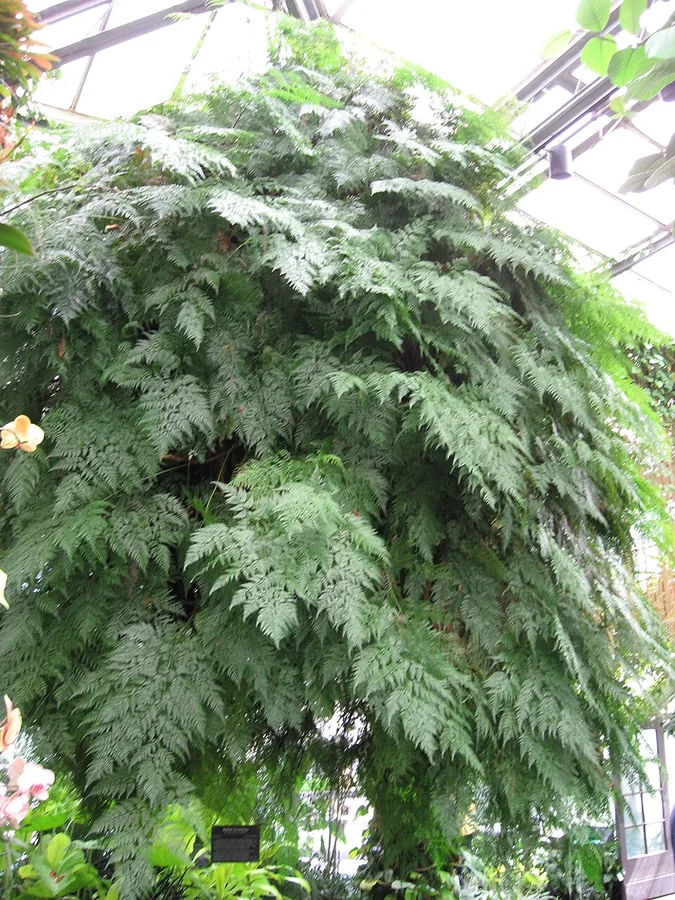
Unlike ferns that root entirely below the mix, this species carries its rhizomes on the surface, so the growing points sit exposed rather than buried. Fronds emerge from those creeping stems in a loose, lacy mound that broadens as the rhizomes extend. Growth stays low in height but wide in spread, which is why a hanging basket or an elevated shelf suits the plant's structure.
The high humidity requirement traces to its origins; 50% to 70% relative humidity keeps the thin fronds from desiccating at the tips. Beyond that, it is undemanding: soft light, steady moisture, and exposed rhizomes are enough for years of growth. Let the mix stay waterlogged or bury the rhizomes, and the exposed tissue rots because it cannot dry.
Care
The short version: provide bright indirect light, a peat-based mix kept evenly moist but free-draining, 50% to 70% humidity, and unburied rhizomes, since the surface growing points need air and cannot tolerate sitting wet.
Light
Position it in bright, indirect light out of direct midday sun. It tolerates partial shade and medium light, but frond density falls as light drops, so brighter, filtered light produces the fullest growth. Direct sun scorches the delicate fronds, so keep it screened.
Water
Keep the mix evenly moist and water roughly every 5 to 10 days, once the top half-inch has dried, which supplies steady moisture without saturating the medium. Reduce watering from fall through late winter, when slowed growth lowers uptake. Because the rhizomes sit on the surface, standing moisture rots them, so drainage is essential.
Soil
Use a peat-based medium high in organic matter that still drains freely, which holds moisture at the roots while letting excess pass. A pH of 5.5 to 6.5 suits the plant, and an open structure keeps water from lingering around the surface rhizomes.
Temperature
Hold it within 55°F to 75°F (13°C to 24°C), ordinary indoor range. Cold drafts and the dry heat of vents both stress the fine fronds, the first by chilling and the second by drying, so site it away from both.
Humidity
This is the decisive factor. Maintain 50% to 70% humidity, above typical indoor levels, using a pebble tray, a humidifier, or grouped plants that raise local moisture. When the air drops below that, the thin frond tips lose water fastest and brown first.
Feeding
Feed monthly during spring and summer with a balanced liquid fertilizer at half strength, matching the active growing season. Withhold fertilizer in fall and winter, when the plant is not growing and cannot use the nutrients.
Pruning
No structural pruning is needed. Remove dead, browned, or damaged fronds at the base, which redirects the plant's energy to healthy growth and keeps the crown open.
Repotting
Repot only every 2 to 3 years, prompted by rhizomes crowding the surface, slowed frond production, or mix that dries unusually fast. Increase pot size by one step, and keep the rhizomes resting on the surface, since burying them defeats their exposed growth habit and invites rot.
Size & spacing
Mature plants reach 12 to 35 inches (30 to 90 cm) in height and spread wider, from 1 to 4 feet (30 to 120 cm), as the rhizomes extend outward. That wide, low form is best served by room to spread or by hanging so the rhizomes can trail.
Troubleshooting
Symptoms sort cleanly by tissue: fronds report atmospheric problems, while the rhizomes report moisture problems. Crisp margins indicate low humidity or underwatering, whereas soft, discolored rhizomes indicate rot from excess water. Identify the affected tissue first, then correct the underlying condition.
Surface rhizomes softening and browning
Soft, brown, rotting paws indicate rhizome rot, which develops when the surface rhizomes are buried or held wet by soggy, poorly draining mix. Because these rhizomes grow exposed, they need air at the surface and rot when denied it. Uncover them, cut away the affected tissue, improve drainage, and let the medium dry to the correct level before rewatering.
Fix:
- Uncover the rhizomes and rest them on the mix surface
- Let the medium dry to the recommended level
- Improve drainage and remove any rotted rhizome sections
Sticky residue, stippling, or raised bumps
Sticky residue, fine stippling, or small raised bumps point to sap-feeding pests, most commonly scale insects, with spider mites and mealybugs as secondary possibilities. Inspect fronds and rhizomes for brown scale, fine webbing, or white cottony masses to confirm which is present. Wipe off the pests, isolate the plant, and treat with a fern-safe horticultural soap or oil, repeating until the fronds are clean.
Fix:
- Wipe off pests and isolate the plant
- Treat with horticultural soap or oil suited to ferns
- Repeat treatments until clear
Browning confined to frond tips and margins
Browning limited to the tips and edges while the rhizomes remain firm signals low humidity or underwatering rather than rot. The thin fronds lose moisture fastest at their margins, so dry air shows there first. Raise humidity with a pebble tray or humidifier, hold the mix evenly moist, and relocate the plant away from heating and cooling vents.
Fix:
- Raise ambient humidity with a pebble tray or humidifier
- Keep the mix evenly moist
- Move away from heating/cooling vents
Toxicity
As a true fern, this species is non-toxic, and the ASPCA lists it as safe for cats, dogs, and horses. Ferns in this group carry none of the compounds that make some plants dangerous to pets, so incidental nibbling poses no poisoning risk. The only realistic effect is mild, mechanical stomach upset if an animal ingests a large volume of foliage.
Safe for
People · Cats · Dogs · Horses · Rabbits · Livestock · Birds
Cats None
The ASPCA classifies this fern as non-toxic to cats, so ingestion carries no poisoning risk. A large quantity of foliage may still cause transient gastrointestinal upset through sheer bulk.
Dogs None
Dogs face no toxic hazard from the fronds or rhizomes, consistent with the ASPCA listing. As with any plant, eating a large amount can mechanically irritate the gut and prompt drooling or vomiting.
Horses None
The species carries no compounds known to affect horses and appears on no equine warning list.
Rabbits Safe
True ferns of this type contain nothing harmful to rabbits, so a nibbled frond has no toxicological consequence.
Livestock Safe
Grazing stock such as goats, sheep, and cattle are unaffected, as this fern lacks the toxins present in certain wild ferns.
Birds Safe
No toxic principle here endangers pet birds, and casual pecking at a frond is harmless.
People Safe
The fern is non-toxic to people and safe in households with children, though it is not cultivated as an edible. Standard hygiene after handling the mix is sufficient.
No special handling precautions are required; the plant is non-toxic, though the furry surface rhizomes should be left exposed on the mix rather than buried.
Varieties
A small number of named selections circulate in cultivation, each altering the frond texture or the plant's size.
'Plumosa'
A feathery selection whose narrow, finely divided segments make the fronds read as even lacier than the species.
'Dwarf Ripple'
A compact form that holds to roughly 6 to 18 inches (15 to 45 cm) tall, suited to limited space.
How to propagate
Propagation follows the plant's growth habit: because it spreads by creeping rhizomes, dividing those rhizomes is the reliable method.
DivisionModerate
Spring · 4-8 weeks
Division in spring is the dependable method, timed to the start of active growth. Cut rhizome tips about 2 to 3 inches long, each bearing one or two fronds, and pin them onto moist mix so the rhizome maintains surface contact; kept warm and humid, they root in about 4 to 8 weeks. Spore sowing is possible but slower and far less reliable, so it is rarely worth the effort.
Myths
The furred rhizomes crossing the pot are roots and should be buried in the mix.
The furred paws are surface rhizomes, not roots, and their natural position is on top of the mix and over the pot's rim. Buried, they lose the air exposure they require and rot. The growing points belong on the surface, left uncovered.