Shrub · Lythraceae
Pomegranate
Punica granatum
Site it in full sun with even moisture, and the pomegranate sets deep red fruit each fall.
Full sun
Every 7–10 days
150–210 days
USDA 7–10
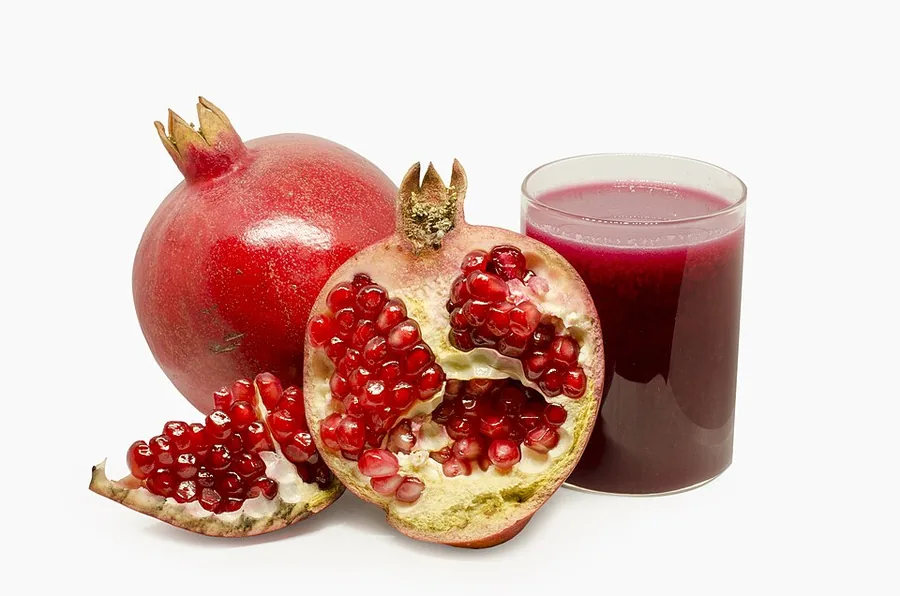
Overview
Punica granatum is a long-lived deciduous fruiting shrub, cultivated around the Mediterranean and the Middle East for thousands of years and spread widely since. It works on two fronts within one season: red-orange flowers in summer and arils that fill the fruit by fall. Its natural habit is multi-trunked, though growers commonly train it to a few main stems to simplify management.
Establishment is the turning point. After the root system settles, the plant needs only full sun, free-draining ground, and a deep irrigation about once a week through dry spells. It withstands drought and moderate cold, with hardy selections holding through Zone 7, but fruit ripening depends on a long, warm growing season to finish.
Two disorders account for most complaints, and both are cultural rather than pathogenic in origin: fruit splitting and heavy suckering. Even irrigation keeps the rind from rupturing, and routine sucker removal preserves form, so consistent management keeps the shrub productive for decades.
Care
The short version: grow it in full sun and well-drained soil, irrigate deeply every 7 to 10 days and hold moisture even as the fruit ripens, prune lightly in late winter, and remove suckers as they emerge.
Light
The plant is a full sun species requiring at least 6 hours of direct light daily to flower and fruit well, because flower initiation depends on high light. It tolerates partial shade, but reduced light lowers bloom count, and fewer blooms translate directly into a smaller crop.
Water
An established pomegranate is drought tolerant, yet uniform soil moisture governs fruit quality. Irrigate deeply every 7 to 10 days during rain-free periods, and hold that moisture steady through late summer and fall, since abrupt changes drive the rind expansion that splits ripening fruit.
Soil
It performs best in well-drained loamy soil and adapts to many textures, provided the root zone never stays saturated. Target a pH between 5.5 and 7.0, and avoid heavy ground that holds water around the roots, the condition it will not tolerate.
Temperature
Hardiness runs from 10°F to 104°F (-12°C to 40°C). Cold at the low end can kill the top growth to the ground, while sustained summer heat is what drives fruit ripening, so the wider the warm season, the better the finish.
Humidity
Low humidity of 20% to 50% suits it. Moist, stagnant air is the risk factor, because it favors the anthracnose fungus that rots fruit in humid regions.
Feeding
Apply a balanced 10-10-10 fertilizer across spring and summer at about 1 pound per 3 feet of plant height, divided between March and July. Two seasonal applications supply enough for a settled plant to fruit.
Pruning
Prune in late winter before growth resumes, clearing suckers, dead wood, and crossing branches. Keep cuts light, because fruit is borne on 2 to 3 year old wood, and heavy removal of that wood sacrifices the coming crop.
Repotting
Only container-grown dwarf forms are repotted, on a 2 to 3 years cycle. Repot when roots circle the pot, water drains straight through, or growth stalls, all signs the root ball has outgrown its container. In-ground plants at maturity are not repotted.
Size & spacing
At full size the shrub reaches 12 to 20 feet (3.7 to 6 m) tall and 8 to 20 feet (2.4 to 6 m) wide, so allow room for the mature footprint. Dwarf cultivars stay far smaller and suit containers and confined spaces.
When to plant
The crop is governed by heat accumulation over a long season. Transplant in spring after the last frost, expect flowering from late spring through fall, and harvest from August into October, roughly 6 to 7 months after bloom.
Northern hemisphere
Southern hemisphere
Typical months for a temperate climate: start earlier in warm zones, later where spring frosts linger.
- Plant: spring after the last frost
- Harvest: blooms late spring through fall; fruit harvested August to October, about 6 to 7 months after bloom
Hardiness
USDA hardiness zones: 7–10
Temperature: down to -18°C
Troubleshooting
Nearly every pomegranate problem registers on the fruit or at the base of the plant, and most trace back to irrigation or pruning practice. Read the early signs, adjust the cultural factor behind them, and intervene before the issue advances. Match the symptom below to its cause.
Anthracnose fruit rot in humid conditions
The pathogen is anthracnose, caused by Colletotrichum gloeosporioides, which sporulates in warm, wet air and rots fruit before maturity, the principal limitation on pomegranate in humid climates. Prune for open canopy airflow to dry the fruit surface, keep irrigation off the fruit, remove and destroy infected fruit to cut inoculum, and select resistant cultivars where humidity is high.
Fix:
- Improve air circulation and avoid overhead wetting
- Remove and destroy infected fruit
- Choose disease-resistant cultivars in humid regions
Rind splitting during fruit ripening
Splitting is a physiological moisture-swing disorder, not an infection: when a dry period ends in heavy rain or a long irrigation, the arils take up water and the fruit expands faster than the rind can accommodate, so the skin ruptures. Maintain even soil moisture from late summer into fall, apply 2 to 3 inches of mulch to buffer the root zone, and reduce irrigation gradually toward harvest rather than in a single change.
Fix:
- Maintain consistent, even soil moisture through late summer and fall
- Apply a 2 to 3 in organic mulch layer to buffer moisture
- Reduce irrigation gradually as fruit matures rather than abruptly
Poor flowering and premature fruit drop
Two cultural factors drive a shy crop: insufficient light and immaturity. In partial shade flower initiation falls off, and a plant under three years old has not built the reserves to hold fruit. Relocate to full sun with 6+ hours of direct light, avoid heavy pruning that removes fruiting wood, and allow until roughly year three before assessing yield.
Fix:
- Site in full sun (6+ hours direct light)
- Be patient; better fruiting typically begins around year three
- Avoid heavy pruning that removes fruiting wood
Profuse suckering at the base
Pomegranate suckers freely from roots and crown as a natural habit, and unchecked growth converts a trained shrub into a thicket. Cut suckers at the base whenever they emerge. Choose a target form early, either a few main trunks or a multi-stem shrub, and prune to maintain it, which also directs vigor into fruiting wood.
Fix:
- Remove suckers regularly at the base
- Train to a few main trunks or allow as a multi-stem shrub
Toxicity
The edible portion is the safe portion. The arils and their juice are wholesome for people, while the rind, bark, and roots concentrate tannins that irritate the gut of cats and dogs when they chew the peel or ingest fruit in quantity. Keep peels and surplus fruit away from pets and grazing animals.
Toxic to
Cats · Dogs · Horses · Rabbits · Livestock · Birds
Safe for
People
Cats Mild
Small quantities of arils are innocuous, but the rind and tannin-rich pith can produce gastric upset in a cat. Expect vomiting or loose stools if it chews the peel or consumes a large amount of fruit.
Dogs Mild
Dogs tolerate the sweet arils, yet the tannins in the rind provoke vomiting or diarrhea when fruit is eaten in quantity. The seeds and tough peel also present a choking or obstruction hazard in a small dog.
Horses Caution
No documented cases of pomegranate poisoning horses exist, but the bitter, tannin-rich rind and bark warrant exclusion, since a large intake can disturb the digestive tract.
Rabbits Caution
The fruit is not poisonous, though its tannins and sugar are poorly suited to a rabbit's gut. Exclude the rind entirely and limit the arils to an occasional small portion.
Livestock Caution
Goats, sheep, and cattle are not genuinely poisoned by pomegranate, but heavy browsing on the astringent rind and bark can cause loose stools or reduced appetite.
Birds Caution
Many birds consume the ripe arils without adverse effect. The rind holds the tannins to avoid, so provide clean fruit only and withhold the peel.
People Fruit safe
For people the juicy arils and pressed juice are a nutritious food, eaten fresh or as juice. The rind and bark are bitter and astringent and are not intended for consumption.
Keep peels and large amounts of fruit away from cats and dogs; a few arils are not toxic but the rind and tannins are the irritating parts.
Helpline numbers

United States
ASPCA Animal Poison Control: (888) 426-4435 (fee applies)
Poison Control: (800) 222-1222



Canada
Poison Centres: 1-844-764-7669
Varieties
Cultivars span a wide range of stature, from a 20-foot shrub to a 2-foot dwarf, along with differences in cold hardiness and fruit size. The following are the selections most often grown.
Wonderful
The dominant commercial cultivar, grown for large, deep red fruit dense with juicy arils, and the reference point against which other selections are judged.
Nana
A true dwarf that matures at only 2 to 3 feet, which makes it the practical choice for container culture or a confined planting.
Salavatski (Russian series)
A cold-hardy selection reported to survive to about Zone 6, extending the crop into gardens colder than most cultivars tolerate.
State Fair
A compact cultivar of roughly 5 feet that fruits reliably with smaller pomegranates, well suited to restricted space.
How to propagate
Pomegranate propagates readily, and the method determines genetic outcome: vegetative routes reproduce the parent, while seed segregates.
Stem cuttingsEasy
Winter (dormant season, January to February) · Roots in one growing season; 1 to 2 years in nursery rows before transplanting
Hardwood cuttings are the reliable route to a genetic copy of the parent. During dormancy, collect pencil-thick pieces about 8 to 10 inches long, treat the base with rooting hormone, and insert them to half their length in a moist soilless medium. They root within one growing season, then hold in nursery rows for 1 to 2 years before transplanting.
SeedModerate
Spring · Germinates in a few weeks; several years to first fruit
Seed propagation succeeds but does not breed true. Sown in spring, seeds germinate within a few weeks, yet the seedlings segregate, rarely reproduce the parent cultivar, and require several years to reach first fruit.
LayeringModerate
Spring to summer · One growing season to root before separating
Layering is a slow but dependable vegetative method. Bend a low, pliable branch to the ground, pin it in place from spring through summer, and it forms roots at the contact point over one growing season. Sever the rooted section from the parent and transplant it once established.
Myths
Pomegranate is toxic to dogs and cats.
The record does not support true toxicity: pomegranate is absent from the ASPCA list, and Pet Poison Helpline classifies it as a mild irritant. The gastrointestinal signs come from the tannin-rich rind and from overconsumption, producing vomiting or loose stools. The arils are harmless in small amounts; the peel is the irritant to withhold from pets.
Two plants are required for pomegranates to fruit.
Not so. Pomegranate flowers are self-fertile, so one plant sets fruit unaided without a pollinizer nearby. A second shrub can raise yield marginally through added pollination, but it is never a requirement.