Herb · Lamiaceae
Peppermint
Mentha × piperita
Give it steady moisture and a pot to call its own, and peppermint yields fresh leaves through the season.
Full sun
Every 2–4 days
80–90 days
USDA 3–8
Overview
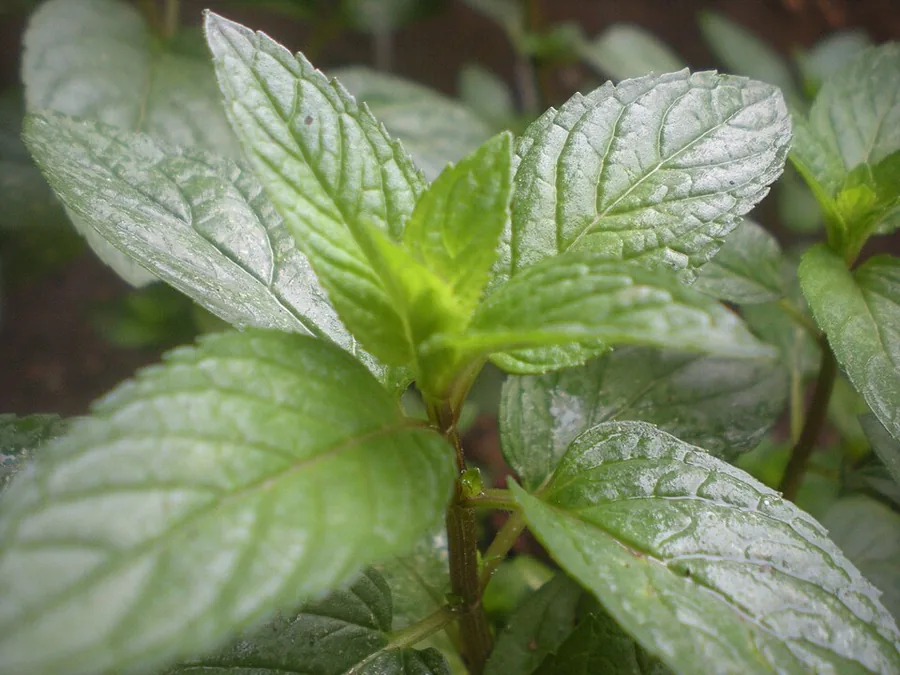
Peppermint is a hardy perennial herb that arose as a natural cross between watermint and spearmint. The square stems, dark leaves, and cool menthol note that define the plant reflect the essential oils concentrated in its foliage, and those oils are the reason it earns space in the kitchen and the tea garden alike. It performs in full sun to partial shade and withstands cold to USDA zone 3, a hardiness that traces to its perennial rootstock rather than its top growth.
The defining trait of peppermint is the vigor of its vegetative spread. Supplied with rich, moist soil, it extends underground and surface runners that root and produce new shoots at each node, so a single plant colonizes the ground available to it. That same vigor that fills a container quickly turns invasive in open ground, which is why containment is the standard recommendation from the outset.
Because peppermint is a sterile hybrid, it produces little or no viable seed and will not come true, so propagation proceeds vegetatively from division or cuttings. The practical advantage is that both root with ease, a direct consequence of the plant's readiness to form roots along its stems and runners. One established plant supplies a pot, a path edge, or a windowsill with minimal input.
Care
The short version: full sun to part shade, soil held evenly moist and never allowed to dry out, and containment in a pot or buried barrier to check the runners.
Light
Peppermint develops best in full sun yet tolerates partial shade, a useful margin where summer heat and dryness are severe. Sun drives the higher oil concentration behind stronger flavor, while partial shade reduces evaporative demand and helps the soil retain the moisture the plant needs.
Water
Hold the soil consistently moist and do not let it dry, because water stress causes the foliage to wilt and the oils to decline. A 2 to 4 day interval suits most conditions, shortened in containers and hot, dry weather where the root zone loses water faster.
Soil
Plant into rich, moisture-retentive loam amended with organic matter, which buffers the moisture supply the plant depends on. A pH of 6.0 to 7.0 keeps nutrients available, and structure that holds water without waterlogging supports continuous leaf production.
Temperature
Peppermint endures a wide range, from -29°F to 84°F (-34°C to 29°C). The top growth dies back over winter while the perennial roots survive and regenerate in spring, and that rootstock is the basis of its hardiness across cold zones.
Humidity
An average range of 40% to 70% maintains lush foliage. Air movement matters more than the exact figure, because stagnant, crowded air raises leaf-surface humidity to the level that rust and spider mites exploit.
Feeding
Feed moderately through spring and summer with a balanced fertilizer or with compost or aged manure. Limit nitrogen in particular, since excess nitrogen promotes soft growth at the expense of the oil concentration that carries the flavor.
Pruning
Pinch and harvest the stem tips regularly to keep the plant bushy, as removing apical growth releases the lower buds. Cut off flower spikes to hold flavor in the leaves, and shear the plant back hard after bloom to force a flush of fresh foliage.
Repotting
Peppermint fills a container quickly, so repot every 1 to 2 years, or sooner when roots circle the pot, leaves shrink, or runners escape the drainage holes. Dividing at repotting relieves the root congestion that otherwise saps vigor.
Size & spacing
Mature plants stand 12 to 35 inches (30 to 90 cm) tall and spread 1.5 to 4 feet (45 to 120 cm) wide through runners. Allow that spacing, or confine the plant to a pot, so the lateral spread does not overtake adjacent ground.
When to plant
Peppermint's cold hardiness makes its planting window forgiving relative to tender crops. Set out divisions or rooted cuttings in spring once the last frost has passed, then harvest leaves through the growing season, removing the flower spikes as they form because flowering diverts resources and diminishes leaf quality.
Northern hemisphere
Southern hemisphere
Typical months for a temperate climate: start earlier in warm zones, later where spring frosts linger.
- Plant: Spring, after the last frost, from divisions of runners or rooted stem cuttings
- Harvest: Harvest leaves throughout the growing season; pinch off flower spikes (summer bloom) to maintain leaf quality
Hardiness
USDA hardiness zones: 3–8
Temperature: down to -40°C
Troubleshooting
Peppermint is undemanding, so most of its problems arise from the two conditions its biology sets up: wet, crowded canopies that favor pathogens, and the vigorous runner spread that overruns its bounds. Detecting the early signs on the foliage or along the bed margins allows intervention before either escalates. Match the observed symptom below, then act while the response is still effective.
Progressive wilt and dieback on one flank of the plant
One-sided wilting that intensifies in warm weather is characteristic of verticillium wilt, a soil-borne fungus that colonizes the vascular tissue and obstructs water transport from within. The obstruction explains both the asymmetric collapse and the brown streaking visible when a wilting stem is cut open. No treatment reverses a systemic infection, so remove and destroy the plant, re-establish with resistant stock in fresh, uninfested soil, and avoid replanting mint on ground with a history of the disease, since the pathogen persists there.
Fix:
- Remove and destroy affected plants
- Do not replant mint or other susceptible crops in the same soil
- Plant resistant mint stock in fresh, uninfested soil
Orange spore pustules beneath yellowing foliage
Those raised pustules signal mint rust, caused by the fungus Puccinia menthae, which establishes readily where foliage remains wet and canopy density traps humidity. Remove the affected leaves as soon as the sporing pustules form, because the spores spread from leaf to leaf. Thin the stems to lower the humidity that the pathogen requires, and direct water at the base rather than the canopy. Where infection is heavy, cut the stand to ground level and remove the debris that would otherwise carry inoculum forward.
Fix:
- Remove and destroy infected foliage immediately
- Improve air circulation by thinning crowded stems
- Avoid overhead watering and wetting foliage
- Cut affected plants to the ground and dispose of debris in severe cases
Rhizome and stolon spread invading adjacent plantings
The advance is runner spread, the normal growth habit of the species rather than a disorder. Rhizomes and stolons extend horizontally from the parent and produce independent shoots at each node they reach, so a contained clump expands into surrounding beds within a season or two. Control depends on physical confinement: grow it in a pot or a buried bottomless container, excise escaped runners as they appear, and edge the bed deeply so lateral growth meets a barrier before it establishes.
Fix:
- Grow in containers or buried barriers to confine roots
- Regularly dig out and remove escaped runners
- Edge beds deeply and monitor margins each season
Congested crown turning woody as the stand ages
Declining vigor and shrinking leaves on an aging stand indicate a congested, woody clump, the result of root and runner density outpacing the soil resources at the crown. The center goes bare and woody while matted runners ring it, a pattern confirmed by lifting the clump. Division every 2 to 3 years resets this: discard the exhausted woody core, replant the vigorous outer divisions where competition is lower, and incorporate compost to restore the fertility the crowded root mass had depleted.
Fix:
- Divide the clump every 2-3 years
- Discard old woody center and replant vigorous outer divisions
- Refresh soil with compost at replanting
Fine stippling and webbing across dulled leaves
The stippling and fine webbing point to spider mites, which reproduce fastest under the hot, dry, dusty conditions that also stress the plant. Confirm the diagnosis by tapping a leaf over white paper and watching the dislodged mites move. A strong jet of water disrupts the colonies mechanically, insecticidal soap or horticultural oil applied to the leaf undersides reaches where they feed, and consistent watering removes the moisture stress that favors their buildup in the first place.
Fix:
- Spray foliage with a strong jet of water to dislodge mites
- Apply insecticidal soap or horticultural oil to undersides of leaves
- Increase humidity and keep plants well watered
Toxicity
Peppermint is a culinary herb, so its leaves are entirely safe for people to eat and to brew. For animals the essential oils change the calculation: they render it a mild hazard to cats, dogs, and horses, producing vomiting or diarrhea on any substantial ingestion, and concentrated peppermint oil is far more dangerous than the intact plant. Keep grazing animals away from large stands, and exclude the oil from cats entirely, since they cannot metabolize it.
Toxic to
Cats · Dogs · Horses · Rabbits · Livestock · Birds
Safe for
People
Cats Mild
A trace of leaf tends to pass without incident, whereas a substantial mouthful can provoke vomiting and diarrhea driven by the essential oils. Cats are the most vulnerable species here because they lack the liver enzymes needed to metabolize those oils, which is precisely why concentrated peppermint oil poses the far greater risk. Exclude that oil from their environment entirely.
Dogs Mild
A few leaves seldom produce symptoms, but a dog that grazes an entire plant can develop vomiting and diarrhea from the oil load. Note drooling or reduced appetite as supporting signs, and store concentrated oils where the animal cannot reach them.
Horses Mild
Incidental amounts in pasture are usually tolerated, though ingestion in quantity can produce gastric upset and loose droppings attributable to the oils. Restrict access to large stands to keep intake incidental.
Rabbits Mild
The aromatic oils that affect cats and dogs can likewise disturb a rabbit's sensitive digestive tract, so the plant is unsuitable for free-choice feeding. Limit it to a leaf or two on occasion and monitor for soft stool as an early indicator of intolerance.
Livestock Mild
Goats, sheep, and cattle can browse modest quantities without evident harm, yet a large intake of the aromatic foliage can induce digestive upset. Regard it as an occasional browse component rather than a forage crop.
Birds Caution
Documented data on mint toxicity in pet birds is sparse, and the potency of the oils warrants a conservative approach. Exclude it from the routine diet and keep any essential oil well away from the enclosure.
People Safe
Peppermint is a culinary herb, and the leaves are suitable for consumption fresh, dried, or steeped as tea. The one meaningful caution concerns the concentrated essential oil, which is far more potent than the leaf tissue and is not intended for casual use.
Concentrated peppermint essential oil is a significantly greater hazard, especially to cats, which lack the liver enzymes to metabolize it; keep essential oils away from pets.
Helpline numbers

United States
ASPCA Animal Poison Control: (888) 426-4435 (fee applies)

United Kingdom
Animal PoisonLine: 01202 509000 (fee applies)

Australia
Animal Poisons Helpline: 1300 869 738
Varieties
The named peppermint types differ chiefly in pigmentation and in the intensity of their menthol. The following are the ones worth distinguishing.
Chocolate mint
The dark-tinged stems and leaves pair with a warm chocolate-peppermint aroma that suits it to desserts and tea.
Black peppermint
Purple-tinged stems and dark foliage identify this high-menthol type, valued where a strong, pronounced flavor is wanted.
White peppermint
Greener stems and paler leaves accompany a milder, sweeter flavor than the darker-stemmed forms.
How to propagate
Peppermint will not come true from seed as a sterile hybrid, but it is among the simplest plants to reproduce vegetatively, whether by dividing an established clump or rooting cuttings in water.
DivisionEasy
Spring or early autumn · 2 to 4 weeks
Division is the most dependable method of propagation, since the sterile hybrid yields no true-to-type seed. Lift the clump in spring or early autumn and separate it into sections that each carry rooted runner, then replant those sections at their original depth. Establishment follows within 2 to 4 weeks as the divisions resume active growth.
Stem cuttingsEasy
Spring through summer · 1 to 3 weeks
Stem cuttings are equally straightforward and reproduce the parent exactly, which is the practical requirement for a sterile hybrid. Take 10 to 15 cm stems at any point from spring through summer and hold them in water or a moist medium until adventitious roots form. Rooting occurs in 1 to 3 weeks, after which the cutting is ready to pot on.
Myths
You can grow true peppermint from seed.
As a sterile hybrid of watermint and spearmint, peppermint sets little or no viable seed, and whatever seedlings arise will not reproduce the parent's traits. Vegetative propagation is therefore the only reliable route to keep the plant true, achieved by dividing the clump or rooting cuttings.
Culinary use proves mint poses no danger to animals.
Culinary safety for people does not extend to animals. The ASPCA classifies mint as toxic to cats, dogs, and horses, in which the essential oils cause vomiting and diarrhea, and concentrated peppermint oil is considerably more dangerous, especially to cats that cannot metabolize it.