Ornamental · Asteraceae
Oxeye Daisy
Leucanthemum vulgare
Give it sun and lean, well-drained soil, and the oxeye daisy flowers for months, then keeps spreading by rhizome and seed.
Full sun
Every 7–14 days
USDA 3–8
1–3 ft · 0.3–0.9 m
Overview
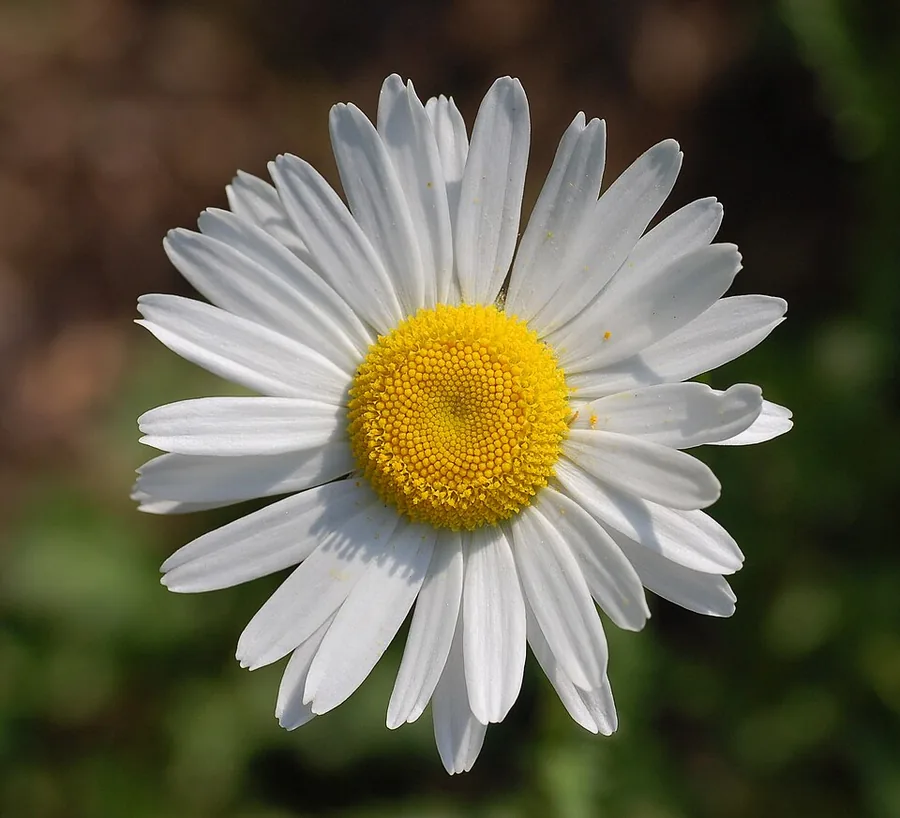
The oxeye daisy is the familiar white composite of summer roadsides and meadows, its white ray florets surrounding a yellow central disc. Placed in the daisy family, it was introduced from Europe and Asia and has since naturalized throughout cool temperate regions. Its tolerance of poor soil and severe cold, which exceeds that of many cultivated perennials, explains how readily it establishes on marginal ground.
Ease of cultivation is precisely the liability. Unchecked, it advances by both creeping rhizomes and heavy seed production, so a single plant can occupy a stand of ground within a couple of growing seasons. That vigor is why much of the western US and states such as Minnesota classify it as an invasive or noxious weed, and why local regulations should be checked before it is planted.
In a contained setting it repays little care with months of bloom. Site it in full sun and free-draining ground, deadhead to prolong flowering, and monitor its lateral spread. Where escape is a concern, the reportedly sterile cultivar is the sounder choice because it does not set seed.
Care
The short version: full sun and average, well-drained soil held on the dry side. Water only during establishment, withhold fertilizer in reasonable ground, and deadhead through the season to sustain flowering.
Light
Grow it in full sun, which yields the heaviest flowering and the most rigid stems. It accepts limited afternoon shade, but under deeper shade reduced light causes the stems to elongate and lodge and the flower count to fall.
Water
Once established, the oxeye daisy is drought tolerant and performs best in dry to medium soil moisture. Irrigate a new planting every 7 to 14 days through establishment, then rely largely on rainfall, since saturated soil predisposes the crown to rot.
Soil
Average, well-drained soil is ideal, and it persists on the lean, infertile ground that defeats more demanding perennials. A slightly acidic to neutral pH of 6.5 to 7.0 suits it, though adequate drainage governs performance far more than the exact reaction.
Temperature
A cold-hardy perennial, it tolerates roughly -40°F to 90°F (-40°C to 32°C). The deep winter minima of zones 3 to 8 pose no difficulty because the crown persists below ground and resprouts from the base each spring.
Humidity
Ambient outdoor humidity is immaterial, so no target level applies. Air circulation is the operative variable, since stagnant, humid air within dense clumps sustains the leaf-surface moisture that leaf spot requires.
Feeding
In soil of ordinary fertility the plant requires no supplemental feeding, and excess nutrition only promotes lax, floppy growth and heavier spread. Where the ground is genuinely impoverished, a single light, balanced application during the growing season suffices.
Pruning
Deadheading spent flowers through the season both prolongs bloom and curbs the copious self-seeding by removing developing seed. As flowering ends, cut the stems back to the basal leaves to renew the clump.
Size & spacing
Mature plants stand 1 to 3 feet (30 to 91 cm) tall with a spread of 12 to 24 inches (30 to 61 cm), so space them accordingly. Adequate spacing preserves airflow, whereas crowded clumps hold humid air against the foliage and favor leaf spot.
When to plant
Hardy across zones 3 to 8, the oxeye daisy withstands severe winter cold without protection. Start seed indoors 6 to 8 weeks before the last frost, transplant once spring soil has warmed, and the white heads open from May through August.
Northern hemisphere
Southern hemisphere
Typical months for a temperate climate: start earlier in warm zones, later where spring frosts linger.
- Sow: 6 to 8 weeks before last spring frost
- Plant: After last spring frost once soil has warmed
- Harvest: Blooms May through August
Hardiness
USDA hardiness zones: 3–8
Temperature: down to -40°C
Troubleshooting
This is a resilient species, so problems are infrequent and generally trace to wet or overcrowded conditions that keep foliage and crowns damp. The usual agents are a fungal pathogen or a few sap-feeding insects. Match the symptom below and intervene early, while control remains practical.
Entire plant wilting and yellowing as growth stalls
These symptoms point to verticillium wilt, a soil-borne fungus that colonizes and occludes the vascular tissue, which is why wilting begins on the lower leaves and advances upward as water transport fails. No treatment reverses an established infection, so remove and destroy affected plants to cut off the inoculum. Because the pathogen persists in soil, raise the drainage and keep susceptible species out of the same ground.
Fix:
- Remove and destroy affected plants
- Avoid replanting susceptible species in the same soil
- Improve drainage
Plant collapsing from rot at the stem base
Softened, decayed tissue at the soil line is the signature of stem rot or southern blight, pathogens favored by warm, saturated soil where poor drainage keeps the crown wet. Rogue out and discard infected plants promptly, since the fungi spread readily through moist debris. Correcting the drainage and pulling mulch back off the crown lowers the moisture at the base that these organisms require to advance.
Fix:
- Remove and discard infected plants
- Improve drainage and reduce moisture at crown
Discrete brown or black lesions marking the leaves
Discrete lesions of this kind are fungal leaf spot, which establishes where humidity is high and dense growth traps moisture on the foliage, then intensifies after rain that keeps leaf surfaces wet. Removing marked foliage takes out sporulating tissue, and thinning or dividing the clump lets air dry the leaves faster and slows infection. Base watering keeps the canopy dry, denying the spores the film of water they need to germinate.
Fix:
- Remove affected foliage
- Improve air circulation by thinning or dividing clumps
- Avoid overhead watering
Deformed shoots with insects massed on stems and buds
Deformed shoots and colonies on the stems indicate sap-feeding aphids, mites, or leaf miners, whose feeding on soft expanding tissue puckers the new growth while miners tunnel the visible trails in the leaves. A firm jet of water dislodges most colonies mechanically, which is often enough on an otherwise vigorous plant. Reserve insecticidal soap for persistent infestations, and let resident predators suppress the remainder rather than spraying prophylactically.
Fix:
- Spray off with water
- Apply insecticidal soap if persistent
Toxicity
Regard the oxeye daisy as a mild irritant rather than a serious poison. Its foliage and flowers contain sesquiterpene lactones that can produce gastrointestinal upset in animals and dermatitis on sensitive skin, though incidental ingestion rarely causes lasting harm. Prevent pets from grazing on it, and wear gloves if your skin is reactive.
Toxic to
Cats · Dogs · Horses · Rabbits · Livestock · Birds · People
Cats Mild
In a cat that ingests the leaves or flowers, the irritant compounds provoke drooling, vomiting, or loose stools, and skin contact with the sap can leave the coat itchy. The response is characteristically mild and resolves once access to the plant is removed.
Dogs Mild
Dogs show a comparable gastrointestinal reaction of drooling and stomach upset, and a large dose can produce transient incoordination as well. Most exposures remain mild, but a substantial ingestion warrants a call to the veterinarian.
Horses Mild
The sesquiterpene lactones concentrated in the foliage account for the sour stomach and mild colic-like discomfort seen in horses. Their strong bitterness normally deters grazing, so intake stays low unless forage is otherwise scarce.
Rabbits Caution
The same daisy-family compounds can disturb a rabbit's finely balanced hindgut fermentation, so the plant is best excluded from its diet. An incidental nibble seldom does measurable harm, but deliberate feeding is inadvisable.
Livestock Caution
Cattle, sheep, and goats generally graze selectively around the bitter foliage, which keeps clinical poisoning uncommon. The greater agronomic concern is its displacement of more palatable forage rather than the mild upset it may cause.
Birds Caution
Documented evidence of serious harm to birds is limited, yet the presence of the same irritant compounds makes it prudent to prevent pet birds from picking at the leaves and flowers.
People Caution
In sensitive individuals, handling the foliage and flowers can elicit a contact dermatitis marked by redness and itching. Since the plant is ornamental rather than culinary, it should be kept away from small children who might attempt to taste it.
Contact with leaves and flowers can cause mild contact dermatitis in sensitive individuals.
Helpline numbers

United States
ASPCA Animal Poison Control: (888) 426-4435 (fee applies)
Poison Control: (800) 222-1222



Canada
Poison Centres: 1-844-764-7669
Varieties
Only two forms are commonly encountered in gardens, and the decision between them rests on a single trait: whether or not the plant self-seeds and spreads.
May Queen ('Maikonigin')
A compact, erect selection reaching about 2 feet (60 cm) that bears large single white daisies and, being reportedly sterile and propagated solely by division, does not self-sow into surrounding beds.
Leucanthemum vulgare (species)
The wild species produces 1.5 to 2 inch (4 to 5 cm) white-rayed heads centered on a yellow disc and spreads rapidly through both rhizomatous growth and abundant seed.
How to propagate
The oxeye daisy increases readily by both seed and division, an advantage in a naturalized setting and a management burden wherever it must be held in place.
SeedEasy
Sow in spring after frost or start indoors 6 to 8 weeks before last frost · Germinates in 1 to 3 weeks; blooms by second season
Seed is the standard method of increase. Direct-sow after the last frost or start indoors 6 to 8 weeks ahead of it, and germination follows in 1 to 3 weeks, with flowering deferred to the second season as the plant builds a rootstock first. The species self-seeds prolifically, and because the seed remains viable in the soil for decades, that persistent seed bank is a principal driver of its invasive behavior.
DivisionEasy
Spring or early fall, every 2 to 3 years · Reestablishes within one season
Divide established clumps every 2 to 3 years in spring or early fall, which relieves the crowding that reduces vigor, and the divisions reestablish within a single season. Note that the rhizomatous habit means severed fragments left in the soil will regenerate, so thorough removal is essential where containment is the goal.
Myths
The oxeye daisy is synonymous with the garden Shasta daisy and may be planted anywhere without concern.
The two are distinct species. The oxeye daisy propagates by rhizome and seed and carries an invasive or noxious-weed listing across many jurisdictions, whereas the clump-forming Shasta daisy remains where it is planted. Verify the identity of the plant before siting it.
Daisies are entirely safe and non-toxic to pets.
Members of the daisy family contain sesquiterpene lactones and pyrethrins capable of inducing mild vomiting, drooling, loose stools, and skin irritation in cats and dogs. The reaction is typically mild, but it is genuine, so grazing should be prevented.