Herb · Lamiaceae
Sweet Marjoram
Origanum majorana
Sweet marjoram converts strong sun and sharp drainage into aromatic oil, yielding one of the mildest, most delicate herb flavors a garden can produce.
Full sun
Every 5–10 days
50–86°F · 10–30°C
60–90 days
Overview
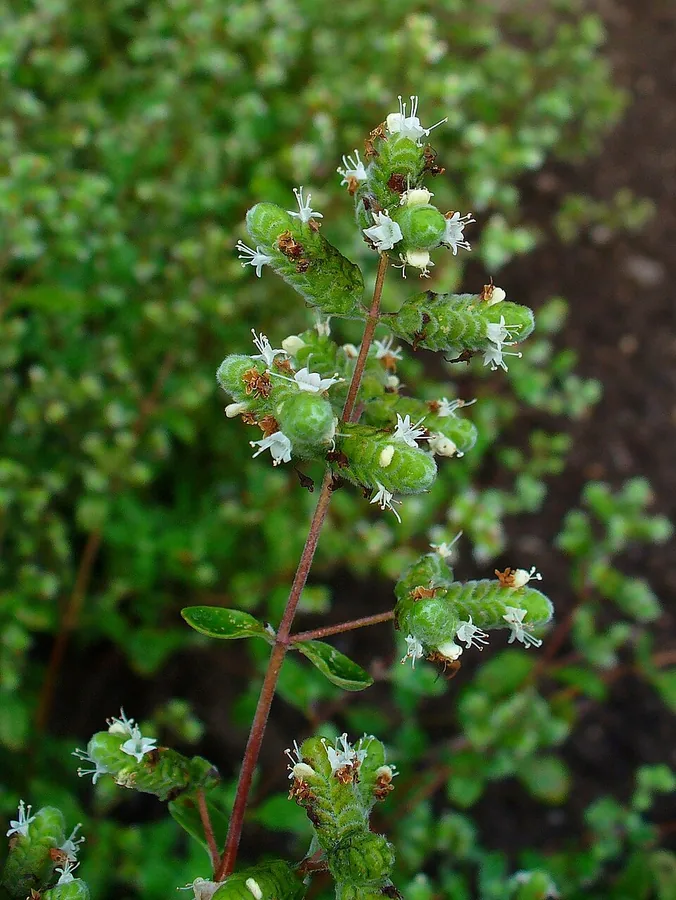
Sweet marjoram is a tender species in the mint family and a close relative of oregano, grown for soft leaves that carry a sweet, faintly resinous, pine-tinged aroma. Its Mediterranean origin explains its requirements precisely: strong light, warmth, and a soil that sheds water quickly. The rounded, knot-like flower clusters ranged along each stem are the diagnostic feature behind the names knotted marjoram and pot marjoram.
Its value lies in the kitchen rather than the ornamental border. The aroma reads milder and sweeter than oregano, and because that quality declines once the plant flowers, regular harvesting is the working strategy. Frequent pinching removes the apical buds, which promotes branching and extends the supply of tender, aromatic foliage.
Marjoram is an undemanding herb, easy to keep once its few requirements are met. It tolerates drought well after establishment, drawing on its dry-country adaptation, but it has no defense against wet feet or frost. Given a sunny bed or a container that can be moved under cover, it yields months of harvest before cold conditions close the season.
Care
The short version: full sun, a light and fast-draining soil, and water only after the top half has dried. Feed it lightly, harvest ahead of flowering, and keep it clear of cold, waterlogged ground.
Light
Marjoram performs best in full sun, six hours a day or more, because ample light drives the production of the aromatic oils that give the leaves their flavor. It will accept some partial sun, but higher light yields stronger aroma and more compact, sturdy growth.
Water
Allow the top half of the soil to dry before watering again, since the plant is adapted to drought far more than to saturation. Its water demand drops further once established. Cold, waterlogged soil deprives the roots of oxygen and is the principal cause of rot, so keep the regime on the dry side.
Soil
Grow it in well-drained sandy loam or loam, favoring the lightest, most freely draining material available, because sharp drainage protects the roots. It accepts a broad pH span from 6.5 to 8.0 and performs well on the alkaline side, consistent with its Mediterranean origin.
Temperature
Marjoram grows best across 50°F to 86°F (10°C to 30°C) and responds well to heat. It has effectively no frost hardiness, so temperatures near or below freezing will kill it outright.
Humidity
It suits low humidity in the range of 30% to 50%, reflecting its dry-country adaptation. Damp, stagnant air favors rot and mildew on the foliage, so provide spacing and air movement to keep the surfaces dry.
Feeding
Treat it as a light feeder that needs no more than a single balanced application in spring. Restrict nitrogen, because an excess stimulates soft leafy growth at the expense of the aromatic oils that carry the flavor.
Pruning
Pinch and harvest the leaves regularly, ahead of the knot-like flower clusters opening, to hold flavor and stimulate branching. Cut back leggy or woody stems as well, which draws out fresh, tender growth from lower on the plant.
Repotting
Marjoram seldom needs repotting and tolerates being somewhat pot-bound. Move it up only when roots circle the pot or emerge from the drainage holes, or when the medium dries unusually fast after watering, both signs the roots have filled the container.
Size & spacing
The plant remains compact, reaching 8 to 18 inches (20 to 45 cm) in height with a spread of 8 to 16 inches (20 to 40 cm). Allow spacing between plants so air circulates and the foliage stays dry.
When to plant
Because marjoram is frost-tender, its schedule follows soil and air temperature rather than the calendar. Sow indoors in late winter, transplant only after the last frost when the soil has warmed, and harvest through summer, taking the leaves before the knot-like flowers open and the aromatic oils decline.
Northern hemisphere
Southern hemisphere
Typical months for a temperate climate: start earlier in warm zones, later where spring frosts linger.
- Sow: 6-8 weeks before the last spring frost
- Plant: After all danger of frost has passed and the soil has warmed
- Harvest: Harvest leaves before or as the knot-like flower clusters open in summer for best flavor
Hardiness
USDA hardiness zones: 9–10
Temperature: down to -7°C
Troubleshooting
Marjoram presents few problems, and nearly all of them trace to excess moisture or cold. Examine the foliage and the crown for the earliest signs. Match the symptom below and intervene before the condition advances.
Wilting, blackened stem bases, and mushy roots
Blackened crowns and soft roots point to root and stem rot, which sets in where cold, waterlogged soil starves the roots of oxygen. Once the root tissue has broken down there is no recovery, so remove and discard the worst plants. Withhold water until the soil dries, and shift container plants into a faster-draining medium so oxygen reaches the roots again.
Fix:
- Stop watering and allow soil to dry
- Improve drainage or move container plants to faster-draining mix
- Remove and discard severely affected plants
Sudden blackening and collapse of the entire plant following frost
As a frost-tender herb, marjoram carries no cold hardiness, so a single freeze ruptures its tissue and blackens the whole plant overnight. Growing it in a container that can be brought under cover before a frost preserves the plant, and replanting in spring is the fallback. Where winters are cold, the practical course is to grow it as an annual.
Fix:
- Replant after danger of frost in spring
- Grow in containers that can be moved indoors before frost
Bitter, less aromatic leaves once flowering begins
At flowering the plant redirects its resources into the rounded, knot-like flower clusters and seed production, and leaf quality declines as a result. Pinching out the buds as they form delays that shift and keeps the foliage sweet. The dependable answer is to harvest and dry the leaves ahead of full bloom, while the aromatic oils are still at their peak.
Fix:
- Pinch off developing flower clusters
- Harvest and dry leaves before full bloom
Curled or stippled leaves with tiny insects or webbing
Two sap-feeders account for this: aphids colonizing the soft new growth, and spider mites that build up as conditions turn hot and dry. Because both feed on the foliage, a strong jet of water dislodges much of the population, and insecticidal soap on the leaf undersides finishes the rest. Prune out any shoot already heavily colonized, since it will keep seeding the rest of the plant.
Fix:
- Rinse plants with a strong jet of water
- Apply insecticidal soap, covering leaf undersides
- Remove heavily infested shoots
Toxicity
Marjoram is a culinary herb, safe for you and your household to cook with and consume. The relevant point is the aromatic essential oils in the leaves, which can irritate a pet's digestive tract and cause mild upset if a real mouthful is eaten. Position any container beyond the reach of a cat or dog inclined to browse foliage.
Toxic to
Cats · Dogs · Horses · Rabbits · Livestock · Birds
Safe for
People
Cats Mild
In a cat that chews down a full mouthful, the aromatic oils irritate the gut lining and can produce drooling, vomiting, and a loose stool. The culinary pinch left on a plate carries no such risk.
Dogs Mild
A dog that consumes a quantity of the plant may show a queasy stomach, vomiting, or loose stools as the oils irritate the digestive tract. The small amounts used in cooking pass through without effect.
Horses Mild
The same essential oils can disturb a horse's gut if it grazes a genuine mouthful, presenting as mild diarrhea or a reduced appetite. A few incidental sprigs are of no consequence.
Rabbits Mild
A rabbit that overconsumes the foliage may develop soft stools or slight bloating in response to the strong oils. Restricting it to an occasional small sprig avoids the problem.
Livestock Mild
Goats, sheep, and cattle seldom seek the plant out, and only a substantial feed of the aromatic foliage would produce a transient bout of digestive upset.
Birds Mild
Pet and backyard birds generally reject the pungent leaves, and a heavy nibble would at most cause a brief digestive upset.
People Safe
As a culinary herb, marjoram is safe to cook with and eat in any amount ordinarily used. Nothing about it needs to be kept away from the household.
Aromatic essential oils in the leaves can mildly irritate a pet's digestive tract if large amounts are chewed.
Helpline numbers

United States
ASPCA Animal Poison Control: (888) 426-4435 (fee applies)

United Kingdom
Animal PoisonLine: 01202 509000 (fee applies)

Australia
Animal Poisons Helpline: 1300 869 738
Varieties
Only a small number of marjorams appear in cultivation, distinguished chiefly by flavor intensity and cold tolerance. These two are the ones to know.
Sweet marjoram (Origanum majorana)
This is the standard culinary species, valued for a sweet, mild aroma carrying a faint pine note, and its knotted flower clusters are the source of the common name knotted marjoram.
Hardy/Italian marjoram (Origanum × majoricum)
A hybrid with oregano, it withstands more cold and delivers a sharper, more pungent flavor than true sweet marjoram.
How to propagate
Marjoram propagates readily by two routes, either from seed sown in a tray or from cuttings taken off an established plant.
SeedEasy
Start indoors 6-8 weeks before the last frost, or sow outdoors after the soil warms · About 1-2 weeks to germinate; transplant outdoors after frost
Seed is the usual route, sown indoors 6 to 8 weeks before the last frost or direct once the soil has warmed. Because the seed is very fine, surface-sow it or barely cover it and hold the medium warm and lightly moist, which suits its small energy reserves. Germination follows in about 1 to 2 weeks, after which the seedlings transplant outdoors once frost has passed.
Stem cuttingsModerate
Late spring through summer from non-flowering shoots · Roughly 2-4 weeks to root
Vegetative propagation reproduces a selected plant exactly, using cuttings taken from late spring through summer. Take non-flowering shoots, since they root more readily than flowering stems, then trim the tips, strip the lower leaves, and insert them in a moist, well-drained medium. Roots develop over roughly 2 to 4 weeks.
Myths
Marjoram is simply oregano under another name.
They are distinct species within a shared genus. Sweet marjoram (Origanum majorana) registers as sweeter and milder than common oregano (Origanum vulgare), and it succumbs to cold well before oregano does. They resemble each other but differ in both flavor and hardiness.
Marjoram poses a serious poisoning risk to dogs and cats.
The ASPCA classifies it as a mild gastrointestinal irritant rather than a serious toxin. A pet that ingests a real mouthful may vomit or pass loose stools, yet the culinary pinch presents no hazard. The effect is mild and depends on the quantity eaten.